Lizziane Andrade Dias, Gilmar Mercês de Jesus, Graciete Oliveira Vieira
{"title":"巴西学童的身体活动和久坐行为模式:基于行为类型的分析。","authors":"Lizziane Andrade Dias, Gilmar Mercês de Jesus, Graciete Oliveira Vieira","doi":"10.1186/s12887-025-05522-x","DOIUrl":null,"url":null,"abstract":"<p><strong>Background: </strong>Studies on physical activity (PA) and sedentary behavior (SB) patterns contribute to planning specifically-population-targeted health interventions. However, most do not assess PA and SB based on types. The current study identified patterns of PA and SB based on types and their association with demographic factors (age, school shift) and weekly attendance in physical education classes (PEC) among schoolchildren.</p><p><strong>Methods: </strong>Students from 11 Brazilian public schools with part-time schedules participated in this cross-sectional study in 2019 (n = 2,477; 9.1 ± 1.38 years, 53.2% girls). Participants self-reported PA, SB, and weekly attendance PEC in an online questionnaire. Data on age and school shift were gathered from the Municipal Education Department. PA and SB patterns were identified through a two-step cluster analysis, stratified by sex. The associations between PA and SB patterns and age (7-9 years old; 10-12 years old), school shift (morning; afternoon), and weekly attendance PEC (0/week; 1/week; ≥2/week) were analyzed by Logistic Regression.</p><p><strong>Results: </strong>Among girls, two distinct patterns emerged: \"Active players\" (n = 549, 44.1%) and \"Sedentary/Household chores performers\" (n = 697, 55.9%); and three patterns among boys: \"Active play/Structured PA practitioners\" (n = 322, 29.8%), \"Sedentary on screen\" (n = 369, 34.1%), and \"Sedentary on academic tasks\" (n = 390, 36.1%). Weekly attendance in PEC was associated with the composition of patterns for both girls and boys. Among boys, the 'Sedentary on screen' group was more likely to be in the 10-12 years age group.</p><p><strong>Conclusions: </strong>Boys and girls exhibited different PA and SB patterns. Active play and household chores contributed to the cluster solution among girls, whereas sports contributed to the cluster solution among boys. Attending PEC increased the odds of participants belonging to clusters with higher PA and lower SB. Identifying patterns of PA and SB by type, along with their associated factors, could inform intervention studies and help shape actions at the school level to increase PA and reduce SB among schoolchildren.</p><p><strong>Clinical trial number: </strong>Not applicable.</p>","PeriodicalId":9144,"journal":{"name":"BMC Pediatrics","volume":"25 1","pages":"173"},"PeriodicalIF":2.0000,"publicationDate":"2025-03-07","publicationTypes":"Journal Article","fieldsOfStudy":null,"isOpenAccess":false,"openAccessPdf":"https://www.ncbi.nlm.nih.gov/pmc/articles/PMC11887351/pdf/","citationCount":"0","resultStr":"{\"title\":\"Patterns of physical activity and sedentary behavior among Brazilian schoolchildren: analysis based on types of behavior.\",\"authors\":\"Lizziane Andrade Dias, Gilmar Mercês de Jesus, Graciete Oliveira Vieira\",\"doi\":\"10.1186/s12887-025-05522-x\",\"DOIUrl\":null,\"url\":null,\"abstract\":\"<p><strong>Background: </strong>Studies on physical activity (PA) and sedentary behavior (SB) patterns contribute to planning specifically-population-targeted health interventions. However, most do not assess PA and SB based on types. The current study identified patterns of PA and SB based on types and their association with demographic factors (age, school shift) and weekly attendance in physical education classes (PEC) among schoolchildren.</p><p><strong>Methods: </strong>Students from 11 Brazilian public schools with part-time schedules participated in this cross-sectional study in 2019 (n = 2,477; 9.1 ± 1.38 years, 53.2% girls). Participants self-reported PA, SB, and weekly attendance PEC in an online questionnaire. Data on age and school shift were gathered from the Municipal Education Department. PA and SB patterns were identified through a two-step cluster analysis, stratified by sex. The associations between PA and SB patterns and age (7-9 years old; 10-12 years old), school shift (morning; afternoon), and weekly attendance PEC (0/week; 1/week; ≥2/week) were analyzed by Logistic Regression.</p><p><strong>Results: </strong>Among girls, two distinct patterns emerged: \\\"Active players\\\" (n = 549, 44.1%) and \\\"Sedentary/Household chores performers\\\" (n = 697, 55.9%); and three patterns among boys: \\\"Active play/Structured PA practitioners\\\" (n = 322, 29.8%), \\\"Sedentary on screen\\\" (n = 369, 34.1%), and \\\"Sedentary on academic tasks\\\" (n = 390, 36.1%). Weekly attendance in PEC was associated with the composition of patterns for both girls and boys. Among boys, the 'Sedentary on screen' group was more likely to be in the 10-12 years age group.</p><p><strong>Conclusions: </strong>Boys and girls exhibited different PA and SB patterns. Active play and household chores contributed to the cluster solution among girls, whereas sports contributed to the cluster solution among boys. Attending PEC increased the odds of participants belonging to clusters with higher PA and lower SB. Identifying patterns of PA and SB by type, along with their associated factors, could inform intervention studies and help shape actions at the school level to increase PA and reduce SB among schoolchildren.</p><p><strong>Clinical trial number: </strong>Not applicable.</p>\",\"PeriodicalId\":9144,\"journal\":{\"name\":\"BMC Pediatrics\",\"volume\":\"25 1\",\"pages\":\"173\"},\"PeriodicalIF\":2.0000,\"publicationDate\":\"2025-03-07\",\"publicationTypes\":\"Journal Article\",\"fieldsOfStudy\":null,\"isOpenAccess\":false,\"openAccessPdf\":\"https://www.ncbi.nlm.nih.gov/pmc/articles/PMC11887351/pdf/\",\"citationCount\":\"0\",\"resultStr\":null,\"platform\":\"Semanticscholar\",\"paperid\":null,\"PeriodicalName\":\"BMC Pediatrics\",\"FirstCategoryId\":\"3\",\"ListUrlMain\":\"https://doi.org/10.1186/s12887-025-05522-x\",\"RegionNum\":3,\"RegionCategory\":\"医学\",\"ArticlePicture\":[],\"TitleCN\":null,\"AbstractTextCN\":null,\"PMCID\":null,\"EPubDate\":\"\",\"PubModel\":\"\",\"JCR\":\"Q2\",\"JCRName\":\"PEDIATRICS\",\"Score\":null,\"Total\":0}","platform":"Semanticscholar","paperid":null,"PeriodicalName":"BMC Pediatrics","FirstCategoryId":"3","ListUrlMain":"https://doi.org/10.1186/s12887-025-05522-x","RegionNum":3,"RegionCategory":"医学","ArticlePicture":[],"TitleCN":null,"AbstractTextCN":null,"PMCID":null,"EPubDate":"","PubModel":"","JCR":"Q2","JCRName":"PEDIATRICS","Score":null,"Total":0}
Patterns of physical activity and sedentary behavior among Brazilian schoolchildren: analysis based on types of behavior.
Background: Studies on physical activity (PA) and sedentary behavior (SB) patterns contribute to planning specifically-population-targeted health interventions. However, most do not assess PA and SB based on types. The current study identified patterns of PA and SB based on types and their association with demographic factors (age, school shift) and weekly attendance in physical education classes (PEC) among schoolchildren.
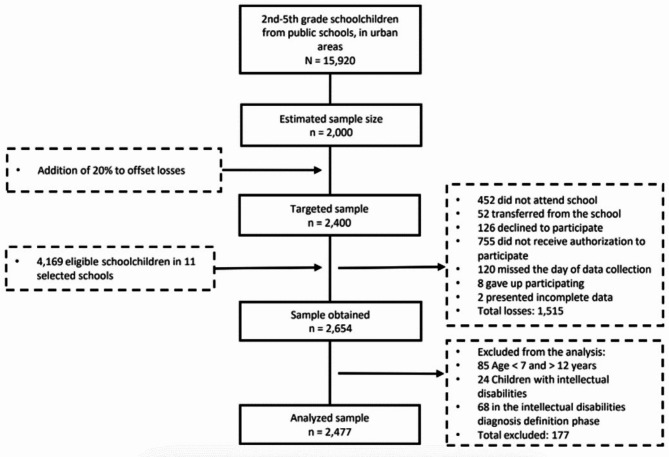
Methods: Students from 11 Brazilian public schools with part-time schedules participated in this cross-sectional study in 2019 (n = 2,477; 9.1 ± 1.38 years, 53.2% girls). Participants self-reported PA, SB, and weekly attendance PEC in an online questionnaire. Data on age and school shift were gathered from the Municipal Education Department. PA and SB patterns were identified through a two-step cluster analysis, stratified by sex. The associations between PA and SB patterns and age (7-9 years old; 10-12 years old), school shift (morning; afternoon), and weekly attendance PEC (0/week; 1/week; ≥2/week) were analyzed by Logistic Regression.
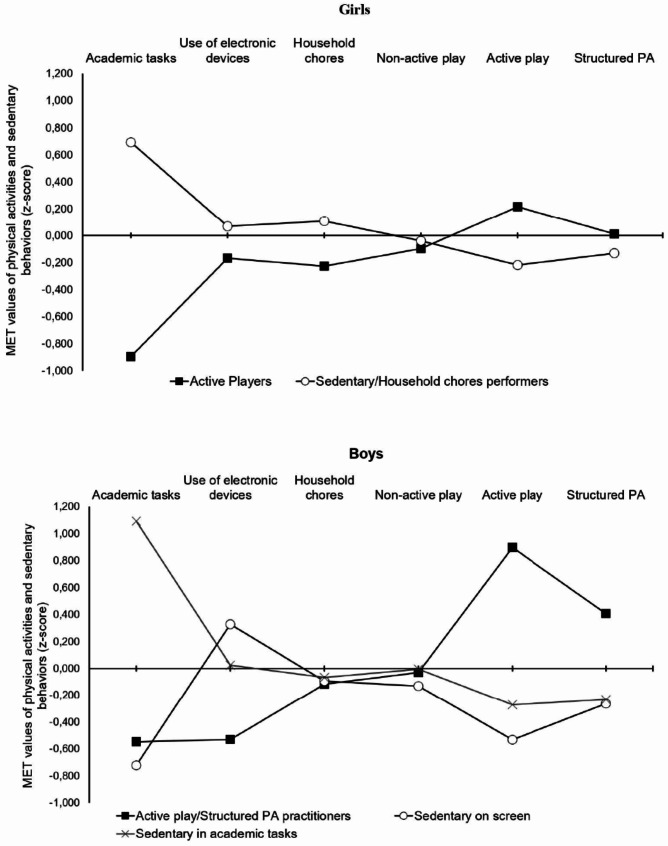
Results: Among girls, two distinct patterns emerged: "Active players" (n = 549, 44.1%) and "Sedentary/Household chores performers" (n = 697, 55.9%); and three patterns among boys: "Active play/Structured PA practitioners" (n = 322, 29.8%), "Sedentary on screen" (n = 369, 34.1%), and "Sedentary on academic tasks" (n = 390, 36.1%). Weekly attendance in PEC was associated with the composition of patterns for both girls and boys. Among boys, the 'Sedentary on screen' group was more likely to be in the 10-12 years age group.
Conclusions: Boys and girls exhibited different PA and SB patterns. Active play and household chores contributed to the cluster solution among girls, whereas sports contributed to the cluster solution among boys. Attending PEC increased the odds of participants belonging to clusters with higher PA and lower SB. Identifying patterns of PA and SB by type, along with their associated factors, could inform intervention studies and help shape actions at the school level to increase PA and reduce SB among schoolchildren.
期刊介绍:
BMC Pediatrics is an open access journal publishing peer-reviewed research articles in all aspects of health care in neonates, children and adolescents, as well as related molecular genetics, pathophysiology, and epidemiology.





 京公网安备 11010802042870号
京ICP备2023020795号-1
京公网安备 11010802042870号
京ICP备2023020795号-1

 分享
分享
 求助内容:
求助内容: 应助结果提醒方式:
 扫码关注我们
