Pegah Heidarian, Amir Jalali, Mohammadrasool Ghasemianrad, Romina Jalali, Ebrahim Ezzati
{"title":"全球皮肤病女性性功能障碍患病率:系统回顾和荟萃分析","authors":"Pegah Heidarian, Amir Jalali, Mohammadrasool Ghasemianrad, Romina Jalali, Ebrahim Ezzati","doi":"10.1186/s12905-025-03625-2","DOIUrl":null,"url":null,"abstract":"<p><strong>Background: </strong>Skin diseases are a category of chronic conditions that often impact patients' appearance, potentially leading to psychological issues, including sexual dysfunction. The present study is an attempt to determine the global prevalence of female sexual dysfunction (FSD) in women with skin diseases.</p><p><strong>Methods: </strong>For this systematic review and meta-analysis, databases including PubMed, Web of Science, Scopus, Science Direct, Embase, and Google Scholar were systematically searched for relevant studies. All published research up to April 2024 imported into EndNote for further analysis. A random-effects model was applied for the analysis, and the I² statistic was used to assess study heterogeneity.</p><p><strong>Results: </strong>Analysis of 24 studies (45 datasets) indicated that the overall prevalence of FSD in women with skin diseases was estimated at 61.3% (95% CI: 53.9-68.2%). Additionally, subgroup analysis based on skin disease type revealed an FSD prevalence of 69.8% (95% CI: 56.7-80.2%) in women with vitiligo, 59.2% (95% CI: 49.1-68.5%) in those with psoriasis, and 56.5% (95% CI: 47.8-64.8%) in women with hidradenitis suppurativa.</p><p><strong>Conclusion: </strong>There was a high prevalence of FSD in women with skin diseases. There is a need for policy makers and healthcare providers to prioritize the well-being of these patients.</p>","PeriodicalId":9204,"journal":{"name":"BMC Women's Health","volume":"25 1","pages":"101"},"PeriodicalIF":3.3000,"publicationDate":"2025-03-06","publicationTypes":"Journal Article","fieldsOfStudy":null,"isOpenAccess":false,"openAccessPdf":"https://www.ncbi.nlm.nih.gov/pmc/articles/PMC11883938/pdf/","citationCount":"0","resultStr":"{\"title\":\"Global prevalence of sexual dysfunction in women with skin diseases: a systematic review and meta-analysis.\",\"authors\":\"Pegah Heidarian, Amir Jalali, Mohammadrasool Ghasemianrad, Romina Jalali, Ebrahim Ezzati\",\"doi\":\"10.1186/s12905-025-03625-2\",\"DOIUrl\":null,\"url\":null,\"abstract\":\"<p><strong>Background: </strong>Skin diseases are a category of chronic conditions that often impact patients' appearance, potentially leading to psychological issues, including sexual dysfunction. The present study is an attempt to determine the global prevalence of female sexual dysfunction (FSD) in women with skin diseases.</p><p><strong>Methods: </strong>For this systematic review and meta-analysis, databases including PubMed, Web of Science, Scopus, Science Direct, Embase, and Google Scholar were systematically searched for relevant studies. All published research up to April 2024 imported into EndNote for further analysis. A random-effects model was applied for the analysis, and the I² statistic was used to assess study heterogeneity.</p><p><strong>Results: </strong>Analysis of 24 studies (45 datasets) indicated that the overall prevalence of FSD in women with skin diseases was estimated at 61.3% (95% CI: 53.9-68.2%). Additionally, subgroup analysis based on skin disease type revealed an FSD prevalence of 69.8% (95% CI: 56.7-80.2%) in women with vitiligo, 59.2% (95% CI: 49.1-68.5%) in those with psoriasis, and 56.5% (95% CI: 47.8-64.8%) in women with hidradenitis suppurativa.</p><p><strong>Conclusion: </strong>There was a high prevalence of FSD in women with skin diseases. There is a need for policy makers and healthcare providers to prioritize the well-being of these patients.</p>\",\"PeriodicalId\":9204,\"journal\":{\"name\":\"BMC Women's Health\",\"volume\":\"25 1\",\"pages\":\"101\"},\"PeriodicalIF\":3.3000,\"publicationDate\":\"2025-03-06\",\"publicationTypes\":\"Journal Article\",\"fieldsOfStudy\":null,\"isOpenAccess\":false,\"openAccessPdf\":\"https://www.ncbi.nlm.nih.gov/pmc/articles/PMC11883938/pdf/\",\"citationCount\":\"0\",\"resultStr\":null,\"platform\":\"Semanticscholar\",\"paperid\":null,\"PeriodicalName\":\"BMC Women's Health\",\"FirstCategoryId\":\"3\",\"ListUrlMain\":\"https://doi.org/10.1186/s12905-025-03625-2\",\"RegionNum\":3,\"RegionCategory\":\"医学\",\"ArticlePicture\":[],\"TitleCN\":null,\"AbstractTextCN\":null,\"PMCID\":null,\"EPubDate\":\"\",\"PubModel\":\"\",\"JCR\":\"Q2\",\"JCRName\":\"OBSTETRICS & GYNECOLOGY\",\"Score\":null,\"Total\":0}","platform":"Semanticscholar","paperid":null,"PeriodicalName":"BMC Women's Health","FirstCategoryId":"3","ListUrlMain":"https://doi.org/10.1186/s12905-025-03625-2","RegionNum":3,"RegionCategory":"医学","ArticlePicture":[],"TitleCN":null,"AbstractTextCN":null,"PMCID":null,"EPubDate":"","PubModel":"","JCR":"Q2","JCRName":"OBSTETRICS & GYNECOLOGY","Score":null,"Total":0}
Global prevalence of sexual dysfunction in women with skin diseases: a systematic review and meta-analysis.
Background: Skin diseases are a category of chronic conditions that often impact patients' appearance, potentially leading to psychological issues, including sexual dysfunction. The present study is an attempt to determine the global prevalence of female sexual dysfunction (FSD) in women with skin diseases.
Methods: For this systematic review and meta-analysis, databases including PubMed, Web of Science, Scopus, Science Direct, Embase, and Google Scholar were systematically searched for relevant studies. All published research up to April 2024 imported into EndNote for further analysis. A random-effects model was applied for the analysis, and the I² statistic was used to assess study heterogeneity.
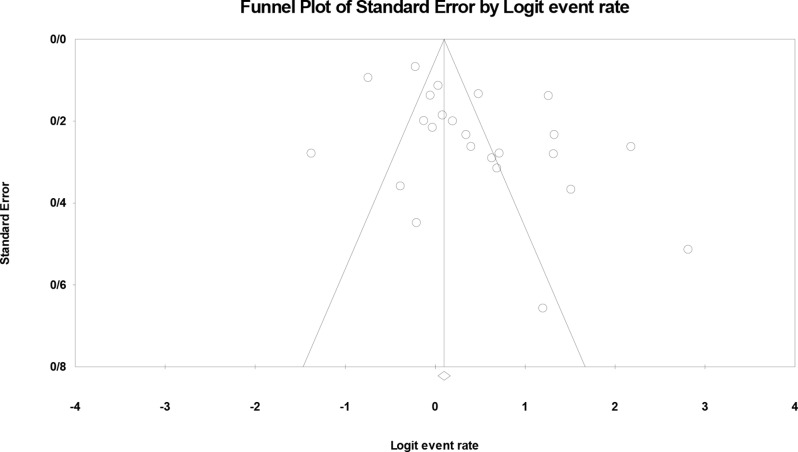
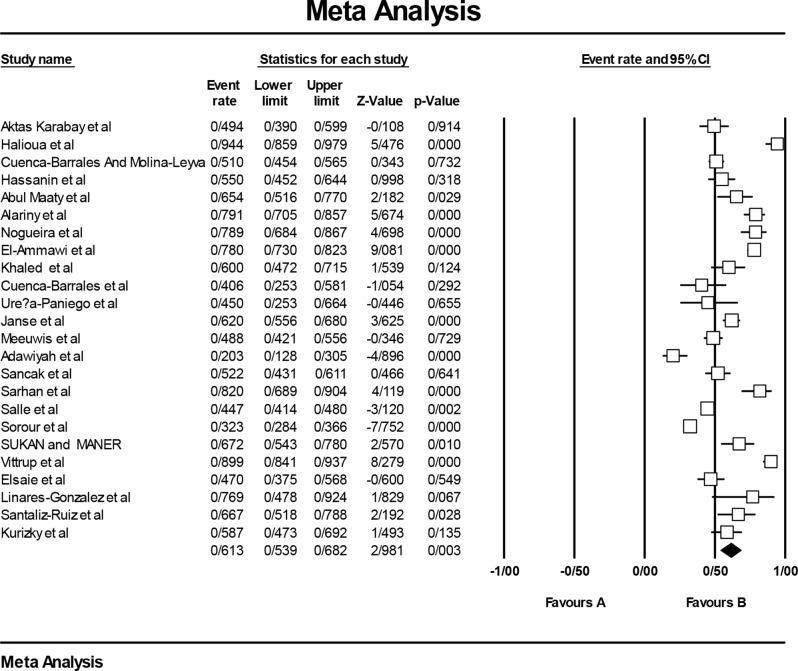
Results: Analysis of 24 studies (45 datasets) indicated that the overall prevalence of FSD in women with skin diseases was estimated at 61.3% (95% CI: 53.9-68.2%). Additionally, subgroup analysis based on skin disease type revealed an FSD prevalence of 69.8% (95% CI: 56.7-80.2%) in women with vitiligo, 59.2% (95% CI: 49.1-68.5%) in those with psoriasis, and 56.5% (95% CI: 47.8-64.8%) in women with hidradenitis suppurativa.
Conclusion: There was a high prevalence of FSD in women with skin diseases. There is a need for policy makers and healthcare providers to prioritize the well-being of these patients.
期刊介绍:
BMC Women''s Health is an open access, peer-reviewed journal that considers articles on all aspects of the health and wellbeing of adolescent girls and women, with a particular focus on the physical, mental, and emotional health of women in developed and developing nations. The journal welcomes submissions on women''s public health issues, health behaviours, breast cancer, gynecological diseases, mental health and health promotion.





 京公网安备 11010802042870号
京ICP备2023020795号-1
京公网安备 11010802042870号
京ICP备2023020795号-1

 分享
分享
 求助内容:
求助内容: 应助结果提醒方式:
 扫码关注我们
