{"title":"利益攸关方对在中学开展额外体育活动以改善青少年健康和学习成绩的障碍和促进因素的看法。","authors":"Susanne Andermo, Lisette Farias, Björg Helgadóttir, Örjan Ekblom, Gisela Nyberg","doi":"10.3389/fspor.2025.1524414","DOIUrl":null,"url":null,"abstract":"<p><strong>Introduction: </strong>There is an association between physical activity and both health and academic performance. However, there is still a lack of consensus on how to engage adolescents in physical activity interventions in secondary schools. One approach to better understand the activities and strategies supporting effective implementation is to involve school staff and adolescents in the early stages of planning and preparing for interventions. Therefore, the aim of this study is to explore how multiple stakeholders, including school staff, students, and experts, perceive the barriers and facilitators for implementing a school-based intervention that extends the school day with additional physical activity in Sweden.</p><p><strong>Material and methods: </strong>This inductive explorative qualitative study involved 16 participants. Three focus groups with school staff, including principals (<i>n</i> = 3), teachers (<i>n</i> = 6), and students (<i>n</i> = 4), and three interviews with experts were conducted. The planned intervention and its components were presented to the participants in the focus group and interviews to discuss them based on their previous experiences and thoughts of implementing physical activities or health promotion programmes in their schools or with adolescents. Data were analysed using qualitative content analysis.</p><p><strong>Results: </strong>Three categories emerged: (1) \"types of activities offered\", highlighting the importance of designing activities that are fun, inclusive and unusual; (2) \"integration of the activities into school curriculum\" to promote sustainability of the intervention and incorporate physical activity throughout the school day and across school subjects, and (3) \"Management support and funding\" referring to the funded time and facilities that teachers leading the activities need to facilitate implementation.</p><p><strong>Conclusions: </strong>Before implementing extra physical activity in a school setting, it is important to understand what activities enhance students' motivation and the type of support teachers need from the school principal and administration. This includes funding for teachers' time, appropriate scheduling of the activities, and access to facilities.</p>","PeriodicalId":12716,"journal":{"name":"Frontiers in Sports and Active Living","volume":"7 ","pages":"1524414"},"PeriodicalIF":3.0000,"publicationDate":"2025-02-20","publicationTypes":"Journal Article","fieldsOfStudy":null,"isOpenAccess":false,"openAccessPdf":"https://www.ncbi.nlm.nih.gov/pmc/articles/PMC11882863/pdf/","citationCount":"0","resultStr":"{\"title\":\"Stakeholders' perspectives on barriers and facilitators to implementing extra physical activity in secondary schools to improve adolescents' health and academic performance.\",\"authors\":\"Susanne Andermo, Lisette Farias, Björg Helgadóttir, Örjan Ekblom, Gisela Nyberg\",\"doi\":\"10.3389/fspor.2025.1524414\",\"DOIUrl\":null,\"url\":null,\"abstract\":\"<p><strong>Introduction: </strong>There is an association between physical activity and both health and academic performance. However, there is still a lack of consensus on how to engage adolescents in physical activity interventions in secondary schools. One approach to better understand the activities and strategies supporting effective implementation is to involve school staff and adolescents in the early stages of planning and preparing for interventions. Therefore, the aim of this study is to explore how multiple stakeholders, including school staff, students, and experts, perceive the barriers and facilitators for implementing a school-based intervention that extends the school day with additional physical activity in Sweden.</p><p><strong>Material and methods: </strong>This inductive explorative qualitative study involved 16 participants. Three focus groups with school staff, including principals (<i>n</i> = 3), teachers (<i>n</i> = 6), and students (<i>n</i> = 4), and three interviews with experts were conducted. The planned intervention and its components were presented to the participants in the focus group and interviews to discuss them based on their previous experiences and thoughts of implementing physical activities or health promotion programmes in their schools or with adolescents. Data were analysed using qualitative content analysis.</p><p><strong>Results: </strong>Three categories emerged: (1) \\\"types of activities offered\\\", highlighting the importance of designing activities that are fun, inclusive and unusual; (2) \\\"integration of the activities into school curriculum\\\" to promote sustainability of the intervention and incorporate physical activity throughout the school day and across school subjects, and (3) \\\"Management support and funding\\\" referring to the funded time and facilities that teachers leading the activities need to facilitate implementation.</p><p><strong>Conclusions: </strong>Before implementing extra physical activity in a school setting, it is important to understand what activities enhance students' motivation and the type of support teachers need from the school principal and administration. This includes funding for teachers' time, appropriate scheduling of the activities, and access to facilities.</p>\",\"PeriodicalId\":12716,\"journal\":{\"name\":\"Frontiers in Sports and Active Living\",\"volume\":\"7 \",\"pages\":\"1524414\"},\"PeriodicalIF\":3.0000,\"publicationDate\":\"2025-02-20\",\"publicationTypes\":\"Journal Article\",\"fieldsOfStudy\":null,\"isOpenAccess\":false,\"openAccessPdf\":\"https://www.ncbi.nlm.nih.gov/pmc/articles/PMC11882863/pdf/\",\"citationCount\":\"0\",\"resultStr\":null,\"platform\":\"Semanticscholar\",\"paperid\":null,\"PeriodicalName\":\"Frontiers in Sports and Active Living\",\"FirstCategoryId\":\"1085\",\"ListUrlMain\":\"https://doi.org/10.3389/fspor.2025.1524414\",\"RegionNum\":0,\"RegionCategory\":null,\"ArticlePicture\":[],\"TitleCN\":null,\"AbstractTextCN\":null,\"PMCID\":null,\"EPubDate\":\"2025/1/1 0:00:00\",\"PubModel\":\"eCollection\",\"JCR\":\"Q2\",\"JCRName\":\"SPORT SCIENCES\",\"Score\":null,\"Total\":0}","platform":"Semanticscholar","paperid":null,"PeriodicalName":"Frontiers in Sports and Active Living","FirstCategoryId":"1085","ListUrlMain":"https://doi.org/10.3389/fspor.2025.1524414","RegionNum":0,"RegionCategory":null,"ArticlePicture":[],"TitleCN":null,"AbstractTextCN":null,"PMCID":null,"EPubDate":"2025/1/1 0:00:00","PubModel":"eCollection","JCR":"Q2","JCRName":"SPORT SCIENCES","Score":null,"Total":0}
Stakeholders' perspectives on barriers and facilitators to implementing extra physical activity in secondary schools to improve adolescents' health and academic performance.
Introduction: There is an association between physical activity and both health and academic performance. However, there is still a lack of consensus on how to engage adolescents in physical activity interventions in secondary schools. One approach to better understand the activities and strategies supporting effective implementation is to involve school staff and adolescents in the early stages of planning and preparing for interventions. Therefore, the aim of this study is to explore how multiple stakeholders, including school staff, students, and experts, perceive the barriers and facilitators for implementing a school-based intervention that extends the school day with additional physical activity in Sweden.
Material and methods: This inductive explorative qualitative study involved 16 participants. Three focus groups with school staff, including principals (n = 3), teachers (n = 6), and students (n = 4), and three interviews with experts were conducted. The planned intervention and its components were presented to the participants in the focus group and interviews to discuss them based on their previous experiences and thoughts of implementing physical activities or health promotion programmes in their schools or with adolescents. Data were analysed using qualitative content analysis.
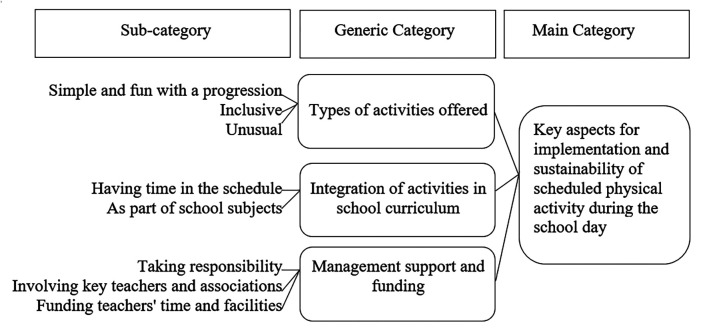
Results: Three categories emerged: (1) "types of activities offered", highlighting the importance of designing activities that are fun, inclusive and unusual; (2) "integration of the activities into school curriculum" to promote sustainability of the intervention and incorporate physical activity throughout the school day and across school subjects, and (3) "Management support and funding" referring to the funded time and facilities that teachers leading the activities need to facilitate implementation.
Conclusions: Before implementing extra physical activity in a school setting, it is important to understand what activities enhance students' motivation and the type of support teachers need from the school principal and administration. This includes funding for teachers' time, appropriate scheduling of the activities, and access to facilities.





 京公网安备 11010802042870号
京ICP备2023020795号-1
京公网安备 11010802042870号
京ICP备2023020795号-1

 分享
分享
 求助内容:
求助内容: 应助结果提醒方式:
 扫码关注我们
