Hendrik Dapper, Claudia Rudroff, Philipp Linde, Johannes Rosenbrock, Joel Schmitz, Simone Ferdinandus, Karolina Jablonska, Daniel Martin, Claus Rödel, Emmanouil Fokas
{"title":"放射治疗肛门高级鳞状上皮内病变-德语国家的护理模式分析。","authors":"Hendrik Dapper, Claudia Rudroff, Philipp Linde, Johannes Rosenbrock, Joel Schmitz, Simone Ferdinandus, Karolina Jablonska, Daniel Martin, Claus Rödel, Emmanouil Fokas","doi":"10.1007/s00066-025-02380-5","DOIUrl":null,"url":null,"abstract":"<p><strong>Background: </strong>High-grade squamous intraepithelial lesions (HSIL) of the anal region are recognized as precursor lesions to squamous cell carcinoma of the anus (SCCA), especially in individuals infected with the human papillomavirus (HPV). Although recent studies indicate that treating HSIL can reduce progression to SCCA, optimal management strategies remain undefined. High recurrence rates and treatment-associated morbidities underscore the need for effective therapeutic options.</p><p><strong>Methods: </strong>A survey among radiation oncologists in Germany was conducted between September and October 2024, covering clinical practice settings, the frequency of HSIL cases, experience with radiotherapy, reasons for radiotherapy inquiries, treatment indications, and concurrent therapies.</p><p><strong>Results: </strong>A total of 58 radiation oncologists participated in the survey, with 37 (63.8%) reporting inquiries about radiotherapy for HSIL, primarily for patients with multiple recurrences. Radiotherapy was generally considered an appropriate option, particularly for recurrent cases where other treatments posed risks, especially complications or worsening of anorectal function after local excision. However, only half of the respondents (29) had prior experience with treating anal HSIL and rated radiotherapy outcomes as good or very good. Most respondents indicated a preference for treating only the local area (i.e., excluding lymphatic drainage pathways) to a total dose of 40-50 Gy.</p><p><strong>Conclusion: </strong>Recurrent anal HSIL presents a major challenge for patients, with no established effective treatment standards available. Radiotherapy is frequently requested and administered, showing promising preliminary outcomes. Clinical studies are warranted to evaluate the effectiveness and tolerability of radiotherapy in patients with anal HSIL.</p>","PeriodicalId":21998,"journal":{"name":"Strahlentherapie und Onkologie","volume":" ","pages":"699-705"},"PeriodicalIF":2.5000,"publicationDate":"2025-07-01","publicationTypes":"Journal Article","fieldsOfStudy":null,"isOpenAccess":false,"openAccessPdf":"https://www.ncbi.nlm.nih.gov/pmc/articles/PMC12181207/pdf/","citationCount":"0","resultStr":"{\"title\":\"Radiation therapy in anal high-grade squamous intraepithelial lesions-a pattern of care analysis in German-speaking countries.\",\"authors\":\"Hendrik Dapper, Claudia Rudroff, Philipp Linde, Johannes Rosenbrock, Joel Schmitz, Simone Ferdinandus, Karolina Jablonska, Daniel Martin, Claus Rödel, Emmanouil Fokas\",\"doi\":\"10.1007/s00066-025-02380-5\",\"DOIUrl\":null,\"url\":null,\"abstract\":\"<p><strong>Background: </strong>High-grade squamous intraepithelial lesions (HSIL) of the anal region are recognized as precursor lesions to squamous cell carcinoma of the anus (SCCA), especially in individuals infected with the human papillomavirus (HPV). Although recent studies indicate that treating HSIL can reduce progression to SCCA, optimal management strategies remain undefined. High recurrence rates and treatment-associated morbidities underscore the need for effective therapeutic options.</p><p><strong>Methods: </strong>A survey among radiation oncologists in Germany was conducted between September and October 2024, covering clinical practice settings, the frequency of HSIL cases, experience with radiotherapy, reasons for radiotherapy inquiries, treatment indications, and concurrent therapies.</p><p><strong>Results: </strong>A total of 58 radiation oncologists participated in the survey, with 37 (63.8%) reporting inquiries about radiotherapy for HSIL, primarily for patients with multiple recurrences. Radiotherapy was generally considered an appropriate option, particularly for recurrent cases where other treatments posed risks, especially complications or worsening of anorectal function after local excision. However, only half of the respondents (29) had prior experience with treating anal HSIL and rated radiotherapy outcomes as good or very good. Most respondents indicated a preference for treating only the local area (i.e., excluding lymphatic drainage pathways) to a total dose of 40-50 Gy.</p><p><strong>Conclusion: </strong>Recurrent anal HSIL presents a major challenge for patients, with no established effective treatment standards available. Radiotherapy is frequently requested and administered, showing promising preliminary outcomes. Clinical studies are warranted to evaluate the effectiveness and tolerability of radiotherapy in patients with anal HSIL.</p>\",\"PeriodicalId\":21998,\"journal\":{\"name\":\"Strahlentherapie und Onkologie\",\"volume\":\" \",\"pages\":\"699-705\"},\"PeriodicalIF\":2.5000,\"publicationDate\":\"2025-07-01\",\"publicationTypes\":\"Journal Article\",\"fieldsOfStudy\":null,\"isOpenAccess\":false,\"openAccessPdf\":\"https://www.ncbi.nlm.nih.gov/pmc/articles/PMC12181207/pdf/\",\"citationCount\":\"0\",\"resultStr\":null,\"platform\":\"Semanticscholar\",\"paperid\":null,\"PeriodicalName\":\"Strahlentherapie und Onkologie\",\"FirstCategoryId\":\"3\",\"ListUrlMain\":\"https://doi.org/10.1007/s00066-025-02380-5\",\"RegionNum\":3,\"RegionCategory\":\"医学\",\"ArticlePicture\":[],\"TitleCN\":null,\"AbstractTextCN\":null,\"PMCID\":null,\"EPubDate\":\"2025/3/7 0:00:00\",\"PubModel\":\"Epub\",\"JCR\":\"Q3\",\"JCRName\":\"ONCOLOGY\",\"Score\":null,\"Total\":0}","platform":"Semanticscholar","paperid":null,"PeriodicalName":"Strahlentherapie und Onkologie","FirstCategoryId":"3","ListUrlMain":"https://doi.org/10.1007/s00066-025-02380-5","RegionNum":3,"RegionCategory":"医学","ArticlePicture":[],"TitleCN":null,"AbstractTextCN":null,"PMCID":null,"EPubDate":"2025/3/7 0:00:00","PubModel":"Epub","JCR":"Q3","JCRName":"ONCOLOGY","Score":null,"Total":0}
Radiation therapy in anal high-grade squamous intraepithelial lesions-a pattern of care analysis in German-speaking countries.
Background: High-grade squamous intraepithelial lesions (HSIL) of the anal region are recognized as precursor lesions to squamous cell carcinoma of the anus (SCCA), especially in individuals infected with the human papillomavirus (HPV). Although recent studies indicate that treating HSIL can reduce progression to SCCA, optimal management strategies remain undefined. High recurrence rates and treatment-associated morbidities underscore the need for effective therapeutic options.
Methods: A survey among radiation oncologists in Germany was conducted between September and October 2024, covering clinical practice settings, the frequency of HSIL cases, experience with radiotherapy, reasons for radiotherapy inquiries, treatment indications, and concurrent therapies.
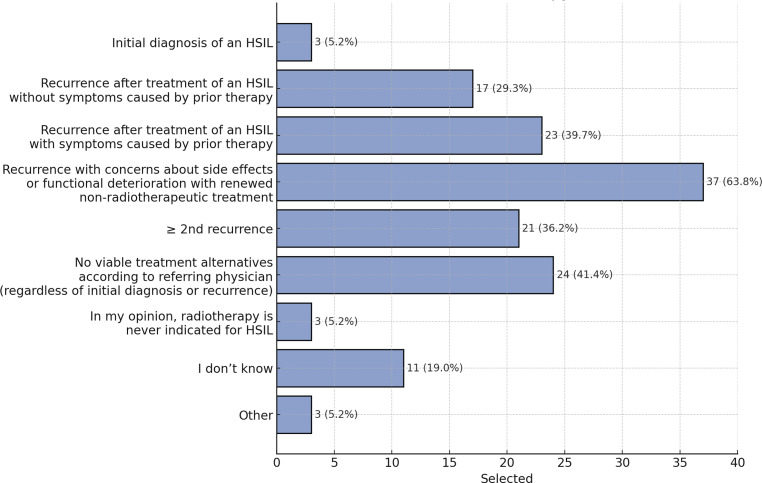
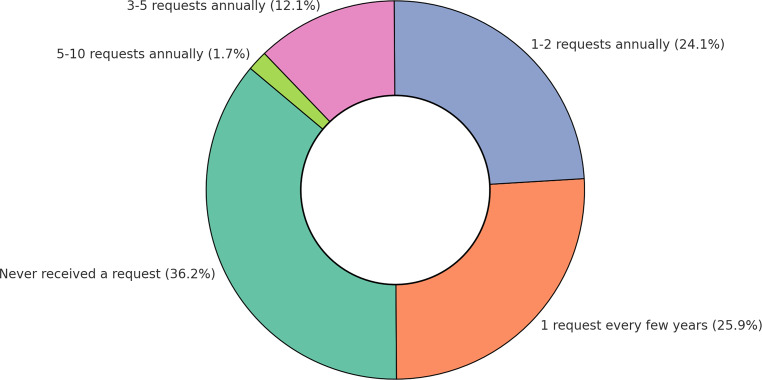
Results: A total of 58 radiation oncologists participated in the survey, with 37 (63.8%) reporting inquiries about radiotherapy for HSIL, primarily for patients with multiple recurrences. Radiotherapy was generally considered an appropriate option, particularly for recurrent cases where other treatments posed risks, especially complications or worsening of anorectal function after local excision. However, only half of the respondents (29) had prior experience with treating anal HSIL and rated radiotherapy outcomes as good or very good. Most respondents indicated a preference for treating only the local area (i.e., excluding lymphatic drainage pathways) to a total dose of 40-50 Gy.
Conclusion: Recurrent anal HSIL presents a major challenge for patients, with no established effective treatment standards available. Radiotherapy is frequently requested and administered, showing promising preliminary outcomes. Clinical studies are warranted to evaluate the effectiveness and tolerability of radiotherapy in patients with anal HSIL.
期刊介绍:
Strahlentherapie und Onkologie, published monthly, is a scientific journal that covers all aspects of oncology with focus on radiooncology, radiation biology and radiation physics. The articles are not only of interest to radiooncologists but to all physicians interested in oncology, to radiation biologists and radiation physicists. The journal publishes original articles, review articles and case studies that are peer-reviewed. It includes scientific short communications as well as a literature review with annotated articles that inform the reader on new developments in the various disciplines concerned and hence allow for a sound overview on the latest results in radiooncology research.
Founded in 1912, Strahlentherapie und Onkologie is the oldest oncological journal in the world. Today, contributions are published in English and German. All articles have English summaries and legends. The journal is the official publication of several scientific radiooncological societies and publishes the relevant communications of these societies.




 京公网安备 11010802042870号
京ICP备2023020795号-1
京公网安备 11010802042870号
京ICP备2023020795号-1

 分享
分享
 求助内容:
求助内容: 应助结果提醒方式:
 扫码关注我们
