Ashlyn Beecroft, Olivia Vaikla, Nora Engel, Thomas Duchaine, Chen Liang, Nitika Pant Pai
{"title":"数字艾滋病毒自我检测的证据从准确性到影响:更新的系统评价。","authors":"Ashlyn Beecroft, Olivia Vaikla, Nora Engel, Thomas Duchaine, Chen Liang, Nitika Pant Pai","doi":"10.2196/63110","DOIUrl":null,"url":null,"abstract":"<p><strong>Background: </strong>HIV self-testing has gained momentum following the approval of self-testing methods and novel technological advancements. Digital HIV self-testing involves completing an oral or blood-based HIV self-test with support from a digital innovation.</p><p><strong>Objective: </strong>We conducted a systematic review on the existing data analyzing digital HIV self-testing accuracy while updating research on digital HIV self-test acceptability, preference, feasibility, and impact.</p><p><strong>Methods: </strong>We searched Embase and PubMed for records on HIV self-testing with digital support. Included studies significantly incorporated a form of digital innovation throughout the HIV self-test process and reported quantitative data. For accuracy measures, the search spanned January 1, 2013, to October 15, 2024; for patient-centered and impact outcomes, we updated existing literature (June 16, 2021, to October 15, 2024) reported in a previous systematic review. Studies' quality was assessed using the QUADAS 2 Tool, Newcastle-Ottawa Scale, and Cochrane Risk of Bias Tool 2.</p><p><strong>Results: </strong>Fifty-five studies (samples ranging 120-21,035, median 1267 participants) were summarized from 19 middle- to high-income countries. Seven studies reported on the accuracy of HIV self-testing with innovations from >5000 participants. Diagnostic performance metrics, including point estimates of specificity, sensitivity, positive predictive value, and negative predictive value were measured (n=3), and ranged from: 96.8% to 99.9%, 92.9% to 100.0%, 76.5% to 99.2%, and 99.2% to 100.0%, respectively. The percentage of invalid test results for oral and blood-based self-tests ranged from 0.2% to 12.7% (n=4). Fifty-one studies reported data on metrics beyond accuracy, including acceptability, preference, feasibility, and impact outcomes from >30,000 participants. Majority (38/51, 74.5%) were observational studies, while 25.5% (13/51) reported data from randomized controlled trials. Acceptability and preference outcomes varied from 64.5% to 99.0% (14/51) and 4.6% to 99.3% (8/51), respectively. Feasibility outcomes included test uptake (30.9% to 98.2%; 28/51), response rate (26.0% to 94.8%; 7/51), and visits to web-based providers (43.0% to 70.7%; n=4). Impact outcomes assessed new infections (0.0% to 25.8%; 31/51), first-time testers (2.0% to 53.0%; 26/51), result return proportions (22.1% to 100.0%; 24/51), linkage to care as both connections to confirmatory testing and counseling (53.0% to 100.0%; 16/51), and referrals for treatment initiation (44.4% to 98.1%; 8/51). The quality of studies varied, though they generally demonstrated low risk of bias.</p><p><strong>Conclusions: </strong>Digital innovations improved the accuracy of HIV self-test results, and were well-accepted and preferred by participants. Operationally, they were found to be feasible and reported impacting the HIV self-testing process. These findings are in favor of the use of digital HIV self-test innovations as a promising support tool and suggest that digital HIV self-tests' service delivery models hold promise in not only facilitating HIV testing but also impacting operational outcomes that are crucial to reaching Joint United Nations Program on HIV/AIDS targets in middle- to high-income countries.</p><p><strong>Trial registration: </strong>PROSPERO CRD42020205025; https://www.crd.york.ac.uk/prospero/CRD42020205025.</p>","PeriodicalId":16337,"journal":{"name":"Journal of Medical Internet Research","volume":"27 ","pages":"e63110"},"PeriodicalIF":8.2000,"publicationDate":"2025-03-04","publicationTypes":"Journal Article","fieldsOfStudy":null,"isOpenAccess":false,"openAccessPdf":"https://www.ncbi.nlm.nih.gov/pmc/articles/PMC11920657/pdf/","citationCount":"0","resultStr":"{\"title\":\"Evidence on Digital HIV Self-Testing From Accuracy to Impact: Updated Systematic Review.\",\"authors\":\"Ashlyn Beecroft, Olivia Vaikla, Nora Engel, Thomas Duchaine, Chen Liang, Nitika Pant Pai\",\"doi\":\"10.2196/63110\",\"DOIUrl\":null,\"url\":null,\"abstract\":\"<p><strong>Background: </strong>HIV self-testing has gained momentum following the approval of self-testing methods and novel technological advancements. Digital HIV self-testing involves completing an oral or blood-based HIV self-test with support from a digital innovation.</p><p><strong>Objective: </strong>We conducted a systematic review on the existing data analyzing digital HIV self-testing accuracy while updating research on digital HIV self-test acceptability, preference, feasibility, and impact.</p><p><strong>Methods: </strong>We searched Embase and PubMed for records on HIV self-testing with digital support. Included studies significantly incorporated a form of digital innovation throughout the HIV self-test process and reported quantitative data. For accuracy measures, the search spanned January 1, 2013, to October 15, 2024; for patient-centered and impact outcomes, we updated existing literature (June 16, 2021, to October 15, 2024) reported in a previous systematic review. Studies' quality was assessed using the QUADAS 2 Tool, Newcastle-Ottawa Scale, and Cochrane Risk of Bias Tool 2.</p><p><strong>Results: </strong>Fifty-five studies (samples ranging 120-21,035, median 1267 participants) were summarized from 19 middle- to high-income countries. Seven studies reported on the accuracy of HIV self-testing with innovations from >5000 participants. Diagnostic performance metrics, including point estimates of specificity, sensitivity, positive predictive value, and negative predictive value were measured (n=3), and ranged from: 96.8% to 99.9%, 92.9% to 100.0%, 76.5% to 99.2%, and 99.2% to 100.0%, respectively. The percentage of invalid test results for oral and blood-based self-tests ranged from 0.2% to 12.7% (n=4). Fifty-one studies reported data on metrics beyond accuracy, including acceptability, preference, feasibility, and impact outcomes from >30,000 participants. Majority (38/51, 74.5%) were observational studies, while 25.5% (13/51) reported data from randomized controlled trials. Acceptability and preference outcomes varied from 64.5% to 99.0% (14/51) and 4.6% to 99.3% (8/51), respectively. Feasibility outcomes included test uptake (30.9% to 98.2%; 28/51), response rate (26.0% to 94.8%; 7/51), and visits to web-based providers (43.0% to 70.7%; n=4). Impact outcomes assessed new infections (0.0% to 25.8%; 31/51), first-time testers (2.0% to 53.0%; 26/51), result return proportions (22.1% to 100.0%; 24/51), linkage to care as both connections to confirmatory testing and counseling (53.0% to 100.0%; 16/51), and referrals for treatment initiation (44.4% to 98.1%; 8/51). The quality of studies varied, though they generally demonstrated low risk of bias.</p><p><strong>Conclusions: </strong>Digital innovations improved the accuracy of HIV self-test results, and were well-accepted and preferred by participants. Operationally, they were found to be feasible and reported impacting the HIV self-testing process. These findings are in favor of the use of digital HIV self-test innovations as a promising support tool and suggest that digital HIV self-tests' service delivery models hold promise in not only facilitating HIV testing but also impacting operational outcomes that are crucial to reaching Joint United Nations Program on HIV/AIDS targets in middle- to high-income countries.</p><p><strong>Trial registration: </strong>PROSPERO CRD42020205025; https://www.crd.york.ac.uk/prospero/CRD42020205025.</p>\",\"PeriodicalId\":16337,\"journal\":{\"name\":\"Journal of Medical Internet Research\",\"volume\":\"27 \",\"pages\":\"e63110\"},\"PeriodicalIF\":8.2000,\"publicationDate\":\"2025-03-04\",\"publicationTypes\":\"Journal Article\",\"fieldsOfStudy\":null,\"isOpenAccess\":false,\"openAccessPdf\":\"https://www.ncbi.nlm.nih.gov/pmc/articles/PMC11920657/pdf/\",\"citationCount\":\"0\",\"resultStr\":null,\"platform\":\"Semanticscholar\",\"paperid\":null,\"PeriodicalName\":\"Journal of Medical Internet Research\",\"FirstCategoryId\":\"3\",\"ListUrlMain\":\"https://doi.org/10.2196/63110\",\"RegionNum\":2,\"RegionCategory\":\"医学\",\"ArticlePicture\":[],\"TitleCN\":null,\"AbstractTextCN\":null,\"PMCID\":null,\"EPubDate\":\"\",\"PubModel\":\"\",\"JCR\":\"Q1\",\"JCRName\":\"HEALTH CARE SCIENCES & SERVICES\",\"Score\":null,\"Total\":0}","platform":"Semanticscholar","paperid":null,"PeriodicalName":"Journal of Medical Internet Research","FirstCategoryId":"3","ListUrlMain":"https://doi.org/10.2196/63110","RegionNum":2,"RegionCategory":"医学","ArticlePicture":[],"TitleCN":null,"AbstractTextCN":null,"PMCID":null,"EPubDate":"","PubModel":"","JCR":"Q1","JCRName":"HEALTH CARE SCIENCES & SERVICES","Score":null,"Total":0}
Evidence on Digital HIV Self-Testing From Accuracy to Impact: Updated Systematic Review.
Background: HIV self-testing has gained momentum following the approval of self-testing methods and novel technological advancements. Digital HIV self-testing involves completing an oral or blood-based HIV self-test with support from a digital innovation.
Objective: We conducted a systematic review on the existing data analyzing digital HIV self-testing accuracy while updating research on digital HIV self-test acceptability, preference, feasibility, and impact.
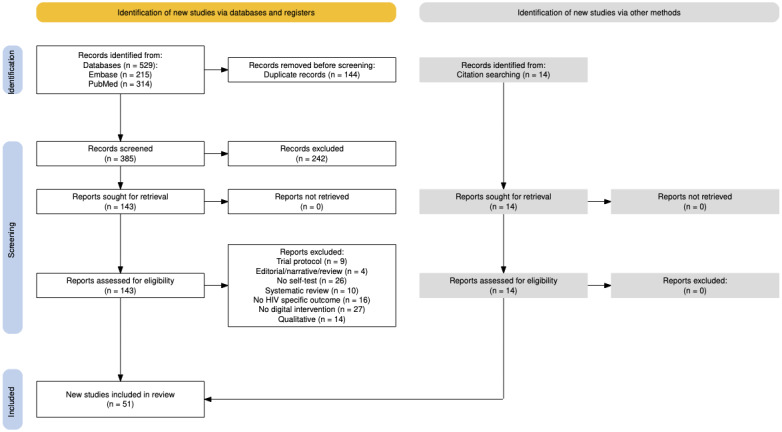
Methods: We searched Embase and PubMed for records on HIV self-testing with digital support. Included studies significantly incorporated a form of digital innovation throughout the HIV self-test process and reported quantitative data. For accuracy measures, the search spanned January 1, 2013, to October 15, 2024; for patient-centered and impact outcomes, we updated existing literature (June 16, 2021, to October 15, 2024) reported in a previous systematic review. Studies' quality was assessed using the QUADAS 2 Tool, Newcastle-Ottawa Scale, and Cochrane Risk of Bias Tool 2.
Results: Fifty-five studies (samples ranging 120-21,035, median 1267 participants) were summarized from 19 middle- to high-income countries. Seven studies reported on the accuracy of HIV self-testing with innovations from >5000 participants. Diagnostic performance metrics, including point estimates of specificity, sensitivity, positive predictive value, and negative predictive value were measured (n=3), and ranged from: 96.8% to 99.9%, 92.9% to 100.0%, 76.5% to 99.2%, and 99.2% to 100.0%, respectively. The percentage of invalid test results for oral and blood-based self-tests ranged from 0.2% to 12.7% (n=4). Fifty-one studies reported data on metrics beyond accuracy, including acceptability, preference, feasibility, and impact outcomes from >30,000 participants. Majority (38/51, 74.5%) were observational studies, while 25.5% (13/51) reported data from randomized controlled trials. Acceptability and preference outcomes varied from 64.5% to 99.0% (14/51) and 4.6% to 99.3% (8/51), respectively. Feasibility outcomes included test uptake (30.9% to 98.2%; 28/51), response rate (26.0% to 94.8%; 7/51), and visits to web-based providers (43.0% to 70.7%; n=4). Impact outcomes assessed new infections (0.0% to 25.8%; 31/51), first-time testers (2.0% to 53.0%; 26/51), result return proportions (22.1% to 100.0%; 24/51), linkage to care as both connections to confirmatory testing and counseling (53.0% to 100.0%; 16/51), and referrals for treatment initiation (44.4% to 98.1%; 8/51). The quality of studies varied, though they generally demonstrated low risk of bias.
Conclusions: Digital innovations improved the accuracy of HIV self-test results, and were well-accepted and preferred by participants. Operationally, they were found to be feasible and reported impacting the HIV self-testing process. These findings are in favor of the use of digital HIV self-test innovations as a promising support tool and suggest that digital HIV self-tests' service delivery models hold promise in not only facilitating HIV testing but also impacting operational outcomes that are crucial to reaching Joint United Nations Program on HIV/AIDS targets in middle- to high-income countries.
期刊介绍:
The Journal of Medical Internet Research (JMIR) is a highly respected publication in the field of health informatics and health services. With a founding date in 1999, JMIR has been a pioneer in the field for over two decades.
As a leader in the industry, the journal focuses on digital health, data science, health informatics, and emerging technologies for health, medicine, and biomedical research. It is recognized as a top publication in these disciplines, ranking in the first quartile (Q1) by Impact Factor.
Notably, JMIR holds the prestigious position of being ranked #1 on Google Scholar within the "Medical Informatics" discipline.





 京公网安备 11010802042870号
京ICP备2023020795号-1
京公网安备 11010802042870号
京ICP备2023020795号-1

 分享
分享
 求助内容:
求助内容: 应助结果提醒方式:
 扫码关注我们
