Melissa J DuPont-Reyes, Alice P Villatoro, Lu Tang
{"title":"拉丁裔青少年在不同语言、文化和技术媒介中的健康信息扫描和寻找:横断面研究。","authors":"Melissa J DuPont-Reyes, Alice P Villatoro, Lu Tang","doi":"10.2196/64672","DOIUrl":null,"url":null,"abstract":"<p><strong>Background: </strong>Continuous scientific and policy debate regarding the potential harm and/or benefit of media and social media on adolescent health has resulted, in part, from a deficiency in robust scientific evidence. Even with a lack of scientific consensus, public attitudes, and sweeping social media prohibitions have swiftly ensued. A focus on the diversity of adolescents around the world and their diverse use of language, culture, and social media is absent from these discussions.</p><p><strong>Objective: </strong>This study aims to guide communication policy and practice, including those addressing access to social media by adolescent populations. This study assesses physical and mental health information scanning and seeking behaviors across diverse language, cultural, and technological media and social media among Latinx adolescent residents in the United States. This study also explores how Latinx adolescents with mental health concerns use media and social media for support.</p><p><strong>Methods: </strong>In 2021, a cross-sectional survey was conducted among 701 US-based Latinx adolescents aged 13-20 years to assess their health-related media use. Assessments ascertained the frequency of media use and mental and physical health information scanning and seeking across various media technologies (eg, TV, podcasts, and social media) and language and cultural types (ie, Spanish, Latinx-tailored English, and general English). Linear regression models were used to estimate adjusted predicted means of mental and physical health information scanning and seeking across diverse language and cultural media types, net personal and family factors, in the full sample and by subsamples of mental health symptoms (moderate-high vs none-mild).</p><p><strong>Results: </strong>Among Latinx adolescents, media and social media use was similar across mental health symptoms. However, Latinx adolescents with moderate-high versus none-mild symptoms more often scanned general English media and social media for mental health information (P<.05), although not for physical health information. Also, Latinx adolescents with moderate-high versus none-mild symptoms more often sought mental health information on Latinx-tailored and general English media, and social media (P<.05); a similar pattern was found for physical health information seeking. In addition, Latinx adolescents with moderate-high versus none-mild symptoms often sought help from family and friends for mental and physical health problems and health care providers for mental health only (P<.05).</p><p><strong>Conclusions: </strong>While media and social media usage was similar across mental health, Latinx adolescents with moderate-high symptoms more often encountered mental health content in general English media and social media and turned to general English- and Latinx-tailored media and social media more often for their health concerns. Together these study findings suggest more prevalent and available mental health content in general English versus Spanish language and Latinx-tailored media and underscore the importance of providing accessible, quality health information across diverse language, cultural, and technological media and social networks as a viable opportunity to help improve adolescent health.</p>","PeriodicalId":16337,"journal":{"name":"Journal of Medical Internet Research","volume":"27 ","pages":"e64672"},"PeriodicalIF":8.2000,"publicationDate":"2025-03-05","publicationTypes":"Journal Article","fieldsOfStudy":null,"isOpenAccess":false,"openAccessPdf":"https://www.ncbi.nlm.nih.gov/pmc/articles/PMC11923458/pdf/","citationCount":"0","resultStr":"{\"title\":\"Health Information Scanning and Seeking in Diverse Language, Cultural and Technological Media Among Latinx Adolescents: Cross-Sectional Study.\",\"authors\":\"Melissa J DuPont-Reyes, Alice P Villatoro, Lu Tang\",\"doi\":\"10.2196/64672\",\"DOIUrl\":null,\"url\":null,\"abstract\":\"<p><strong>Background: </strong>Continuous scientific and policy debate regarding the potential harm and/or benefit of media and social media on adolescent health has resulted, in part, from a deficiency in robust scientific evidence. Even with a lack of scientific consensus, public attitudes, and sweeping social media prohibitions have swiftly ensued. A focus on the diversity of adolescents around the world and their diverse use of language, culture, and social media is absent from these discussions.</p><p><strong>Objective: </strong>This study aims to guide communication policy and practice, including those addressing access to social media by adolescent populations. This study assesses physical and mental health information scanning and seeking behaviors across diverse language, cultural, and technological media and social media among Latinx adolescent residents in the United States. This study also explores how Latinx adolescents with mental health concerns use media and social media for support.</p><p><strong>Methods: </strong>In 2021, a cross-sectional survey was conducted among 701 US-based Latinx adolescents aged 13-20 years to assess their health-related media use. Assessments ascertained the frequency of media use and mental and physical health information scanning and seeking across various media technologies (eg, TV, podcasts, and social media) and language and cultural types (ie, Spanish, Latinx-tailored English, and general English). Linear regression models were used to estimate adjusted predicted means of mental and physical health information scanning and seeking across diverse language and cultural media types, net personal and family factors, in the full sample and by subsamples of mental health symptoms (moderate-high vs none-mild).</p><p><strong>Results: </strong>Among Latinx adolescents, media and social media use was similar across mental health symptoms. However, Latinx adolescents with moderate-high versus none-mild symptoms more often scanned general English media and social media for mental health information (P<.05), although not for physical health information. Also, Latinx adolescents with moderate-high versus none-mild symptoms more often sought mental health information on Latinx-tailored and general English media, and social media (P<.05); a similar pattern was found for physical health information seeking. In addition, Latinx adolescents with moderate-high versus none-mild symptoms often sought help from family and friends for mental and physical health problems and health care providers for mental health only (P<.05).</p><p><strong>Conclusions: </strong>While media and social media usage was similar across mental health, Latinx adolescents with moderate-high symptoms more often encountered mental health content in general English media and social media and turned to general English- and Latinx-tailored media and social media more often for their health concerns. Together these study findings suggest more prevalent and available mental health content in general English versus Spanish language and Latinx-tailored media and underscore the importance of providing accessible, quality health information across diverse language, cultural, and technological media and social networks as a viable opportunity to help improve adolescent health.</p>\",\"PeriodicalId\":16337,\"journal\":{\"name\":\"Journal of Medical Internet Research\",\"volume\":\"27 \",\"pages\":\"e64672\"},\"PeriodicalIF\":8.2000,\"publicationDate\":\"2025-03-05\",\"publicationTypes\":\"Journal Article\",\"fieldsOfStudy\":null,\"isOpenAccess\":false,\"openAccessPdf\":\"https://www.ncbi.nlm.nih.gov/pmc/articles/PMC11923458/pdf/\",\"citationCount\":\"0\",\"resultStr\":null,\"platform\":\"Semanticscholar\",\"paperid\":null,\"PeriodicalName\":\"Journal of Medical Internet Research\",\"FirstCategoryId\":\"3\",\"ListUrlMain\":\"https://doi.org/10.2196/64672\",\"RegionNum\":2,\"RegionCategory\":\"医学\",\"ArticlePicture\":[],\"TitleCN\":null,\"AbstractTextCN\":null,\"PMCID\":null,\"EPubDate\":\"\",\"PubModel\":\"\",\"JCR\":\"Q1\",\"JCRName\":\"HEALTH CARE SCIENCES & SERVICES\",\"Score\":null,\"Total\":0}","platform":"Semanticscholar","paperid":null,"PeriodicalName":"Journal of Medical Internet Research","FirstCategoryId":"3","ListUrlMain":"https://doi.org/10.2196/64672","RegionNum":2,"RegionCategory":"医学","ArticlePicture":[],"TitleCN":null,"AbstractTextCN":null,"PMCID":null,"EPubDate":"","PubModel":"","JCR":"Q1","JCRName":"HEALTH CARE SCIENCES & SERVICES","Score":null,"Total":0}
Health Information Scanning and Seeking in Diverse Language, Cultural and Technological Media Among Latinx Adolescents: Cross-Sectional Study.
Background: Continuous scientific and policy debate regarding the potential harm and/or benefit of media and social media on adolescent health has resulted, in part, from a deficiency in robust scientific evidence. Even with a lack of scientific consensus, public attitudes, and sweeping social media prohibitions have swiftly ensued. A focus on the diversity of adolescents around the world and their diverse use of language, culture, and social media is absent from these discussions.
Objective: This study aims to guide communication policy and practice, including those addressing access to social media by adolescent populations. This study assesses physical and mental health information scanning and seeking behaviors across diverse language, cultural, and technological media and social media among Latinx adolescent residents in the United States. This study also explores how Latinx adolescents with mental health concerns use media and social media for support.
Methods: In 2021, a cross-sectional survey was conducted among 701 US-based Latinx adolescents aged 13-20 years to assess their health-related media use. Assessments ascertained the frequency of media use and mental and physical health information scanning and seeking across various media technologies (eg, TV, podcasts, and social media) and language and cultural types (ie, Spanish, Latinx-tailored English, and general English). Linear regression models were used to estimate adjusted predicted means of mental and physical health information scanning and seeking across diverse language and cultural media types, net personal and family factors, in the full sample and by subsamples of mental health symptoms (moderate-high vs none-mild).
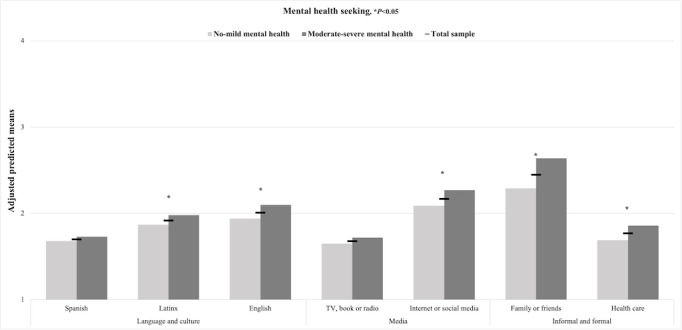
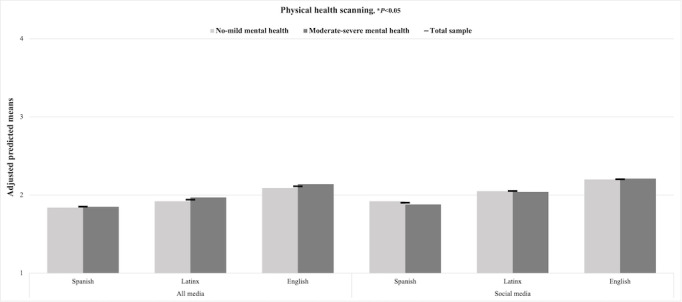
Results: Among Latinx adolescents, media and social media use was similar across mental health symptoms. However, Latinx adolescents with moderate-high versus none-mild symptoms more often scanned general English media and social media for mental health information (P<.05), although not for physical health information. Also, Latinx adolescents with moderate-high versus none-mild symptoms more often sought mental health information on Latinx-tailored and general English media, and social media (P<.05); a similar pattern was found for physical health information seeking. In addition, Latinx adolescents with moderate-high versus none-mild symptoms often sought help from family and friends for mental and physical health problems and health care providers for mental health only (P<.05).
Conclusions: While media and social media usage was similar across mental health, Latinx adolescents with moderate-high symptoms more often encountered mental health content in general English media and social media and turned to general English- and Latinx-tailored media and social media more often for their health concerns. Together these study findings suggest more prevalent and available mental health content in general English versus Spanish language and Latinx-tailored media and underscore the importance of providing accessible, quality health information across diverse language, cultural, and technological media and social networks as a viable opportunity to help improve adolescent health.
期刊介绍:
The Journal of Medical Internet Research (JMIR) is a highly respected publication in the field of health informatics and health services. With a founding date in 1999, JMIR has been a pioneer in the field for over two decades.
As a leader in the industry, the journal focuses on digital health, data science, health informatics, and emerging technologies for health, medicine, and biomedical research. It is recognized as a top publication in these disciplines, ranking in the first quartile (Q1) by Impact Factor.
Notably, JMIR holds the prestigious position of being ranked #1 on Google Scholar within the "Medical Informatics" discipline.





 京公网安备 11010802042870号
京ICP备2023020795号-1
京公网安备 11010802042870号
京ICP备2023020795号-1

 分享
分享
 求助内容:
求助内容: 应助结果提醒方式:
 扫码关注我们
