{"title":"以咪唑基氯代酸盐离子液体为前驱体/模板合成硫化镍纳米片用于日光辅助降解有机染料†","authors":"Sukanya Das, Debanga Bhusan Bora, Sangeeta Kalita, Niharika Kashyap and Ruli Borah","doi":"10.1039/D4NJ03928A","DOIUrl":null,"url":null,"abstract":"<p >In the current work, two new bifunctional Brønsted–Lewis acidic chloronickellate ionic liquid systems, <strong>1a</strong> and <strong>1b</strong> ([RSIM]<small><sub><em>x</em></sub></small>[NiCl<small><sub><em>y</em></sub></small>], where R = C<small><sub>2</sub></small>H<small><sub>5</sub></small> and CH<small><sub>3</sub></small>, <em>x</em> = 2, <em>y</em> = 2, 3, 4 or 5), were developed by incorporating two –SO<small><sub>3</sub></small>H groups into the imidazolium cation. These chloronickellate ionic liquids (ILs) were then utilized as precursors/templates in the synthesis of nickel sulphide nanosheets (<strong>2a</strong> and <strong>2b</strong>) using a simple grinding method. The synthesized nanosheets were characterized using PXRD, FT-IR, RAMAN, TEM, SEM-EDX, XPS, BET and UV-visible analysis. The photocatalytic activities of these nanosheets were then explored in the degradation of organic dyes (methylene blue, methyl orange, crystal violet and malachite green) and their mixtures in the presence of sunlight. The nanosheet <strong>2a</strong> exhibited excellent degradation efficiency of 98.38% for methylene blue at pH = 7. The recyclability study established the stability and feasibility of multiple utilizations of the photocatalyst, supporting its potential implementation in water remediation.</p>","PeriodicalId":95,"journal":{"name":"New Journal of Chemistry","volume":" 11","pages":" 4353-4370"},"PeriodicalIF":2.5000,"publicationDate":"2025-02-19","publicationTypes":"Journal Article","fieldsOfStudy":null,"isOpenAccess":false,"openAccessPdf":"","citationCount":"0","resultStr":"{\"title\":\"Synthesis of nickel sulphide nanosheets using imidazolium-based chloronickellate ionic liquids as precursors/templates for sunlight-assisted degradation of organic dyes†\",\"authors\":\"Sukanya Das, Debanga Bhusan Bora, Sangeeta Kalita, Niharika Kashyap and Ruli Borah\",\"doi\":\"10.1039/D4NJ03928A\",\"DOIUrl\":null,\"url\":null,\"abstract\":\"<p >In the current work, two new bifunctional Brønsted–Lewis acidic chloronickellate ionic liquid systems, <strong>1a</strong> and <strong>1b</strong> ([RSIM]<small><sub><em>x</em></sub></small>[NiCl<small><sub><em>y</em></sub></small>], where R = C<small><sub>2</sub></small>H<small><sub>5</sub></small> and CH<small><sub>3</sub></small>, <em>x</em> = 2, <em>y</em> = 2, 3, 4 or 5), were developed by incorporating two –SO<small><sub>3</sub></small>H groups into the imidazolium cation. These chloronickellate ionic liquids (ILs) were then utilized as precursors/templates in the synthesis of nickel sulphide nanosheets (<strong>2a</strong> and <strong>2b</strong>) using a simple grinding method. The synthesized nanosheets were characterized using PXRD, FT-IR, RAMAN, TEM, SEM-EDX, XPS, BET and UV-visible analysis. The photocatalytic activities of these nanosheets were then explored in the degradation of organic dyes (methylene blue, methyl orange, crystal violet and malachite green) and their mixtures in the presence of sunlight. The nanosheet <strong>2a</strong> exhibited excellent degradation efficiency of 98.38% for methylene blue at pH = 7. The recyclability study established the stability and feasibility of multiple utilizations of the photocatalyst, supporting its potential implementation in water remediation.</p>\",\"PeriodicalId\":95,\"journal\":{\"name\":\"New Journal of Chemistry\",\"volume\":\" 11\",\"pages\":\" 4353-4370\"},\"PeriodicalIF\":2.5000,\"publicationDate\":\"2025-02-19\",\"publicationTypes\":\"Journal Article\",\"fieldsOfStudy\":null,\"isOpenAccess\":false,\"openAccessPdf\":\"\",\"citationCount\":\"0\",\"resultStr\":null,\"platform\":\"Semanticscholar\",\"paperid\":null,\"PeriodicalName\":\"New Journal of Chemistry\",\"FirstCategoryId\":\"92\",\"ListUrlMain\":\"https://pubs.rsc.org/en/content/articlelanding/2025/nj/d4nj03928a\",\"RegionNum\":3,\"RegionCategory\":\"化学\",\"ArticlePicture\":[],\"TitleCN\":null,\"AbstractTextCN\":null,\"PMCID\":null,\"EPubDate\":\"\",\"PubModel\":\"\",\"JCR\":\"Q2\",\"JCRName\":\"CHEMISTRY, MULTIDISCIPLINARY\",\"Score\":null,\"Total\":0}","platform":"Semanticscholar","paperid":null,"PeriodicalName":"New Journal of Chemistry","FirstCategoryId":"92","ListUrlMain":"https://pubs.rsc.org/en/content/articlelanding/2025/nj/d4nj03928a","RegionNum":3,"RegionCategory":"化学","ArticlePicture":[],"TitleCN":null,"AbstractTextCN":null,"PMCID":null,"EPubDate":"","PubModel":"","JCR":"Q2","JCRName":"CHEMISTRY, MULTIDISCIPLINARY","Score":null,"Total":0}
引用次数: 0
摘要
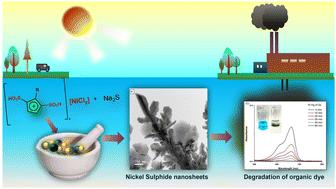
在目前的工作中,通过在咪唑阳离子中加入两个-SO3H基团,开发了两种新的双功能Brønsted-Lewis酸性氯酸盐离子液体体系1a和1b ([RSIM]x[NiCly],其中R = C2H5和CH3, x = 2, y = 2,3,4或5)。然后利用这些氯镍酸盐离子液体(ILs)作为前体/模板,采用简单的研磨方法合成硫化镍纳米片(2a和2b)。采用PXRD、FT-IR、RAMAN、TEM、SEM-EDX、XPS、BET和紫外可见分析对合成的纳米片进行了表征。这些纳米片在降解有机染料(亚甲基蓝、甲基橙、结晶紫和孔雀石绿)及其混合物时的光催化活性在阳光下进行了探索。在pH = 7的条件下,纳米片2a对亚甲基蓝的降解效率达到了98.38%。可回收性研究确定了光催化剂多种用途的稳定性和可行性,支持其在水修复中的潜在应用。
Synthesis of nickel sulphide nanosheets using imidazolium-based chloronickellate ionic liquids as precursors/templates for sunlight-assisted degradation of organic dyes†
In the current work, two new bifunctional Brønsted–Lewis acidic chloronickellate ionic liquid systems, 1a and 1b ([RSIM]x[NiCly], where R = C2H5 and CH3, x = 2, y = 2, 3, 4 or 5), were developed by incorporating two –SO3H groups into the imidazolium cation. These chloronickellate ionic liquids (ILs) were then utilized as precursors/templates in the synthesis of nickel sulphide nanosheets (2a and 2b) using a simple grinding method. The synthesized nanosheets were characterized using PXRD, FT-IR, RAMAN, TEM, SEM-EDX, XPS, BET and UV-visible analysis. The photocatalytic activities of these nanosheets were then explored in the degradation of organic dyes (methylene blue, methyl orange, crystal violet and malachite green) and their mixtures in the presence of sunlight. The nanosheet 2a exhibited excellent degradation efficiency of 98.38% for methylene blue at pH = 7. The recyclability study established the stability and feasibility of multiple utilizations of the photocatalyst, supporting its potential implementation in water remediation.




 京公网安备 11010802042870号
京ICP备2023020795号-1
京公网安备 11010802042870号
京ICP备2023020795号-1

 分享
分享
 求助内容:
求助内容: 应助结果提醒方式:
 扫码关注我们
