Saewung Kim, Roger Seco, Daun Jeong, Alex Guenther, Kitae Kim, Ahra Mo, Jung-Ok Choi, Jisoo Park and Keyhong Park
{"title":"控制南大洋南部秋季异戊二烯、DMS和含氧挥发性有机化合物(VOCs)的生物和非生物因素。","authors":"Saewung Kim, Roger Seco, Daun Jeong, Alex Guenther, Kitae Kim, Ahra Mo, Jung-Ok Choi, Jisoo Park and Keyhong Park","doi":"10.1039/D4FD00168K","DOIUrl":null,"url":null,"abstract":"<p >We present shipborne observations of volatile organic compounds such as dimethylsulfide (DMS), isoprene, acetaldehyde, acetone, and methanol over the Southern Ocean in April and May 2018. During the cruise, we encountered air masses influenced by the open ocean, coastal Antarctica, and sea ice. No direct correlation between oceanographic parameters and ambient distributions of VOCs is found. Nonetheless, the previously reported correlations among the observed VOCs are found in our observed dataset. The statistically meaningful (<em>R</em><small><sup>2</sup></small> > 0.2) anti-correlation of DMS with acetone and methanol is consistent with the previous report about biological activities associated with DMS emission and uptake of methanol and acetone. A positive correlation for isoprene and acetaldehyde, notably in the air masses originating from coastal Antarctica, indicates that photolysis of dissolved organic matter (DOM) was the likely source for the compounds when we conducted the observations. In addition, the observed VOCs were often enhanced over the sea ice observations. This can be accounted for by the ventilation processes of the dissolved VOCs under the ice.</p>","PeriodicalId":49075,"journal":{"name":"Faraday Discussions","volume":"258 ","pages":" 40-59"},"PeriodicalIF":3.1000,"publicationDate":"2024-11-26","publicationTypes":"Journal Article","fieldsOfStudy":null,"isOpenAccess":false,"openAccessPdf":"","citationCount":"0","resultStr":"{\"title\":\"Biotic and abiotic factors controlling isoprene, DMS, and oxygenated volatile organic compounds (VOCs) at the Southern Ocean in the Austral fall\",\"authors\":\"Saewung Kim, Roger Seco, Daun Jeong, Alex Guenther, Kitae Kim, Ahra Mo, Jung-Ok Choi, Jisoo Park and Keyhong Park\",\"doi\":\"10.1039/D4FD00168K\",\"DOIUrl\":null,\"url\":null,\"abstract\":\"<p >We present shipborne observations of volatile organic compounds such as dimethylsulfide (DMS), isoprene, acetaldehyde, acetone, and methanol over the Southern Ocean in April and May 2018. During the cruise, we encountered air masses influenced by the open ocean, coastal Antarctica, and sea ice. No direct correlation between oceanographic parameters and ambient distributions of VOCs is found. Nonetheless, the previously reported correlations among the observed VOCs are found in our observed dataset. The statistically meaningful (<em>R</em><small><sup>2</sup></small> > 0.2) anti-correlation of DMS with acetone and methanol is consistent with the previous report about biological activities associated with DMS emission and uptake of methanol and acetone. A positive correlation for isoprene and acetaldehyde, notably in the air masses originating from coastal Antarctica, indicates that photolysis of dissolved organic matter (DOM) was the likely source for the compounds when we conducted the observations. In addition, the observed VOCs were often enhanced over the sea ice observations. This can be accounted for by the ventilation processes of the dissolved VOCs under the ice.</p>\",\"PeriodicalId\":49075,\"journal\":{\"name\":\"Faraday Discussions\",\"volume\":\"258 \",\"pages\":\" 40-59\"},\"PeriodicalIF\":3.1000,\"publicationDate\":\"2024-11-26\",\"publicationTypes\":\"Journal Article\",\"fieldsOfStudy\":null,\"isOpenAccess\":false,\"openAccessPdf\":\"\",\"citationCount\":\"0\",\"resultStr\":null,\"platform\":\"Semanticscholar\",\"paperid\":null,\"PeriodicalName\":\"Faraday Discussions\",\"FirstCategoryId\":\"92\",\"ListUrlMain\":\"https://pubs.rsc.org/en/content/articlelanding/2025/fd/d4fd00168k\",\"RegionNum\":3,\"RegionCategory\":\"化学\",\"ArticlePicture\":[],\"TitleCN\":null,\"AbstractTextCN\":null,\"PMCID\":null,\"EPubDate\":\"\",\"PubModel\":\"\",\"JCR\":\"Q2\",\"JCRName\":\"Chemistry\",\"Score\":null,\"Total\":0}","platform":"Semanticscholar","paperid":null,"PeriodicalName":"Faraday Discussions","FirstCategoryId":"92","ListUrlMain":"https://pubs.rsc.org/en/content/articlelanding/2025/fd/d4fd00168k","RegionNum":3,"RegionCategory":"化学","ArticlePicture":[],"TitleCN":null,"AbstractTextCN":null,"PMCID":null,"EPubDate":"","PubModel":"","JCR":"Q2","JCRName":"Chemistry","Score":null,"Total":0}
Biotic and abiotic factors controlling isoprene, DMS, and oxygenated volatile organic compounds (VOCs) at the Southern Ocean in the Austral fall
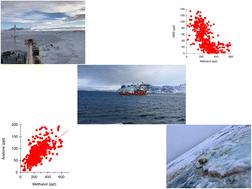
We present shipborne observations of volatile organic compounds such as dimethylsulfide (DMS), isoprene, acetaldehyde, acetone, and methanol over the Southern Ocean in April and May 2018. During the cruise, we encountered air masses influenced by the open ocean, coastal Antarctica, and sea ice. No direct correlation between oceanographic parameters and ambient distributions of VOCs is found. Nonetheless, the previously reported correlations among the observed VOCs are found in our observed dataset. The statistically meaningful (R2 > 0.2) anti-correlation of DMS with acetone and methanol is consistent with the previous report about biological activities associated with DMS emission and uptake of methanol and acetone. A positive correlation for isoprene and acetaldehyde, notably in the air masses originating from coastal Antarctica, indicates that photolysis of dissolved organic matter (DOM) was the likely source for the compounds when we conducted the observations. In addition, the observed VOCs were often enhanced over the sea ice observations. This can be accounted for by the ventilation processes of the dissolved VOCs under the ice.




 京公网安备 11010802042870号
京ICP备2023020795号-1
京公网安备 11010802042870号
京ICP备2023020795号-1

 分享
分享
 求助内容:
求助内容: 应助结果提醒方式:
 扫码关注我们
