JunQiang Lei, YongSheng Xu, YuanHui Zhu, ShanShan Jiang, Song Tian, Yi Zhu
{"title":"自动检测肝硬化小肝细胞癌:应用深度学习gd - eob - dtpa增强MRI。","authors":"JunQiang Lei, YongSheng Xu, YuanHui Zhu, ShanShan Jiang, Song Tian, Yi Zhu","doi":"10.1007/s00261-025-04853-8","DOIUrl":null,"url":null,"abstract":"<div><h3>Objectives</h3><p>To develop an automated deep learning (DL) methodology for detecting small hepatocellular carcinoma (sHCC) in cirrhotic livers, leveraging Gd-EOB-DTPA-enhanced MRI.</p><h3>Methods</h3><p>The present retrospective study included a total of 120 patients with cirrhosis, comprising 78 patients with sHCC and 42 patients with non-HCC cirrhosis, who were selected through stratified sampling. The dataset was divided into training and testing sets (8:2 ratio). The nnU-Net exhibits enhanced capabilities in segmenting small objects. The segmentation performance was assessed using the Dice coefficient. The ability to distinguish between sHCC and non-HCC lesions was evaluated through ROC curves, AUC scores and <i>P</i> values. The case-level detection performance for sHCC was evaluated through several metrics: accuracy, sensitivity, and specificity.</p><h3>Results</h3><p>The AUCs for distinguishing sHCC patients from non-HCC patients at the lesion level were 0.967 and 0.864 for the training and test cohorts, respectively, both of which were statistically significant at <i>P</i> < 0.001. At the case level, distinguishing between patients with sHCC and patients with cirrhosis resulted in accuracies of 92.5% (95% CI, 85.1–96.9%) and 81.5% (95% CI, 61.9–93.7%), sensitivities of 95.1% (95% CI, 86.3–99.0%) and 88.2% (95% CI, 63.6–98.5%), and specificities of 87.5% (95% CI, 71.0–96.5%) and 70% (95% CI, 34.8–93.3%) for the training and test sets, respectively.</p><h3>Conclusion</h3><p>The DL methodology demonstrated its efficacy in detecting sHCC within a cohort of patients with cirrhosis.</p><h3>Graphical Abstract</h3><div><figure><div><div><picture><source><img></source></picture></div></div></figure></div></div>","PeriodicalId":7126,"journal":{"name":"Abdominal Radiology","volume":"50 9","pages":"4087 - 4099"},"PeriodicalIF":2.3000,"publicationDate":"2025-03-10","publicationTypes":"Journal Article","fieldsOfStudy":null,"isOpenAccess":false,"openAccessPdf":"","citationCount":"0","resultStr":"{\"title\":\"Automated detection of small hepatocellular carcinoma in cirrhotic livers: applying deep learning to Gd-EOB-DTPA-enhanced MRI\",\"authors\":\"JunQiang Lei, YongSheng Xu, YuanHui Zhu, ShanShan Jiang, Song Tian, Yi Zhu\",\"doi\":\"10.1007/s00261-025-04853-8\",\"DOIUrl\":null,\"url\":null,\"abstract\":\"<div><h3>Objectives</h3><p>To develop an automated deep learning (DL) methodology for detecting small hepatocellular carcinoma (sHCC) in cirrhotic livers, leveraging Gd-EOB-DTPA-enhanced MRI.</p><h3>Methods</h3><p>The present retrospective study included a total of 120 patients with cirrhosis, comprising 78 patients with sHCC and 42 patients with non-HCC cirrhosis, who were selected through stratified sampling. The dataset was divided into training and testing sets (8:2 ratio). The nnU-Net exhibits enhanced capabilities in segmenting small objects. The segmentation performance was assessed using the Dice coefficient. The ability to distinguish between sHCC and non-HCC lesions was evaluated through ROC curves, AUC scores and <i>P</i> values. The case-level detection performance for sHCC was evaluated through several metrics: accuracy, sensitivity, and specificity.</p><h3>Results</h3><p>The AUCs for distinguishing sHCC patients from non-HCC patients at the lesion level were 0.967 and 0.864 for the training and test cohorts, respectively, both of which were statistically significant at <i>P</i> < 0.001. At the case level, distinguishing between patients with sHCC and patients with cirrhosis resulted in accuracies of 92.5% (95% CI, 85.1–96.9%) and 81.5% (95% CI, 61.9–93.7%), sensitivities of 95.1% (95% CI, 86.3–99.0%) and 88.2% (95% CI, 63.6–98.5%), and specificities of 87.5% (95% CI, 71.0–96.5%) and 70% (95% CI, 34.8–93.3%) for the training and test sets, respectively.</p><h3>Conclusion</h3><p>The DL methodology demonstrated its efficacy in detecting sHCC within a cohort of patients with cirrhosis.</p><h3>Graphical Abstract</h3><div><figure><div><div><picture><source><img></source></picture></div></div></figure></div></div>\",\"PeriodicalId\":7126,\"journal\":{\"name\":\"Abdominal Radiology\",\"volume\":\"50 9\",\"pages\":\"4087 - 4099\"},\"PeriodicalIF\":2.3000,\"publicationDate\":\"2025-03-10\",\"publicationTypes\":\"Journal Article\",\"fieldsOfStudy\":null,\"isOpenAccess\":false,\"openAccessPdf\":\"\",\"citationCount\":\"0\",\"resultStr\":null,\"platform\":\"Semanticscholar\",\"paperid\":null,\"PeriodicalName\":\"Abdominal Radiology\",\"FirstCategoryId\":\"3\",\"ListUrlMain\":\"https://link.springer.com/article/10.1007/s00261-025-04853-8\",\"RegionNum\":3,\"RegionCategory\":\"医学\",\"ArticlePicture\":[],\"TitleCN\":null,\"AbstractTextCN\":null,\"PMCID\":null,\"EPubDate\":\"\",\"PubModel\":\"\",\"JCR\":\"Q2\",\"JCRName\":\"RADIOLOGY, NUCLEAR MEDICINE & MEDICAL IMAGING\",\"Score\":null,\"Total\":0}","platform":"Semanticscholar","paperid":null,"PeriodicalName":"Abdominal Radiology","FirstCategoryId":"3","ListUrlMain":"https://link.springer.com/article/10.1007/s00261-025-04853-8","RegionNum":3,"RegionCategory":"医学","ArticlePicture":[],"TitleCN":null,"AbstractTextCN":null,"PMCID":null,"EPubDate":"","PubModel":"","JCR":"Q2","JCRName":"RADIOLOGY, NUCLEAR MEDICINE & MEDICAL IMAGING","Score":null,"Total":0}
Automated detection of small hepatocellular carcinoma in cirrhotic livers: applying deep learning to Gd-EOB-DTPA-enhanced MRI
Objectives
To develop an automated deep learning (DL) methodology for detecting small hepatocellular carcinoma (sHCC) in cirrhotic livers, leveraging Gd-EOB-DTPA-enhanced MRI.
Methods
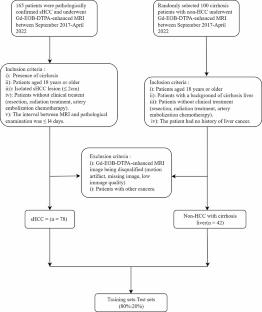
The present retrospective study included a total of 120 patients with cirrhosis, comprising 78 patients with sHCC and 42 patients with non-HCC cirrhosis, who were selected through stratified sampling. The dataset was divided into training and testing sets (8:2 ratio). The nnU-Net exhibits enhanced capabilities in segmenting small objects. The segmentation performance was assessed using the Dice coefficient. The ability to distinguish between sHCC and non-HCC lesions was evaluated through ROC curves, AUC scores and P values. The case-level detection performance for sHCC was evaluated through several metrics: accuracy, sensitivity, and specificity.
Results
The AUCs for distinguishing sHCC patients from non-HCC patients at the lesion level were 0.967 and 0.864 for the training and test cohorts, respectively, both of which were statistically significant at P < 0.001. At the case level, distinguishing between patients with sHCC and patients with cirrhosis resulted in accuracies of 92.5% (95% CI, 85.1–96.9%) and 81.5% (95% CI, 61.9–93.7%), sensitivities of 95.1% (95% CI, 86.3–99.0%) and 88.2% (95% CI, 63.6–98.5%), and specificities of 87.5% (95% CI, 71.0–96.5%) and 70% (95% CI, 34.8–93.3%) for the training and test sets, respectively.
Conclusion
The DL methodology demonstrated its efficacy in detecting sHCC within a cohort of patients with cirrhosis.
期刊介绍:
Abdominal Radiology seeks to meet the professional needs of the abdominal radiologist by publishing clinically pertinent original, review and practice related articles on the gastrointestinal and genitourinary tracts and abdominal interventional and radiologic procedures. Case reports are generally not accepted unless they are the first report of a new disease or condition, or part of a special solicited section.
Reasons to Publish Your Article in Abdominal Radiology:
· Official journal of the Society of Abdominal Radiology (SAR)
· Published in Cooperation with:
European Society of Gastrointestinal and Abdominal Radiology (ESGAR)
European Society of Urogenital Radiology (ESUR)
Asian Society of Abdominal Radiology (ASAR)
· Efficient handling and Expeditious review
· Author feedback is provided in a mentoring style
· Global readership
· Readers can earn CME credits




 京公网安备 11010802042870号
京ICP备2023020795号-1
京公网安备 11010802042870号
京ICP备2023020795号-1

 分享
分享
 求助内容:
求助内容: 应助结果提醒方式:
 扫码关注我们
