{"title":"通过受体转移调节纳米颗粒胞吐方向:一种提高西马鲁肽治疗效果的新策略。","authors":"Yating Wang, Mingjie Ni, Minyi Huang, Liyun Xing, Xi Liu, Fuya Jia, Yuan Huang","doi":"10.1016/j.ijpharm.2025.125439","DOIUrl":null,"url":null,"abstract":"<div><div>Coumaric acid (CA) is a typical nutrient required in relatively high quantities by the body. It has been proved CA could specifically bind to monocarboxylate Transporter-1 (MCT-1) receptors, a transporter protein expressed on the surface of intestinal epithelial cells, to facilitate its cellular uptake. Although our preliminary research demonstrated semaglutide (SEM) loaded CA modified nanoparticles (SEM@CNP) could improve the absorption of SEM to some extent, the oral bioavailability still remained suboptimal owing to the lysosomal degradation. To address this issue, INF-7 (peptide chain GLFEAIEGFIENGWEGMIDGWYG) and chloroquine (CQ), two lysosomal escape agents (LEAs) with different mechanisms of action, were incorporated with SEM@CNP for oral delivery (SEM@CNP + INF-7, SEM@CNP + CQ). In type II diabetes mice models, SEM@CNP + CQ effectively inhibited postprandial glucose rise with a relative pharmacological bioavailability of 20.63 ± 2.99 %, 1.73 times higher than SEM@CNP (11.90 ± 4.56 %). Mechanistic studies revealed that: 1) after adding LEAs, the exocytosis preference of nanoparticles was altered, tending towards basolateral exocytosis apparently. Regulated exocytosis directionality was linked to the spatial redistribution of MCT-1 receptors. 2) among the two LEAs, CQ demonstrated superior efficacy compared to INF-7. This superiority was attributed to the earlier onset of action and more pronounced degree of membrane disruption induced by CQ. This research provided new insights for the design of oral delivery systems for peptidic drugs.</div></div>","PeriodicalId":14187,"journal":{"name":"International Journal of Pharmaceutics","volume":"674 ","pages":"Article 125439"},"PeriodicalIF":5.2000,"publicationDate":"2025-04-15","publicationTypes":"Journal Article","fieldsOfStudy":null,"isOpenAccess":false,"openAccessPdf":"","citationCount":"0","resultStr":"{\"title\":\"Regulation of nanoparticle exocytosis direction via receptors transfer: A novel strategy to enhance therapeutic efficacy of semaglutide\",\"authors\":\"Yating Wang, Mingjie Ni, Minyi Huang, Liyun Xing, Xi Liu, Fuya Jia, Yuan Huang\",\"doi\":\"10.1016/j.ijpharm.2025.125439\",\"DOIUrl\":null,\"url\":null,\"abstract\":\"<div><div>Coumaric acid (CA) is a typical nutrient required in relatively high quantities by the body. It has been proved CA could specifically bind to monocarboxylate Transporter-1 (MCT-1) receptors, a transporter protein expressed on the surface of intestinal epithelial cells, to facilitate its cellular uptake. Although our preliminary research demonstrated semaglutide (SEM) loaded CA modified nanoparticles (SEM@CNP) could improve the absorption of SEM to some extent, the oral bioavailability still remained suboptimal owing to the lysosomal degradation. To address this issue, INF-7 (peptide chain GLFEAIEGFIENGWEGMIDGWYG) and chloroquine (CQ), two lysosomal escape agents (LEAs) with different mechanisms of action, were incorporated with SEM@CNP for oral delivery (SEM@CNP + INF-7, SEM@CNP + CQ). In type II diabetes mice models, SEM@CNP + CQ effectively inhibited postprandial glucose rise with a relative pharmacological bioavailability of 20.63 ± 2.99 %, 1.73 times higher than SEM@CNP (11.90 ± 4.56 %). Mechanistic studies revealed that: 1) after adding LEAs, the exocytosis preference of nanoparticles was altered, tending towards basolateral exocytosis apparently. Regulated exocytosis directionality was linked to the spatial redistribution of MCT-1 receptors. 2) among the two LEAs, CQ demonstrated superior efficacy compared to INF-7. This superiority was attributed to the earlier onset of action and more pronounced degree of membrane disruption induced by CQ. This research provided new insights for the design of oral delivery systems for peptidic drugs.</div></div>\",\"PeriodicalId\":14187,\"journal\":{\"name\":\"International Journal of Pharmaceutics\",\"volume\":\"674 \",\"pages\":\"Article 125439\"},\"PeriodicalIF\":5.2000,\"publicationDate\":\"2025-04-15\",\"publicationTypes\":\"Journal Article\",\"fieldsOfStudy\":null,\"isOpenAccess\":false,\"openAccessPdf\":\"\",\"citationCount\":\"0\",\"resultStr\":null,\"platform\":\"Semanticscholar\",\"paperid\":null,\"PeriodicalName\":\"International Journal of Pharmaceutics\",\"FirstCategoryId\":\"3\",\"ListUrlMain\":\"https://www.sciencedirect.com/science/article/pii/S0378517325002753\",\"RegionNum\":2,\"RegionCategory\":\"医学\",\"ArticlePicture\":[],\"TitleCN\":null,\"AbstractTextCN\":null,\"PMCID\":null,\"EPubDate\":\"2025/3/8 0:00:00\",\"PubModel\":\"Epub\",\"JCR\":\"Q1\",\"JCRName\":\"PHARMACOLOGY & PHARMACY\",\"Score\":null,\"Total\":0}","platform":"Semanticscholar","paperid":null,"PeriodicalName":"International Journal of Pharmaceutics","FirstCategoryId":"3","ListUrlMain":"https://www.sciencedirect.com/science/article/pii/S0378517325002753","RegionNum":2,"RegionCategory":"医学","ArticlePicture":[],"TitleCN":null,"AbstractTextCN":null,"PMCID":null,"EPubDate":"2025/3/8 0:00:00","PubModel":"Epub","JCR":"Q1","JCRName":"PHARMACOLOGY & PHARMACY","Score":null,"Total":0}
Regulation of nanoparticle exocytosis direction via receptors transfer: A novel strategy to enhance therapeutic efficacy of semaglutide
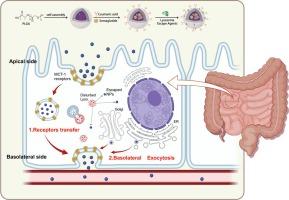
Coumaric acid (CA) is a typical nutrient required in relatively high quantities by the body. It has been proved CA could specifically bind to monocarboxylate Transporter-1 (MCT-1) receptors, a transporter protein expressed on the surface of intestinal epithelial cells, to facilitate its cellular uptake. Although our preliminary research demonstrated semaglutide (SEM) loaded CA modified nanoparticles (SEM@CNP) could improve the absorption of SEM to some extent, the oral bioavailability still remained suboptimal owing to the lysosomal degradation. To address this issue, INF-7 (peptide chain GLFEAIEGFIENGWEGMIDGWYG) and chloroquine (CQ), two lysosomal escape agents (LEAs) with different mechanisms of action, were incorporated with SEM@CNP for oral delivery (SEM@CNP + INF-7, SEM@CNP + CQ). In type II diabetes mice models, SEM@CNP + CQ effectively inhibited postprandial glucose rise with a relative pharmacological bioavailability of 20.63 ± 2.99 %, 1.73 times higher than SEM@CNP (11.90 ± 4.56 %). Mechanistic studies revealed that: 1) after adding LEAs, the exocytosis preference of nanoparticles was altered, tending towards basolateral exocytosis apparently. Regulated exocytosis directionality was linked to the spatial redistribution of MCT-1 receptors. 2) among the two LEAs, CQ demonstrated superior efficacy compared to INF-7. This superiority was attributed to the earlier onset of action and more pronounced degree of membrane disruption induced by CQ. This research provided new insights for the design of oral delivery systems for peptidic drugs.
期刊介绍:
The International Journal of Pharmaceutics is the third most cited journal in the "Pharmacy & Pharmacology" category out of 366 journals, being the true home for pharmaceutical scientists concerned with the physical, chemical and biological properties of devices and delivery systems for drugs, vaccines and biologicals, including their design, manufacture and evaluation. This includes evaluation of the properties of drugs, excipients such as surfactants and polymers and novel materials. The journal has special sections on pharmaceutical nanotechnology and personalized medicines, and publishes research papers, reviews, commentaries and letters to the editor as well as special issues.




 京公网安备 11010802042870号
京ICP备2023020795号-1
京公网安备 11010802042870号
京ICP备2023020795号-1

 分享
分享
 求助内容:
求助内容: 应助结果提醒方式:
 扫码关注我们
