Ashok David Jose , Celine Hui-Ning Chong , Ernest Cheah , Jagdish Jaiswal , Zimei Wu , Sachin Sunil Thakur
{"title":"在水凝胶中稳定氧微泡增强放射治疗的配方和评价。","authors":"Ashok David Jose , Celine Hui-Ning Chong , Ernest Cheah , Jagdish Jaiswal , Zimei Wu , Sachin Sunil Thakur","doi":"10.1016/j.ijpharm.2025.125443","DOIUrl":null,"url":null,"abstract":"<div><h3>Background</h3><div>Tumour hypoxia poses a significant challenge in cancer treatment. There is mounting evidence that reoxygenating tumours increases their sensitivity to conventional cancer therapies. Oxygenated microbubbles (OMB) show promise for this application but suffer from poor stability and rapid clearance. Embedding OMB in a thermosensitive hydrogel (OMBHG) may prolong tumour oxygenation and improve therapeutic outcomes.</div></div><div><h3>Objectives</h3><div>To formulate and evaluate OMB loaded in a temperature sensitive hydrogel on an <em>in vitro</em> model of tumour hypoxia.</div></div><div><h3>Methods</h3><div>OMB generated from a liposomal precursor were dispersed at various concentrations in a poloxamer hydrogel. OMB size, hydrogel rheology, injectability, oxygen loading/release, and impact on efficacy of radiotherapy against HCT116 colon cancer cells under hypoxia/normoxia were evaluated.</div></div><div><h3>Results</h3><div>DSPC:DSPE-PEG2000 (94:6 molar ratio) liposomes dispersed in a poloxamer 407: poloxamer 188 (21:6.5 % w/w) hydrogel generated OMB predominantly sized < 1 µm. OMBHG formulations were deemed injectable (force to inject < 38 N) at 20 °C and gelled before 37 °C and demonstrated both greater oxygen loading and prolonged oxygen release than OMB alone. Cancer cells were significantly less sensitive to radiotherapy under hypoxic conditions<em>.</em> Pre-treatment of the cells with OMB or OMBHG enhanced radiotherapy significantly, reducing clonogenic survival rates in HCT116 cells by 78 % in hypoxic conditions and by 68 % in normoxic conditions (p < 0.0001 in both cases). Notably, this treatment restored the radiotherapy sensitivity of hypoxic cells to the levels seen with normoxic cells.</div></div><div><h3>Conclusion</h3><div>Reoxygenation with a newly developed OMB hydrogel formulation effectively sensitised HCT116 to radiotherapy <em>in vitro</em>. Ongoing studies are exploring the importance of reoxygenation rate and extent for optimal tumour sensitisation.</div></div>","PeriodicalId":14187,"journal":{"name":"International Journal of Pharmaceutics","volume":"674 ","pages":"Article 125443"},"PeriodicalIF":5.2000,"publicationDate":"2025-04-15","publicationTypes":"Journal Article","fieldsOfStudy":null,"isOpenAccess":false,"openAccessPdf":"","citationCount":"0","resultStr":"{\"title\":\"Formulation and evaluation of oxygen microbubbles stabilised in a hydrogel to potentiate radiotherapy\",\"authors\":\"Ashok David Jose , Celine Hui-Ning Chong , Ernest Cheah , Jagdish Jaiswal , Zimei Wu , Sachin Sunil Thakur\",\"doi\":\"10.1016/j.ijpharm.2025.125443\",\"DOIUrl\":null,\"url\":null,\"abstract\":\"<div><h3>Background</h3><div>Tumour hypoxia poses a significant challenge in cancer treatment. There is mounting evidence that reoxygenating tumours increases their sensitivity to conventional cancer therapies. Oxygenated microbubbles (OMB) show promise for this application but suffer from poor stability and rapid clearance. Embedding OMB in a thermosensitive hydrogel (OMBHG) may prolong tumour oxygenation and improve therapeutic outcomes.</div></div><div><h3>Objectives</h3><div>To formulate and evaluate OMB loaded in a temperature sensitive hydrogel on an <em>in vitro</em> model of tumour hypoxia.</div></div><div><h3>Methods</h3><div>OMB generated from a liposomal precursor were dispersed at various concentrations in a poloxamer hydrogel. OMB size, hydrogel rheology, injectability, oxygen loading/release, and impact on efficacy of radiotherapy against HCT116 colon cancer cells under hypoxia/normoxia were evaluated.</div></div><div><h3>Results</h3><div>DSPC:DSPE-PEG2000 (94:6 molar ratio) liposomes dispersed in a poloxamer 407: poloxamer 188 (21:6.5 % w/w) hydrogel generated OMB predominantly sized < 1 µm. OMBHG formulations were deemed injectable (force to inject < 38 N) at 20 °C and gelled before 37 °C and demonstrated both greater oxygen loading and prolonged oxygen release than OMB alone. Cancer cells were significantly less sensitive to radiotherapy under hypoxic conditions<em>.</em> Pre-treatment of the cells with OMB or OMBHG enhanced radiotherapy significantly, reducing clonogenic survival rates in HCT116 cells by 78 % in hypoxic conditions and by 68 % in normoxic conditions (p < 0.0001 in both cases). Notably, this treatment restored the radiotherapy sensitivity of hypoxic cells to the levels seen with normoxic cells.</div></div><div><h3>Conclusion</h3><div>Reoxygenation with a newly developed OMB hydrogel formulation effectively sensitised HCT116 to radiotherapy <em>in vitro</em>. Ongoing studies are exploring the importance of reoxygenation rate and extent for optimal tumour sensitisation.</div></div>\",\"PeriodicalId\":14187,\"journal\":{\"name\":\"International Journal of Pharmaceutics\",\"volume\":\"674 \",\"pages\":\"Article 125443\"},\"PeriodicalIF\":5.2000,\"publicationDate\":\"2025-04-15\",\"publicationTypes\":\"Journal Article\",\"fieldsOfStudy\":null,\"isOpenAccess\":false,\"openAccessPdf\":\"\",\"citationCount\":\"0\",\"resultStr\":null,\"platform\":\"Semanticscholar\",\"paperid\":null,\"PeriodicalName\":\"International Journal of Pharmaceutics\",\"FirstCategoryId\":\"3\",\"ListUrlMain\":\"https://www.sciencedirect.com/science/article/pii/S0378517325002790\",\"RegionNum\":2,\"RegionCategory\":\"医学\",\"ArticlePicture\":[],\"TitleCN\":null,\"AbstractTextCN\":null,\"PMCID\":null,\"EPubDate\":\"2025/3/8 0:00:00\",\"PubModel\":\"Epub\",\"JCR\":\"Q1\",\"JCRName\":\"PHARMACOLOGY & PHARMACY\",\"Score\":null,\"Total\":0}","platform":"Semanticscholar","paperid":null,"PeriodicalName":"International Journal of Pharmaceutics","FirstCategoryId":"3","ListUrlMain":"https://www.sciencedirect.com/science/article/pii/S0378517325002790","RegionNum":2,"RegionCategory":"医学","ArticlePicture":[],"TitleCN":null,"AbstractTextCN":null,"PMCID":null,"EPubDate":"2025/3/8 0:00:00","PubModel":"Epub","JCR":"Q1","JCRName":"PHARMACOLOGY & PHARMACY","Score":null,"Total":0}
Formulation and evaluation of oxygen microbubbles stabilised in a hydrogel to potentiate radiotherapy
Background
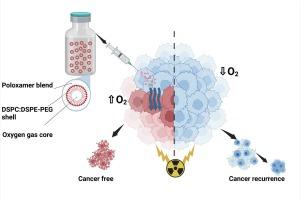
Tumour hypoxia poses a significant challenge in cancer treatment. There is mounting evidence that reoxygenating tumours increases their sensitivity to conventional cancer therapies. Oxygenated microbubbles (OMB) show promise for this application but suffer from poor stability and rapid clearance. Embedding OMB in a thermosensitive hydrogel (OMBHG) may prolong tumour oxygenation and improve therapeutic outcomes.
Objectives
To formulate and evaluate OMB loaded in a temperature sensitive hydrogel on an in vitro model of tumour hypoxia.
Methods
OMB generated from a liposomal precursor were dispersed at various concentrations in a poloxamer hydrogel. OMB size, hydrogel rheology, injectability, oxygen loading/release, and impact on efficacy of radiotherapy against HCT116 colon cancer cells under hypoxia/normoxia were evaluated.
Results
DSPC:DSPE-PEG2000 (94:6 molar ratio) liposomes dispersed in a poloxamer 407: poloxamer 188 (21:6.5 % w/w) hydrogel generated OMB predominantly sized < 1 µm. OMBHG formulations were deemed injectable (force to inject < 38 N) at 20 °C and gelled before 37 °C and demonstrated both greater oxygen loading and prolonged oxygen release than OMB alone. Cancer cells were significantly less sensitive to radiotherapy under hypoxic conditions. Pre-treatment of the cells with OMB or OMBHG enhanced radiotherapy significantly, reducing clonogenic survival rates in HCT116 cells by 78 % in hypoxic conditions and by 68 % in normoxic conditions (p < 0.0001 in both cases). Notably, this treatment restored the radiotherapy sensitivity of hypoxic cells to the levels seen with normoxic cells.
Conclusion
Reoxygenation with a newly developed OMB hydrogel formulation effectively sensitised HCT116 to radiotherapy in vitro. Ongoing studies are exploring the importance of reoxygenation rate and extent for optimal tumour sensitisation.
期刊介绍:
The International Journal of Pharmaceutics is the third most cited journal in the "Pharmacy & Pharmacology" category out of 366 journals, being the true home for pharmaceutical scientists concerned with the physical, chemical and biological properties of devices and delivery systems for drugs, vaccines and biologicals, including their design, manufacture and evaluation. This includes evaluation of the properties of drugs, excipients such as surfactants and polymers and novel materials. The journal has special sections on pharmaceutical nanotechnology and personalized medicines, and publishes research papers, reviews, commentaries and letters to the editor as well as special issues.




 京公网安备 11010802042870号
京ICP备2023020795号-1
京公网安备 11010802042870号
京ICP备2023020795号-1

 分享
分享
 求助内容:
求助内容: 应助结果提醒方式:
 扫码关注我们
