Identification and functional characterization of silk fibroin genes in leaf-folding behaviour, silk properties and development of the rice leaf folder, Cnaphalocrocis medinalis (lepidoptera: Pyralidae)
BACKGROUND
Outbreaks of the rice leaf folder (Cnaphalocrocis medinalis) poses a significant threat to rice production. Silk-spinning creates an enclosed leaf roll that protects larvae from predators and insecticides, while serving as a feeding site and facilitating host transfer and leaf-folding. Disrupting this behaviour could enhance control strategies. The silk fibroin gene, essential for silk production, remains poorly understood in C. medinalis.
RESULT
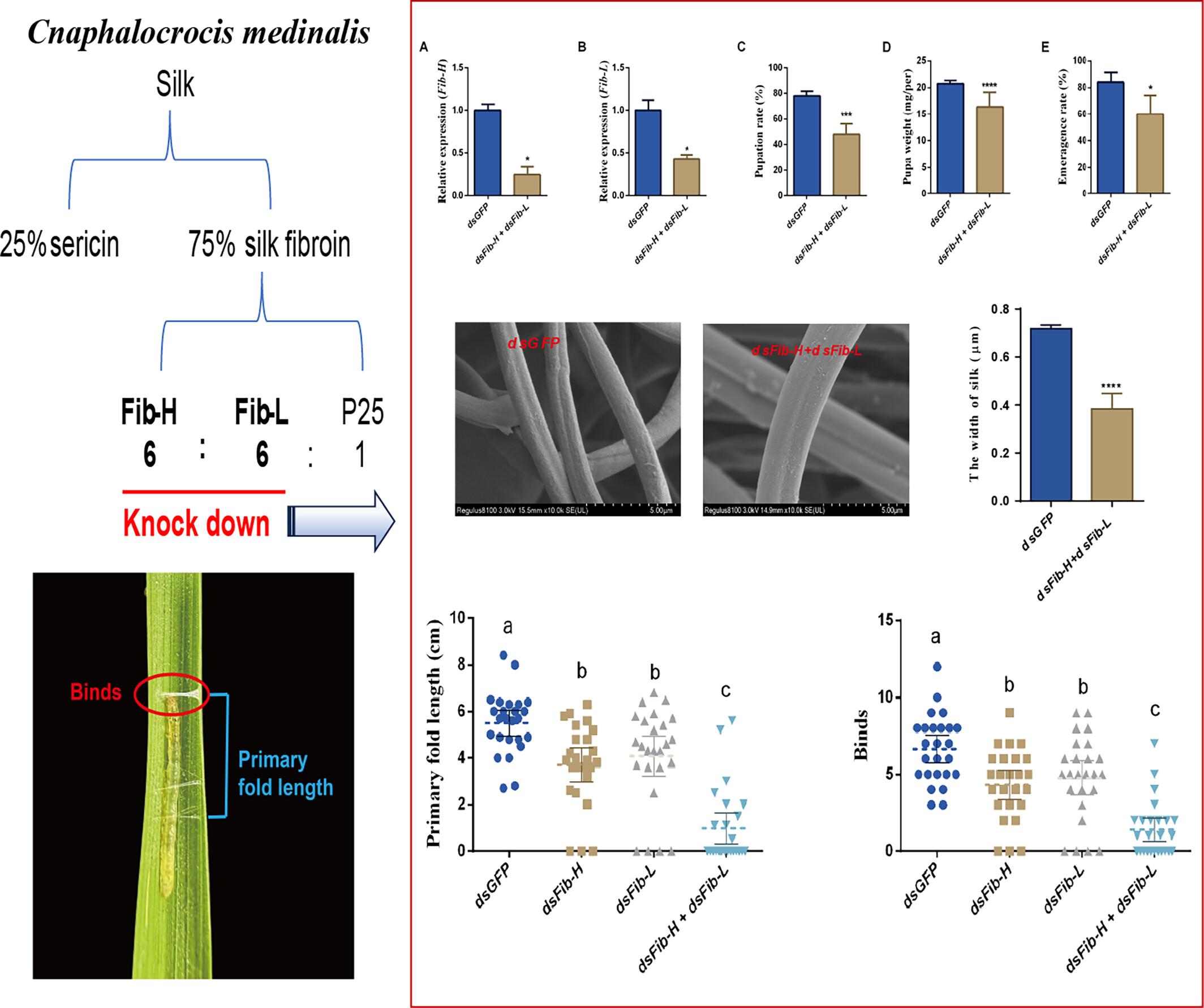
We cloned a 644-bp fragment of the fibroin heavy chain (CmFib-H) gene and the full-length 1158-bp fibroin light chain (CmFib-L) gene in C. medinalis. Both genes showed high expression during the larval stage, particularly in the silk glands. Third-instar larvae injected with dsCmFib-H, dsCmFib-L, or both, displayed disrupted silk-spinning and leaf-folding behaviours 48 h postinjection, with significantly reduced primary fold length and binding numbers compared to the dsGFP control. Ultrastructural analysis revealed disorganized silk and reduced diameter in co-injected larvae, and mechanical testing indicated significantly decreased compressive and tensile strength of the silk. Additionally, injecting dsCmFib-H and dsCmFib-L into 5th-instar larvae significantly reduced pupation rate, pupal weight and eclosion rate 48 h postinjection.
期刊介绍:
Pest Management Science is the international journal of research and development in crop protection and pest control. Since its launch in 1970, the journal has become the premier forum for papers on the discovery, application, and impact on the environment of products and strategies designed for pest management.
Published for SCI by John Wiley & Sons Ltd.






 京公网安备 11010802042870号
京ICP备2023020795号-1
京公网安备 11010802042870号
京ICP备2023020795号-1

 分享
分享
 求助内容:
求助内容: 应助结果提醒方式:
 扫码关注我们
