Gwen van Husen, Thijs J Burger, Mariken B de Koning, Matty A S de Wit, Menno W Segeren, Aartjan T F Beekman
{"title":"网络需求:重度精神疾病(SMI)患者的家庭成员、伴侣和亲密朋友需求的定性研究。","authors":"Gwen van Husen, Thijs J Burger, Mariken B de Koning, Matty A S de Wit, Menno W Segeren, Aartjan T F Beekman","doi":"10.1186/s12888-025-06607-8","DOIUrl":null,"url":null,"abstract":"<p><strong>Background: </strong>Mental healthcare for people with a severe mental illness (SMI) is increasingly being delivered in a deinstitutionalized setting. Community-dwelling, ambulatory care and support, and the associated treatment goals have implications for the roles and experiences of family members and close friends of people with an SMI. This study aims to provide a deeper understanding of what social network members of people with an SMI need to cope with the effects of the illness and possible caregiving responsibilities and remain involved.</p><p><strong>Methods: </strong>This qualitative study focusses on the perspectives of social network members of people with an SMI residing in independent or supported housing in an urban setting. Between 2020 and 2023, thirty adult family members, partners, and friends of people with an SMI were interviewed. We used reflexive thematic analysis to analyze the data, resulting in three themes of perceived needs and useful support.</p><p><strong>Results: </strong>(1) Needs related to mental healthcare and support services to the person with an SMI. Quality care and support for the person with an SMI were a priority for participants. They specifically wanted more robust care and support concerning mental health crises, daytime activities and housing support. (2) Needs concerning the way mental healthcare and support services involve the social network. Participants wanted professionals providing care and support to the person with an SMI to structurally acknowledge the role, possibilities and limitations of the social network around that person. (3) Needs resulting from their relationship with a person with an SMI. Many participants wanted information and education about SMI and the care provision, improved interaction skills, financial and practical assistance, social and peer support, the opportunity to (temporarily) take a step back or psychological support for themselves.</p><p><strong>Conclusions: </strong>Creating a closer connection between the worlds of social network members and professionals is crucial. Social network members can experience a profound sense of loss and desperation as they navigate the complexities of being a family member, partner or friend of a person with an SMI. Recognizing how this desperation and deep-felt loss feed into the high hopes and expectations that social network members place on mental healthcare and support services, can help professionals in their interaction with social network members. This study underscores the importance of mental healthcare and support services in structurally extending its attention to social network members of people with an SMI. Considering the impact of the illness on social network members and acknowledging their needs and expectations, can contribute to social network members and professionals finding common ground, fostering a more sustainable support system around people with an SMI.</p>","PeriodicalId":9029,"journal":{"name":"BMC Psychiatry","volume":"25 1","pages":"220"},"PeriodicalIF":3.4000,"publicationDate":"2025-03-11","publicationTypes":"Journal Article","fieldsOfStudy":null,"isOpenAccess":false,"openAccessPdf":"https://www.ncbi.nlm.nih.gov/pmc/articles/PMC11895330/pdf/","citationCount":"0","resultStr":"{\"title\":\"Needs of the network: a qualitative study of the needs of family members, partners and close friends of people with a severe mental illness (SMI).\",\"authors\":\"Gwen van Husen, Thijs J Burger, Mariken B de Koning, Matty A S de Wit, Menno W Segeren, Aartjan T F Beekman\",\"doi\":\"10.1186/s12888-025-06607-8\",\"DOIUrl\":null,\"url\":null,\"abstract\":\"<p><strong>Background: </strong>Mental healthcare for people with a severe mental illness (SMI) is increasingly being delivered in a deinstitutionalized setting. Community-dwelling, ambulatory care and support, and the associated treatment goals have implications for the roles and experiences of family members and close friends of people with an SMI. This study aims to provide a deeper understanding of what social network members of people with an SMI need to cope with the effects of the illness and possible caregiving responsibilities and remain involved.</p><p><strong>Methods: </strong>This qualitative study focusses on the perspectives of social network members of people with an SMI residing in independent or supported housing in an urban setting. Between 2020 and 2023, thirty adult family members, partners, and friends of people with an SMI were interviewed. We used reflexive thematic analysis to analyze the data, resulting in three themes of perceived needs and useful support.</p><p><strong>Results: </strong>(1) Needs related to mental healthcare and support services to the person with an SMI. Quality care and support for the person with an SMI were a priority for participants. They specifically wanted more robust care and support concerning mental health crises, daytime activities and housing support. (2) Needs concerning the way mental healthcare and support services involve the social network. Participants wanted professionals providing care and support to the person with an SMI to structurally acknowledge the role, possibilities and limitations of the social network around that person. (3) Needs resulting from their relationship with a person with an SMI. Many participants wanted information and education about SMI and the care provision, improved interaction skills, financial and practical assistance, social and peer support, the opportunity to (temporarily) take a step back or psychological support for themselves.</p><p><strong>Conclusions: </strong>Creating a closer connection between the worlds of social network members and professionals is crucial. Social network members can experience a profound sense of loss and desperation as they navigate the complexities of being a family member, partner or friend of a person with an SMI. Recognizing how this desperation and deep-felt loss feed into the high hopes and expectations that social network members place on mental healthcare and support services, can help professionals in their interaction with social network members. This study underscores the importance of mental healthcare and support services in structurally extending its attention to social network members of people with an SMI. Considering the impact of the illness on social network members and acknowledging their needs and expectations, can contribute to social network members and professionals finding common ground, fostering a more sustainable support system around people with an SMI.</p>\",\"PeriodicalId\":9029,\"journal\":{\"name\":\"BMC Psychiatry\",\"volume\":\"25 1\",\"pages\":\"220\"},\"PeriodicalIF\":3.4000,\"publicationDate\":\"2025-03-11\",\"publicationTypes\":\"Journal Article\",\"fieldsOfStudy\":null,\"isOpenAccess\":false,\"openAccessPdf\":\"https://www.ncbi.nlm.nih.gov/pmc/articles/PMC11895330/pdf/\",\"citationCount\":\"0\",\"resultStr\":null,\"platform\":\"Semanticscholar\",\"paperid\":null,\"PeriodicalName\":\"BMC Psychiatry\",\"FirstCategoryId\":\"3\",\"ListUrlMain\":\"https://doi.org/10.1186/s12888-025-06607-8\",\"RegionNum\":2,\"RegionCategory\":\"医学\",\"ArticlePicture\":[],\"TitleCN\":null,\"AbstractTextCN\":null,\"PMCID\":null,\"EPubDate\":\"\",\"PubModel\":\"\",\"JCR\":\"Q2\",\"JCRName\":\"PSYCHIATRY\",\"Score\":null,\"Total\":0}","platform":"Semanticscholar","paperid":null,"PeriodicalName":"BMC Psychiatry","FirstCategoryId":"3","ListUrlMain":"https://doi.org/10.1186/s12888-025-06607-8","RegionNum":2,"RegionCategory":"医学","ArticlePicture":[],"TitleCN":null,"AbstractTextCN":null,"PMCID":null,"EPubDate":"","PubModel":"","JCR":"Q2","JCRName":"PSYCHIATRY","Score":null,"Total":0}
Needs of the network: a qualitative study of the needs of family members, partners and close friends of people with a severe mental illness (SMI).
Background: Mental healthcare for people with a severe mental illness (SMI) is increasingly being delivered in a deinstitutionalized setting. Community-dwelling, ambulatory care and support, and the associated treatment goals have implications for the roles and experiences of family members and close friends of people with an SMI. This study aims to provide a deeper understanding of what social network members of people with an SMI need to cope with the effects of the illness and possible caregiving responsibilities and remain involved.
Methods: This qualitative study focusses on the perspectives of social network members of people with an SMI residing in independent or supported housing in an urban setting. Between 2020 and 2023, thirty adult family members, partners, and friends of people with an SMI were interviewed. We used reflexive thematic analysis to analyze the data, resulting in three themes of perceived needs and useful support.
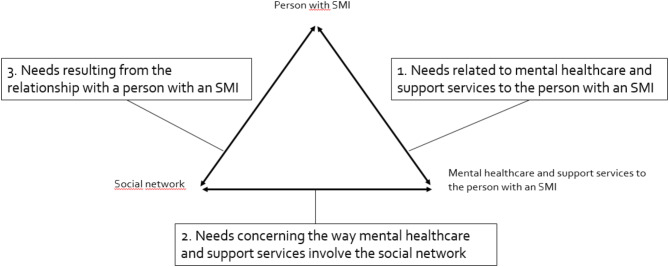
Results: (1) Needs related to mental healthcare and support services to the person with an SMI. Quality care and support for the person with an SMI were a priority for participants. They specifically wanted more robust care and support concerning mental health crises, daytime activities and housing support. (2) Needs concerning the way mental healthcare and support services involve the social network. Participants wanted professionals providing care and support to the person with an SMI to structurally acknowledge the role, possibilities and limitations of the social network around that person. (3) Needs resulting from their relationship with a person with an SMI. Many participants wanted information and education about SMI and the care provision, improved interaction skills, financial and practical assistance, social and peer support, the opportunity to (temporarily) take a step back or psychological support for themselves.
Conclusions: Creating a closer connection between the worlds of social network members and professionals is crucial. Social network members can experience a profound sense of loss and desperation as they navigate the complexities of being a family member, partner or friend of a person with an SMI. Recognizing how this desperation and deep-felt loss feed into the high hopes and expectations that social network members place on mental healthcare and support services, can help professionals in their interaction with social network members. This study underscores the importance of mental healthcare and support services in structurally extending its attention to social network members of people with an SMI. Considering the impact of the illness on social network members and acknowledging their needs and expectations, can contribute to social network members and professionals finding common ground, fostering a more sustainable support system around people with an SMI.
期刊介绍:
BMC Psychiatry is an open access, peer-reviewed journal that considers articles on all aspects of the prevention, diagnosis and management of psychiatric disorders, as well as related molecular genetics, pathophysiology, and epidemiology.





 京公网安备 11010802042870号
京ICP备2023020795号-1
京公网安备 11010802042870号
京ICP备2023020795号-1

 分享
分享
 求助内容:
求助内容: 应助结果提醒方式:
 扫码关注我们
