Kisha K Patel, Mito Tariveranmoshabad, Siddhant Kadu, Nour Shobaki, Carl June
{"title":"从概念到治愈:CAR-T细胞疗法的演变。","authors":"Kisha K Patel, Mito Tariveranmoshabad, Siddhant Kadu, Nour Shobaki, Carl June","doi":"10.1016/j.ymthe.2025.03.005","DOIUrl":null,"url":null,"abstract":"<p><p>Chimeric antigen receptor (CAR)-T cell therapy has revolutionized cancer immunotherapy in the 21st century, providing innovative solutions and life-saving therapies for previously untreatable diseases. This approach has shown remarkable success in treating various hematological malignancies and is now expanding into clinical trials for solid tumors, such as prostate cancer and glioblastoma, as well as infectious and autoimmune diseases. CAR-T cell therapy involves harvesting a patient's T cells, genetically engineering them with viral vectors to express CARs targeting specific antigens and reinfusing the modified cells into the patient. These CAR-T cells function independently of major histocompatibility complex (MHC) antigen presentation, selectively identifying and eliminating target cells. This review highlights the key milestones in CAR-T cell evolution, from its invention to its clinical applications. It outlines the historical timeline leading to the invention of CAR-T cells, discusses the major achievements that have transformed them into a breakthrough therapy, and addresses remaining challenges, including high manufacturing costs, limited accessibility, and toxicity issues such as cytokine release syndrome and immune effector cell-associated neurotoxicity syndrome. Additionally, the review explores future directions and advances in the field, such as developing next-generation CAR-T cells aiming to maximize efficacy, minimize toxicity, and broaden therapeutic applications.</p>","PeriodicalId":19020,"journal":{"name":"Molecular Therapy","volume":" ","pages":"2123-2140"},"PeriodicalIF":12.0000,"publicationDate":"2025-05-07","publicationTypes":"Journal Article","fieldsOfStudy":null,"isOpenAccess":false,"openAccessPdf":"https://www.ncbi.nlm.nih.gov/pmc/articles/PMC12126787/pdf/","citationCount":"0","resultStr":"{\"title\":\"From concept to cure: The evolution of CAR-T cell therapy.\",\"authors\":\"Kisha K Patel, Mito Tariveranmoshabad, Siddhant Kadu, Nour Shobaki, Carl June\",\"doi\":\"10.1016/j.ymthe.2025.03.005\",\"DOIUrl\":null,\"url\":null,\"abstract\":\"<p><p>Chimeric antigen receptor (CAR)-T cell therapy has revolutionized cancer immunotherapy in the 21st century, providing innovative solutions and life-saving therapies for previously untreatable diseases. This approach has shown remarkable success in treating various hematological malignancies and is now expanding into clinical trials for solid tumors, such as prostate cancer and glioblastoma, as well as infectious and autoimmune diseases. CAR-T cell therapy involves harvesting a patient's T cells, genetically engineering them with viral vectors to express CARs targeting specific antigens and reinfusing the modified cells into the patient. These CAR-T cells function independently of major histocompatibility complex (MHC) antigen presentation, selectively identifying and eliminating target cells. This review highlights the key milestones in CAR-T cell evolution, from its invention to its clinical applications. It outlines the historical timeline leading to the invention of CAR-T cells, discusses the major achievements that have transformed them into a breakthrough therapy, and addresses remaining challenges, including high manufacturing costs, limited accessibility, and toxicity issues such as cytokine release syndrome and immune effector cell-associated neurotoxicity syndrome. Additionally, the review explores future directions and advances in the field, such as developing next-generation CAR-T cells aiming to maximize efficacy, minimize toxicity, and broaden therapeutic applications.</p>\",\"PeriodicalId\":19020,\"journal\":{\"name\":\"Molecular Therapy\",\"volume\":\" \",\"pages\":\"2123-2140\"},\"PeriodicalIF\":12.0000,\"publicationDate\":\"2025-05-07\",\"publicationTypes\":\"Journal Article\",\"fieldsOfStudy\":null,\"isOpenAccess\":false,\"openAccessPdf\":\"https://www.ncbi.nlm.nih.gov/pmc/articles/PMC12126787/pdf/\",\"citationCount\":\"0\",\"resultStr\":null,\"platform\":\"Semanticscholar\",\"paperid\":null,\"PeriodicalName\":\"Molecular Therapy\",\"FirstCategoryId\":\"3\",\"ListUrlMain\":\"https://doi.org/10.1016/j.ymthe.2025.03.005\",\"RegionNum\":1,\"RegionCategory\":\"医学\",\"ArticlePicture\":[],\"TitleCN\":null,\"AbstractTextCN\":null,\"PMCID\":null,\"EPubDate\":\"2025/3/10 0:00:00\",\"PubModel\":\"Epub\",\"JCR\":\"Q1\",\"JCRName\":\"BIOTECHNOLOGY & APPLIED MICROBIOLOGY\",\"Score\":null,\"Total\":0}","platform":"Semanticscholar","paperid":null,"PeriodicalName":"Molecular Therapy","FirstCategoryId":"3","ListUrlMain":"https://doi.org/10.1016/j.ymthe.2025.03.005","RegionNum":1,"RegionCategory":"医学","ArticlePicture":[],"TitleCN":null,"AbstractTextCN":null,"PMCID":null,"EPubDate":"2025/3/10 0:00:00","PubModel":"Epub","JCR":"Q1","JCRName":"BIOTECHNOLOGY & APPLIED MICROBIOLOGY","Score":null,"Total":0}
From concept to cure: The evolution of CAR-T cell therapy.
Chimeric antigen receptor (CAR)-T cell therapy has revolutionized cancer immunotherapy in the 21st century, providing innovative solutions and life-saving therapies for previously untreatable diseases. This approach has shown remarkable success in treating various hematological malignancies and is now expanding into clinical trials for solid tumors, such as prostate cancer and glioblastoma, as well as infectious and autoimmune diseases. CAR-T cell therapy involves harvesting a patient's T cells, genetically engineering them with viral vectors to express CARs targeting specific antigens and reinfusing the modified cells into the patient. These CAR-T cells function independently of major histocompatibility complex (MHC) antigen presentation, selectively identifying and eliminating target cells. This review highlights the key milestones in CAR-T cell evolution, from its invention to its clinical applications. It outlines the historical timeline leading to the invention of CAR-T cells, discusses the major achievements that have transformed them into a breakthrough therapy, and addresses remaining challenges, including high manufacturing costs, limited accessibility, and toxicity issues such as cytokine release syndrome and immune effector cell-associated neurotoxicity syndrome. Additionally, the review explores future directions and advances in the field, such as developing next-generation CAR-T cells aiming to maximize efficacy, minimize toxicity, and broaden therapeutic applications.
期刊介绍:
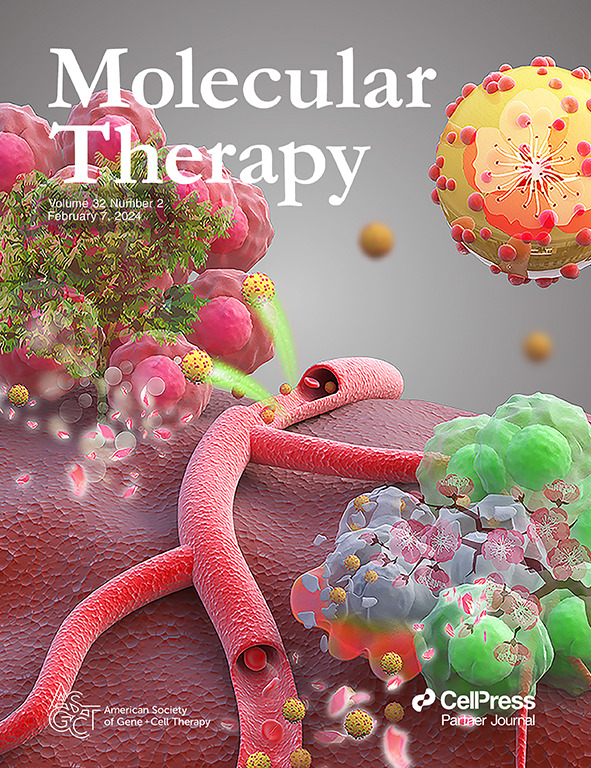
Molecular Therapy is the leading journal for research in gene transfer, vector development, stem cell manipulation, and therapeutic interventions. It covers a broad spectrum of topics including genetic and acquired disease correction, vaccine development, pre-clinical validation, safety/efficacy studies, and clinical trials. With a focus on advancing genetics, medicine, and biotechnology, Molecular Therapy publishes peer-reviewed research, reviews, and commentaries to showcase the latest advancements in the field. With an impressive impact factor of 12.4 in 2022, it continues to attract top-tier contributions.




 京公网安备 11010802042870号
京ICP备2023020795号-1
京公网安备 11010802042870号
京ICP备2023020795号-1

 分享
分享
 求助内容:
求助内容: 应助结果提醒方式:
 扫码关注我们
