M A J Versluis, Y M van der Linden, S Oerlemans, D W Sommeijer, W K de Jong, A Baars, T J Smilde, A van der Padt-Pruijsten, L V van de Poll-Franse, N J H Raijmakers
{"title":"晚期癌症患者生命最后一年与健康相关的生活质量和医疗保健使用的社会经济差异:eQuiPe研究的纵向结果","authors":"M A J Versluis, Y M van der Linden, S Oerlemans, D W Sommeijer, W K de Jong, A Baars, T J Smilde, A van der Padt-Pruijsten, L V van de Poll-Franse, N J H Raijmakers","doi":"10.1007/s00520-025-09309-9","DOIUrl":null,"url":null,"abstract":"<p><strong>Purpose: </strong>To examine socioeconomic disparities in health-related quality of life (HRQoL) and healthcare use during the last year of life of patients with advanced cancer.</p><p><strong>Methods: </strong>Data was used from a prospective, longitudinal, multicenter, observational study of patients with advanced cancer in forty Dutch hospitals (eQuiPe). Adult patients with stage IV cancer completed 3-monthly questionnaires until death. Socioeconomic position (SEP) was defined as estimated income on street-level. Mixed-effects regression analysis was used to identify associated factors.</p><p><strong>Results: </strong>A total of 639 patients were included, 14% with a lower SEP, 59% medium SEP and 28% higher SEP. Patients with a lower SEP were more often lower educated (40% vs. 18%, p < 0.001) and less often reported to have a partner (61% vs. 90%, p < 0.001) than those with a higher SEP. In the last year of life, patients with lower SEP were more likely to experience disease-related financial difficulties than those with higher SEP (28% vs. 12%, p = 0.001; β 8.2, 95%CI 2.9-13.3). No significant associations were found between SEP and HRQoL, hospital admissions or emergency department admissions. Although, patients with lower SEP had more frequent (≥ 5 per month) interactions with healthcare professionals than patients with higher SEP in the last year of life (OR 1.9, 95%CI 1.0-3.5).</p><p><strong>Conclusion: </strong>Some socioeconomic disparities are present during the last year of life of patients with advanced cancer. It is important for clinicians to be aware of the greater financial impact and higher healthcare utilization in patients with a lower SEP to ensure equitable end-of-life care.</p>","PeriodicalId":22046,"journal":{"name":"Supportive Care in Cancer","volume":"33 4","pages":"265"},"PeriodicalIF":3.4000,"publicationDate":"2025-03-11","publicationTypes":"Journal Article","fieldsOfStudy":null,"isOpenAccess":false,"openAccessPdf":"https://www.ncbi.nlm.nih.gov/pmc/articles/PMC11897117/pdf/","citationCount":"0","resultStr":"{\"title\":\"Socioeconomic disparities in health-related quality of life and healthcare use in the last year of life of patients with advanced cancer: longitudinal results from the eQuiPe study.\",\"authors\":\"M A J Versluis, Y M van der Linden, S Oerlemans, D W Sommeijer, W K de Jong, A Baars, T J Smilde, A van der Padt-Pruijsten, L V van de Poll-Franse, N J H Raijmakers\",\"doi\":\"10.1007/s00520-025-09309-9\",\"DOIUrl\":null,\"url\":null,\"abstract\":\"<p><strong>Purpose: </strong>To examine socioeconomic disparities in health-related quality of life (HRQoL) and healthcare use during the last year of life of patients with advanced cancer.</p><p><strong>Methods: </strong>Data was used from a prospective, longitudinal, multicenter, observational study of patients with advanced cancer in forty Dutch hospitals (eQuiPe). Adult patients with stage IV cancer completed 3-monthly questionnaires until death. Socioeconomic position (SEP) was defined as estimated income on street-level. Mixed-effects regression analysis was used to identify associated factors.</p><p><strong>Results: </strong>A total of 639 patients were included, 14% with a lower SEP, 59% medium SEP and 28% higher SEP. Patients with a lower SEP were more often lower educated (40% vs. 18%, p < 0.001) and less often reported to have a partner (61% vs. 90%, p < 0.001) than those with a higher SEP. In the last year of life, patients with lower SEP were more likely to experience disease-related financial difficulties than those with higher SEP (28% vs. 12%, p = 0.001; β 8.2, 95%CI 2.9-13.3). No significant associations were found between SEP and HRQoL, hospital admissions or emergency department admissions. Although, patients with lower SEP had more frequent (≥ 5 per month) interactions with healthcare professionals than patients with higher SEP in the last year of life (OR 1.9, 95%CI 1.0-3.5).</p><p><strong>Conclusion: </strong>Some socioeconomic disparities are present during the last year of life of patients with advanced cancer. It is important for clinicians to be aware of the greater financial impact and higher healthcare utilization in patients with a lower SEP to ensure equitable end-of-life care.</p>\",\"PeriodicalId\":22046,\"journal\":{\"name\":\"Supportive Care in Cancer\",\"volume\":\"33 4\",\"pages\":\"265\"},\"PeriodicalIF\":3.4000,\"publicationDate\":\"2025-03-11\",\"publicationTypes\":\"Journal Article\",\"fieldsOfStudy\":null,\"isOpenAccess\":false,\"openAccessPdf\":\"https://www.ncbi.nlm.nih.gov/pmc/articles/PMC11897117/pdf/\",\"citationCount\":\"0\",\"resultStr\":null,\"platform\":\"Semanticscholar\",\"paperid\":null,\"PeriodicalName\":\"Supportive Care in Cancer\",\"FirstCategoryId\":\"3\",\"ListUrlMain\":\"https://doi.org/10.1007/s00520-025-09309-9\",\"RegionNum\":3,\"RegionCategory\":\"医学\",\"ArticlePicture\":[],\"TitleCN\":null,\"AbstractTextCN\":null,\"PMCID\":null,\"EPubDate\":\"\",\"PubModel\":\"\",\"JCR\":\"Q2\",\"JCRName\":\"HEALTH CARE SCIENCES & SERVICES\",\"Score\":null,\"Total\":0}","platform":"Semanticscholar","paperid":null,"PeriodicalName":"Supportive Care in Cancer","FirstCategoryId":"3","ListUrlMain":"https://doi.org/10.1007/s00520-025-09309-9","RegionNum":3,"RegionCategory":"医学","ArticlePicture":[],"TitleCN":null,"AbstractTextCN":null,"PMCID":null,"EPubDate":"","PubModel":"","JCR":"Q2","JCRName":"HEALTH CARE SCIENCES & SERVICES","Score":null,"Total":0}
Socioeconomic disparities in health-related quality of life and healthcare use in the last year of life of patients with advanced cancer: longitudinal results from the eQuiPe study.
Purpose: To examine socioeconomic disparities in health-related quality of life (HRQoL) and healthcare use during the last year of life of patients with advanced cancer.
Methods: Data was used from a prospective, longitudinal, multicenter, observational study of patients with advanced cancer in forty Dutch hospitals (eQuiPe). Adult patients with stage IV cancer completed 3-monthly questionnaires until death. Socioeconomic position (SEP) was defined as estimated income on street-level. Mixed-effects regression analysis was used to identify associated factors.
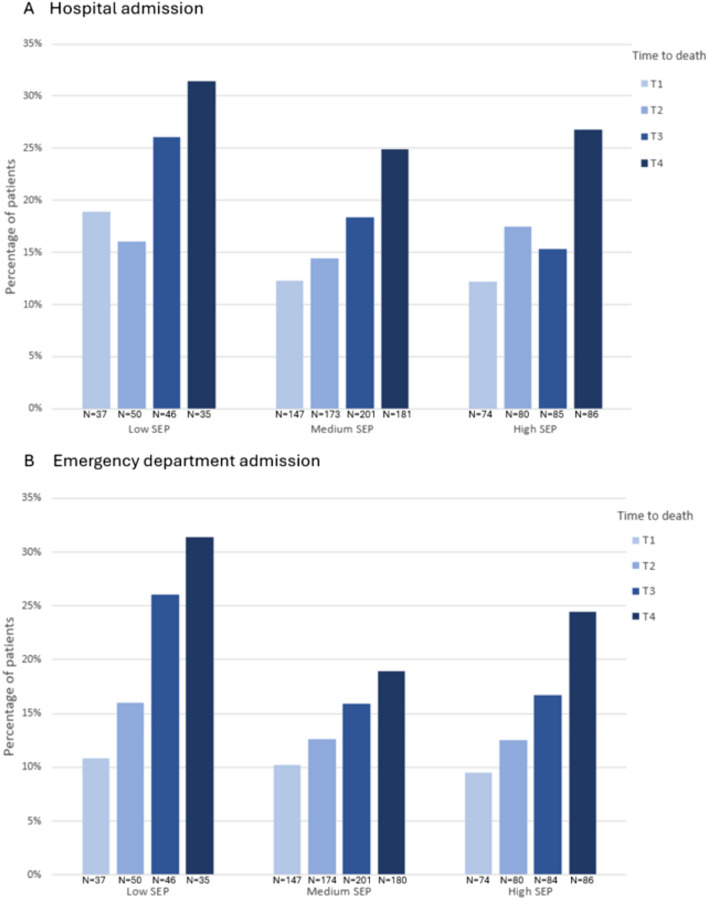
Results: A total of 639 patients were included, 14% with a lower SEP, 59% medium SEP and 28% higher SEP. Patients with a lower SEP were more often lower educated (40% vs. 18%, p < 0.001) and less often reported to have a partner (61% vs. 90%, p < 0.001) than those with a higher SEP. In the last year of life, patients with lower SEP were more likely to experience disease-related financial difficulties than those with higher SEP (28% vs. 12%, p = 0.001; β 8.2, 95%CI 2.9-13.3). No significant associations were found between SEP and HRQoL, hospital admissions or emergency department admissions. Although, patients with lower SEP had more frequent (≥ 5 per month) interactions with healthcare professionals than patients with higher SEP in the last year of life (OR 1.9, 95%CI 1.0-3.5).
Conclusion: Some socioeconomic disparities are present during the last year of life of patients with advanced cancer. It is important for clinicians to be aware of the greater financial impact and higher healthcare utilization in patients with a lower SEP to ensure equitable end-of-life care.
期刊介绍:
Supportive Care in Cancer provides members of the Multinational Association of Supportive Care in Cancer (MASCC) and all other interested individuals, groups and institutions with the most recent scientific and social information on all aspects of supportive care in cancer patients. It covers primarily medical, technical and surgical topics concerning supportive therapy and care which may supplement or substitute basic cancer treatment at all stages of the disease.
Nursing, rehabilitative, psychosocial and spiritual issues of support are also included.





 京公网安备 11010802042870号
京ICP备2023020795号-1
京公网安备 11010802042870号
京ICP备2023020795号-1

 分享
分享
 求助内容:
求助内容: 应助结果提醒方式:
 扫码关注我们
