Fabio Corvino, Francesco Giurazza, Massimo Galia, Antonio Corvino, Roberto Minici, Antonio Basile, Anna Maria Ierardi, Paolo Marra, Raffaella Niola
{"title":"下肢急慢性深静脉血栓的血管内超声表现。","authors":"Fabio Corvino, Francesco Giurazza, Massimo Galia, Antonio Corvino, Roberto Minici, Antonio Basile, Anna Maria Ierardi, Paolo Marra, Raffaella Niola","doi":"10.3390/diagnostics15050577","DOIUrl":null,"url":null,"abstract":"<p><p>Deep vein thrombosis (DVT) of the lower extremities, as part of venous thromboembolism disorder, is the third leading cause of acute cardiovascular syndrome after heart attack and stroke. It can result in disability due to pulmonary embolism (PE) and post-thrombotic syndrome (PTS), particularly in cases where the thrombosis extends to the iliofemoral veins. Anticoagulation therapy is effective in preventing thrombus propagation and embolism but may not be sufficient for thrombus degradation and venous patency restoration. Up to 50% of patients with iliofemoral DVT develop PTS, mainly due to venous outflow obstruction or valvular incompetence. To date, the advent of new devices that enables rapid thrombus elimination and the restoration of deep venous patency, known as the \"OPEN VEIN hypothesis\", may prevent valvular damage and reflux, cutting down the rate of PTS. Similarly, chronic venous disease could be related to a stenosis or occlusion of a major vein that can restrict blood flow. In this setting, intravascular ultrasound (IVUS) is an essential tool for correct diagnostic and therapeutic planning in acute and chronic vein disease. Only angiography in vein disease can limit the procedure's efficacy, with a high rate of stenosis misdiagnosed; IVUS provides further imaging that complements traditional angiographic study, and its role is now established by different international guidelines. If compared to angiography, IVUS allows for the evaluation of major axial veins in a 360-degree ultrasound image of the lumen and of the vessel wall structure. At the same time, the precise location and size of the major lower extremity veins allow for the placement of the stent to be more straightforward with a precise dimension of the vein in all of its diameters; moreover, other abnormalities should be visualized as acute or chronic thrombus, fibrosis, or trabeculations. This review aims to provide an in-depth analysis of IVUS findings in acute and chronic lower extremity DVT, emphasizing its diagnostic and therapeutic implications.</p>","PeriodicalId":11225,"journal":{"name":"Diagnostics","volume":"15 5","pages":""},"PeriodicalIF":3.8000,"publicationDate":"2025-02-27","publicationTypes":"Journal Article","fieldsOfStudy":null,"isOpenAccess":false,"openAccessPdf":"https://www.ncbi.nlm.nih.gov/pmc/articles/PMC11898815/pdf/","citationCount":"0","resultStr":"{\"title\":\"Intravascular Ultrasound Findings in Acute and Chronic Deep Vein Thrombosis of the Lower Extremities.\",\"authors\":\"Fabio Corvino, Francesco Giurazza, Massimo Galia, Antonio Corvino, Roberto Minici, Antonio Basile, Anna Maria Ierardi, Paolo Marra, Raffaella Niola\",\"doi\":\"10.3390/diagnostics15050577\",\"DOIUrl\":null,\"url\":null,\"abstract\":\"<p><p>Deep vein thrombosis (DVT) of the lower extremities, as part of venous thromboembolism disorder, is the third leading cause of acute cardiovascular syndrome after heart attack and stroke. It can result in disability due to pulmonary embolism (PE) and post-thrombotic syndrome (PTS), particularly in cases where the thrombosis extends to the iliofemoral veins. Anticoagulation therapy is effective in preventing thrombus propagation and embolism but may not be sufficient for thrombus degradation and venous patency restoration. Up to 50% of patients with iliofemoral DVT develop PTS, mainly due to venous outflow obstruction or valvular incompetence. To date, the advent of new devices that enables rapid thrombus elimination and the restoration of deep venous patency, known as the \\\"OPEN VEIN hypothesis\\\", may prevent valvular damage and reflux, cutting down the rate of PTS. Similarly, chronic venous disease could be related to a stenosis or occlusion of a major vein that can restrict blood flow. In this setting, intravascular ultrasound (IVUS) is an essential tool for correct diagnostic and therapeutic planning in acute and chronic vein disease. Only angiography in vein disease can limit the procedure's efficacy, with a high rate of stenosis misdiagnosed; IVUS provides further imaging that complements traditional angiographic study, and its role is now established by different international guidelines. If compared to angiography, IVUS allows for the evaluation of major axial veins in a 360-degree ultrasound image of the lumen and of the vessel wall structure. At the same time, the precise location and size of the major lower extremity veins allow for the placement of the stent to be more straightforward with a precise dimension of the vein in all of its diameters; moreover, other abnormalities should be visualized as acute or chronic thrombus, fibrosis, or trabeculations. This review aims to provide an in-depth analysis of IVUS findings in acute and chronic lower extremity DVT, emphasizing its diagnostic and therapeutic implications.</p>\",\"PeriodicalId\":11225,\"journal\":{\"name\":\"Diagnostics\",\"volume\":\"15 5\",\"pages\":\"\"},\"PeriodicalIF\":3.8000,\"publicationDate\":\"2025-02-27\",\"publicationTypes\":\"Journal Article\",\"fieldsOfStudy\":null,\"isOpenAccess\":false,\"openAccessPdf\":\"https://www.ncbi.nlm.nih.gov/pmc/articles/PMC11898815/pdf/\",\"citationCount\":\"0\",\"resultStr\":null,\"platform\":\"Semanticscholar\",\"paperid\":null,\"PeriodicalName\":\"Diagnostics\",\"FirstCategoryId\":\"3\",\"ListUrlMain\":\"https://doi.org/10.3390/diagnostics15050577\",\"RegionNum\":3,\"RegionCategory\":\"医学\",\"ArticlePicture\":[],\"TitleCN\":null,\"AbstractTextCN\":null,\"PMCID\":null,\"EPubDate\":\"\",\"PubModel\":\"\",\"JCR\":\"Q1\",\"JCRName\":\"MEDICINE, GENERAL & INTERNAL\",\"Score\":null,\"Total\":0}","platform":"Semanticscholar","paperid":null,"PeriodicalName":"Diagnostics","FirstCategoryId":"3","ListUrlMain":"https://doi.org/10.3390/diagnostics15050577","RegionNum":3,"RegionCategory":"医学","ArticlePicture":[],"TitleCN":null,"AbstractTextCN":null,"PMCID":null,"EPubDate":"","PubModel":"","JCR":"Q1","JCRName":"MEDICINE, GENERAL & INTERNAL","Score":null,"Total":0}
Intravascular Ultrasound Findings in Acute and Chronic Deep Vein Thrombosis of the Lower Extremities.
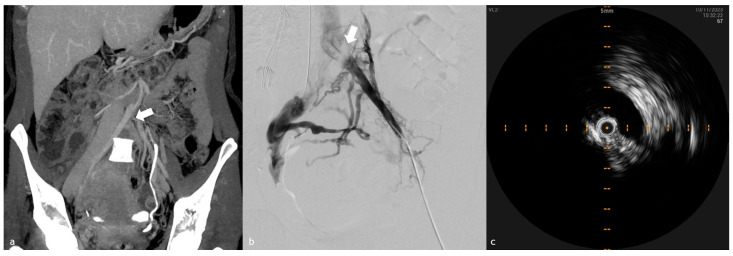
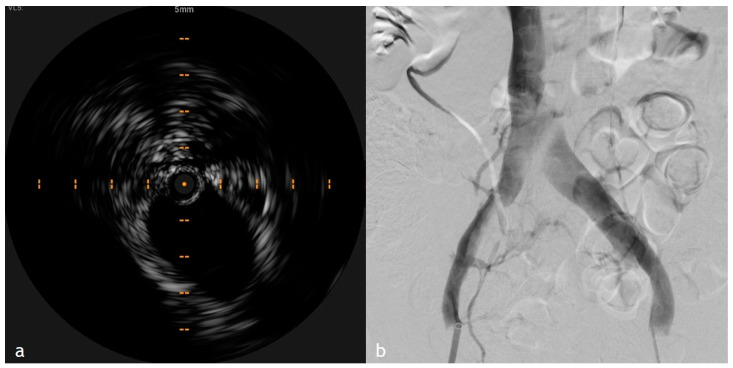
Deep vein thrombosis (DVT) of the lower extremities, as part of venous thromboembolism disorder, is the third leading cause of acute cardiovascular syndrome after heart attack and stroke. It can result in disability due to pulmonary embolism (PE) and post-thrombotic syndrome (PTS), particularly in cases where the thrombosis extends to the iliofemoral veins. Anticoagulation therapy is effective in preventing thrombus propagation and embolism but may not be sufficient for thrombus degradation and venous patency restoration. Up to 50% of patients with iliofemoral DVT develop PTS, mainly due to venous outflow obstruction or valvular incompetence. To date, the advent of new devices that enables rapid thrombus elimination and the restoration of deep venous patency, known as the "OPEN VEIN hypothesis", may prevent valvular damage and reflux, cutting down the rate of PTS. Similarly, chronic venous disease could be related to a stenosis or occlusion of a major vein that can restrict blood flow. In this setting, intravascular ultrasound (IVUS) is an essential tool for correct diagnostic and therapeutic planning in acute and chronic vein disease. Only angiography in vein disease can limit the procedure's efficacy, with a high rate of stenosis misdiagnosed; IVUS provides further imaging that complements traditional angiographic study, and its role is now established by different international guidelines. If compared to angiography, IVUS allows for the evaluation of major axial veins in a 360-degree ultrasound image of the lumen and of the vessel wall structure. At the same time, the precise location and size of the major lower extremity veins allow for the placement of the stent to be more straightforward with a precise dimension of the vein in all of its diameters; moreover, other abnormalities should be visualized as acute or chronic thrombus, fibrosis, or trabeculations. This review aims to provide an in-depth analysis of IVUS findings in acute and chronic lower extremity DVT, emphasizing its diagnostic and therapeutic implications.
DiagnosticsBiochemistry, Genetics and Molecular Biology-Clinical Biochemistry
CiteScore
4.70
自引率
8.30%
发文量
2699
审稿时长
19.64 days
期刊介绍:
Diagnostics (ISSN 2075-4418) is an international scholarly open access journal on medical diagnostics. It publishes original research articles, reviews, communications and short notes on the research and development of medical diagnostics. There is no restriction on the length of the papers. Our aim is to encourage scientists to publish their experimental and theoretical research in as much detail as possible. Full experimental and/or methodological details must be provided for research articles.





 京公网安备 11010802042870号
京ICP备2023020795号-1
京公网安备 11010802042870号
京ICP备2023020795号-1

 分享
分享
 求助内容:
求助内容: 应助结果提醒方式:
 扫码关注我们
