{"title":"拮抗剂方案中触发日黄体酮水平与基础黄体酮比值与体外受精-胚胎移植结果的关系","authors":"Miao-Yi Xu, Yu-Ting Wang, Yao-Fang Liu","doi":"10.2147/IJWH.S506574","DOIUrl":null,"url":null,"abstract":"<p><strong>Objective: </strong>To investigate the relationship between the progesterone level on trigger day (P<sub>trigger</sub>) to basal progesterone (bP) ratio and the outcomes of in vitro fertilization-embryo transfer (IVF-ET).</p><p><strong>Methods: </strong>A retrospective analysis was conducted on women who received an antagonist protocol, with a P<sub>trigger</sub> less than 1.5 ng/mL and who underwent fresh embryo transfer. Based on the P<sub>trigger</sub>/bP ratio, participants were categorized into four groups: group A (P<sub>trigger</sub>/bP < 1, n = 284), group B (P<sub>trigger</sub>/bP ≥ 1 and < 2, n = 363), group C (P<sub>trigger</sub>/bP ≥ 2 and < 3, n = 165), and group D (P<sub>trigger</sub>/bP ≥ 3, n = 118). Recombinant follicle-stimulating hormone was used to stimulate ovulation. Receiver operating characteristic curve analysis was used to analyze the accuracy of the P<sub>trigger</sub>/bP ratio in predicting clinical pregnancy following fresh embryo transfer.</p><p><strong>Results: </strong>A decreasing trend in bP levels was observed across groups (A > B > C > D), while P<sub>trigger</sub> levels showed an increasing trend (A < B < C < D). Groups A and B included significantly younger women and required lower doses of gonadotropin (Gn) compared to Groups C and D. The embryo implantation and clinical pregnancy rates in Group A were 34.93% and 49.30%, respectively, significantly higher than those in Group D (23.19% and 33.90%, respectively). After propensity score matching for age, the differences in implantation and clinical pregnancy rates were not statistically significant between Group A and D. The P<sub>trigger/</sub>bP ratio had limited accuracy in predicting clinical pregnancy, with an area under the curve of 0.538 (95% CI [confidence interval]: 0.501-0.575, <i>P = 0.044</i>).</p><p><strong>Conclusion: </strong>A P<sub>trigger</sub>/bP ratio of less than 1 was associated with relatively favorable pregnancy outcomes in women undergoing IVF-ET with an antagonist protocol for ovulation induction.</p>","PeriodicalId":14356,"journal":{"name":"International Journal of Women's Health","volume":"17 ","pages":"663-671"},"PeriodicalIF":2.6000,"publicationDate":"2025-03-08","publicationTypes":"Journal Article","fieldsOfStudy":null,"isOpenAccess":false,"openAccessPdf":"https://www.ncbi.nlm.nih.gov/pmc/articles/PMC11900791/pdf/","citationCount":"0","resultStr":"{\"title\":\"Association Between Progesterone Level on Trigger Day to Basal Progesterone Ratio and in vitro Fertilization-Embryo Transfer Outcomes in Antagonist Protocols.\",\"authors\":\"Miao-Yi Xu, Yu-Ting Wang, Yao-Fang Liu\",\"doi\":\"10.2147/IJWH.S506574\",\"DOIUrl\":null,\"url\":null,\"abstract\":\"<p><strong>Objective: </strong>To investigate the relationship between the progesterone level on trigger day (P<sub>trigger</sub>) to basal progesterone (bP) ratio and the outcomes of in vitro fertilization-embryo transfer (IVF-ET).</p><p><strong>Methods: </strong>A retrospective analysis was conducted on women who received an antagonist protocol, with a P<sub>trigger</sub> less than 1.5 ng/mL and who underwent fresh embryo transfer. Based on the P<sub>trigger</sub>/bP ratio, participants were categorized into four groups: group A (P<sub>trigger</sub>/bP < 1, n = 284), group B (P<sub>trigger</sub>/bP ≥ 1 and < 2, n = 363), group C (P<sub>trigger</sub>/bP ≥ 2 and < 3, n = 165), and group D (P<sub>trigger</sub>/bP ≥ 3, n = 118). Recombinant follicle-stimulating hormone was used to stimulate ovulation. Receiver operating characteristic curve analysis was used to analyze the accuracy of the P<sub>trigger</sub>/bP ratio in predicting clinical pregnancy following fresh embryo transfer.</p><p><strong>Results: </strong>A decreasing trend in bP levels was observed across groups (A > B > C > D), while P<sub>trigger</sub> levels showed an increasing trend (A < B < C < D). Groups A and B included significantly younger women and required lower doses of gonadotropin (Gn) compared to Groups C and D. The embryo implantation and clinical pregnancy rates in Group A were 34.93% and 49.30%, respectively, significantly higher than those in Group D (23.19% and 33.90%, respectively). After propensity score matching for age, the differences in implantation and clinical pregnancy rates were not statistically significant between Group A and D. The P<sub>trigger/</sub>bP ratio had limited accuracy in predicting clinical pregnancy, with an area under the curve of 0.538 (95% CI [confidence interval]: 0.501-0.575, <i>P = 0.044</i>).</p><p><strong>Conclusion: </strong>A P<sub>trigger</sub>/bP ratio of less than 1 was associated with relatively favorable pregnancy outcomes in women undergoing IVF-ET with an antagonist protocol for ovulation induction.</p>\",\"PeriodicalId\":14356,\"journal\":{\"name\":\"International Journal of Women's Health\",\"volume\":\"17 \",\"pages\":\"663-671\"},\"PeriodicalIF\":2.6000,\"publicationDate\":\"2025-03-08\",\"publicationTypes\":\"Journal Article\",\"fieldsOfStudy\":null,\"isOpenAccess\":false,\"openAccessPdf\":\"https://www.ncbi.nlm.nih.gov/pmc/articles/PMC11900791/pdf/\",\"citationCount\":\"0\",\"resultStr\":null,\"platform\":\"Semanticscholar\",\"paperid\":null,\"PeriodicalName\":\"International Journal of Women's Health\",\"FirstCategoryId\":\"3\",\"ListUrlMain\":\"https://doi.org/10.2147/IJWH.S506574\",\"RegionNum\":4,\"RegionCategory\":\"医学\",\"ArticlePicture\":[],\"TitleCN\":null,\"AbstractTextCN\":null,\"PMCID\":null,\"EPubDate\":\"2025/1/1 0:00:00\",\"PubModel\":\"eCollection\",\"JCR\":\"Q2\",\"JCRName\":\"OBSTETRICS & GYNECOLOGY\",\"Score\":null,\"Total\":0}","platform":"Semanticscholar","paperid":null,"PeriodicalName":"International Journal of Women's Health","FirstCategoryId":"3","ListUrlMain":"https://doi.org/10.2147/IJWH.S506574","RegionNum":4,"RegionCategory":"医学","ArticlePicture":[],"TitleCN":null,"AbstractTextCN":null,"PMCID":null,"EPubDate":"2025/1/1 0:00:00","PubModel":"eCollection","JCR":"Q2","JCRName":"OBSTETRICS & GYNECOLOGY","Score":null,"Total":0}
引用次数: 0
摘要
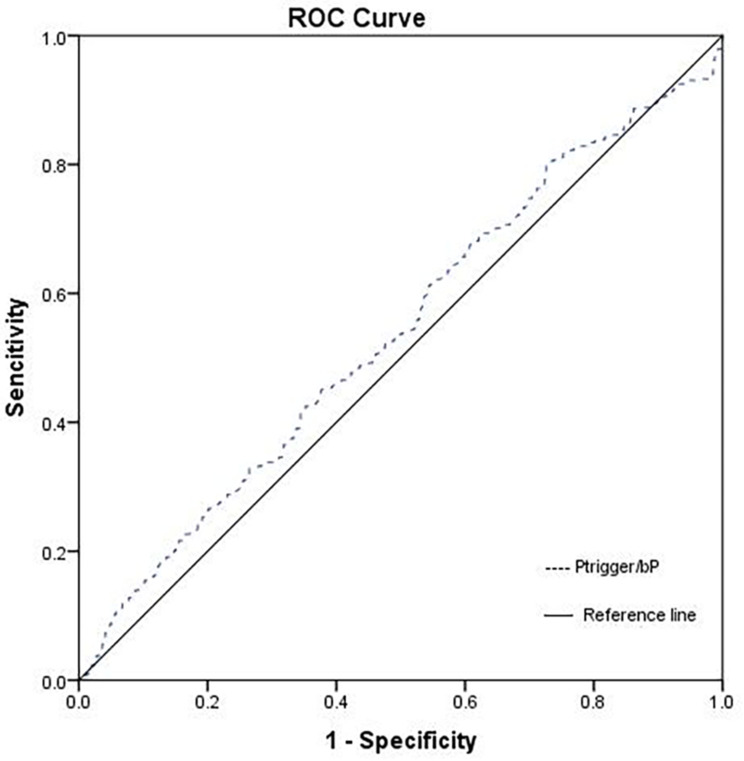
目的:探讨触发日(Ptrigger)孕酮与基础孕酮(bP)比值与体外受精-胚胎移植(IVF-ET)结果的关系。方法:回顾性分析接受拮抗剂方案的妇女,Ptrigger小于1.5 ng/mL,并进行新鲜胚胎移植。根据Ptrigger/bP比值将受试者分为A组(Ptrigger/bP < 1, n = 284)、B组(Ptrigger/bP≥1,< 2,n = 363)、C组(Ptrigger/bP≥2,< 3,n = 165)、D组(Ptrigger/bP≥3,n = 118)。使用重组促卵泡激素刺激排卵。采用受试者工作特征曲线分析,分析Ptrigger/bP比值预测新鲜胚胎移植后临床妊娠的准确性。结果:各组bP水平呈下降趋势(A b> B > C > D), Ptrigger水平呈上升趋势(A < B < C < D)。A、B组患者年龄明显低于C、D组,促性腺激素(Gn)用量明显低于C、D组,A组胚胎着床率和临床妊娠率分别为34.93%和49.30%,显著高于D组(23.19%和33.90%)。经年龄倾向评分匹配后,A组与d组的植入率和临床妊娠率差异无统计学意义。Ptrigger/bP比值预测临床妊娠的准确性有限,曲线下面积为0.538 (95% CI[置信区间]:0.501 ~ 0.575,P = 0.044)。结论:在使用拮抗剂促排卵的IVF-ET患者中,Ptrigger/bP比值小于1与相对有利的妊娠结局相关。
Association Between Progesterone Level on Trigger Day to Basal Progesterone Ratio and in vitro Fertilization-Embryo Transfer Outcomes in Antagonist Protocols.
Objective: To investigate the relationship between the progesterone level on trigger day (Ptrigger) to basal progesterone (bP) ratio and the outcomes of in vitro fertilization-embryo transfer (IVF-ET).
Methods: A retrospective analysis was conducted on women who received an antagonist protocol, with a Ptrigger less than 1.5 ng/mL and who underwent fresh embryo transfer. Based on the Ptrigger/bP ratio, participants were categorized into four groups: group A (Ptrigger/bP < 1, n = 284), group B (Ptrigger/bP ≥ 1 and < 2, n = 363), group C (Ptrigger/bP ≥ 2 and < 3, n = 165), and group D (Ptrigger/bP ≥ 3, n = 118). Recombinant follicle-stimulating hormone was used to stimulate ovulation. Receiver operating characteristic curve analysis was used to analyze the accuracy of the Ptrigger/bP ratio in predicting clinical pregnancy following fresh embryo transfer.
Results: A decreasing trend in bP levels was observed across groups (A > B > C > D), while Ptrigger levels showed an increasing trend (A < B < C < D). Groups A and B included significantly younger women and required lower doses of gonadotropin (Gn) compared to Groups C and D. The embryo implantation and clinical pregnancy rates in Group A were 34.93% and 49.30%, respectively, significantly higher than those in Group D (23.19% and 33.90%, respectively). After propensity score matching for age, the differences in implantation and clinical pregnancy rates were not statistically significant between Group A and D. The Ptrigger/bP ratio had limited accuracy in predicting clinical pregnancy, with an area under the curve of 0.538 (95% CI [confidence interval]: 0.501-0.575, P = 0.044).
Conclusion: A Ptrigger/bP ratio of less than 1 was associated with relatively favorable pregnancy outcomes in women undergoing IVF-ET with an antagonist protocol for ovulation induction.
期刊介绍:
International Journal of Women''s Health is an international, peer-reviewed, open access, online journal. Publishing original research, reports, editorials, reviews and commentaries on all aspects of women''s healthcare including gynecology, obstetrics, and breast cancer. Subject areas include: Chronic conditions including cancers of various organs specific and not specific to women Migraine, headaches, arthritis, osteoporosis Endocrine and autoimmune syndromes - asthma, multiple sclerosis, lupus, diabetes Sexual and reproductive health including fertility patterns and emerging technologies to address infertility Infectious disease with chronic sequelae including HIV/AIDS, HPV, PID, and other STDs Psychological and psychosocial conditions - depression across the life span, substance abuse, domestic violence Health maintenance among aging females - factors affecting the quality of life including physical, social and mental issues Avenues for health promotion and disease prevention across the life span Male vs female incidence comparisons for conditions that affect both genders.






 京公网安备 11010802042870号
京ICP备2023020795号-1
京公网安备 11010802042870号
京ICP备2023020795号-1

 分享
分享
 求助内容:
求助内容: 应助结果提醒方式:
 扫码关注我们
