{"title":"RNA-seq单核苷酸召唤基因型插入策略的比较分析。","authors":"Kaixuan Guo, Zhanming Zhong, Haonan Zeng, Changliang Zhang, Teddy Tinashe Chitotombe, Jinyan Teng, Yahui Gao, Zhe Zhang","doi":"10.1186/s12864-025-11411-5","DOIUrl":null,"url":null,"abstract":"<p><strong>Background: </strong>RNA sequencing (RNA-seq) is a powerful tool for transcriptome profiling, enabling integrative studies of expression quantitative trait loci (eQTL). As it identifies fewer genetic variants than DNA sequencing (DNA-seq), reference panel-based genotype imputation is often required to enhance its utility.</p><p><strong>Results: </strong>This study evaluated the accuracy of genotype imputation using SNPs called from RNA-seq data (RNA-SNPs). SNP features from 6,567 RNA-seq samples across 28 pig tissues were used to mask whole genome sequencing (WGS) data, with the Pig Genomic Reference Panel (PGRP) serving as the reference panel. Three imputation software tools (i.e., Beagle, Minimac4, and Impute5) were employed to perform the imputation. The result showed that RNA-SNPs achieved higher imputation accuracy (CR: 0.895 ~ 0.933; r²: 0.745 ~ 0.817) than SNPs from GeneSeek Genomic Profiler Porcine SNP50 BeadChip (Chip-SNPs) (CR: 0.873 ~ 0.909; r²: 0.629 ~ 0.698), and lower accuracy in \"intergenic\" regions. After imputation, quality control (QC) by minor allele frequency (MAF) and imputation quality (DR²) could improve r² but reduce SNP retention. Among software, Minimac4 takes the least runtime in single-thread setting, while Beagle performed best in multi-thread setting and phasing. Impute5 takes up minimal memory usage but requires the maximum runtime. All tools demonstrated comparable global accuracy (CR: 0.906 ~ 0.917; r²: 0.780 ~ 0.787).</p><p><strong>Conclusions: </strong>This study offers practical guidance for conducting RNA-SNP imputation strategies in genome and transcriptome research.</p>","PeriodicalId":9030,"journal":{"name":"BMC Genomics","volume":"26 1","pages":"245"},"PeriodicalIF":3.7000,"publicationDate":"2025-03-13","publicationTypes":"Journal Article","fieldsOfStudy":null,"isOpenAccess":false,"openAccessPdf":"https://www.ncbi.nlm.nih.gov/pmc/articles/PMC11907794/pdf/","citationCount":"0","resultStr":"{\"title\":\"Comparative analysis of genotype imputation strategies for SNPs calling from RNA-seq.\",\"authors\":\"Kaixuan Guo, Zhanming Zhong, Haonan Zeng, Changliang Zhang, Teddy Tinashe Chitotombe, Jinyan Teng, Yahui Gao, Zhe Zhang\",\"doi\":\"10.1186/s12864-025-11411-5\",\"DOIUrl\":null,\"url\":null,\"abstract\":\"<p><strong>Background: </strong>RNA sequencing (RNA-seq) is a powerful tool for transcriptome profiling, enabling integrative studies of expression quantitative trait loci (eQTL). As it identifies fewer genetic variants than DNA sequencing (DNA-seq), reference panel-based genotype imputation is often required to enhance its utility.</p><p><strong>Results: </strong>This study evaluated the accuracy of genotype imputation using SNPs called from RNA-seq data (RNA-SNPs). SNP features from 6,567 RNA-seq samples across 28 pig tissues were used to mask whole genome sequencing (WGS) data, with the Pig Genomic Reference Panel (PGRP) serving as the reference panel. Three imputation software tools (i.e., Beagle, Minimac4, and Impute5) were employed to perform the imputation. The result showed that RNA-SNPs achieved higher imputation accuracy (CR: 0.895 ~ 0.933; r²: 0.745 ~ 0.817) than SNPs from GeneSeek Genomic Profiler Porcine SNP50 BeadChip (Chip-SNPs) (CR: 0.873 ~ 0.909; r²: 0.629 ~ 0.698), and lower accuracy in \\\"intergenic\\\" regions. After imputation, quality control (QC) by minor allele frequency (MAF) and imputation quality (DR²) could improve r² but reduce SNP retention. Among software, Minimac4 takes the least runtime in single-thread setting, while Beagle performed best in multi-thread setting and phasing. Impute5 takes up minimal memory usage but requires the maximum runtime. All tools demonstrated comparable global accuracy (CR: 0.906 ~ 0.917; r²: 0.780 ~ 0.787).</p><p><strong>Conclusions: </strong>This study offers practical guidance for conducting RNA-SNP imputation strategies in genome and transcriptome research.</p>\",\"PeriodicalId\":9030,\"journal\":{\"name\":\"BMC Genomics\",\"volume\":\"26 1\",\"pages\":\"245\"},\"PeriodicalIF\":3.7000,\"publicationDate\":\"2025-03-13\",\"publicationTypes\":\"Journal Article\",\"fieldsOfStudy\":null,\"isOpenAccess\":false,\"openAccessPdf\":\"https://www.ncbi.nlm.nih.gov/pmc/articles/PMC11907794/pdf/\",\"citationCount\":\"0\",\"resultStr\":null,\"platform\":\"Semanticscholar\",\"paperid\":null,\"PeriodicalName\":\"BMC Genomics\",\"FirstCategoryId\":\"99\",\"ListUrlMain\":\"https://doi.org/10.1186/s12864-025-11411-5\",\"RegionNum\":2,\"RegionCategory\":\"生物学\",\"ArticlePicture\":[],\"TitleCN\":null,\"AbstractTextCN\":null,\"PMCID\":null,\"EPubDate\":\"\",\"PubModel\":\"\",\"JCR\":\"Q2\",\"JCRName\":\"BIOTECHNOLOGY & APPLIED MICROBIOLOGY\",\"Score\":null,\"Total\":0}","platform":"Semanticscholar","paperid":null,"PeriodicalName":"BMC Genomics","FirstCategoryId":"99","ListUrlMain":"https://doi.org/10.1186/s12864-025-11411-5","RegionNum":2,"RegionCategory":"生物学","ArticlePicture":[],"TitleCN":null,"AbstractTextCN":null,"PMCID":null,"EPubDate":"","PubModel":"","JCR":"Q2","JCRName":"BIOTECHNOLOGY & APPLIED MICROBIOLOGY","Score":null,"Total":0}
Comparative analysis of genotype imputation strategies for SNPs calling from RNA-seq.
Background: RNA sequencing (RNA-seq) is a powerful tool for transcriptome profiling, enabling integrative studies of expression quantitative trait loci (eQTL). As it identifies fewer genetic variants than DNA sequencing (DNA-seq), reference panel-based genotype imputation is often required to enhance its utility.
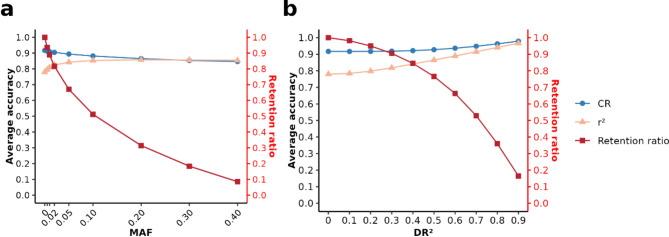
Results: This study evaluated the accuracy of genotype imputation using SNPs called from RNA-seq data (RNA-SNPs). SNP features from 6,567 RNA-seq samples across 28 pig tissues were used to mask whole genome sequencing (WGS) data, with the Pig Genomic Reference Panel (PGRP) serving as the reference panel. Three imputation software tools (i.e., Beagle, Minimac4, and Impute5) were employed to perform the imputation. The result showed that RNA-SNPs achieved higher imputation accuracy (CR: 0.895 ~ 0.933; r²: 0.745 ~ 0.817) than SNPs from GeneSeek Genomic Profiler Porcine SNP50 BeadChip (Chip-SNPs) (CR: 0.873 ~ 0.909; r²: 0.629 ~ 0.698), and lower accuracy in "intergenic" regions. After imputation, quality control (QC) by minor allele frequency (MAF) and imputation quality (DR²) could improve r² but reduce SNP retention. Among software, Minimac4 takes the least runtime in single-thread setting, while Beagle performed best in multi-thread setting and phasing. Impute5 takes up minimal memory usage but requires the maximum runtime. All tools demonstrated comparable global accuracy (CR: 0.906 ~ 0.917; r²: 0.780 ~ 0.787).
Conclusions: This study offers practical guidance for conducting RNA-SNP imputation strategies in genome and transcriptome research.
期刊介绍:
BMC Genomics is an open access, peer-reviewed journal that considers articles on all aspects of genome-scale analysis, functional genomics, and proteomics.
BMC Genomics is part of the BMC series which publishes subject-specific journals focused on the needs of individual research communities across all areas of biology and medicine. We offer an efficient, fair and friendly peer review service, and are committed to publishing all sound science, provided that there is some advance in knowledge presented by the work.







 京公网安备 11010802042870号
京ICP备2023020795号-1
京公网安备 11010802042870号
京ICP备2023020795号-1

 分享
分享
 求助内容:
求助内容: 应助结果提醒方式:
 扫码关注我们
