{"title":"结肠炎可使大鼠扣带皮层神经元密度降低。","authors":"Fazel Isapanah Amlashi, Sima Besharat, Mehrdad Jahanshahi, Hesamaddin Shirzad-Aski, Fatemeh Nassaj Torshizi","doi":"10.1186/s12876-025-03745-x","DOIUrl":null,"url":null,"abstract":"<p><strong>Background and aim: </strong>Hyperalgesia and hypersensitivity in patients with Inflammatory Bowel Disease (IBD) can be related to central nervous system (CNS) changes, particularly in the pain pathways. The objective of this study was to examine the neuronal density of the cingulate cortex area (CC) and amygdala in an animal model of colitis.</p><p><strong>Materials and methods: </strong>In this experiment, 13 male Wistar rats were subjected to study. Colitis was induced in the rats by transrectally administering 1 cc of acetic acid 3% under sedation with xylazine 10% (5 mg/kg). After 14 days of colitis, the rats were euthanized under high doses of anesthesia with ketamine (50 mg/kg), xylazine (10 mg/kg), and diazepam (2.5 mg/kg). Their brains were then removed surgically. Six-micrometer-thick brain slices were stained with cresyl violet, and the neuronal density of the amygdala, area 1 of the cingulate cortex area (CC1), and area 2 of the cingulate cortex area (CC2) was assessed via microscopic imaging.</p><p><strong>Results: </strong>The mean ± standard deviation (SD) of the neuronal density in CC1 was significantly decreased in rats with colitis compared to the control group in both the right CC1 (43.53 ± 9.63 vs. 62.7 ± 11.89; p-value ˂ 0.001), and left CC1 (41.19 ± 9.05 and 63.1 ± 7.44; p-value ˂ 0.001). Additionally, the neuronal density of CC2 in the colitis group was found to be significantly lower than that of the controls in both the right CC2 (57.8 ± 13.23 vs. 87.95 ± 8.76; p-value ˂ 0.001), and left CC2 (55.42 ± 11.3 vs. 98 ± 8.99; p-value ˂ 0.001). Furthermore, the amygdala had a lower neuronal density in both hemispheres in rats with colitis in comparison to the controls bilaterally: right hemisphere (24.51 ± 5.49 and 36.3 ± 7.44; p-value = 0.360), and left hemisphere (24.52 ± 5.53 VS. 35.25 ± 5.6; P-value = 0.869).</p><p><strong>Conclusion: </strong>This study showed that colitis can reduce the neuronal density within cortical areas and amygdala of both hemispheres. Considering the cingulate cortex's role in suppressing pain perception, any harm inflicted upon this region of the brain can has the ability to impact the cognitive and sensory aspects of pain.</p>","PeriodicalId":9129,"journal":{"name":"BMC Gastroenterology","volume":"25 1","pages":"171"},"PeriodicalIF":3.2000,"publicationDate":"2025-03-13","publicationTypes":"Journal Article","fieldsOfStudy":null,"isOpenAccess":false,"openAccessPdf":"https://www.ncbi.nlm.nih.gov/pmc/articles/PMC11907912/pdf/","citationCount":"0","resultStr":"{\"title\":\"Colitis can reduce the cingulate cortex neuronal density in rats.\",\"authors\":\"Fazel Isapanah Amlashi, Sima Besharat, Mehrdad Jahanshahi, Hesamaddin Shirzad-Aski, Fatemeh Nassaj Torshizi\",\"doi\":\"10.1186/s12876-025-03745-x\",\"DOIUrl\":null,\"url\":null,\"abstract\":\"<p><strong>Background and aim: </strong>Hyperalgesia and hypersensitivity in patients with Inflammatory Bowel Disease (IBD) can be related to central nervous system (CNS) changes, particularly in the pain pathways. The objective of this study was to examine the neuronal density of the cingulate cortex area (CC) and amygdala in an animal model of colitis.</p><p><strong>Materials and methods: </strong>In this experiment, 13 male Wistar rats were subjected to study. Colitis was induced in the rats by transrectally administering 1 cc of acetic acid 3% under sedation with xylazine 10% (5 mg/kg). After 14 days of colitis, the rats were euthanized under high doses of anesthesia with ketamine (50 mg/kg), xylazine (10 mg/kg), and diazepam (2.5 mg/kg). Their brains were then removed surgically. Six-micrometer-thick brain slices were stained with cresyl violet, and the neuronal density of the amygdala, area 1 of the cingulate cortex area (CC1), and area 2 of the cingulate cortex area (CC2) was assessed via microscopic imaging.</p><p><strong>Results: </strong>The mean ± standard deviation (SD) of the neuronal density in CC1 was significantly decreased in rats with colitis compared to the control group in both the right CC1 (43.53 ± 9.63 vs. 62.7 ± 11.89; p-value ˂ 0.001), and left CC1 (41.19 ± 9.05 and 63.1 ± 7.44; p-value ˂ 0.001). Additionally, the neuronal density of CC2 in the colitis group was found to be significantly lower than that of the controls in both the right CC2 (57.8 ± 13.23 vs. 87.95 ± 8.76; p-value ˂ 0.001), and left CC2 (55.42 ± 11.3 vs. 98 ± 8.99; p-value ˂ 0.001). Furthermore, the amygdala had a lower neuronal density in both hemispheres in rats with colitis in comparison to the controls bilaterally: right hemisphere (24.51 ± 5.49 and 36.3 ± 7.44; p-value = 0.360), and left hemisphere (24.52 ± 5.53 VS. 35.25 ± 5.6; P-value = 0.869).</p><p><strong>Conclusion: </strong>This study showed that colitis can reduce the neuronal density within cortical areas and amygdala of both hemispheres. Considering the cingulate cortex's role in suppressing pain perception, any harm inflicted upon this region of the brain can has the ability to impact the cognitive and sensory aspects of pain.</p>\",\"PeriodicalId\":9129,\"journal\":{\"name\":\"BMC Gastroenterology\",\"volume\":\"25 1\",\"pages\":\"171\"},\"PeriodicalIF\":3.2000,\"publicationDate\":\"2025-03-13\",\"publicationTypes\":\"Journal Article\",\"fieldsOfStudy\":null,\"isOpenAccess\":false,\"openAccessPdf\":\"https://www.ncbi.nlm.nih.gov/pmc/articles/PMC11907912/pdf/\",\"citationCount\":\"0\",\"resultStr\":null,\"platform\":\"Semanticscholar\",\"paperid\":null,\"PeriodicalName\":\"BMC Gastroenterology\",\"FirstCategoryId\":\"3\",\"ListUrlMain\":\"https://doi.org/10.1186/s12876-025-03745-x\",\"RegionNum\":3,\"RegionCategory\":\"医学\",\"ArticlePicture\":[],\"TitleCN\":null,\"AbstractTextCN\":null,\"PMCID\":null,\"EPubDate\":\"\",\"PubModel\":\"\",\"JCR\":\"Q2\",\"JCRName\":\"GASTROENTEROLOGY & HEPATOLOGY\",\"Score\":null,\"Total\":0}","platform":"Semanticscholar","paperid":null,"PeriodicalName":"BMC Gastroenterology","FirstCategoryId":"3","ListUrlMain":"https://doi.org/10.1186/s12876-025-03745-x","RegionNum":3,"RegionCategory":"医学","ArticlePicture":[],"TitleCN":null,"AbstractTextCN":null,"PMCID":null,"EPubDate":"","PubModel":"","JCR":"Q2","JCRName":"GASTROENTEROLOGY & HEPATOLOGY","Score":null,"Total":0}
引用次数: 0
摘要
背景和目的:炎症性肠病(IBD)患者的痛觉过敏和超敏反应可能与中枢神经系统(CNS)的改变有关,特别是在疼痛通路中。本研究的目的是检查结肠炎动物模型扣带皮质区(CC)和杏仁核的神经元密度。材料与方法:本实验以13只雄性Wistar大鼠为研究对象。大鼠经直肠给药1 cc醋酸3%,羟嗪10% (5 mg/kg)镇静,诱导结肠炎。结肠炎14天后,大鼠在高剂量氯胺酮(50 mg/kg)、噻嗪(10 mg/kg)和地西泮(2.5 mg/kg)麻醉下安乐死。然后,他们的大脑被手术切除。用甲酚紫染色6微米厚的脑切片,通过显微镜成像评估杏仁核、扣带皮层1区(CC1)和扣带皮层2区(CC2)的神经元密度。结果:结肠炎大鼠右侧CC1神经元密度均值±标准差(SD)较对照组显著降低(43.53±9.63∶62.7±11.89;p值小于0.001),左CC1(41.19±9.05和63.1±7.44;p值小于0.001)。结肠炎组CC2右侧神经元密度明显低于对照组(57.8±13.23 vs. 87.95±8.76;p值小于0.001),左CC2(55.42±11.3∶98±8.99;p值小于0.001)。此外,与双侧对照组相比,结肠炎大鼠双脑杏仁核的神经元密度较低:右半球(24.51±5.49和36.3±7.44);p值= 0.360),左半球(24.52±5.53 VS. 35.25±5.6;p值= 0.869)。结论:结肠炎可使双脑皮质区和杏仁核内的神经元密度降低。考虑到扣带皮层在抑制疼痛感知方面的作用,对大脑这一区域造成的任何伤害都可能影响疼痛的认知和感觉方面。
Colitis can reduce the cingulate cortex neuronal density in rats.
Background and aim: Hyperalgesia and hypersensitivity in patients with Inflammatory Bowel Disease (IBD) can be related to central nervous system (CNS) changes, particularly in the pain pathways. The objective of this study was to examine the neuronal density of the cingulate cortex area (CC) and amygdala in an animal model of colitis.
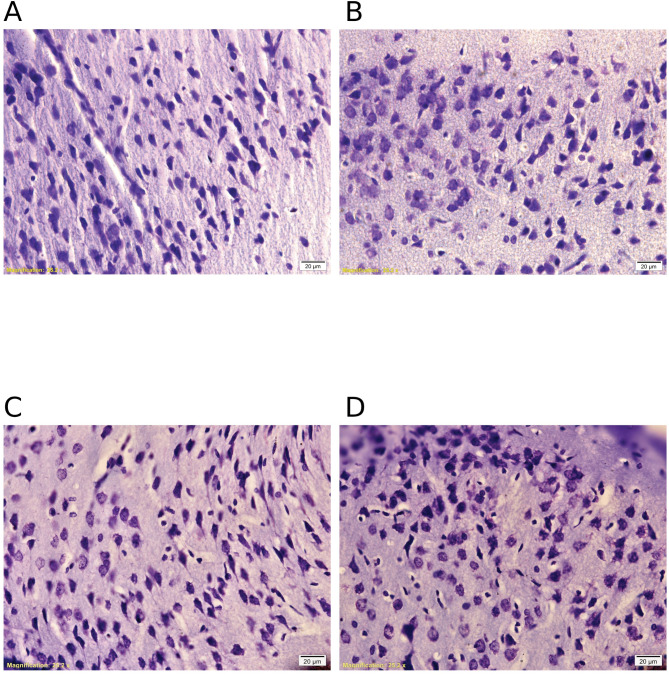
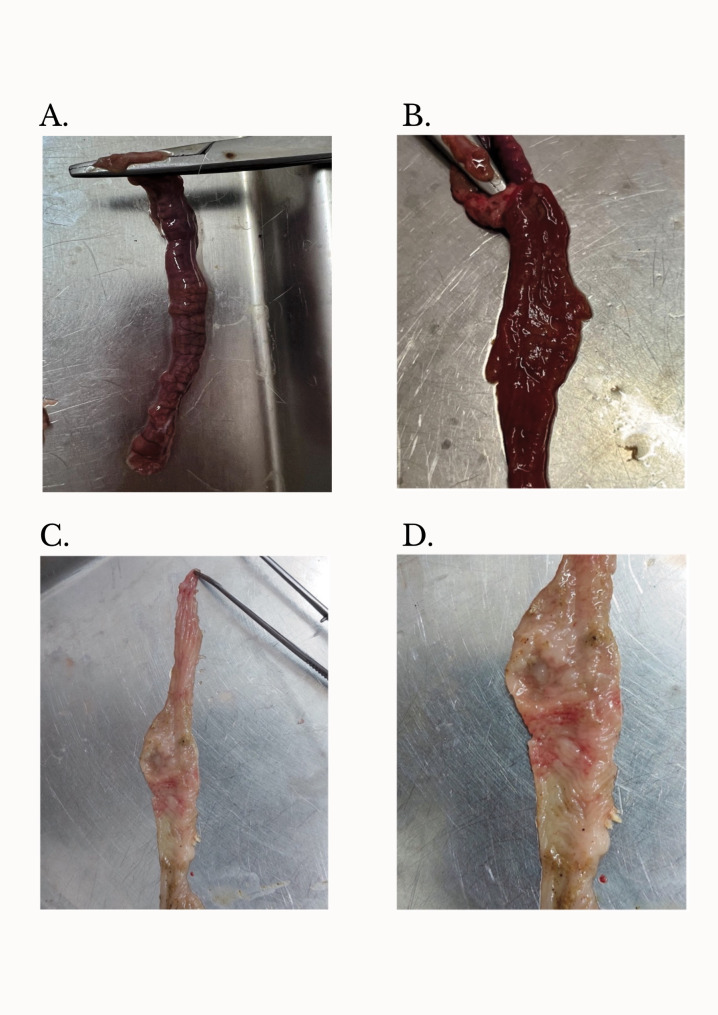
Materials and methods: In this experiment, 13 male Wistar rats were subjected to study. Colitis was induced in the rats by transrectally administering 1 cc of acetic acid 3% under sedation with xylazine 10% (5 mg/kg). After 14 days of colitis, the rats were euthanized under high doses of anesthesia with ketamine (50 mg/kg), xylazine (10 mg/kg), and diazepam (2.5 mg/kg). Their brains were then removed surgically. Six-micrometer-thick brain slices were stained with cresyl violet, and the neuronal density of the amygdala, area 1 of the cingulate cortex area (CC1), and area 2 of the cingulate cortex area (CC2) was assessed via microscopic imaging.
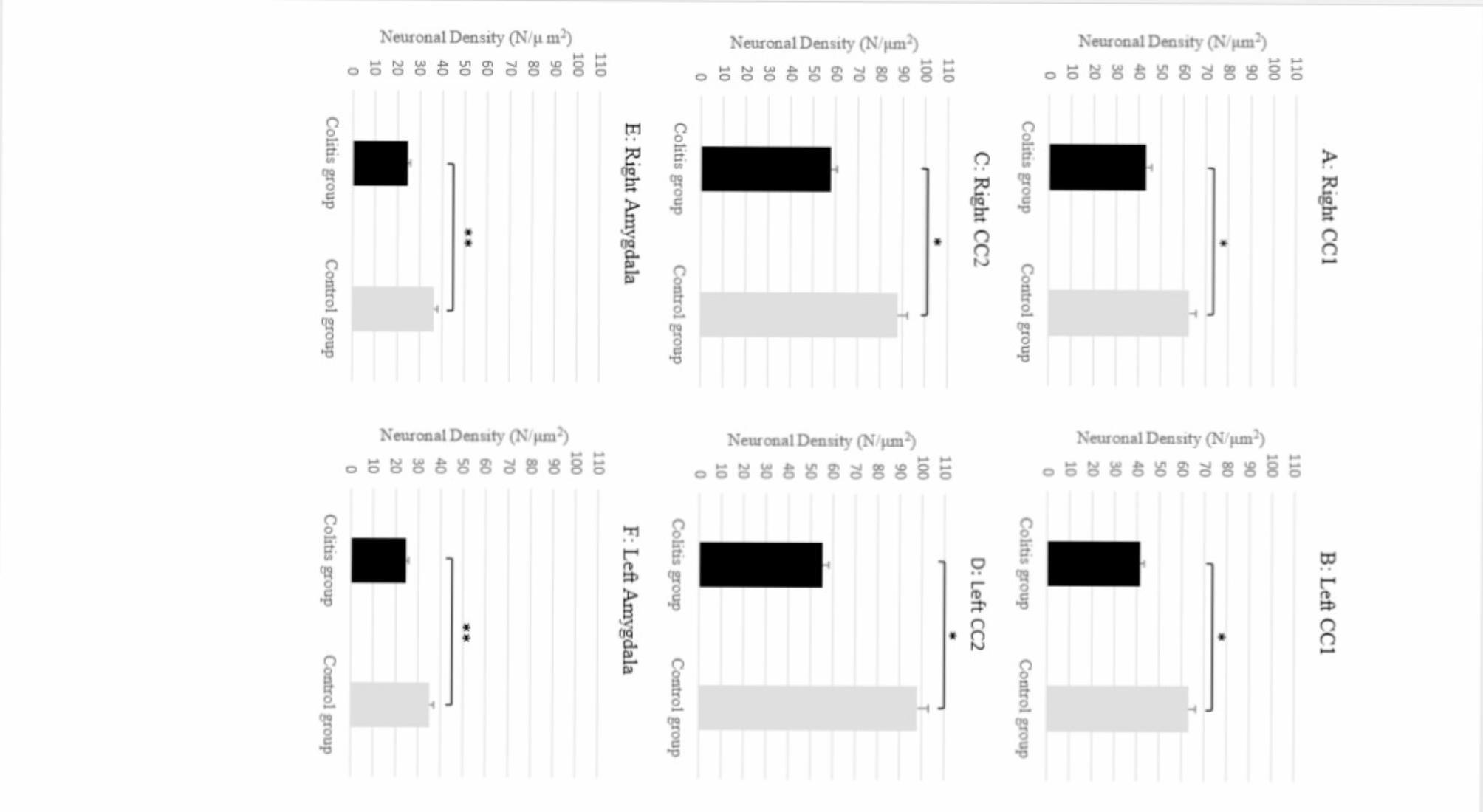
Results: The mean ± standard deviation (SD) of the neuronal density in CC1 was significantly decreased in rats with colitis compared to the control group in both the right CC1 (43.53 ± 9.63 vs. 62.7 ± 11.89; p-value ˂ 0.001), and left CC1 (41.19 ± 9.05 and 63.1 ± 7.44; p-value ˂ 0.001). Additionally, the neuronal density of CC2 in the colitis group was found to be significantly lower than that of the controls in both the right CC2 (57.8 ± 13.23 vs. 87.95 ± 8.76; p-value ˂ 0.001), and left CC2 (55.42 ± 11.3 vs. 98 ± 8.99; p-value ˂ 0.001). Furthermore, the amygdala had a lower neuronal density in both hemispheres in rats with colitis in comparison to the controls bilaterally: right hemisphere (24.51 ± 5.49 and 36.3 ± 7.44; p-value = 0.360), and left hemisphere (24.52 ± 5.53 VS. 35.25 ± 5.6; P-value = 0.869).
Conclusion: This study showed that colitis can reduce the neuronal density within cortical areas and amygdala of both hemispheres. Considering the cingulate cortex's role in suppressing pain perception, any harm inflicted upon this region of the brain can has the ability to impact the cognitive and sensory aspects of pain.
期刊介绍:
BMC Gastroenterology is an open access, peer-reviewed journal that considers articles on all aspects of the prevention, diagnosis and management of gastrointestinal and hepatobiliary disorders, as well as related molecular genetics, pathophysiology, and epidemiology.




 京公网安备 11010802042870号
京ICP备2023020795号-1
京公网安备 11010802042870号
京ICP备2023020795号-1

 分享
分享
 求助内容:
求助内容: 应助结果提醒方式:
 扫码关注我们
