Eliezer Y. Goldmünz , Abraham Aserin , Ananya Pal , Daphna Shimon , M.Francesca Ottaviani , Nissim Garti
{"title":"用于口服零级缓释药物的ph敏感溶性液晶珠。","authors":"Eliezer Y. Goldmünz , Abraham Aserin , Ananya Pal , Daphna Shimon , M.Francesca Ottaviani , Nissim Garti","doi":"10.1016/j.ijpharm.2025.125412","DOIUrl":null,"url":null,"abstract":"<div><div>The present study introduces a novel formulation approach for utilizing Lyotropic Liquid Crystals (LLCs) as sustained oral delivery systems. For this purpose, a novel bottom-up fabrication process was developed, enabling the casting of LLC beads with precise control over their diameter. Predetermining the effective diffusional interfacial surface of the beads enables regulation of the release rate of solubilized drugs from the LLCs. To prevent bead coalescence throughout shelf life, the LLC beads are embedded in a heat-sensitive gelatin-chitosan coacervate. Additionally, the study focuses on LLC beads formulated as pH-responsive systems, designed to attenuate the Higuchian primary diffusional burst in a gastric environment while enhancing the release of the solubilized load at an elevated pH (6.4).</div><div>To demonstrate the applicability of the pH-responsive systems, the LLC beads were loaded with a lipophilic low water solubility (< 5 µg/mL) model drug, Celecoxib (CLXB). Although the water solubility of CLXB is not pH dependent, the Higuchian release constant of CLXB increased from 9.31 at pH 1.5 to 15.03 at pH 6.4. The pH dependency of CLXB release was achieved by the co-solubilization of additional compounds in the LLC structure, creating a pH-dependent environment that influences both the LLC structure and the release of the co-solubilized compounds. The enhanced release of CLXB in an elevated pH environment enables gaining a zero-order (R<sup>2</sup> > 0.99) sustained release profile extending beyond 10 h in a release medium simulating the gastrointestinal (GI) tract environment.</div><div>Additionally, the study investigated the association between the release of co-solubilized compounds and the micellar structure using techniques such as small-angle X-ray diffraction, nuclear magnetic resonance, and electron paramagnetic resonance. The results revealed a co-dependent relationship between the release of lipophilic compounds and changes of the LLC's curvature at different pH levels, suggesting that a compensatory mechanism operates between these two processes. These insights, combined with the innovative bottom-up fabrication method for LLC beads, provide valuable tools for controlling the release of lipophilic compounds from LLCs and for enhancing their effectiveness as controlled oral delivery systems.</div></div>","PeriodicalId":14187,"journal":{"name":"International Journal of Pharmaceutics","volume":"674 ","pages":"Article 125412"},"PeriodicalIF":5.2000,"publicationDate":"2025-04-15","publicationTypes":"Journal Article","fieldsOfStudy":null,"isOpenAccess":false,"openAccessPdf":"","citationCount":"0","resultStr":"{\"title\":\"pH-sensitive lyotropic liquid crystal beads designed for oral zero-order extended drug release\",\"authors\":\"Eliezer Y. Goldmünz , Abraham Aserin , Ananya Pal , Daphna Shimon , M.Francesca Ottaviani , Nissim Garti\",\"doi\":\"10.1016/j.ijpharm.2025.125412\",\"DOIUrl\":null,\"url\":null,\"abstract\":\"<div><div>The present study introduces a novel formulation approach for utilizing Lyotropic Liquid Crystals (LLCs) as sustained oral delivery systems. For this purpose, a novel bottom-up fabrication process was developed, enabling the casting of LLC beads with precise control over their diameter. Predetermining the effective diffusional interfacial surface of the beads enables regulation of the release rate of solubilized drugs from the LLCs. To prevent bead coalescence throughout shelf life, the LLC beads are embedded in a heat-sensitive gelatin-chitosan coacervate. Additionally, the study focuses on LLC beads formulated as pH-responsive systems, designed to attenuate the Higuchian primary diffusional burst in a gastric environment while enhancing the release of the solubilized load at an elevated pH (6.4).</div><div>To demonstrate the applicability of the pH-responsive systems, the LLC beads were loaded with a lipophilic low water solubility (< 5 µg/mL) model drug, Celecoxib (CLXB). Although the water solubility of CLXB is not pH dependent, the Higuchian release constant of CLXB increased from 9.31 at pH 1.5 to 15.03 at pH 6.4. The pH dependency of CLXB release was achieved by the co-solubilization of additional compounds in the LLC structure, creating a pH-dependent environment that influences both the LLC structure and the release of the co-solubilized compounds. The enhanced release of CLXB in an elevated pH environment enables gaining a zero-order (R<sup>2</sup> > 0.99) sustained release profile extending beyond 10 h in a release medium simulating the gastrointestinal (GI) tract environment.</div><div>Additionally, the study investigated the association between the release of co-solubilized compounds and the micellar structure using techniques such as small-angle X-ray diffraction, nuclear magnetic resonance, and electron paramagnetic resonance. The results revealed a co-dependent relationship between the release of lipophilic compounds and changes of the LLC's curvature at different pH levels, suggesting that a compensatory mechanism operates between these two processes. These insights, combined with the innovative bottom-up fabrication method for LLC beads, provide valuable tools for controlling the release of lipophilic compounds from LLCs and for enhancing their effectiveness as controlled oral delivery systems.</div></div>\",\"PeriodicalId\":14187,\"journal\":{\"name\":\"International Journal of Pharmaceutics\",\"volume\":\"674 \",\"pages\":\"Article 125412\"},\"PeriodicalIF\":5.2000,\"publicationDate\":\"2025-04-15\",\"publicationTypes\":\"Journal Article\",\"fieldsOfStudy\":null,\"isOpenAccess\":false,\"openAccessPdf\":\"\",\"citationCount\":\"0\",\"resultStr\":null,\"platform\":\"Semanticscholar\",\"paperid\":null,\"PeriodicalName\":\"International Journal of Pharmaceutics\",\"FirstCategoryId\":\"3\",\"ListUrlMain\":\"https://www.sciencedirect.com/science/article/pii/S0378517325002480\",\"RegionNum\":2,\"RegionCategory\":\"医学\",\"ArticlePicture\":[],\"TitleCN\":null,\"AbstractTextCN\":null,\"PMCID\":null,\"EPubDate\":\"2025/3/12 0:00:00\",\"PubModel\":\"Epub\",\"JCR\":\"Q1\",\"JCRName\":\"PHARMACOLOGY & PHARMACY\",\"Score\":null,\"Total\":0}","platform":"Semanticscholar","paperid":null,"PeriodicalName":"International Journal of Pharmaceutics","FirstCategoryId":"3","ListUrlMain":"https://www.sciencedirect.com/science/article/pii/S0378517325002480","RegionNum":2,"RegionCategory":"医学","ArticlePicture":[],"TitleCN":null,"AbstractTextCN":null,"PMCID":null,"EPubDate":"2025/3/12 0:00:00","PubModel":"Epub","JCR":"Q1","JCRName":"PHARMACOLOGY & PHARMACY","Score":null,"Total":0}
pH-sensitive lyotropic liquid crystal beads designed for oral zero-order extended drug release
The present study introduces a novel formulation approach for utilizing Lyotropic Liquid Crystals (LLCs) as sustained oral delivery systems. For this purpose, a novel bottom-up fabrication process was developed, enabling the casting of LLC beads with precise control over their diameter. Predetermining the effective diffusional interfacial surface of the beads enables regulation of the release rate of solubilized drugs from the LLCs. To prevent bead coalescence throughout shelf life, the LLC beads are embedded in a heat-sensitive gelatin-chitosan coacervate. Additionally, the study focuses on LLC beads formulated as pH-responsive systems, designed to attenuate the Higuchian primary diffusional burst in a gastric environment while enhancing the release of the solubilized load at an elevated pH (6.4).
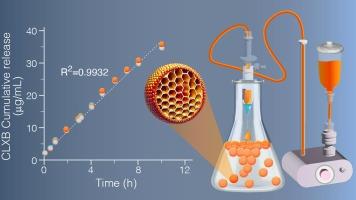
To demonstrate the applicability of the pH-responsive systems, the LLC beads were loaded with a lipophilic low water solubility (< 5 µg/mL) model drug, Celecoxib (CLXB). Although the water solubility of CLXB is not pH dependent, the Higuchian release constant of CLXB increased from 9.31 at pH 1.5 to 15.03 at pH 6.4. The pH dependency of CLXB release was achieved by the co-solubilization of additional compounds in the LLC structure, creating a pH-dependent environment that influences both the LLC structure and the release of the co-solubilized compounds. The enhanced release of CLXB in an elevated pH environment enables gaining a zero-order (R2 > 0.99) sustained release profile extending beyond 10 h in a release medium simulating the gastrointestinal (GI) tract environment.
Additionally, the study investigated the association between the release of co-solubilized compounds and the micellar structure using techniques such as small-angle X-ray diffraction, nuclear magnetic resonance, and electron paramagnetic resonance. The results revealed a co-dependent relationship between the release of lipophilic compounds and changes of the LLC's curvature at different pH levels, suggesting that a compensatory mechanism operates between these two processes. These insights, combined with the innovative bottom-up fabrication method for LLC beads, provide valuable tools for controlling the release of lipophilic compounds from LLCs and for enhancing their effectiveness as controlled oral delivery systems.
期刊介绍:
The International Journal of Pharmaceutics is the third most cited journal in the "Pharmacy & Pharmacology" category out of 366 journals, being the true home for pharmaceutical scientists concerned with the physical, chemical and biological properties of devices and delivery systems for drugs, vaccines and biologicals, including their design, manufacture and evaluation. This includes evaluation of the properties of drugs, excipients such as surfactants and polymers and novel materials. The journal has special sections on pharmaceutical nanotechnology and personalized medicines, and publishes research papers, reviews, commentaries and letters to the editor as well as special issues.




 京公网安备 11010802042870号
京ICP备2023020795号-1
京公网安备 11010802042870号
京ICP备2023020795号-1

 分享
分享
 求助内容:
求助内容: 应助结果提醒方式:
 扫码关注我们
