{"title":"通过在相似性度量中结合结构化变量标签关系来改善患者聚类。","authors":"Judith Lambert, Anne-Louise Leutenegger, Anaïs Baudot, Anne-Sophie Jannot","doi":"10.1186/s12874-025-02459-8","DOIUrl":null,"url":null,"abstract":"<p><strong>Background: </strong>Patient stratification is the cornerstone of numerous health investigations, serving to enhance the estimation of treatment efficacy and facilitating patient matching. To stratify patients, similarity measures between patients can be computed from clinical variables contained in medical health records. These variables have both values and labels structured in ontologies or other classification systems. The relevance of considering variable label relationships in the computation of patient similarity measures has been poorly studied.</p><p><strong>Objective: </strong>We adapt and evaluate several weighted versions of the Cosine similarity in order to consider structured label relationships to compute patient similarities from a medico-administrative database.</p><p><strong>Materials and methods: </strong>As a use case, we clustered patients aged 60 years from their annual medicine reimbursements contained in the Échantillon Généraliste des Bénéficiaires, a random sample of a French medico-administrative database. We used four patient similarity measures: the standard Cosine similarity, a weighted Cosine similarity measure that includes variable frequencies and two weighted Cosine similarity measures that consider variable label relationships. We construct patient networks from each similarity measure and identify clusters of patients using the Markov Cluster algorithm. We evaluate the performance of the different similarity measures with enrichment tests based on patient diagnoses.</p><p><strong>Results: </strong>The weighted similarity measures that include structured variable label relationships perform better to identify similar patients. Indeed, using these weighted measures, we identify more clusters associated with different diagnose enrichment. Importantly, the enrichment tests provide clinically interpretable insights into these patient clusters.</p><p><strong>Conclusion: </strong>Considering label relationships when computing patient similarities improves stratification of patients regarding their health status.</p>","PeriodicalId":9114,"journal":{"name":"BMC Medical Research Methodology","volume":"25 1","pages":"72"},"PeriodicalIF":3.4000,"publicationDate":"2025-03-15","publicationTypes":"Journal Article","fieldsOfStudy":null,"isOpenAccess":false,"openAccessPdf":"https://www.ncbi.nlm.nih.gov/pmc/articles/PMC11910865/pdf/","citationCount":"0","resultStr":"{\"title\":\"Improving patient clustering by incorporating structured variable label relationships in similarity measures.\",\"authors\":\"Judith Lambert, Anne-Louise Leutenegger, Anaïs Baudot, Anne-Sophie Jannot\",\"doi\":\"10.1186/s12874-025-02459-8\",\"DOIUrl\":null,\"url\":null,\"abstract\":\"<p><strong>Background: </strong>Patient stratification is the cornerstone of numerous health investigations, serving to enhance the estimation of treatment efficacy and facilitating patient matching. To stratify patients, similarity measures between patients can be computed from clinical variables contained in medical health records. These variables have both values and labels structured in ontologies or other classification systems. The relevance of considering variable label relationships in the computation of patient similarity measures has been poorly studied.</p><p><strong>Objective: </strong>We adapt and evaluate several weighted versions of the Cosine similarity in order to consider structured label relationships to compute patient similarities from a medico-administrative database.</p><p><strong>Materials and methods: </strong>As a use case, we clustered patients aged 60 years from their annual medicine reimbursements contained in the Échantillon Généraliste des Bénéficiaires, a random sample of a French medico-administrative database. We used four patient similarity measures: the standard Cosine similarity, a weighted Cosine similarity measure that includes variable frequencies and two weighted Cosine similarity measures that consider variable label relationships. We construct patient networks from each similarity measure and identify clusters of patients using the Markov Cluster algorithm. We evaluate the performance of the different similarity measures with enrichment tests based on patient diagnoses.</p><p><strong>Results: </strong>The weighted similarity measures that include structured variable label relationships perform better to identify similar patients. Indeed, using these weighted measures, we identify more clusters associated with different diagnose enrichment. Importantly, the enrichment tests provide clinically interpretable insights into these patient clusters.</p><p><strong>Conclusion: </strong>Considering label relationships when computing patient similarities improves stratification of patients regarding their health status.</p>\",\"PeriodicalId\":9114,\"journal\":{\"name\":\"BMC Medical Research Methodology\",\"volume\":\"25 1\",\"pages\":\"72\"},\"PeriodicalIF\":3.4000,\"publicationDate\":\"2025-03-15\",\"publicationTypes\":\"Journal Article\",\"fieldsOfStudy\":null,\"isOpenAccess\":false,\"openAccessPdf\":\"https://www.ncbi.nlm.nih.gov/pmc/articles/PMC11910865/pdf/\",\"citationCount\":\"0\",\"resultStr\":null,\"platform\":\"Semanticscholar\",\"paperid\":null,\"PeriodicalName\":\"BMC Medical Research Methodology\",\"FirstCategoryId\":\"3\",\"ListUrlMain\":\"https://doi.org/10.1186/s12874-025-02459-8\",\"RegionNum\":3,\"RegionCategory\":\"医学\",\"ArticlePicture\":[],\"TitleCN\":null,\"AbstractTextCN\":null,\"PMCID\":null,\"EPubDate\":\"\",\"PubModel\":\"\",\"JCR\":\"Q1\",\"JCRName\":\"HEALTH CARE SCIENCES & SERVICES\",\"Score\":null,\"Total\":0}","platform":"Semanticscholar","paperid":null,"PeriodicalName":"BMC Medical Research Methodology","FirstCategoryId":"3","ListUrlMain":"https://doi.org/10.1186/s12874-025-02459-8","RegionNum":3,"RegionCategory":"医学","ArticlePicture":[],"TitleCN":null,"AbstractTextCN":null,"PMCID":null,"EPubDate":"","PubModel":"","JCR":"Q1","JCRName":"HEALTH CARE SCIENCES & SERVICES","Score":null,"Total":0}
引用次数: 0
摘要
背景:患者分层是许多健康调查的基础,有助于提高治疗效果的估计和促进患者匹配。为了对患者进行分层,可以从医疗健康记录中包含的临床变量计算患者之间的相似性度量。这些变量具有在本体或其他分类系统中结构化的值和标签。在计算患者相似度时考虑变量标签关系的相关性研究很少。目的:我们调整和评估余弦相似度的几个加权版本,以便考虑结构化标签关系来计算来自医疗管理数据库的患者相似度。材料和方法:作为一个用例,我们从法国医疗管理数据库的随机样本Échantillon gsamnastaliste des bsamnsamiciciaires中收集了60岁的年度医疗报销患者。我们使用了四种患者相似度度量:标准余弦相似度,包括可变频率的加权余弦相似度和考虑可变标签关系的两个加权余弦相似度度量。我们从每个相似度量构建患者网络,并使用马尔可夫聚类算法识别患者簇。我们评估了不同的相似性措施的性能与富集试验基于患者的诊断。结果:包含结构化变量标签关系的加权相似度度量在识别相似患者方面表现更好。事实上,使用这些加权措施,我们确定了更多与不同诊断富集相关的集群。重要的是,富集试验为这些患者群提供了临床可解释的见解。结论:在计算患者相似度时考虑标签关系可以改善患者健康状况的分层。
Improving patient clustering by incorporating structured variable label relationships in similarity measures.
Background: Patient stratification is the cornerstone of numerous health investigations, serving to enhance the estimation of treatment efficacy and facilitating patient matching. To stratify patients, similarity measures between patients can be computed from clinical variables contained in medical health records. These variables have both values and labels structured in ontologies or other classification systems. The relevance of considering variable label relationships in the computation of patient similarity measures has been poorly studied.
Objective: We adapt and evaluate several weighted versions of the Cosine similarity in order to consider structured label relationships to compute patient similarities from a medico-administrative database.
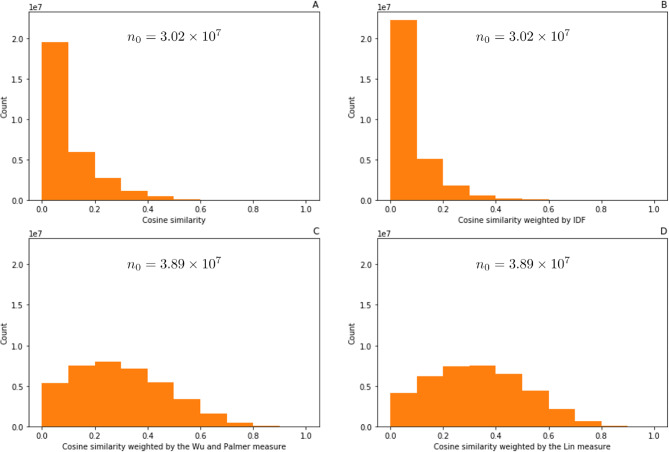
Materials and methods: As a use case, we clustered patients aged 60 years from their annual medicine reimbursements contained in the Échantillon Généraliste des Bénéficiaires, a random sample of a French medico-administrative database. We used four patient similarity measures: the standard Cosine similarity, a weighted Cosine similarity measure that includes variable frequencies and two weighted Cosine similarity measures that consider variable label relationships. We construct patient networks from each similarity measure and identify clusters of patients using the Markov Cluster algorithm. We evaluate the performance of the different similarity measures with enrichment tests based on patient diagnoses.
Results: The weighted similarity measures that include structured variable label relationships perform better to identify similar patients. Indeed, using these weighted measures, we identify more clusters associated with different diagnose enrichment. Importantly, the enrichment tests provide clinically interpretable insights into these patient clusters.
Conclusion: Considering label relationships when computing patient similarities improves stratification of patients regarding their health status.
期刊介绍:
BMC Medical Research Methodology is an open access journal publishing original peer-reviewed research articles in methodological approaches to healthcare research. Articles on the methodology of epidemiological research, clinical trials and meta-analysis/systematic review are particularly encouraged, as are empirical studies of the associations between choice of methodology and study outcomes. BMC Medical Research Methodology does not aim to publish articles describing scientific methods or techniques: these should be directed to the BMC journal covering the relevant biomedical subject area.







 京公网安备 11010802042870号
京ICP备2023020795号-1
京公网安备 11010802042870号
京ICP备2023020795号-1

 分享
分享
 求助内容:
求助内容: 应助结果提醒方式:
 扫码关注我们
