Sinenhlanhla X.H. Mthembu , Sithandiwe E. Mazibuko-Mbeje , Sonia Silvestri , Patrick Orlando , Bongani B. Nkambule , Christo J.F. Muller , Luca Tiano , Phiwayinkosi V. Dludla
{"title":"长期暴露于辛伐他汀影响辅酶Q9/10状态,导致线粒体呼吸能力受损和培养心脏细胞活力降低。","authors":"Sinenhlanhla X.H. Mthembu , Sithandiwe E. Mazibuko-Mbeje , Sonia Silvestri , Patrick Orlando , Bongani B. Nkambule , Christo J.F. Muller , Luca Tiano , Phiwayinkosi V. Dludla","doi":"10.1016/j.tiv.2025.106052","DOIUrl":null,"url":null,"abstract":"<div><div>This study investigates the effects of prolonged simvastatin exposure on coenzyme Q<sub>9/10</sub> (CoQ<sub>9/10</sub>) levels, an essential component of antioxidant defense, in cultured cardiac cells. Statins, commonly used to manage dyslipidemia and reduce cardiovascular risk, may impair mitochondrial function, but their impact on CoQ<sub>10</sub> depletion and oxidative stress is not well understood. We examined the influence of simvastatin on mitochondrial oxidative capacity, reactive oxygen species (ROS) production, and CoQ<sub>9/10</sub> status at concentrations of 0.3, 0.6, 1.25, 2.5, 5, 10, and 20 μM, over durations of 24, 48, and 72 h. Using an in vitro model of cultured H9c2 cardiomyoblasts, our results showed that short-term exposure (24 h) at lower concentrations (<5 μM) enhanced cytosolic and mitochondrial ROS levels without affecting mitochondrial function or CoQ<sub>9/10</sub> status. However, prolonged exposure to higher concentrations (≥10 μM for >48 h) resulted in impaired mitochondrial oxidative capacity, indicated by increased proton leak and elevated ROS levels, which were followed by significantly reduced cell viability. These findings suggest that prolonged, high-dose simvastatin exposure may disrupt the oxidative balance of CoQ<sub>9/10</sub>, leading to myocardial injury. This research addresses a gap in understanding the long-term effects of statins on mitochondrial health and underscores the need for further studies to optimize statin therapy and minimize adverse effects on myocardial function.</div></div>","PeriodicalId":54423,"journal":{"name":"Toxicology in Vitro","volume":"106 ","pages":"Article 106052"},"PeriodicalIF":2.7000,"publicationDate":"2025-06-01","publicationTypes":"Journal Article","fieldsOfStudy":null,"isOpenAccess":false,"openAccessPdf":"","citationCount":"0","resultStr":"{\"title\":\"Prolonged exposure to simvastatin affects coenzyme Q9/10 status leading to impaired mitochondrial respiratory capacity and reduced viability of cultured cardiac cells\",\"authors\":\"Sinenhlanhla X.H. Mthembu , Sithandiwe E. Mazibuko-Mbeje , Sonia Silvestri , Patrick Orlando , Bongani B. Nkambule , Christo J.F. Muller , Luca Tiano , Phiwayinkosi V. Dludla\",\"doi\":\"10.1016/j.tiv.2025.106052\",\"DOIUrl\":null,\"url\":null,\"abstract\":\"<div><div>This study investigates the effects of prolonged simvastatin exposure on coenzyme Q<sub>9/10</sub> (CoQ<sub>9/10</sub>) levels, an essential component of antioxidant defense, in cultured cardiac cells. Statins, commonly used to manage dyslipidemia and reduce cardiovascular risk, may impair mitochondrial function, but their impact on CoQ<sub>10</sub> depletion and oxidative stress is not well understood. We examined the influence of simvastatin on mitochondrial oxidative capacity, reactive oxygen species (ROS) production, and CoQ<sub>9/10</sub> status at concentrations of 0.3, 0.6, 1.25, 2.5, 5, 10, and 20 μM, over durations of 24, 48, and 72 h. Using an in vitro model of cultured H9c2 cardiomyoblasts, our results showed that short-term exposure (24 h) at lower concentrations (<5 μM) enhanced cytosolic and mitochondrial ROS levels without affecting mitochondrial function or CoQ<sub>9/10</sub> status. However, prolonged exposure to higher concentrations (≥10 μM for >48 h) resulted in impaired mitochondrial oxidative capacity, indicated by increased proton leak and elevated ROS levels, which were followed by significantly reduced cell viability. These findings suggest that prolonged, high-dose simvastatin exposure may disrupt the oxidative balance of CoQ<sub>9/10</sub>, leading to myocardial injury. This research addresses a gap in understanding the long-term effects of statins on mitochondrial health and underscores the need for further studies to optimize statin therapy and minimize adverse effects on myocardial function.</div></div>\",\"PeriodicalId\":54423,\"journal\":{\"name\":\"Toxicology in Vitro\",\"volume\":\"106 \",\"pages\":\"Article 106052\"},\"PeriodicalIF\":2.7000,\"publicationDate\":\"2025-06-01\",\"publicationTypes\":\"Journal Article\",\"fieldsOfStudy\":null,\"isOpenAccess\":false,\"openAccessPdf\":\"\",\"citationCount\":\"0\",\"resultStr\":null,\"platform\":\"Semanticscholar\",\"paperid\":null,\"PeriodicalName\":\"Toxicology in Vitro\",\"FirstCategoryId\":\"3\",\"ListUrlMain\":\"https://www.sciencedirect.com/science/article/pii/S0887233325000463\",\"RegionNum\":3,\"RegionCategory\":\"医学\",\"ArticlePicture\":[],\"TitleCN\":null,\"AbstractTextCN\":null,\"PMCID\":null,\"EPubDate\":\"2025/3/13 0:00:00\",\"PubModel\":\"Epub\",\"JCR\":\"Q3\",\"JCRName\":\"TOXICOLOGY\",\"Score\":null,\"Total\":0}","platform":"Semanticscholar","paperid":null,"PeriodicalName":"Toxicology in Vitro","FirstCategoryId":"3","ListUrlMain":"https://www.sciencedirect.com/science/article/pii/S0887233325000463","RegionNum":3,"RegionCategory":"医学","ArticlePicture":[],"TitleCN":null,"AbstractTextCN":null,"PMCID":null,"EPubDate":"2025/3/13 0:00:00","PubModel":"Epub","JCR":"Q3","JCRName":"TOXICOLOGY","Score":null,"Total":0}
Prolonged exposure to simvastatin affects coenzyme Q9/10 status leading to impaired mitochondrial respiratory capacity and reduced viability of cultured cardiac cells
This study investigates the effects of prolonged simvastatin exposure on coenzyme Q9/10 (CoQ9/10) levels, an essential component of antioxidant defense, in cultured cardiac cells. Statins, commonly used to manage dyslipidemia and reduce cardiovascular risk, may impair mitochondrial function, but their impact on CoQ10 depletion and oxidative stress is not well understood. We examined the influence of simvastatin on mitochondrial oxidative capacity, reactive oxygen species (ROS) production, and CoQ9/10 status at concentrations of 0.3, 0.6, 1.25, 2.5, 5, 10, and 20 μM, over durations of 24, 48, and 72 h. Using an in vitro model of cultured H9c2 cardiomyoblasts, our results showed that short-term exposure (24 h) at lower concentrations (<5 μM) enhanced cytosolic and mitochondrial ROS levels without affecting mitochondrial function or CoQ9/10 status. However, prolonged exposure to higher concentrations (≥10 μM for >48 h) resulted in impaired mitochondrial oxidative capacity, indicated by increased proton leak and elevated ROS levels, which were followed by significantly reduced cell viability. These findings suggest that prolonged, high-dose simvastatin exposure may disrupt the oxidative balance of CoQ9/10, leading to myocardial injury. This research addresses a gap in understanding the long-term effects of statins on mitochondrial health and underscores the need for further studies to optimize statin therapy and minimize adverse effects on myocardial function.
期刊介绍:
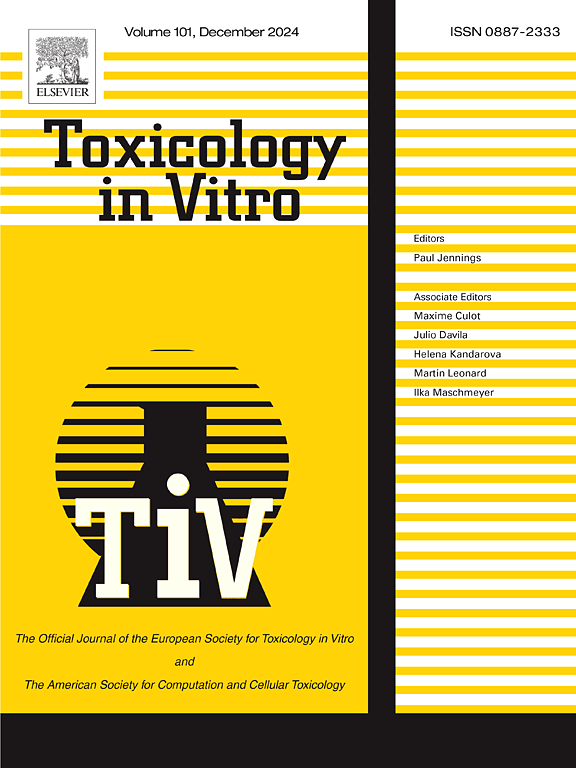
Toxicology in Vitro publishes original research papers and reviews on the application and use of in vitro systems for assessing or predicting the toxic effects of chemicals and elucidating their mechanisms of action. These in vitro techniques include utilizing cell or tissue cultures, isolated cells, tissue slices, subcellular fractions, transgenic cell cultures, and cells from transgenic organisms, as well as in silico modelling. The Journal will focus on investigations that involve the development and validation of new in vitro methods, e.g. for prediction of toxic effects based on traditional and in silico modelling; on the use of methods in high-throughput toxicology and pharmacology; elucidation of mechanisms of toxic action; the application of genomics, transcriptomics and proteomics in toxicology, as well as on comparative studies that characterise the relationship between in vitro and in vivo findings. The Journal strongly encourages the submission of manuscripts that focus on the development of in vitro methods, their practical applications and regulatory use (e.g. in the areas of food components cosmetics, pharmaceuticals, pesticides, and industrial chemicals). Toxicology in Vitro discourages papers that record reporting on toxicological effects from materials, such as plant extracts or herbal medicines, that have not been chemically characterized.




 京公网安备 11010802042870号
京ICP备2023020795号-1
京公网安备 11010802042870号
京ICP备2023020795号-1

 分享
分享
 求助内容:
求助内容: 应助结果提醒方式:
 扫码关注我们
