Rahul A. Kalel, Anuja P. Ware and Subhash S. Pingale
{"title":"2-氰基-3-(萘-1-酰基)丙烯酸乙酯(ECNA):一种敏感的,选择性荧光“关闭”化学剂量计探针,用于检测有毒水合肼及其蒸汽†","authors":"Rahul A. Kalel, Anuja P. Ware and Subhash S. Pingale","doi":"10.1039/D5NJ00428D","DOIUrl":null,"url":null,"abstract":"<p >The broad spectrum of applications of so-called ‘devil's venom’ (hydrazine hydrate) has resulted in its entry into the soil and water, but it is a pollutant to the ecosystem and human health. Thus, capable monitoring techniques for hydrazine hydrate (Hz) are a hot research topic in environmental remediation. Small-molecular-probe-based fluorescence detection methods are usually established due to their simplicity and sensitivity. In the present manuscript, we demonstrate that ethyl-2-cyano-3-(naphthalene-1-yl)acrylate (ECNA) is an economical, easy-to-synthesize/commercially available chemodosimeteric probe for the effective detection of toxic Hz <em>via</em> absorption, emission spectroscopy and fluorescence photography methods. The detection mechanism has been confirmed by Fourier transform infra-red (FTIR), time-dependant density functional theory (TD-DFT), and mass spectroscopy (MS) studies. Paper strip, spray analysis and spot-test-based approaches have been employed to detect Hz. In addition, the vapour of aqueous Hz has been detected using ECNA-coated thin-layer chromatography (TLC) plates and paper strips. The ECNA powder exhibits a drastic colour change in response to Hz, and reveals a fluorescence ‘turn-off’ response. The bright fluorescence of ECNA is quenched ∼14 fold with a ∼20 nm blue shift in the presence of ∼1.6 μM of Hz. 1 : 1 ECNA : Hz binding with a <em>K</em><small><sub>b</sub></small> value of 3.35 μM<small><sup>−1</sup></small>, a superior limit of detection (LOD) of 3.077 nM, and a favourable pH range were obtained. ECNA is a quick, real-time/on-site, easy-to-handle, selective, sensitive and cost-effective fluorescent probe for the proficient detection of Hz by the naked eye.</p>","PeriodicalId":95,"journal":{"name":"New Journal of Chemistry","volume":" 12","pages":" 5126-5138"},"PeriodicalIF":2.5000,"publicationDate":"2025-03-06","publicationTypes":"Journal Article","fieldsOfStudy":null,"isOpenAccess":false,"openAccessPdf":"","citationCount":"0","resultStr":"{\"title\":\"Ethyl 2-cyano-3-(naphthalene-1-yl) acrylate (ECNA): a sensitive, selective fluorescence ‘turn-off’ chemodosimeteric probe for the detection of poisonous hydrazine hydrate and its vapour†\",\"authors\":\"Rahul A. Kalel, Anuja P. Ware and Subhash S. Pingale\",\"doi\":\"10.1039/D5NJ00428D\",\"DOIUrl\":null,\"url\":null,\"abstract\":\"<p >The broad spectrum of applications of so-called ‘devil's venom’ (hydrazine hydrate) has resulted in its entry into the soil and water, but it is a pollutant to the ecosystem and human health. Thus, capable monitoring techniques for hydrazine hydrate (Hz) are a hot research topic in environmental remediation. Small-molecular-probe-based fluorescence detection methods are usually established due to their simplicity and sensitivity. In the present manuscript, we demonstrate that ethyl-2-cyano-3-(naphthalene-1-yl)acrylate (ECNA) is an economical, easy-to-synthesize/commercially available chemodosimeteric probe for the effective detection of toxic Hz <em>via</em> absorption, emission spectroscopy and fluorescence photography methods. The detection mechanism has been confirmed by Fourier transform infra-red (FTIR), time-dependant density functional theory (TD-DFT), and mass spectroscopy (MS) studies. Paper strip, spray analysis and spot-test-based approaches have been employed to detect Hz. In addition, the vapour of aqueous Hz has been detected using ECNA-coated thin-layer chromatography (TLC) plates and paper strips. The ECNA powder exhibits a drastic colour change in response to Hz, and reveals a fluorescence ‘turn-off’ response. The bright fluorescence of ECNA is quenched ∼14 fold with a ∼20 nm blue shift in the presence of ∼1.6 μM of Hz. 1 : 1 ECNA : Hz binding with a <em>K</em><small><sub>b</sub></small> value of 3.35 μM<small><sup>−1</sup></small>, a superior limit of detection (LOD) of 3.077 nM, and a favourable pH range were obtained. ECNA is a quick, real-time/on-site, easy-to-handle, selective, sensitive and cost-effective fluorescent probe for the proficient detection of Hz by the naked eye.</p>\",\"PeriodicalId\":95,\"journal\":{\"name\":\"New Journal of Chemistry\",\"volume\":\" 12\",\"pages\":\" 5126-5138\"},\"PeriodicalIF\":2.5000,\"publicationDate\":\"2025-03-06\",\"publicationTypes\":\"Journal Article\",\"fieldsOfStudy\":null,\"isOpenAccess\":false,\"openAccessPdf\":\"\",\"citationCount\":\"0\",\"resultStr\":null,\"platform\":\"Semanticscholar\",\"paperid\":null,\"PeriodicalName\":\"New Journal of Chemistry\",\"FirstCategoryId\":\"92\",\"ListUrlMain\":\"https://pubs.rsc.org/en/content/articlelanding/2025/nj/d5nj00428d\",\"RegionNum\":3,\"RegionCategory\":\"化学\",\"ArticlePicture\":[],\"TitleCN\":null,\"AbstractTextCN\":null,\"PMCID\":null,\"EPubDate\":\"\",\"PubModel\":\"\",\"JCR\":\"Q2\",\"JCRName\":\"CHEMISTRY, MULTIDISCIPLINARY\",\"Score\":null,\"Total\":0}","platform":"Semanticscholar","paperid":null,"PeriodicalName":"New Journal of Chemistry","FirstCategoryId":"92","ListUrlMain":"https://pubs.rsc.org/en/content/articlelanding/2025/nj/d5nj00428d","RegionNum":3,"RegionCategory":"化学","ArticlePicture":[],"TitleCN":null,"AbstractTextCN":null,"PMCID":null,"EPubDate":"","PubModel":"","JCR":"Q2","JCRName":"CHEMISTRY, MULTIDISCIPLINARY","Score":null,"Total":0}
Ethyl 2-cyano-3-(naphthalene-1-yl) acrylate (ECNA): a sensitive, selective fluorescence ‘turn-off’ chemodosimeteric probe for the detection of poisonous hydrazine hydrate and its vapour†
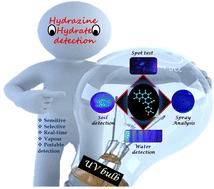
The broad spectrum of applications of so-called ‘devil's venom’ (hydrazine hydrate) has resulted in its entry into the soil and water, but it is a pollutant to the ecosystem and human health. Thus, capable monitoring techniques for hydrazine hydrate (Hz) are a hot research topic in environmental remediation. Small-molecular-probe-based fluorescence detection methods are usually established due to their simplicity and sensitivity. In the present manuscript, we demonstrate that ethyl-2-cyano-3-(naphthalene-1-yl)acrylate (ECNA) is an economical, easy-to-synthesize/commercially available chemodosimeteric probe for the effective detection of toxic Hz via absorption, emission spectroscopy and fluorescence photography methods. The detection mechanism has been confirmed by Fourier transform infra-red (FTIR), time-dependant density functional theory (TD-DFT), and mass spectroscopy (MS) studies. Paper strip, spray analysis and spot-test-based approaches have been employed to detect Hz. In addition, the vapour of aqueous Hz has been detected using ECNA-coated thin-layer chromatography (TLC) plates and paper strips. The ECNA powder exhibits a drastic colour change in response to Hz, and reveals a fluorescence ‘turn-off’ response. The bright fluorescence of ECNA is quenched ∼14 fold with a ∼20 nm blue shift in the presence of ∼1.6 μM of Hz. 1 : 1 ECNA : Hz binding with a Kb value of 3.35 μM−1, a superior limit of detection (LOD) of 3.077 nM, and a favourable pH range were obtained. ECNA is a quick, real-time/on-site, easy-to-handle, selective, sensitive and cost-effective fluorescent probe for the proficient detection of Hz by the naked eye.




 京公网安备 11010802042870号
京ICP备2023020795号-1
京公网安备 11010802042870号
京ICP备2023020795号-1

 分享
分享
 求助内容:
求助内容: 应助结果提醒方式:
 扫码关注我们
