{"title":"血液镜检中疟原虫评估的深度学习方法","authors":"Abhinav Dahiya , Devvrat Raghuvanshi , Chhaya Sharma , Kamaldeep Joshi , Ashima Nehra , Archana Sharma , Radha Jangra , Parul Badhwar , Renu Tuteja , Sarvajeet S. Gill , Ritu Gill","doi":"10.1016/j.artmed.2025.103114","DOIUrl":null,"url":null,"abstract":"<div><h3>Objective</h3><div>Malaria remains a leading cause of global morbidity and mortality, responsible for approximately 5,97,000 deaths according to World Malaria Report 2024. The study aims to systematically review current methodologies for automated analysis of the <em>Plasmodium</em> genus in malaria diagnostics. Specifically, it focuses on computer-assisted methods, examining databases, blood smear types, staining techniques, and diagnostic models used for malaria characterization while identifying the limitations and contributions of recent studies.</div></div><div><h3>Methods</h3><div>A systematic literature review was conducted following the Preferred Reporting Items for Systematic Reviews and Meta-Analyses (PRISMA) guidelines. Peer-reviewed and published studies from 2020 to 2024 were retrieved from Web of Science and Scopus. Inclusion criteria focused on studies utilizing deep learning and machine learning models for automated malaria detection from microscopic blood smears. The review considered various blood smear types, staining techniques, and diagnostic models, providing a comprehensive evaluation of the automated diagnostic landscape for malaria.</div></div><div><h3>Results</h3><div>The NIH database is the standardized and most widely tested database for malaria diagnostics. Giemsa stained-thin blood smear is the most efficient diagnostic method for the detection and observation of the <em>plasmodium</em> lifecycle. This study has been able to identify three categories of ML models most suitable for digital diagnostic of malaria, i.e., Most Accurate- ResNet and VGG with peak accuracy of 99.12 %, Most Popular- custom CNN-based models used by 58 % of studies, and least complex- CADx model. A few pre and post-processing techniques like Gaussian filter and auto encoder for noise reduction have also been discussed for improved accuracy of models.</div></div><div><h3>Conclusion</h3><div>Automated methods for malaria diagnostics show considerable promise in improving diagnostic accuracy and reducing human error. While deep learning models have demonstrated high performance, challenges remain in data standardization and real-world application. Addressing these gaps could lead to more reliable and scalable diagnostic tools, aiding global malaria control efforts.</div></div>","PeriodicalId":55458,"journal":{"name":"Artificial Intelligence in Medicine","volume":"163 ","pages":"Article 103114"},"PeriodicalIF":6.2000,"publicationDate":"2025-05-01","publicationTypes":"Journal Article","fieldsOfStudy":null,"isOpenAccess":false,"openAccessPdf":"","citationCount":"0","resultStr":"{\"title\":\"Deep learning method for malaria parasite evaluation from microscopic blood smear\",\"authors\":\"Abhinav Dahiya , Devvrat Raghuvanshi , Chhaya Sharma , Kamaldeep Joshi , Ashima Nehra , Archana Sharma , Radha Jangra , Parul Badhwar , Renu Tuteja , Sarvajeet S. Gill , Ritu Gill\",\"doi\":\"10.1016/j.artmed.2025.103114\",\"DOIUrl\":null,\"url\":null,\"abstract\":\"<div><h3>Objective</h3><div>Malaria remains a leading cause of global morbidity and mortality, responsible for approximately 5,97,000 deaths according to World Malaria Report 2024. The study aims to systematically review current methodologies for automated analysis of the <em>Plasmodium</em> genus in malaria diagnostics. Specifically, it focuses on computer-assisted methods, examining databases, blood smear types, staining techniques, and diagnostic models used for malaria characterization while identifying the limitations and contributions of recent studies.</div></div><div><h3>Methods</h3><div>A systematic literature review was conducted following the Preferred Reporting Items for Systematic Reviews and Meta-Analyses (PRISMA) guidelines. Peer-reviewed and published studies from 2020 to 2024 were retrieved from Web of Science and Scopus. Inclusion criteria focused on studies utilizing deep learning and machine learning models for automated malaria detection from microscopic blood smears. The review considered various blood smear types, staining techniques, and diagnostic models, providing a comprehensive evaluation of the automated diagnostic landscape for malaria.</div></div><div><h3>Results</h3><div>The NIH database is the standardized and most widely tested database for malaria diagnostics. Giemsa stained-thin blood smear is the most efficient diagnostic method for the detection and observation of the <em>plasmodium</em> lifecycle. This study has been able to identify three categories of ML models most suitable for digital diagnostic of malaria, i.e., Most Accurate- ResNet and VGG with peak accuracy of 99.12 %, Most Popular- custom CNN-based models used by 58 % of studies, and least complex- CADx model. A few pre and post-processing techniques like Gaussian filter and auto encoder for noise reduction have also been discussed for improved accuracy of models.</div></div><div><h3>Conclusion</h3><div>Automated methods for malaria diagnostics show considerable promise in improving diagnostic accuracy and reducing human error. While deep learning models have demonstrated high performance, challenges remain in data standardization and real-world application. Addressing these gaps could lead to more reliable and scalable diagnostic tools, aiding global malaria control efforts.</div></div>\",\"PeriodicalId\":55458,\"journal\":{\"name\":\"Artificial Intelligence in Medicine\",\"volume\":\"163 \",\"pages\":\"Article 103114\"},\"PeriodicalIF\":6.2000,\"publicationDate\":\"2025-05-01\",\"publicationTypes\":\"Journal Article\",\"fieldsOfStudy\":null,\"isOpenAccess\":false,\"openAccessPdf\":\"\",\"citationCount\":\"0\",\"resultStr\":null,\"platform\":\"Semanticscholar\",\"paperid\":null,\"PeriodicalName\":\"Artificial Intelligence in Medicine\",\"FirstCategoryId\":\"5\",\"ListUrlMain\":\"https://www.sciencedirect.com/science/article/pii/S0933365725000491\",\"RegionNum\":2,\"RegionCategory\":\"医学\",\"ArticlePicture\":[],\"TitleCN\":null,\"AbstractTextCN\":null,\"PMCID\":null,\"EPubDate\":\"2025/3/15 0:00:00\",\"PubModel\":\"Epub\",\"JCR\":\"Q1\",\"JCRName\":\"COMPUTER SCIENCE, ARTIFICIAL INTELLIGENCE\",\"Score\":null,\"Total\":0}","platform":"Semanticscholar","paperid":null,"PeriodicalName":"Artificial Intelligence in Medicine","FirstCategoryId":"5","ListUrlMain":"https://www.sciencedirect.com/science/article/pii/S0933365725000491","RegionNum":2,"RegionCategory":"医学","ArticlePicture":[],"TitleCN":null,"AbstractTextCN":null,"PMCID":null,"EPubDate":"2025/3/15 0:00:00","PubModel":"Epub","JCR":"Q1","JCRName":"COMPUTER SCIENCE, ARTIFICIAL INTELLIGENCE","Score":null,"Total":0}
引用次数: 0
摘要
根据《2024年世界疟疾报告》,疟疾仍然是全球发病率和死亡率的主要原因,造成约59.7万人死亡。该研究旨在系统地回顾目前用于疟疾诊断中疟原虫属自动分析的方法。具体而言,它侧重于计算机辅助方法、检查数据库、血液涂片类型、染色技术和用于疟疾特征的诊断模型,同时确定最近研究的局限性和贡献。方法按照系统评价和荟萃分析的首选报告项目(PRISMA)指南进行系统文献综述。同行评审和发表的研究从2020年到2024年检索自Web of Science和Scopus。纳入标准侧重于利用深度学习和机器学习模型从显微血液涂片中自动检测疟疾的研究。该综述考虑了各种血液涂片类型、染色技术和诊断模型,对疟疾的自动诊断前景进行了全面评估。结果NIH数据库是标准化、测试最广泛的疟疾诊断数据库。吉姆萨染色薄血涂片是检测和观察疟原虫生命周期最有效的诊断方法。本研究已经能够确定三种最适合疟疾数字诊断的ML模型,即最准确的- ResNet和VGG,峰值准确率为99.12%,最流行的- 58%的研究使用的基于cnn的定制模型,以及最不复杂的- CADx模型。为了提高模型的精度,本文还讨论了一些预处理和后处理技术,如高斯滤波和自动编码器的降噪。结论自动化疟疾诊断方法在提高诊断准确性和减少人为错误方面具有广阔的应用前景。虽然深度学习模型已经展示了高性能,但在数据标准化和实际应用方面仍然存在挑战。解决这些差距可能导致更可靠和可扩展的诊断工具,有助于全球疟疾控制工作。
Deep learning method for malaria parasite evaluation from microscopic blood smear
Objective
Malaria remains a leading cause of global morbidity and mortality, responsible for approximately 5,97,000 deaths according to World Malaria Report 2024. The study aims to systematically review current methodologies for automated analysis of the Plasmodium genus in malaria diagnostics. Specifically, it focuses on computer-assisted methods, examining databases, blood smear types, staining techniques, and diagnostic models used for malaria characterization while identifying the limitations and contributions of recent studies.
Methods
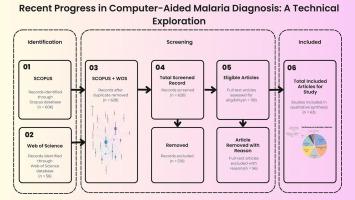
A systematic literature review was conducted following the Preferred Reporting Items for Systematic Reviews and Meta-Analyses (PRISMA) guidelines. Peer-reviewed and published studies from 2020 to 2024 were retrieved from Web of Science and Scopus. Inclusion criteria focused on studies utilizing deep learning and machine learning models for automated malaria detection from microscopic blood smears. The review considered various blood smear types, staining techniques, and diagnostic models, providing a comprehensive evaluation of the automated diagnostic landscape for malaria.
Results
The NIH database is the standardized and most widely tested database for malaria diagnostics. Giemsa stained-thin blood smear is the most efficient diagnostic method for the detection and observation of the plasmodium lifecycle. This study has been able to identify three categories of ML models most suitable for digital diagnostic of malaria, i.e., Most Accurate- ResNet and VGG with peak accuracy of 99.12 %, Most Popular- custom CNN-based models used by 58 % of studies, and least complex- CADx model. A few pre and post-processing techniques like Gaussian filter and auto encoder for noise reduction have also been discussed for improved accuracy of models.
Conclusion
Automated methods for malaria diagnostics show considerable promise in improving diagnostic accuracy and reducing human error. While deep learning models have demonstrated high performance, challenges remain in data standardization and real-world application. Addressing these gaps could lead to more reliable and scalable diagnostic tools, aiding global malaria control efforts.
期刊介绍:
Artificial Intelligence in Medicine publishes original articles from a wide variety of interdisciplinary perspectives concerning the theory and practice of artificial intelligence (AI) in medicine, medically-oriented human biology, and health care.
Artificial intelligence in medicine may be characterized as the scientific discipline pertaining to research studies, projects, and applications that aim at supporting decision-based medical tasks through knowledge- and/or data-intensive computer-based solutions that ultimately support and improve the performance of a human care provider.




 京公网安备 11010802042870号
京ICP备2023020795号-1
京公网安备 11010802042870号
京ICP备2023020795号-1

 分享
分享
 求助内容:
求助内容: 应助结果提醒方式:
 扫码关注我们
