Alp Aytekin, Masaru Seguchi, Erion Xhepa, Michael Haude, Adrian Wlodarczak, René J van der Schaaf, Jan Torzewski, Hector M. Garcia-Garcia, Ron Waksman, Michael Joner
{"title":"第三代可吸收镁支架植入后潜在斑块特征的影响:长达12个月的血管内OCT评估","authors":"Alp Aytekin, Masaru Seguchi, Erion Xhepa, Michael Haude, Adrian Wlodarczak, René J van der Schaaf, Jan Torzewski, Hector M. Garcia-Garcia, Ron Waksman, Michael Joner","doi":"10.1002/ccd.31486","DOIUrl":null,"url":null,"abstract":"<div>\n \n \n <section>\n \n <h3> Background</h3>\n \n <p>Third-generation resorbable magnesium scaffold (RMS) was developed with stronger mechanical properties and thinner struts compared to its predecessor. This study aimed to assess the influence of the OCT-derived underlying plaque characteristics on in-scaffold late lumen loss (LLL) in patients treated with RMS up to 12-months.</p>\n </section>\n \n <section>\n \n <h3> Methods</h3>\n \n <p>Patients enrolled in the BIOMAG-I trial and who underwent OCT imaging before and after the index procedure were included in the current analysis. The acquired intravascular imaging data were evaluated to assess the presence of fibrous, calcific, or lipidic lesions. We calculated the proportions of each plaque feature per pullback and assessed their correlation with LLL obtained at 6- and 12-months follow-up. In addition, we investigated the potential impact of scaffold edge dissection and strut malapposition on in-scaffold LLL.</p>\n </section>\n \n <section>\n \n <h3> Results</h3>\n \n <p>Eighty-four patients and 84 lesions were evaluated in the current analysis. There was no significant correlation between the underlying plaque characteristic and in-scaffold LLL at 6-months (<i>p</i> = 0.79 for fibrous, <i>p</i> = 0.88 for calcific, <i>p</i> = 0.67 for lipid lesions). This trend was similar at 12 months follow-up (<i>p</i> = 0.56 for fibrous, <i>p</i> = 0.75 for calcific, <i>p</i> = 0.69 for lipid lesions). The presence or absence of edge dissection did not influence the degree of in-scaffold - (<i>p</i> = 0.51 at 6-months, <i>p</i> = 0.68 at 12-months follow-up) or in-segment LLL (<i>p</i> = 0.88 at 6-months, <i>p</i> = 0.70 at 12-months follow-up).</p>\n </section>\n \n <section>\n \n <h3> Conclusion</h3>\n \n <p>The underlying plaque characteristics, edge dissection or strut malapposition had no significant impact on in-scaffold LLL following DREAMS 3 G implantation up to 12 months. This suggests better device performance irrespective of the underlying plaque characteristics.</p>\n </section>\n \n <section>\n \n <h3> Trial Registration</h3>\n \n <p>ClinicalTrials.gov ID: NCT04157153.</p>\n </section>\n </div>","PeriodicalId":9650,"journal":{"name":"Catheterization and Cardiovascular Interventions","volume":"105 7","pages":"1563-1571"},"PeriodicalIF":1.9000,"publicationDate":"2025-03-16","publicationTypes":"Journal Article","fieldsOfStudy":null,"isOpenAccess":false,"openAccessPdf":"https://onlinelibrary.wiley.com/doi/epdf/10.1002/ccd.31486","citationCount":"0","resultStr":"{\"title\":\"The Impact of Underlying Plaque Characteristics Following the Third-Generation Resorbable Magnesium Scaffold Implantation: An Intravascular OCT Assessment up to 12-Months\",\"authors\":\"Alp Aytekin, Masaru Seguchi, Erion Xhepa, Michael Haude, Adrian Wlodarczak, René J van der Schaaf, Jan Torzewski, Hector M. Garcia-Garcia, Ron Waksman, Michael Joner\",\"doi\":\"10.1002/ccd.31486\",\"DOIUrl\":null,\"url\":null,\"abstract\":\"<div>\\n \\n \\n <section>\\n \\n <h3> Background</h3>\\n \\n <p>Third-generation resorbable magnesium scaffold (RMS) was developed with stronger mechanical properties and thinner struts compared to its predecessor. This study aimed to assess the influence of the OCT-derived underlying plaque characteristics on in-scaffold late lumen loss (LLL) in patients treated with RMS up to 12-months.</p>\\n </section>\\n \\n <section>\\n \\n <h3> Methods</h3>\\n \\n <p>Patients enrolled in the BIOMAG-I trial and who underwent OCT imaging before and after the index procedure were included in the current analysis. The acquired intravascular imaging data were evaluated to assess the presence of fibrous, calcific, or lipidic lesions. We calculated the proportions of each plaque feature per pullback and assessed their correlation with LLL obtained at 6- and 12-months follow-up. In addition, we investigated the potential impact of scaffold edge dissection and strut malapposition on in-scaffold LLL.</p>\\n </section>\\n \\n <section>\\n \\n <h3> Results</h3>\\n \\n <p>Eighty-four patients and 84 lesions were evaluated in the current analysis. There was no significant correlation between the underlying plaque characteristic and in-scaffold LLL at 6-months (<i>p</i> = 0.79 for fibrous, <i>p</i> = 0.88 for calcific, <i>p</i> = 0.67 for lipid lesions). This trend was similar at 12 months follow-up (<i>p</i> = 0.56 for fibrous, <i>p</i> = 0.75 for calcific, <i>p</i> = 0.69 for lipid lesions). The presence or absence of edge dissection did not influence the degree of in-scaffold - (<i>p</i> = 0.51 at 6-months, <i>p</i> = 0.68 at 12-months follow-up) or in-segment LLL (<i>p</i> = 0.88 at 6-months, <i>p</i> = 0.70 at 12-months follow-up).</p>\\n </section>\\n \\n <section>\\n \\n <h3> Conclusion</h3>\\n \\n <p>The underlying plaque characteristics, edge dissection or strut malapposition had no significant impact on in-scaffold LLL following DREAMS 3 G implantation up to 12 months. This suggests better device performance irrespective of the underlying plaque characteristics.</p>\\n </section>\\n \\n <section>\\n \\n <h3> Trial Registration</h3>\\n \\n <p>ClinicalTrials.gov ID: NCT04157153.</p>\\n </section>\\n </div>\",\"PeriodicalId\":9650,\"journal\":{\"name\":\"Catheterization and Cardiovascular Interventions\",\"volume\":\"105 7\",\"pages\":\"1563-1571\"},\"PeriodicalIF\":1.9000,\"publicationDate\":\"2025-03-16\",\"publicationTypes\":\"Journal Article\",\"fieldsOfStudy\":null,\"isOpenAccess\":false,\"openAccessPdf\":\"https://onlinelibrary.wiley.com/doi/epdf/10.1002/ccd.31486\",\"citationCount\":\"0\",\"resultStr\":null,\"platform\":\"Semanticscholar\",\"paperid\":null,\"PeriodicalName\":\"Catheterization and Cardiovascular Interventions\",\"FirstCategoryId\":\"3\",\"ListUrlMain\":\"https://onlinelibrary.wiley.com/doi/10.1002/ccd.31486\",\"RegionNum\":3,\"RegionCategory\":\"医学\",\"ArticlePicture\":[],\"TitleCN\":null,\"AbstractTextCN\":null,\"PMCID\":null,\"EPubDate\":\"\",\"PubModel\":\"\",\"JCR\":\"Q3\",\"JCRName\":\"CARDIAC & CARDIOVASCULAR SYSTEMS\",\"Score\":null,\"Total\":0}","platform":"Semanticscholar","paperid":null,"PeriodicalName":"Catheterization and Cardiovascular Interventions","FirstCategoryId":"3","ListUrlMain":"https://onlinelibrary.wiley.com/doi/10.1002/ccd.31486","RegionNum":3,"RegionCategory":"医学","ArticlePicture":[],"TitleCN":null,"AbstractTextCN":null,"PMCID":null,"EPubDate":"","PubModel":"","JCR":"Q3","JCRName":"CARDIAC & CARDIOVASCULAR SYSTEMS","Score":null,"Total":0}
The Impact of Underlying Plaque Characteristics Following the Third-Generation Resorbable Magnesium Scaffold Implantation: An Intravascular OCT Assessment up to 12-Months
Background
Third-generation resorbable magnesium scaffold (RMS) was developed with stronger mechanical properties and thinner struts compared to its predecessor. This study aimed to assess the influence of the OCT-derived underlying plaque characteristics on in-scaffold late lumen loss (LLL) in patients treated with RMS up to 12-months.
Methods
Patients enrolled in the BIOMAG-I trial and who underwent OCT imaging before and after the index procedure were included in the current analysis. The acquired intravascular imaging data were evaluated to assess the presence of fibrous, calcific, or lipidic lesions. We calculated the proportions of each plaque feature per pullback and assessed their correlation with LLL obtained at 6- and 12-months follow-up. In addition, we investigated the potential impact of scaffold edge dissection and strut malapposition on in-scaffold LLL.
Results
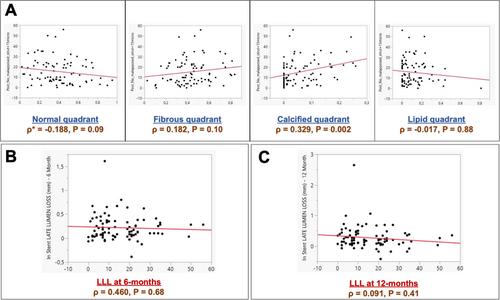
Eighty-four patients and 84 lesions were evaluated in the current analysis. There was no significant correlation between the underlying plaque characteristic and in-scaffold LLL at 6-months (p = 0.79 for fibrous, p = 0.88 for calcific, p = 0.67 for lipid lesions). This trend was similar at 12 months follow-up (p = 0.56 for fibrous, p = 0.75 for calcific, p = 0.69 for lipid lesions). The presence or absence of edge dissection did not influence the degree of in-scaffold - (p = 0.51 at 6-months, p = 0.68 at 12-months follow-up) or in-segment LLL (p = 0.88 at 6-months, p = 0.70 at 12-months follow-up).
Conclusion
The underlying plaque characteristics, edge dissection or strut malapposition had no significant impact on in-scaffold LLL following DREAMS 3 G implantation up to 12 months. This suggests better device performance irrespective of the underlying plaque characteristics.
期刊介绍:
Catheterization and Cardiovascular Interventions is an international journal covering the broad field of cardiovascular diseases. Subject material includes basic and clinical information that is derived from or related to invasive and interventional coronary or peripheral vascular techniques. The journal focuses on material that will be of immediate practical value to physicians providing patient care in the clinical laboratory setting. To accomplish this, the journal publishes Preliminary Reports and Work In Progress articles that complement the traditional Original Studies, Case Reports, and Comprehensive Reviews. Perspective and insight concerning controversial subjects and evolving technologies are provided regularly through Editorial Commentaries furnished by members of the Editorial Board and other experts. Articles are subject to double-blind peer review and complete editorial evaluation prior to any decision regarding acceptability.




 京公网安备 11010802042870号
京ICP备2023020795号-1
京公网安备 11010802042870号
京ICP备2023020795号-1

 分享
分享
 求助内容:
求助内容: 应助结果提醒方式:
 扫码关注我们
