{"title":"探索在埃塞俄比亚西南部公共卫生机构分娩的产褥期母亲的基本新生儿护理知识、态度和做法:一项混合研究。","authors":"Endale Tamiru Burayu","doi":"10.11604/pamj.2024.49.104.43893","DOIUrl":null,"url":null,"abstract":"<p><strong>Introduction: </strong>essential newborn care guidelines have been developed to cover all aspects of care from conception to postnatal care. There were concerns about knowledge and practices related to newborn care in Ethiopia, and unfortunately, neonatal mortality remained high. To address this issue, we conducted a new study to examine the attitudes, knowledge and practices of postpartum mothers who gave birth in public health facilities in Ilubabor zone, southwest Ethiopia.</p><p><strong>Methods: </strong>a mixed-institution cross-sectional study was conducted from June 20 to August 20, 2023. Participants were selected using systematic random sampling until the sample size was 381. Data were collected through semi-structured questionnaires and in-depth interviews. Data were then entered into Epidata and analyzed using SPSS.</p><p><strong>Results: </strong>of the postpartum mothers interviewed, 225 (59.1%) received information about essential newborn care. Knowledge-wise, 239 (62.7%) participants showed good knowledge, while 142 (37.3%) showed poor knowledge. Of the attitudes, 220 (57.8%) participants had a positive attitude and 161 (42.2%) participants had a negative attitude. Regarding practices, 150 (39.4%) participants had good practices and 231 (60.6%) had bad practices.</p><p><strong>Conclusion: </strong>there appears to be a significant difference between the perceived knowledge of study participants and the actual practice of neonatal care. Therefore, it is recommended that health professionals provide ongoing postpartum education and training to mothers who have given birth to bridge this gap and bring about meaningful change.</p>","PeriodicalId":48190,"journal":{"name":"Pan African Medical Journal","volume":"49 ","pages":"104"},"PeriodicalIF":0.9000,"publicationDate":"2024-12-02","publicationTypes":"Journal Article","fieldsOfStudy":null,"isOpenAccess":false,"openAccessPdf":"https://www.ncbi.nlm.nih.gov/pmc/articles/PMC11907715/pdf/","citationCount":"0","resultStr":"{\"title\":\"Exploring knowledge, attitude and practices of essential newborn care among puerperal mothers who gave birth at public health facilities of southwest Ethiopia: a mixed study.\",\"authors\":\"Endale Tamiru Burayu\",\"doi\":\"10.11604/pamj.2024.49.104.43893\",\"DOIUrl\":null,\"url\":null,\"abstract\":\"<p><strong>Introduction: </strong>essential newborn care guidelines have been developed to cover all aspects of care from conception to postnatal care. There were concerns about knowledge and practices related to newborn care in Ethiopia, and unfortunately, neonatal mortality remained high. To address this issue, we conducted a new study to examine the attitudes, knowledge and practices of postpartum mothers who gave birth in public health facilities in Ilubabor zone, southwest Ethiopia.</p><p><strong>Methods: </strong>a mixed-institution cross-sectional study was conducted from June 20 to August 20, 2023. Participants were selected using systematic random sampling until the sample size was 381. Data were collected through semi-structured questionnaires and in-depth interviews. Data were then entered into Epidata and analyzed using SPSS.</p><p><strong>Results: </strong>of the postpartum mothers interviewed, 225 (59.1%) received information about essential newborn care. Knowledge-wise, 239 (62.7%) participants showed good knowledge, while 142 (37.3%) showed poor knowledge. Of the attitudes, 220 (57.8%) participants had a positive attitude and 161 (42.2%) participants had a negative attitude. Regarding practices, 150 (39.4%) participants had good practices and 231 (60.6%) had bad practices.</p><p><strong>Conclusion: </strong>there appears to be a significant difference between the perceived knowledge of study participants and the actual practice of neonatal care. Therefore, it is recommended that health professionals provide ongoing postpartum education and training to mothers who have given birth to bridge this gap and bring about meaningful change.</p>\",\"PeriodicalId\":48190,\"journal\":{\"name\":\"Pan African Medical Journal\",\"volume\":\"49 \",\"pages\":\"104\"},\"PeriodicalIF\":0.9000,\"publicationDate\":\"2024-12-02\",\"publicationTypes\":\"Journal Article\",\"fieldsOfStudy\":null,\"isOpenAccess\":false,\"openAccessPdf\":\"https://www.ncbi.nlm.nih.gov/pmc/articles/PMC11907715/pdf/\",\"citationCount\":\"0\",\"resultStr\":null,\"platform\":\"Semanticscholar\",\"paperid\":null,\"PeriodicalName\":\"Pan African Medical Journal\",\"FirstCategoryId\":\"1085\",\"ListUrlMain\":\"https://doi.org/10.11604/pamj.2024.49.104.43893\",\"RegionNum\":0,\"RegionCategory\":null,\"ArticlePicture\":[],\"TitleCN\":null,\"AbstractTextCN\":null,\"PMCID\":null,\"EPubDate\":\"2024/1/1 0:00:00\",\"PubModel\":\"eCollection\",\"JCR\":\"Q4\",\"JCRName\":\"PUBLIC, ENVIRONMENTAL & OCCUPATIONAL HEALTH\",\"Score\":null,\"Total\":0}","platform":"Semanticscholar","paperid":null,"PeriodicalName":"Pan African Medical Journal","FirstCategoryId":"1085","ListUrlMain":"https://doi.org/10.11604/pamj.2024.49.104.43893","RegionNum":0,"RegionCategory":null,"ArticlePicture":[],"TitleCN":null,"AbstractTextCN":null,"PMCID":null,"EPubDate":"2024/1/1 0:00:00","PubModel":"eCollection","JCR":"Q4","JCRName":"PUBLIC, ENVIRONMENTAL & OCCUPATIONAL HEALTH","Score":null,"Total":0}
Exploring knowledge, attitude and practices of essential newborn care among puerperal mothers who gave birth at public health facilities of southwest Ethiopia: a mixed study.
Introduction: essential newborn care guidelines have been developed to cover all aspects of care from conception to postnatal care. There were concerns about knowledge and practices related to newborn care in Ethiopia, and unfortunately, neonatal mortality remained high. To address this issue, we conducted a new study to examine the attitudes, knowledge and practices of postpartum mothers who gave birth in public health facilities in Ilubabor zone, southwest Ethiopia.
Methods: a mixed-institution cross-sectional study was conducted from June 20 to August 20, 2023. Participants were selected using systematic random sampling until the sample size was 381. Data were collected through semi-structured questionnaires and in-depth interviews. Data were then entered into Epidata and analyzed using SPSS.
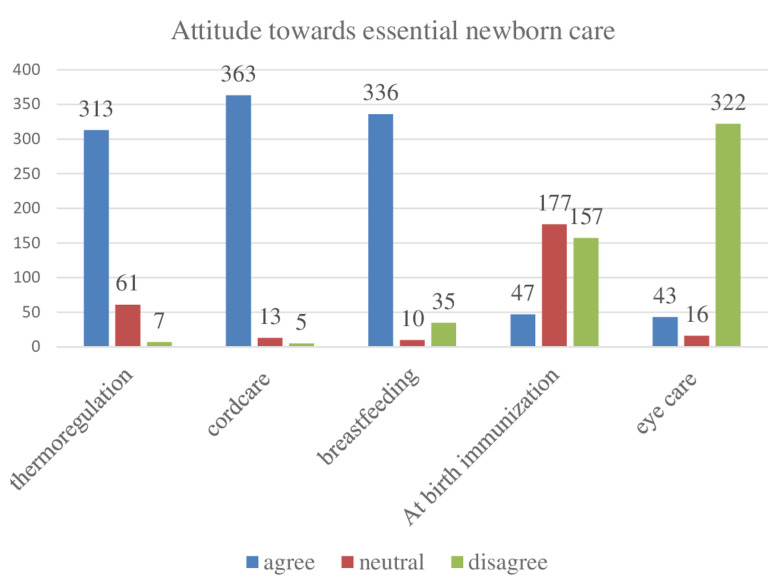
Results: of the postpartum mothers interviewed, 225 (59.1%) received information about essential newborn care. Knowledge-wise, 239 (62.7%) participants showed good knowledge, while 142 (37.3%) showed poor knowledge. Of the attitudes, 220 (57.8%) participants had a positive attitude and 161 (42.2%) participants had a negative attitude. Regarding practices, 150 (39.4%) participants had good practices and 231 (60.6%) had bad practices.
Conclusion: there appears to be a significant difference between the perceived knowledge of study participants and the actual practice of neonatal care. Therefore, it is recommended that health professionals provide ongoing postpartum education and training to mothers who have given birth to bridge this gap and bring about meaningful change.







 京公网安备 11010802042870号
京ICP备2023020795号-1
京公网安备 11010802042870号
京ICP备2023020795号-1

 分享
分享
 求助内容:
求助内容: 应助结果提醒方式:
 扫码关注我们
