{"title":"VisionMol:一种用于蛋白质分子结构可视化和操作的新型虚拟现实工具。","authors":"Xin Wang, Yicheng Zhuang, Wenrui Liang, Haoyang Wen, Zhencong Cai, Yujia He, Yuxi Su, Wei Qin, Yuanzhe Cai, Lixin Liang, Bingding Huang","doi":"10.1093/bioinformatics/btaf118","DOIUrl":null,"url":null,"abstract":"<p><strong>Motivation & results: </strong>Virtual reality (VR) technology holds significant potential for applications in biomedicine, particularly in the visualization and manipulation of protein molecular structures. To facilitate the study of protein molecules and enable the state-of-the-art VR hardware, we developed a novel VR software named VisionMol, which allows users to engage in immersive exploration and analysis of 3D molecular structures using a range of VR platforms (such as Rhino X Pro, Meta's Oculus Quest Pro/3) as well as personal computers. Built on the Unity engine and programmed using C#, VisionMol incorporates custom scripts to enable a variety of molecular operations. Users can rotate, scale, and translate molecular models using gestures, controllers, or other input devices. Furthermore, VisionMol offers rich visualization and interactive features, including multi-model molecular display, distance measurement between molecular components, and molecular alignment and docking.</p><p><strong>Summary: </strong>These capabilities facilitate a more intuitive understanding of molecular interactions and chemical properties. The real-time interactive effects and clear visual representations allow users to delve deeper into the relationships between molecular structures and their properties, thereby accelerating research progress and promoting scientific discovery. We believe that this VR-based protein molecule analysis has significant application value in several fields, including biomedicine, life science education, drug design and optimization, biotechnology, and engineering applications.</p><p><strong>Availability and implementation: </strong>The code is at https://github.com/WangLabforComputationalBiology/VisionMol. The v1.1 code (for Oculus Quest) could also be found at https://doi.org/10.5281/zenodo.14705790. The v1.0 code (for Rhino X Pro) could also be found at https://doi.org/10.5281/zenodo.14865216. Detailed documentation could be found at https://visionmol.surge.sh/#/en-us/README.</p>","PeriodicalId":93899,"journal":{"name":"Bioinformatics (Oxford, England)","volume":" ","pages":""},"PeriodicalIF":5.4000,"publicationDate":"2025-03-04","publicationTypes":"Journal Article","fieldsOfStudy":null,"isOpenAccess":false,"openAccessPdf":"https://www.ncbi.nlm.nih.gov/pmc/articles/PMC11947413/pdf/","citationCount":"0","resultStr":"{\"title\":\"VisionMol: a novel virtual reality tool for protein molecular structure visualization and manipulation.\",\"authors\":\"Xin Wang, Yicheng Zhuang, Wenrui Liang, Haoyang Wen, Zhencong Cai, Yujia He, Yuxi Su, Wei Qin, Yuanzhe Cai, Lixin Liang, Bingding Huang\",\"doi\":\"10.1093/bioinformatics/btaf118\",\"DOIUrl\":null,\"url\":null,\"abstract\":\"<p><strong>Motivation & results: </strong>Virtual reality (VR) technology holds significant potential for applications in biomedicine, particularly in the visualization and manipulation of protein molecular structures. To facilitate the study of protein molecules and enable the state-of-the-art VR hardware, we developed a novel VR software named VisionMol, which allows users to engage in immersive exploration and analysis of 3D molecular structures using a range of VR platforms (such as Rhino X Pro, Meta's Oculus Quest Pro/3) as well as personal computers. Built on the Unity engine and programmed using C#, VisionMol incorporates custom scripts to enable a variety of molecular operations. Users can rotate, scale, and translate molecular models using gestures, controllers, or other input devices. Furthermore, VisionMol offers rich visualization and interactive features, including multi-model molecular display, distance measurement between molecular components, and molecular alignment and docking.</p><p><strong>Summary: </strong>These capabilities facilitate a more intuitive understanding of molecular interactions and chemical properties. The real-time interactive effects and clear visual representations allow users to delve deeper into the relationships between molecular structures and their properties, thereby accelerating research progress and promoting scientific discovery. We believe that this VR-based protein molecule analysis has significant application value in several fields, including biomedicine, life science education, drug design and optimization, biotechnology, and engineering applications.</p><p><strong>Availability and implementation: </strong>The code is at https://github.com/WangLabforComputationalBiology/VisionMol. The v1.1 code (for Oculus Quest) could also be found at https://doi.org/10.5281/zenodo.14705790. The v1.0 code (for Rhino X Pro) could also be found at https://doi.org/10.5281/zenodo.14865216. Detailed documentation could be found at https://visionmol.surge.sh/#/en-us/README.</p>\",\"PeriodicalId\":93899,\"journal\":{\"name\":\"Bioinformatics (Oxford, England)\",\"volume\":\" \",\"pages\":\"\"},\"PeriodicalIF\":5.4000,\"publicationDate\":\"2025-03-04\",\"publicationTypes\":\"Journal Article\",\"fieldsOfStudy\":null,\"isOpenAccess\":false,\"openAccessPdf\":\"https://www.ncbi.nlm.nih.gov/pmc/articles/PMC11947413/pdf/\",\"citationCount\":\"0\",\"resultStr\":null,\"platform\":\"Semanticscholar\",\"paperid\":null,\"PeriodicalName\":\"Bioinformatics (Oxford, England)\",\"FirstCategoryId\":\"1085\",\"ListUrlMain\":\"https://doi.org/10.1093/bioinformatics/btaf118\",\"RegionNum\":0,\"RegionCategory\":null,\"ArticlePicture\":[],\"TitleCN\":null,\"AbstractTextCN\":null,\"PMCID\":null,\"EPubDate\":\"\",\"PubModel\":\"\",\"JCR\":\"\",\"JCRName\":\"\",\"Score\":null,\"Total\":0}","platform":"Semanticscholar","paperid":null,"PeriodicalName":"Bioinformatics (Oxford, England)","FirstCategoryId":"1085","ListUrlMain":"https://doi.org/10.1093/bioinformatics/btaf118","RegionNum":0,"RegionCategory":null,"ArticlePicture":[],"TitleCN":null,"AbstractTextCN":null,"PMCID":null,"EPubDate":"","PubModel":"","JCR":"","JCRName":"","Score":null,"Total":0}
引用次数: 0
摘要
动机:虚拟现实技术在生物医学领域有着巨大的应用潜力,特别是在蛋白质分子结构的可视化和操纵方面。为了促进蛋白质分子的研究,并使最先进的VR硬件,我们开发了一种名为VisionMol的新型VR软件,它允许用户使用一系列虚拟现实平台(如Rhino X Pro, Meta的Oculus Quest Pro/3)以及个人电脑进行沉浸式的三维分子结构探索和分析。结果:构建在Unity引擎上,使用c#编程,VisionMol包含自定义脚本,以实现各种分子操作。用户可以使用手势、控制器或其他输入设备旋转、缩放和转换分子模型。此外,VisionMol还提供丰富的可视化和交互功能,包括多模型分子显示、分子组分之间的距离测量、分子比对和对接。这些能力有助于更直观地理解分子相互作用和化学性质。实时交互效果和清晰的视觉表现使用户能够更深入地研究分子结构与其性质之间的关系,从而加快研究进展,促进科学发现。我们相信这种基于vr的蛋白质分子分析在生物医学、生命科学教育、药物设计与优化、生物技术和工程应用等多个领域具有重要的应用价值。可用性:代码在https://github.com/WangLabforComputationalBiology/VisionMol。v1.1代码(Oculus Quest)也可以在https://doi.org/10.5281/zenodo.14705790找到。1.0版本的代码(用于Rhino X Pro)也可以在https://doi.org/10.5281/zenodo.14865216上找到。详细的文件可在https://visionmol.surge.sh/#/en-us/README.Supplementary信息中找到:补充文件可在生物信息学在线上找到。
VisionMol: a novel virtual reality tool for protein molecular structure visualization and manipulation.
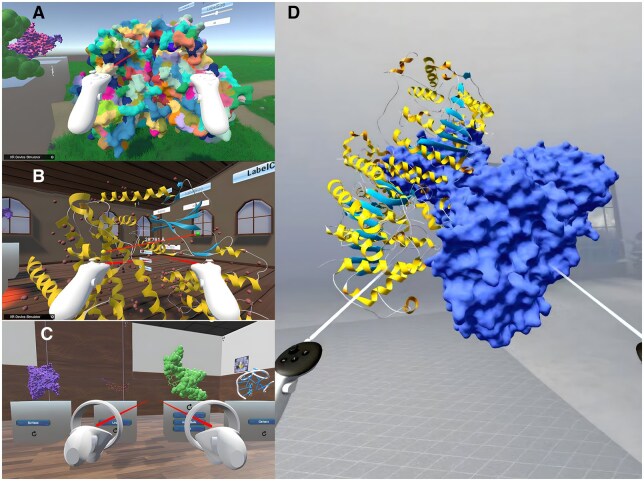
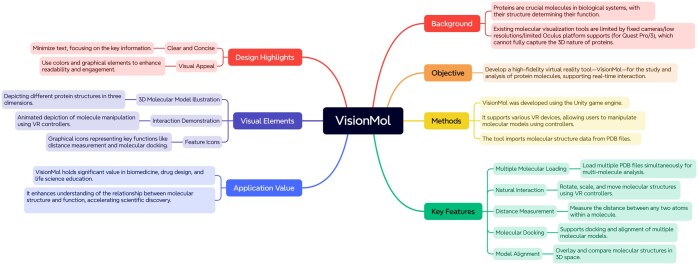
Motivation & results: Virtual reality (VR) technology holds significant potential for applications in biomedicine, particularly in the visualization and manipulation of protein molecular structures. To facilitate the study of protein molecules and enable the state-of-the-art VR hardware, we developed a novel VR software named VisionMol, which allows users to engage in immersive exploration and analysis of 3D molecular structures using a range of VR platforms (such as Rhino X Pro, Meta's Oculus Quest Pro/3) as well as personal computers. Built on the Unity engine and programmed using C#, VisionMol incorporates custom scripts to enable a variety of molecular operations. Users can rotate, scale, and translate molecular models using gestures, controllers, or other input devices. Furthermore, VisionMol offers rich visualization and interactive features, including multi-model molecular display, distance measurement between molecular components, and molecular alignment and docking.
Summary: These capabilities facilitate a more intuitive understanding of molecular interactions and chemical properties. The real-time interactive effects and clear visual representations allow users to delve deeper into the relationships between molecular structures and their properties, thereby accelerating research progress and promoting scientific discovery. We believe that this VR-based protein molecule analysis has significant application value in several fields, including biomedicine, life science education, drug design and optimization, biotechnology, and engineering applications.
Availability and implementation: The code is at https://github.com/WangLabforComputationalBiology/VisionMol. The v1.1 code (for Oculus Quest) could also be found at https://doi.org/10.5281/zenodo.14705790. The v1.0 code (for Rhino X Pro) could also be found at https://doi.org/10.5281/zenodo.14865216. Detailed documentation could be found at https://visionmol.surge.sh/#/en-us/README.




 京公网安备 11010802042870号
京ICP备2023020795号-1
京公网安备 11010802042870号
京ICP备2023020795号-1

 分享
分享

 求助内容:
求助内容: 应助结果提醒方式:
 扫码关注我们
