Daryna Diment, Oliver Musl, Mikhail Balakshin, Davide Rigo
{"title":"通过2,2-二苯基-1-吡啶酰肼(DPPH)测定法评估木质素抗氧化活性的指南。","authors":"Daryna Diment, Oliver Musl, Mikhail Balakshin, Davide Rigo","doi":"10.1002/cssc.202402383","DOIUrl":null,"url":null,"abstract":"<p>The most widespread procedure to measure the antioxidant activity of lignin is via the 2,2-diphenyl-1-picrylhydrazyl (DPPH) assay. So far, different experimental procedures (<i>i. e</i>., different solvent, time, etc.) have been used to implement the DPPH methodology without estimating the effect of such modifications on the experimental procedure. To overcome this issue, the impact of the solvent, the time, and the type of substrate on the evaluation of the antioxidant activity (AoA) of lignin via the DPPH assay was investigated in this work. We found that multiple different parameters affect the evaluation of the AoA of lignin: i) the stability of the DPPH radical and the lignin solubility in a given solvent; ii) the importance of reaching steady state (the effect of time); iii) the background noise associated with lignin absorbance at λ=515 nm (used to monitor the DPPH radical scavenging); iv) lignin structure; v) providing a <i>normalized</i> radical scavenging index (nRSI); vi) comparing nRSI vs. inhibition percentage (IP) values. Overall, our investigation allowed us to provide guidelines on how to perform the DPPH assay for a more reliable evaluation of lignin AoA.</p>","PeriodicalId":149,"journal":{"name":"ChemSusChem","volume":"18 10","pages":""},"PeriodicalIF":6.6000,"publicationDate":"2025-03-19","publicationTypes":"Journal Article","fieldsOfStudy":null,"isOpenAccess":false,"openAccessPdf":"https://onlinelibrary.wiley.com/doi/epdf/10.1002/cssc.202402383","citationCount":"0","resultStr":"{\"title\":\"Guidelines for Evaluating the Antioxidant Activity of Lignin via the 2,2-diphenyl-1-picrylhydrazyl (DPPH) Assay\",\"authors\":\"Daryna Diment, Oliver Musl, Mikhail Balakshin, Davide Rigo\",\"doi\":\"10.1002/cssc.202402383\",\"DOIUrl\":null,\"url\":null,\"abstract\":\"<p>The most widespread procedure to measure the antioxidant activity of lignin is via the 2,2-diphenyl-1-picrylhydrazyl (DPPH) assay. So far, different experimental procedures (<i>i. e</i>., different solvent, time, etc.) have been used to implement the DPPH methodology without estimating the effect of such modifications on the experimental procedure. To overcome this issue, the impact of the solvent, the time, and the type of substrate on the evaluation of the antioxidant activity (AoA) of lignin via the DPPH assay was investigated in this work. We found that multiple different parameters affect the evaluation of the AoA of lignin: i) the stability of the DPPH radical and the lignin solubility in a given solvent; ii) the importance of reaching steady state (the effect of time); iii) the background noise associated with lignin absorbance at λ=515 nm (used to monitor the DPPH radical scavenging); iv) lignin structure; v) providing a <i>normalized</i> radical scavenging index (nRSI); vi) comparing nRSI vs. inhibition percentage (IP) values. Overall, our investigation allowed us to provide guidelines on how to perform the DPPH assay for a more reliable evaluation of lignin AoA.</p>\",\"PeriodicalId\":149,\"journal\":{\"name\":\"ChemSusChem\",\"volume\":\"18 10\",\"pages\":\"\"},\"PeriodicalIF\":6.6000,\"publicationDate\":\"2025-03-19\",\"publicationTypes\":\"Journal Article\",\"fieldsOfStudy\":null,\"isOpenAccess\":false,\"openAccessPdf\":\"https://onlinelibrary.wiley.com/doi/epdf/10.1002/cssc.202402383\",\"citationCount\":\"0\",\"resultStr\":null,\"platform\":\"Semanticscholar\",\"paperid\":null,\"PeriodicalName\":\"ChemSusChem\",\"FirstCategoryId\":\"92\",\"ListUrlMain\":\"https://chemistry-europe.onlinelibrary.wiley.com/doi/10.1002/cssc.202402383\",\"RegionNum\":2,\"RegionCategory\":\"化学\",\"ArticlePicture\":[],\"TitleCN\":null,\"AbstractTextCN\":null,\"PMCID\":null,\"EPubDate\":\"\",\"PubModel\":\"\",\"JCR\":\"Q1\",\"JCRName\":\"CHEMISTRY, MULTIDISCIPLINARY\",\"Score\":null,\"Total\":0}","platform":"Semanticscholar","paperid":null,"PeriodicalName":"ChemSusChem","FirstCategoryId":"92","ListUrlMain":"https://chemistry-europe.onlinelibrary.wiley.com/doi/10.1002/cssc.202402383","RegionNum":2,"RegionCategory":"化学","ArticlePicture":[],"TitleCN":null,"AbstractTextCN":null,"PMCID":null,"EPubDate":"","PubModel":"","JCR":"Q1","JCRName":"CHEMISTRY, MULTIDISCIPLINARY","Score":null,"Total":0}
Guidelines for Evaluating the Antioxidant Activity of Lignin via the 2,2-diphenyl-1-picrylhydrazyl (DPPH) Assay
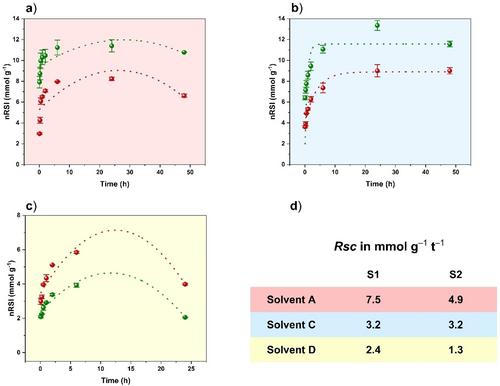
The most widespread procedure to measure the antioxidant activity of lignin is via the 2,2-diphenyl-1-picrylhydrazyl (DPPH) assay. So far, different experimental procedures (i. e., different solvent, time, etc.) have been used to implement the DPPH methodology without estimating the effect of such modifications on the experimental procedure. To overcome this issue, the impact of the solvent, the time, and the type of substrate on the evaluation of the antioxidant activity (AoA) of lignin via the DPPH assay was investigated in this work. We found that multiple different parameters affect the evaluation of the AoA of lignin: i) the stability of the DPPH radical and the lignin solubility in a given solvent; ii) the importance of reaching steady state (the effect of time); iii) the background noise associated with lignin absorbance at λ=515 nm (used to monitor the DPPH radical scavenging); iv) lignin structure; v) providing a normalized radical scavenging index (nRSI); vi) comparing nRSI vs. inhibition percentage (IP) values. Overall, our investigation allowed us to provide guidelines on how to perform the DPPH assay for a more reliable evaluation of lignin AoA.
期刊介绍:
ChemSusChem
Impact Factor (2016): 7.226
Scope:
Interdisciplinary journal
Focuses on research at the interface of chemistry and sustainability
Features the best research on sustainability and energy
Areas Covered:
Chemistry
Materials Science
Chemical Engineering
Biotechnology






 京公网安备 11010802042870号
京ICP备2023020795号-1
京公网安备 11010802042870号
京ICP备2023020795号-1

 分享
分享
 求助内容:
求助内容: 应助结果提醒方式:
 扫码关注我们
