Min Li, Chang-Bao Wei, Hai-Feng Li, Ke He, Rui-Jun Bai, Fang-Jie Zhang
{"title":"骨桥蛋白通过CD44和avβ3整合素抑制自噬,促进骨关节炎成纤维细胞样滑膜细胞的细胞增殖。","authors":"Min Li, Chang-Bao Wei, Hai-Feng Li, Ke He, Rui-Jun Bai, Fang-Jie Zhang","doi":"10.1186/s12891-025-08509-y","DOIUrl":null,"url":null,"abstract":"<p><strong>Objective: </strong>Osteoarthritis (OA) is closely related to aging, and autophagy is implicated in the retardation of aging. Activated synoviocytes play important roles in OA; the synoviocytes could produce osteopontin (OPN) and its main receptors CD44 and integrin, which are all involved in OA. The purpose of this study is to investigate whether OPN has an effect on autophagy in osteoarthritic synoviocytes.</p><p><strong>Methods: </strong>We cultured human OA fibroblast-like synoviocytes (FLS) and treated them with rhOPN and antibodies against CD44 and CD51/61 (αvβ3 integrin) or isotype IgG to block the interaction between receptors and ligands. Infection with lentivirus mRFP-GFP-LC3, laser confocal imaging and Western blotting were used to determine changes in the expression of autophagy markers, and cell proliferation of FLS was assessed with a CCK-8 assay.</p><p><strong>Results: </strong>Our results showed the expression level of autophagy marker protein LC3 II and the mRFP-GFP-LC3 puncta were significantly decreased after treatment with rhOPN when compared with the control group, when the FLS were incubated with antibodies against CD44 or CD51/61 (αvβ3 integrin) or with control isotype IgG for 1 h, followed by rhOPN treatment for 48 h, rhOPN could suppress the relative expression of LC3 II and Beclin1 via integrin and CD44 in the FLS, CCK-8 assay also showed that rhOPN significantly increased the cell proliferation and viability of FLS.</p><p><strong>Conclusions: </strong>OPN could inhibit autophagy via CD44 and αvβ3 integrin and promote the proliferation of FLS, playing an important role in OA synovitis.</p>","PeriodicalId":9189,"journal":{"name":"BMC Musculoskeletal Disorders","volume":"26 1","pages":"274"},"PeriodicalIF":2.8000,"publicationDate":"2025-03-18","publicationTypes":"Journal Article","fieldsOfStudy":null,"isOpenAccess":false,"openAccessPdf":"https://www.ncbi.nlm.nih.gov/pmc/articles/PMC11916941/pdf/","citationCount":"0","resultStr":"{\"title\":\"Osteopontin inhibits autophagy via CD44 and avβ3 integrin and promotes cell proliferation in osteoarthritic fibroblast-like synoviocytes.\",\"authors\":\"Min Li, Chang-Bao Wei, Hai-Feng Li, Ke He, Rui-Jun Bai, Fang-Jie Zhang\",\"doi\":\"10.1186/s12891-025-08509-y\",\"DOIUrl\":null,\"url\":null,\"abstract\":\"<p><strong>Objective: </strong>Osteoarthritis (OA) is closely related to aging, and autophagy is implicated in the retardation of aging. Activated synoviocytes play important roles in OA; the synoviocytes could produce osteopontin (OPN) and its main receptors CD44 and integrin, which are all involved in OA. The purpose of this study is to investigate whether OPN has an effect on autophagy in osteoarthritic synoviocytes.</p><p><strong>Methods: </strong>We cultured human OA fibroblast-like synoviocytes (FLS) and treated them with rhOPN and antibodies against CD44 and CD51/61 (αvβ3 integrin) or isotype IgG to block the interaction between receptors and ligands. Infection with lentivirus mRFP-GFP-LC3, laser confocal imaging and Western blotting were used to determine changes in the expression of autophagy markers, and cell proliferation of FLS was assessed with a CCK-8 assay.</p><p><strong>Results: </strong>Our results showed the expression level of autophagy marker protein LC3 II and the mRFP-GFP-LC3 puncta were significantly decreased after treatment with rhOPN when compared with the control group, when the FLS were incubated with antibodies against CD44 or CD51/61 (αvβ3 integrin) or with control isotype IgG for 1 h, followed by rhOPN treatment for 48 h, rhOPN could suppress the relative expression of LC3 II and Beclin1 via integrin and CD44 in the FLS, CCK-8 assay also showed that rhOPN significantly increased the cell proliferation and viability of FLS.</p><p><strong>Conclusions: </strong>OPN could inhibit autophagy via CD44 and αvβ3 integrin and promote the proliferation of FLS, playing an important role in OA synovitis.</p>\",\"PeriodicalId\":9189,\"journal\":{\"name\":\"BMC Musculoskeletal Disorders\",\"volume\":\"26 1\",\"pages\":\"274\"},\"PeriodicalIF\":2.8000,\"publicationDate\":\"2025-03-18\",\"publicationTypes\":\"Journal Article\",\"fieldsOfStudy\":null,\"isOpenAccess\":false,\"openAccessPdf\":\"https://www.ncbi.nlm.nih.gov/pmc/articles/PMC11916941/pdf/\",\"citationCount\":\"0\",\"resultStr\":null,\"platform\":\"Semanticscholar\",\"paperid\":null,\"PeriodicalName\":\"BMC Musculoskeletal Disorders\",\"FirstCategoryId\":\"3\",\"ListUrlMain\":\"https://doi.org/10.1186/s12891-025-08509-y\",\"RegionNum\":3,\"RegionCategory\":\"医学\",\"ArticlePicture\":[],\"TitleCN\":null,\"AbstractTextCN\":null,\"PMCID\":null,\"EPubDate\":\"\",\"PubModel\":\"\",\"JCR\":\"Q2\",\"JCRName\":\"ORTHOPEDICS\",\"Score\":null,\"Total\":0}","platform":"Semanticscholar","paperid":null,"PeriodicalName":"BMC Musculoskeletal Disorders","FirstCategoryId":"3","ListUrlMain":"https://doi.org/10.1186/s12891-025-08509-y","RegionNum":3,"RegionCategory":"医学","ArticlePicture":[],"TitleCN":null,"AbstractTextCN":null,"PMCID":null,"EPubDate":"","PubModel":"","JCR":"Q2","JCRName":"ORTHOPEDICS","Score":null,"Total":0}
Osteopontin inhibits autophagy via CD44 and avβ3 integrin and promotes cell proliferation in osteoarthritic fibroblast-like synoviocytes.
Objective: Osteoarthritis (OA) is closely related to aging, and autophagy is implicated in the retardation of aging. Activated synoviocytes play important roles in OA; the synoviocytes could produce osteopontin (OPN) and its main receptors CD44 and integrin, which are all involved in OA. The purpose of this study is to investigate whether OPN has an effect on autophagy in osteoarthritic synoviocytes.
Methods: We cultured human OA fibroblast-like synoviocytes (FLS) and treated them with rhOPN and antibodies against CD44 and CD51/61 (αvβ3 integrin) or isotype IgG to block the interaction between receptors and ligands. Infection with lentivirus mRFP-GFP-LC3, laser confocal imaging and Western blotting were used to determine changes in the expression of autophagy markers, and cell proliferation of FLS was assessed with a CCK-8 assay.
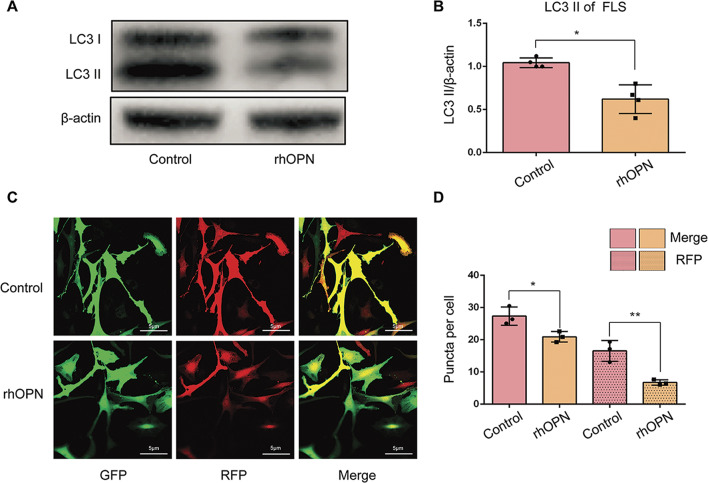
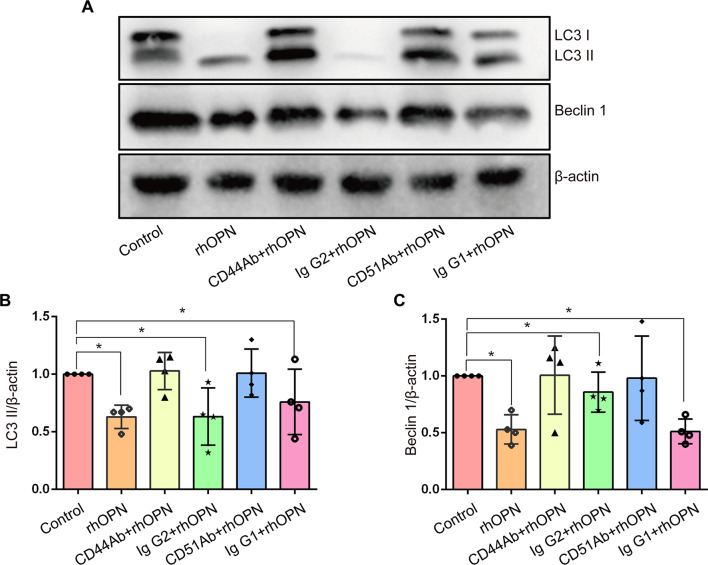
Results: Our results showed the expression level of autophagy marker protein LC3 II and the mRFP-GFP-LC3 puncta were significantly decreased after treatment with rhOPN when compared with the control group, when the FLS were incubated with antibodies against CD44 or CD51/61 (αvβ3 integrin) or with control isotype IgG for 1 h, followed by rhOPN treatment for 48 h, rhOPN could suppress the relative expression of LC3 II and Beclin1 via integrin and CD44 in the FLS, CCK-8 assay also showed that rhOPN significantly increased the cell proliferation and viability of FLS.
Conclusions: OPN could inhibit autophagy via CD44 and αvβ3 integrin and promote the proliferation of FLS, playing an important role in OA synovitis.
期刊介绍:
BMC Musculoskeletal Disorders is an open access, peer-reviewed journal that considers articles on all aspects of the prevention, diagnosis and management of musculoskeletal disorders, as well as related molecular genetics, pathophysiology, and epidemiology.
The scope of the Journal covers research into rheumatic diseases where the primary focus relates specifically to a component(s) of the musculoskeletal system.





 京公网安备 11010802042870号
京ICP备2023020795号-1
京公网安备 11010802042870号
京ICP备2023020795号-1

 分享
分享
 求助内容:
求助内容: 应助结果提醒方式:
 扫码关注我们
