Katrien Benhalima, Caro Minschart, Ina Geerts, Lieveke Ameye, Bart Van Der Schueren, Roland Devlieger, Annick Bogaerts, Chantal Mathieu
{"title":"在诊断为妊娠期糖尿病的孕妇中重新考虑降低妊娠期体重增加指南:来自比利时一项研究的证据。","authors":"Katrien Benhalima, Caro Minschart, Ina Geerts, Lieveke Ameye, Bart Van Der Schueren, Roland Devlieger, Annick Bogaerts, Chantal Mathieu","doi":"10.1186/s12916-025-03992-5","DOIUrl":null,"url":null,"abstract":"<p><strong>Background: </strong>The suitability of the United States National Academy of Medicine guidelines for gestational weight gain in women with gestational diabetes remains uncertain, raising global concerns. This study aimed to evaluate the association of gestational weight gain with pregnancy and birth outcomes and to determine optimal ranges for gestational weight gain per pre-pregnancy body mass index category in women with gestational diabetes.</p><p><strong>Methods: </strong>An epidemiological analysis between 2009-2018 analyzed a large Belgian cohort of singleton pregnancies with gestational diabetes and gestational age 38-40 weeks. Multivariate logistic regression assessed associations between gestational weight gain and relevant pregnancy and birth outcomes, with and without adjustment for confounding variables, including maternal age, origin, education, mode of conception, parity, gestational age at delivery, social deprivation, and year of delivery. Potential optimal weight gain ranges were calculated by minimizing the combined risk of small- and large-for-gestational-age infants (SGA, LGA).</p><p><strong>Results: </strong>A total of 13,060 women with gestational diabetes were included. Compared to recommended weight gain, gestational weight gain above guidelines occurred in 26.9% and was associated with an increased risk of gestational hypertension (aOR 1.41, 95% CI 1.20-1.66, p < 0.001), emergency caesarean section (aOR 1.45, 95% CI 1.25-1.69, p < 0.001), LGA infants (aOR 1.84, 95% CI 1.63-2.08, p < 0.001), and macrosomia (aOR 1.78, 95% CI 1.55-2.04, p < 0.001). Weight gain less than recommended (40.2%) was associated with a decreased risk of gestational hypertension (aOR 0.81, 95% CI 0.69-0.96, p = 0.015), LGA infants (aOR 0.58, 95% CI 0.50-0.66, p < 0.001), and macrosomia (aOR 0.57, 95% CI 0.49-0.65, p < 0.001), but at the expense of an increased risk of SGA infants (aOR 1.68, 95% CI 1.45-1.96, p < 0.001) and low birth weight (aOR 2.28, 95% CI 1.57-3.32, p < 0.001). Based on current analysis, the optimal ranges for gestational weight gain would be 9 to 14 kg for women with a normal weight, 1 to 9 kg for women with overweight, and -7 to 1 kg for women with obesity.</p><p><strong>Conclusions: </strong>This Belgian study suggests that optimal gestational weight gain for singleton at-term pregnancies complicated by gestational diabetes should be lower than current recommendations, highlighting the need to reevaluate gestational weight gain guidelines in this context.</p>","PeriodicalId":9188,"journal":{"name":"BMC Medicine","volume":"23 1","pages":"165"},"PeriodicalIF":8.3000,"publicationDate":"2025-03-18","publicationTypes":"Journal Article","fieldsOfStudy":null,"isOpenAccess":false,"openAccessPdf":"https://www.ncbi.nlm.nih.gov/pmc/articles/PMC11921705/pdf/","citationCount":"0","resultStr":"{\"title\":\"Reconsideration of lowering gestational weight gain guidelines in pregnant women diagnosed with gestational diabetes: evidence from a Belgian study.\",\"authors\":\"Katrien Benhalima, Caro Minschart, Ina Geerts, Lieveke Ameye, Bart Van Der Schueren, Roland Devlieger, Annick Bogaerts, Chantal Mathieu\",\"doi\":\"10.1186/s12916-025-03992-5\",\"DOIUrl\":null,\"url\":null,\"abstract\":\"<p><strong>Background: </strong>The suitability of the United States National Academy of Medicine guidelines for gestational weight gain in women with gestational diabetes remains uncertain, raising global concerns. This study aimed to evaluate the association of gestational weight gain with pregnancy and birth outcomes and to determine optimal ranges for gestational weight gain per pre-pregnancy body mass index category in women with gestational diabetes.</p><p><strong>Methods: </strong>An epidemiological analysis between 2009-2018 analyzed a large Belgian cohort of singleton pregnancies with gestational diabetes and gestational age 38-40 weeks. Multivariate logistic regression assessed associations between gestational weight gain and relevant pregnancy and birth outcomes, with and without adjustment for confounding variables, including maternal age, origin, education, mode of conception, parity, gestational age at delivery, social deprivation, and year of delivery. Potential optimal weight gain ranges were calculated by minimizing the combined risk of small- and large-for-gestational-age infants (SGA, LGA).</p><p><strong>Results: </strong>A total of 13,060 women with gestational diabetes were included. Compared to recommended weight gain, gestational weight gain above guidelines occurred in 26.9% and was associated with an increased risk of gestational hypertension (aOR 1.41, 95% CI 1.20-1.66, p < 0.001), emergency caesarean section (aOR 1.45, 95% CI 1.25-1.69, p < 0.001), LGA infants (aOR 1.84, 95% CI 1.63-2.08, p < 0.001), and macrosomia (aOR 1.78, 95% CI 1.55-2.04, p < 0.001). Weight gain less than recommended (40.2%) was associated with a decreased risk of gestational hypertension (aOR 0.81, 95% CI 0.69-0.96, p = 0.015), LGA infants (aOR 0.58, 95% CI 0.50-0.66, p < 0.001), and macrosomia (aOR 0.57, 95% CI 0.49-0.65, p < 0.001), but at the expense of an increased risk of SGA infants (aOR 1.68, 95% CI 1.45-1.96, p < 0.001) and low birth weight (aOR 2.28, 95% CI 1.57-3.32, p < 0.001). Based on current analysis, the optimal ranges for gestational weight gain would be 9 to 14 kg for women with a normal weight, 1 to 9 kg for women with overweight, and -7 to 1 kg for women with obesity.</p><p><strong>Conclusions: </strong>This Belgian study suggests that optimal gestational weight gain for singleton at-term pregnancies complicated by gestational diabetes should be lower than current recommendations, highlighting the need to reevaluate gestational weight gain guidelines in this context.</p>\",\"PeriodicalId\":9188,\"journal\":{\"name\":\"BMC Medicine\",\"volume\":\"23 1\",\"pages\":\"165\"},\"PeriodicalIF\":8.3000,\"publicationDate\":\"2025-03-18\",\"publicationTypes\":\"Journal Article\",\"fieldsOfStudy\":null,\"isOpenAccess\":false,\"openAccessPdf\":\"https://www.ncbi.nlm.nih.gov/pmc/articles/PMC11921705/pdf/\",\"citationCount\":\"0\",\"resultStr\":null,\"platform\":\"Semanticscholar\",\"paperid\":null,\"PeriodicalName\":\"BMC Medicine\",\"FirstCategoryId\":\"3\",\"ListUrlMain\":\"https://doi.org/10.1186/s12916-025-03992-5\",\"RegionNum\":1,\"RegionCategory\":\"医学\",\"ArticlePicture\":[],\"TitleCN\":null,\"AbstractTextCN\":null,\"PMCID\":null,\"EPubDate\":\"\",\"PubModel\":\"\",\"JCR\":\"Q1\",\"JCRName\":\"MEDICINE, GENERAL & INTERNAL\",\"Score\":null,\"Total\":0}","platform":"Semanticscholar","paperid":null,"PeriodicalName":"BMC Medicine","FirstCategoryId":"3","ListUrlMain":"https://doi.org/10.1186/s12916-025-03992-5","RegionNum":1,"RegionCategory":"医学","ArticlePicture":[],"TitleCN":null,"AbstractTextCN":null,"PMCID":null,"EPubDate":"","PubModel":"","JCR":"Q1","JCRName":"MEDICINE, GENERAL & INTERNAL","Score":null,"Total":0}
引用次数: 0
摘要
背景:美国国家医学院指南对妊娠期糖尿病妇女妊娠期体重增加的适用性仍不确定,这引起了全球关注。本研究旨在评估妊娠期体重增加与妊娠和分娩结局的关系,并确定妊娠期糖尿病妇女孕前体重指数类别中妊娠期体重增加的最佳范围。方法:2009-2018年的流行病学分析分析了妊娠期糖尿病的单胎妊娠,胎龄38-40周的大型比利时队列。多变量logistic回归评估了妊娠体重增加与相关妊娠和分娩结局之间的相关性,并对混淆变量进行了调整,包括产妇年龄、来源、教育程度、受孕方式、胎次、分娩时胎龄、社会剥夺和分娩年份。通过最小化小胎龄和大胎龄婴儿的综合风险来计算潜在的最佳体重增加范围(SGA, LGA)。结果:共纳入13060例妊娠期糖尿病患者。与推荐的体重增加相比,妊娠期体重增加高于指南的发生率为26.9%,并与妊娠期高血压的风险增加相关(aOR 1.41, 95% CI 1.20-1.66, p)。结论:比利时的这项研究表明,合并妊娠期糖尿病的单胎足月妊娠期最佳体重增加应低于目前的建议,强调在这种情况下重新评估妊娠期体重增加指南的必要性。
Reconsideration of lowering gestational weight gain guidelines in pregnant women diagnosed with gestational diabetes: evidence from a Belgian study.
Background: The suitability of the United States National Academy of Medicine guidelines for gestational weight gain in women with gestational diabetes remains uncertain, raising global concerns. This study aimed to evaluate the association of gestational weight gain with pregnancy and birth outcomes and to determine optimal ranges for gestational weight gain per pre-pregnancy body mass index category in women with gestational diabetes.
Methods: An epidemiological analysis between 2009-2018 analyzed a large Belgian cohort of singleton pregnancies with gestational diabetes and gestational age 38-40 weeks. Multivariate logistic regression assessed associations between gestational weight gain and relevant pregnancy and birth outcomes, with and without adjustment for confounding variables, including maternal age, origin, education, mode of conception, parity, gestational age at delivery, social deprivation, and year of delivery. Potential optimal weight gain ranges were calculated by minimizing the combined risk of small- and large-for-gestational-age infants (SGA, LGA).
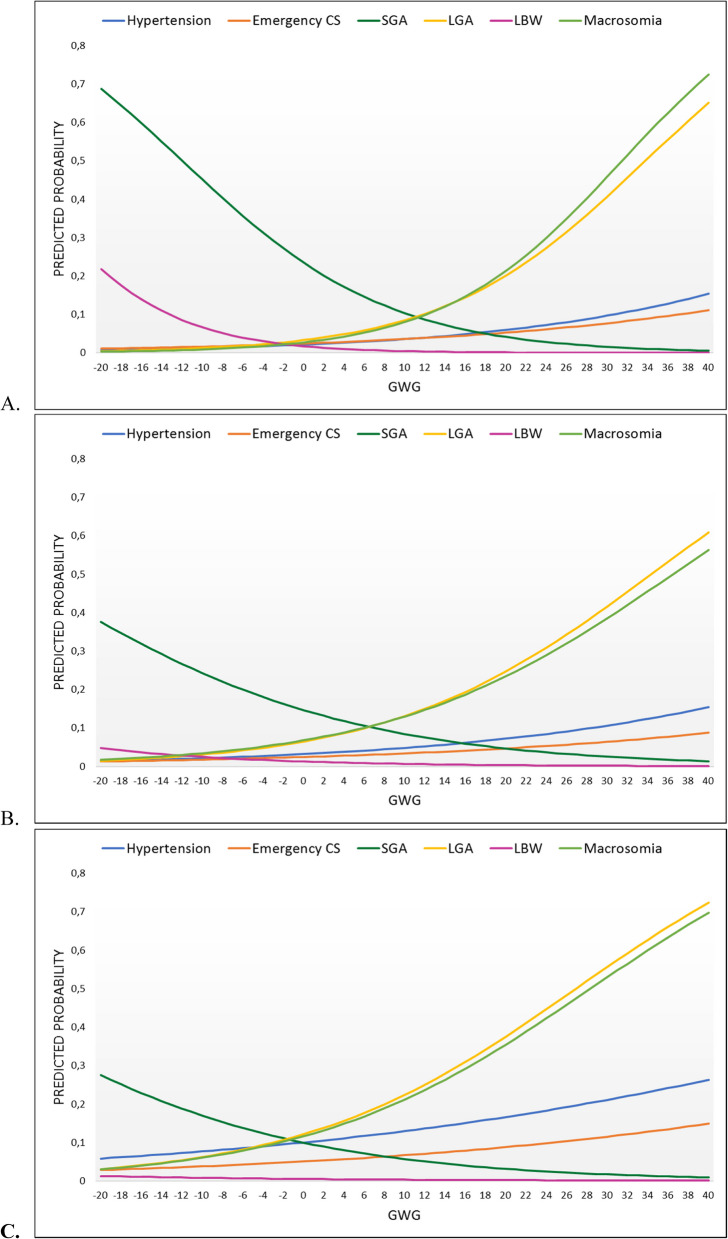
Results: A total of 13,060 women with gestational diabetes were included. Compared to recommended weight gain, gestational weight gain above guidelines occurred in 26.9% and was associated with an increased risk of gestational hypertension (aOR 1.41, 95% CI 1.20-1.66, p < 0.001), emergency caesarean section (aOR 1.45, 95% CI 1.25-1.69, p < 0.001), LGA infants (aOR 1.84, 95% CI 1.63-2.08, p < 0.001), and macrosomia (aOR 1.78, 95% CI 1.55-2.04, p < 0.001). Weight gain less than recommended (40.2%) was associated with a decreased risk of gestational hypertension (aOR 0.81, 95% CI 0.69-0.96, p = 0.015), LGA infants (aOR 0.58, 95% CI 0.50-0.66, p < 0.001), and macrosomia (aOR 0.57, 95% CI 0.49-0.65, p < 0.001), but at the expense of an increased risk of SGA infants (aOR 1.68, 95% CI 1.45-1.96, p < 0.001) and low birth weight (aOR 2.28, 95% CI 1.57-3.32, p < 0.001). Based on current analysis, the optimal ranges for gestational weight gain would be 9 to 14 kg for women with a normal weight, 1 to 9 kg for women with overweight, and -7 to 1 kg for women with obesity.
Conclusions: This Belgian study suggests that optimal gestational weight gain for singleton at-term pregnancies complicated by gestational diabetes should be lower than current recommendations, highlighting the need to reevaluate gestational weight gain guidelines in this context.
期刊介绍:
BMC Medicine is an open access, transparent peer-reviewed general medical journal. It is the flagship journal of the BMC series and publishes outstanding and influential research in various areas including clinical practice, translational medicine, medical and health advances, public health, global health, policy, and general topics of interest to the biomedical and sociomedical professional communities. In addition to research articles, the journal also publishes stimulating debates, reviews, unique forum articles, and concise tutorials. All articles published in BMC Medicine are included in various databases such as Biological Abstracts, BIOSIS, CAS, Citebase, Current contents, DOAJ, Embase, MEDLINE, PubMed, Science Citation Index Expanded, OAIster, SCImago, Scopus, SOCOLAR, and Zetoc.




 京公网安备 11010802042870号
京ICP备2023020795号-1
京公网安备 11010802042870号
京ICP备2023020795号-1

 分享
分享
 求助内容:
求助内容: 应助结果提醒方式:
 扫码关注我们
