{"title":"摘要floridogyne对辣椒(Capsicum annuum)抗性和易感根结线虫具有独特的毒力。","authors":"C Khanal, W Rutter, M S Alam, I Alarcon-Mendoza","doi":"10.2478/jofnem-2025-0007","DOIUrl":null,"url":null,"abstract":"<p><p><i>Meloidogyne floridensis</i> is a recently described species of root-knot nematode (RKN) that is very closely related to many other tropical RKN species, including <i>M. incognita.</i> Despite its close phylogenetic relationship, <i>M. floridensis</i> is distinctive from its close relatives in both its meiotic mechanism of reproduction and its documented virulence on many of the most common RKN resistance genes in cultivated peach, tomato, and pepper. To further characterize the virulence profile of <i>M. floridensis</i>, we conducted replicate screens using this nematode to infect a panel of pepper lines that carry different sets of known RKN resistance genes. We found that <i>M. floridensis</i> was virulent against all the most common RKN resistance genes, including <i>N</i>, <i>Me1</i>, and <i>Me3</i>. We also found that two of these lines, PA 136 and PM 217, were highly resistant to <i>M. floridensis</i>. PA136 was previously considered to be universally susceptible to all other RKN species. Further testing of an F1 hybrid of this line confirmed this result and indicated that PA 136 contains a yet uncharacterized and potentially dominant source of species-specific resistance against <i>M. floridensis</i>. These surprising results provide additional data on the differences between <i>M. floridensis</i> and its close relatives, and identify new sources of resistance that could be used by pepper breeding programs to develop new cultivars with resistance against this nematode.</p>","PeriodicalId":16475,"journal":{"name":"Journal of nematology","volume":"57 1","pages":"20250007"},"PeriodicalIF":2.0000,"publicationDate":"2025-03-14","publicationTypes":"Journal Article","fieldsOfStudy":null,"isOpenAccess":false,"openAccessPdf":"https://www.ncbi.nlm.nih.gov/pmc/articles/PMC11915053/pdf/","citationCount":"0","resultStr":"{\"title\":\"<i>Meloidogyne floridensis</i> has a unique virulence profile against root-knot nematode resistant and susceptible pepper (<i>Capsicum annuum</i>) lines.\",\"authors\":\"C Khanal, W Rutter, M S Alam, I Alarcon-Mendoza\",\"doi\":\"10.2478/jofnem-2025-0007\",\"DOIUrl\":null,\"url\":null,\"abstract\":\"<p><p><i>Meloidogyne floridensis</i> is a recently described species of root-knot nematode (RKN) that is very closely related to many other tropical RKN species, including <i>M. incognita.</i> Despite its close phylogenetic relationship, <i>M. floridensis</i> is distinctive from its close relatives in both its meiotic mechanism of reproduction and its documented virulence on many of the most common RKN resistance genes in cultivated peach, tomato, and pepper. To further characterize the virulence profile of <i>M. floridensis</i>, we conducted replicate screens using this nematode to infect a panel of pepper lines that carry different sets of known RKN resistance genes. We found that <i>M. floridensis</i> was virulent against all the most common RKN resistance genes, including <i>N</i>, <i>Me1</i>, and <i>Me3</i>. We also found that two of these lines, PA 136 and PM 217, were highly resistant to <i>M. floridensis</i>. PA136 was previously considered to be universally susceptible to all other RKN species. Further testing of an F1 hybrid of this line confirmed this result and indicated that PA 136 contains a yet uncharacterized and potentially dominant source of species-specific resistance against <i>M. floridensis</i>. These surprising results provide additional data on the differences between <i>M. floridensis</i> and its close relatives, and identify new sources of resistance that could be used by pepper breeding programs to develop new cultivars with resistance against this nematode.</p>\",\"PeriodicalId\":16475,\"journal\":{\"name\":\"Journal of nematology\",\"volume\":\"57 1\",\"pages\":\"20250007\"},\"PeriodicalIF\":2.0000,\"publicationDate\":\"2025-03-14\",\"publicationTypes\":\"Journal Article\",\"fieldsOfStudy\":null,\"isOpenAccess\":false,\"openAccessPdf\":\"https://www.ncbi.nlm.nih.gov/pmc/articles/PMC11915053/pdf/\",\"citationCount\":\"0\",\"resultStr\":null,\"platform\":\"Semanticscholar\",\"paperid\":null,\"PeriodicalName\":\"Journal of nematology\",\"FirstCategoryId\":\"99\",\"ListUrlMain\":\"https://doi.org/10.2478/jofnem-2025-0007\",\"RegionNum\":4,\"RegionCategory\":\"生物学\",\"ArticlePicture\":[],\"TitleCN\":null,\"AbstractTextCN\":null,\"PMCID\":null,\"EPubDate\":\"2025/2/1 0:00:00\",\"PubModel\":\"eCollection\",\"JCR\":\"Q2\",\"JCRName\":\"ZOOLOGY\",\"Score\":null,\"Total\":0}","platform":"Semanticscholar","paperid":null,"PeriodicalName":"Journal of nematology","FirstCategoryId":"99","ListUrlMain":"https://doi.org/10.2478/jofnem-2025-0007","RegionNum":4,"RegionCategory":"生物学","ArticlePicture":[],"TitleCN":null,"AbstractTextCN":null,"PMCID":null,"EPubDate":"2025/2/1 0:00:00","PubModel":"eCollection","JCR":"Q2","JCRName":"ZOOLOGY","Score":null,"Total":0}
Meloidogyne floridensis has a unique virulence profile against root-knot nematode resistant and susceptible pepper (Capsicum annuum) lines.
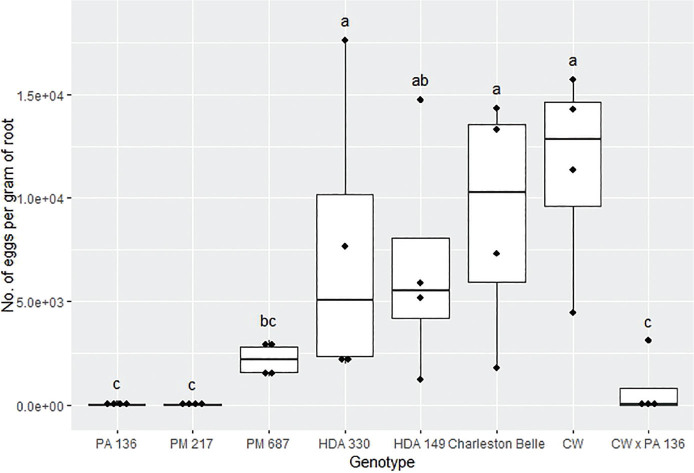
Meloidogyne floridensis is a recently described species of root-knot nematode (RKN) that is very closely related to many other tropical RKN species, including M. incognita. Despite its close phylogenetic relationship, M. floridensis is distinctive from its close relatives in both its meiotic mechanism of reproduction and its documented virulence on many of the most common RKN resistance genes in cultivated peach, tomato, and pepper. To further characterize the virulence profile of M. floridensis, we conducted replicate screens using this nematode to infect a panel of pepper lines that carry different sets of known RKN resistance genes. We found that M. floridensis was virulent against all the most common RKN resistance genes, including N, Me1, and Me3. We also found that two of these lines, PA 136 and PM 217, were highly resistant to M. floridensis. PA136 was previously considered to be universally susceptible to all other RKN species. Further testing of an F1 hybrid of this line confirmed this result and indicated that PA 136 contains a yet uncharacterized and potentially dominant source of species-specific resistance against M. floridensis. These surprising results provide additional data on the differences between M. floridensis and its close relatives, and identify new sources of resistance that could be used by pepper breeding programs to develop new cultivars with resistance against this nematode.
期刊介绍:
Journal of Nematology is the official technical and scientific communication publication of the Society of Nematologists since 1969. The journal publishes original papers on all aspects of basic, applied, descriptive, theoretical or experimental nematology and adheres to strict peer-review policy. Other categories of papers include invited reviews, research notes, abstracts of papers presented at annual meetings, and special publications as appropriate.






 京公网安备 11010802042870号
京ICP备2023020795号-1
京公网安备 11010802042870号
京ICP备2023020795号-1

 分享
分享
 求助内容:
求助内容: 应助结果提醒方式:
 扫码关注我们
