{"title":"通过分析分子结构和蛋白-蛋白相互作用来研究LPS-TLR4免疫应答。","authors":"Ruiqin Luo, Yuexin Yao, Zhuo Chen, Xiaoming Sun","doi":"10.1186/s12964-025-02149-4","DOIUrl":null,"url":null,"abstract":"<p><p>The LPS-TLR4 immune response is a critical mechanism in the body's defense against Gram-negative bacterial infections, yet its dysregulation can lead to severe inflammatory diseases. Lipopolysaccharide (LPS), a pivotal pathogen-associated molecular pattern (PAMP) on the surface of gram-negative bacteria, is recognized by Toll-like receptor 4 (TLR4), initiating a complex cascade of immune responses. This review delves into the intricate molecular structures and protein-protein interactions that underpin the LPS-TLR4 signaling pathway, offering a comprehensive analysis of both extracellular recognition and intracellular signal transduction. We explore the roles of key molecules such as LBP, CD14, MD-2, and TLR4 in the initial recognition of LPS, followed by the downstream signaling pathways mediated by MyD88-dependent and MyD88-independent mechanisms. The MyD88-dependent pathway primarily activates NF-κB and AP-1, leading to macrophage M1 polarization and the release of pro-inflammatory cytokines, while the MyD88-independent pathway triggers IRF activation and type-I interferon production. By elucidating the structural basis and functional interactions of these signaling molecules, this review not only enhances our understanding of the LPS-TLR4 immune response but also highlights its implications in both infectious and non-infectious diseases. Our findings underscore the potential of targeting this pathway for therapeutic interventions, offering new avenues for the treatment of inflammatory and immune-related disorders.</p>","PeriodicalId":55268,"journal":{"name":"Cell Communication and Signaling","volume":"23 1","pages":"142"},"PeriodicalIF":11.6000,"publicationDate":"2025-03-18","publicationTypes":"Journal Article","fieldsOfStudy":null,"isOpenAccess":false,"openAccessPdf":"https://www.ncbi.nlm.nih.gov/pmc/articles/PMC11921546/pdf/","citationCount":"0","resultStr":"{\"title\":\"An examination of the LPS-TLR4 immune response through the analysis of molecular structures and protein-protein interactions.\",\"authors\":\"Ruiqin Luo, Yuexin Yao, Zhuo Chen, Xiaoming Sun\",\"doi\":\"10.1186/s12964-025-02149-4\",\"DOIUrl\":null,\"url\":null,\"abstract\":\"<p><p>The LPS-TLR4 immune response is a critical mechanism in the body's defense against Gram-negative bacterial infections, yet its dysregulation can lead to severe inflammatory diseases. Lipopolysaccharide (LPS), a pivotal pathogen-associated molecular pattern (PAMP) on the surface of gram-negative bacteria, is recognized by Toll-like receptor 4 (TLR4), initiating a complex cascade of immune responses. This review delves into the intricate molecular structures and protein-protein interactions that underpin the LPS-TLR4 signaling pathway, offering a comprehensive analysis of both extracellular recognition and intracellular signal transduction. We explore the roles of key molecules such as LBP, CD14, MD-2, and TLR4 in the initial recognition of LPS, followed by the downstream signaling pathways mediated by MyD88-dependent and MyD88-independent mechanisms. The MyD88-dependent pathway primarily activates NF-κB and AP-1, leading to macrophage M1 polarization and the release of pro-inflammatory cytokines, while the MyD88-independent pathway triggers IRF activation and type-I interferon production. By elucidating the structural basis and functional interactions of these signaling molecules, this review not only enhances our understanding of the LPS-TLR4 immune response but also highlights its implications in both infectious and non-infectious diseases. Our findings underscore the potential of targeting this pathway for therapeutic interventions, offering new avenues for the treatment of inflammatory and immune-related disorders.</p>\",\"PeriodicalId\":55268,\"journal\":{\"name\":\"Cell Communication and Signaling\",\"volume\":\"23 1\",\"pages\":\"142\"},\"PeriodicalIF\":11.6000,\"publicationDate\":\"2025-03-18\",\"publicationTypes\":\"Journal Article\",\"fieldsOfStudy\":null,\"isOpenAccess\":false,\"openAccessPdf\":\"https://www.ncbi.nlm.nih.gov/pmc/articles/PMC11921546/pdf/\",\"citationCount\":\"0\",\"resultStr\":null,\"platform\":\"Semanticscholar\",\"paperid\":null,\"PeriodicalName\":\"Cell Communication and Signaling\",\"FirstCategoryId\":\"99\",\"ListUrlMain\":\"https://doi.org/10.1186/s12964-025-02149-4\",\"RegionNum\":2,\"RegionCategory\":\"生物学\",\"ArticlePicture\":[],\"TitleCN\":null,\"AbstractTextCN\":null,\"PMCID\":null,\"EPubDate\":\"\",\"PubModel\":\"\",\"JCR\":\"Q1\",\"JCRName\":\"CELL BIOLOGY\",\"Score\":null,\"Total\":0}","platform":"Semanticscholar","paperid":null,"PeriodicalName":"Cell Communication and Signaling","FirstCategoryId":"99","ListUrlMain":"https://doi.org/10.1186/s12964-025-02149-4","RegionNum":2,"RegionCategory":"生物学","ArticlePicture":[],"TitleCN":null,"AbstractTextCN":null,"PMCID":null,"EPubDate":"","PubModel":"","JCR":"Q1","JCRName":"CELL BIOLOGY","Score":null,"Total":0}
An examination of the LPS-TLR4 immune response through the analysis of molecular structures and protein-protein interactions.
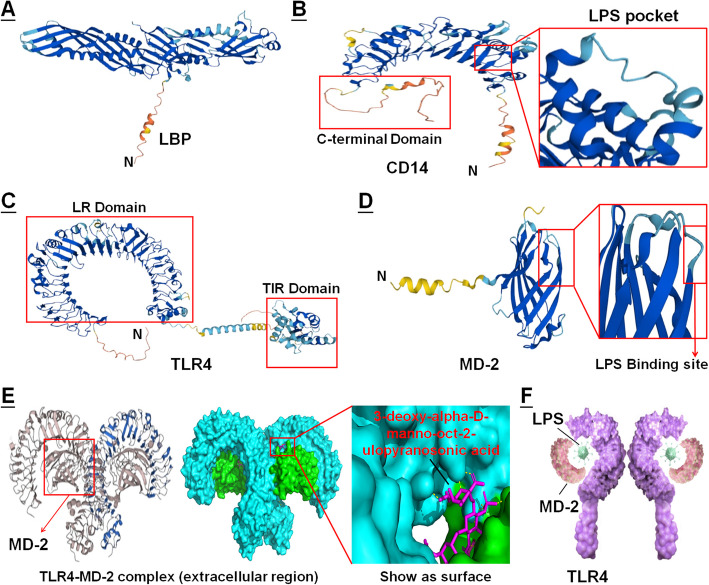
The LPS-TLR4 immune response is a critical mechanism in the body's defense against Gram-negative bacterial infections, yet its dysregulation can lead to severe inflammatory diseases. Lipopolysaccharide (LPS), a pivotal pathogen-associated molecular pattern (PAMP) on the surface of gram-negative bacteria, is recognized by Toll-like receptor 4 (TLR4), initiating a complex cascade of immune responses. This review delves into the intricate molecular structures and protein-protein interactions that underpin the LPS-TLR4 signaling pathway, offering a comprehensive analysis of both extracellular recognition and intracellular signal transduction. We explore the roles of key molecules such as LBP, CD14, MD-2, and TLR4 in the initial recognition of LPS, followed by the downstream signaling pathways mediated by MyD88-dependent and MyD88-independent mechanisms. The MyD88-dependent pathway primarily activates NF-κB and AP-1, leading to macrophage M1 polarization and the release of pro-inflammatory cytokines, while the MyD88-independent pathway triggers IRF activation and type-I interferon production. By elucidating the structural basis and functional interactions of these signaling molecules, this review not only enhances our understanding of the LPS-TLR4 immune response but also highlights its implications in both infectious and non-infectious diseases. Our findings underscore the potential of targeting this pathway for therapeutic interventions, offering new avenues for the treatment of inflammatory and immune-related disorders.
期刊介绍:
Cell Communication and Signaling (CCS) is a peer-reviewed, open-access scientific journal that focuses on cellular signaling pathways in both normal and pathological conditions. It publishes original research, reviews, and commentaries, welcoming studies that utilize molecular, morphological, biochemical, structural, and cell biology approaches. CCS also encourages interdisciplinary work and innovative models, including in silico, in vitro, and in vivo approaches, to facilitate investigations of cell signaling pathways, networks, and behavior.
Starting from January 2019, CCS is proud to announce its affiliation with the International Cell Death Society. The journal now encourages submissions covering all aspects of cell death, including apoptotic and non-apoptotic mechanisms, cell death in model systems, autophagy, clearance of dying cells, and the immunological and pathological consequences of dying cells in the tissue microenvironment.






 京公网安备 11010802042870号
京ICP备2023020795号-1
京公网安备 11010802042870号
京ICP备2023020795号-1

 分享
分享
 求助内容:
求助内容: 应助结果提醒方式:
 扫码关注我们
