{"title":"早期帕金森病伴睡眠障碍患者的临床特征、血浆神经递质水平和血浆神经激素水平","authors":"Cui-Hong Ma, Ning Ren, Jing Xu, Lei Chen","doi":"10.1186/s12964-025-02153-8","DOIUrl":null,"url":null,"abstract":"<p><strong>Background: </strong>Sleep disorders occur frequently among patients with Parkinson's disease (PD). Neurotransmitters and neurosteroids are known to be involved in various neurophysiological processes, including sleep development. We aimed to assess the associations of peripheral neurotransmitter and neurosteroid levels with various sleep disorders in early-stage PD.</p><p><strong>Methods: </strong>Fifty-nine patients with early-stage PD and 30 healthy controls were enrolled. Demographic and clinical data were collected, and sleep conditions were comprehensively assessed with clinical questionnaires and polysomnography. Blood samples were obtained from all participants at 1:00 AM and 9:00 AM. The concentrations of plasma neurotransmitters and neurohormones were detected via high-performance liquid chromatography tandem mass spectrometry.</p><p><strong>Results: </strong>Sleep disorders were common nonmotor symptoms (81.4%) and coexisted in approximately half of the patients. Dysautonomia was significantly associated with the presence of multiple sleep disorders. RBD was associated with dysautonomia and was negatively correlated with the plasma melatonin concentration at 1:00 AM (r = - 0.40, p = 0.002) in early-stage PD patients. The RLS group had higher PSQI scores, and RLS was negatively associated with the 5-hydroxytryptamine levels (r = - 0.40, p = 0.002) at 1:00 AM and glutamine levels (r = - 0.39, p = 0.002) at 9:00 AM. SDB was associated with cognitive impairment, a greater body mass index, and lower plasma acetylcholine concentrations at 1:00 AM.</p><p><strong>Conclusion: </strong>Combined sleep disturbances are common in early-stage PD. Dysautonomia is closely related to various sleep disorders, including RBD, EDS, and insomnia. Changes in peripheral neurotransmitter and neurohormone levels may be involved in the development of sleep disorders.</p>","PeriodicalId":55268,"journal":{"name":"Cell Communication and Signaling","volume":"23 1","pages":"144"},"PeriodicalIF":8.2000,"publicationDate":"2025-03-18","publicationTypes":"Journal Article","fieldsOfStudy":null,"isOpenAccess":false,"openAccessPdf":"https://www.ncbi.nlm.nih.gov/pmc/articles/PMC11921563/pdf/","citationCount":"0","resultStr":"{\"title\":\"Clinical features, plasma neurotransmitter levels and plasma neurohormone levels among patients with early-stage Parkinson's disease with sleep disorders.\",\"authors\":\"Cui-Hong Ma, Ning Ren, Jing Xu, Lei Chen\",\"doi\":\"10.1186/s12964-025-02153-8\",\"DOIUrl\":null,\"url\":null,\"abstract\":\"<p><strong>Background: </strong>Sleep disorders occur frequently among patients with Parkinson's disease (PD). Neurotransmitters and neurosteroids are known to be involved in various neurophysiological processes, including sleep development. We aimed to assess the associations of peripheral neurotransmitter and neurosteroid levels with various sleep disorders in early-stage PD.</p><p><strong>Methods: </strong>Fifty-nine patients with early-stage PD and 30 healthy controls were enrolled. Demographic and clinical data were collected, and sleep conditions were comprehensively assessed with clinical questionnaires and polysomnography. Blood samples were obtained from all participants at 1:00 AM and 9:00 AM. The concentrations of plasma neurotransmitters and neurohormones were detected via high-performance liquid chromatography tandem mass spectrometry.</p><p><strong>Results: </strong>Sleep disorders were common nonmotor symptoms (81.4%) and coexisted in approximately half of the patients. Dysautonomia was significantly associated with the presence of multiple sleep disorders. RBD was associated with dysautonomia and was negatively correlated with the plasma melatonin concentration at 1:00 AM (r = - 0.40, p = 0.002) in early-stage PD patients. The RLS group had higher PSQI scores, and RLS was negatively associated with the 5-hydroxytryptamine levels (r = - 0.40, p = 0.002) at 1:00 AM and glutamine levels (r = - 0.39, p = 0.002) at 9:00 AM. SDB was associated with cognitive impairment, a greater body mass index, and lower plasma acetylcholine concentrations at 1:00 AM.</p><p><strong>Conclusion: </strong>Combined sleep disturbances are common in early-stage PD. Dysautonomia is closely related to various sleep disorders, including RBD, EDS, and insomnia. Changes in peripheral neurotransmitter and neurohormone levels may be involved in the development of sleep disorders.</p>\",\"PeriodicalId\":55268,\"journal\":{\"name\":\"Cell Communication and Signaling\",\"volume\":\"23 1\",\"pages\":\"144\"},\"PeriodicalIF\":8.2000,\"publicationDate\":\"2025-03-18\",\"publicationTypes\":\"Journal Article\",\"fieldsOfStudy\":null,\"isOpenAccess\":false,\"openAccessPdf\":\"https://www.ncbi.nlm.nih.gov/pmc/articles/PMC11921563/pdf/\",\"citationCount\":\"0\",\"resultStr\":null,\"platform\":\"Semanticscholar\",\"paperid\":null,\"PeriodicalName\":\"Cell Communication and Signaling\",\"FirstCategoryId\":\"99\",\"ListUrlMain\":\"https://doi.org/10.1186/s12964-025-02153-8\",\"RegionNum\":2,\"RegionCategory\":\"生物学\",\"ArticlePicture\":[],\"TitleCN\":null,\"AbstractTextCN\":null,\"PMCID\":null,\"EPubDate\":\"\",\"PubModel\":\"\",\"JCR\":\"Q1\",\"JCRName\":\"CELL BIOLOGY\",\"Score\":null,\"Total\":0}","platform":"Semanticscholar","paperid":null,"PeriodicalName":"Cell Communication and Signaling","FirstCategoryId":"99","ListUrlMain":"https://doi.org/10.1186/s12964-025-02153-8","RegionNum":2,"RegionCategory":"生物学","ArticlePicture":[],"TitleCN":null,"AbstractTextCN":null,"PMCID":null,"EPubDate":"","PubModel":"","JCR":"Q1","JCRName":"CELL BIOLOGY","Score":null,"Total":0}
引用次数: 0
摘要
背景:帕金森病(PD)患者经常出现睡眠障碍。众所周知,神经递质和神经类固醇参与各种神经生理过程,包括睡眠发育。我们的目的是评估周围神经递质和神经类固醇水平与早期PD患者各种睡眠障碍的关系。方法:59例早期PD患者和30例健康对照。收集人口学和临床数据,并通过临床问卷和多导睡眠图对睡眠状况进行全面评估。在凌晨1点和9点采集了所有参与者的血液样本。采用高效液相色谱-串联质谱法检测血浆神经递质和神经激素浓度。结果:睡眠障碍是常见的非运动症状(81.4%),约半数患者同时存在睡眠障碍。自主神经异常与多重睡眠障碍显著相关。早期PD患者RBD与自主神经异常相关,且与1:00 AM血浆褪黑激素浓度呈负相关(r = - 0.40, p = 0.002)。RLS组PSQI评分较高,且RLS与凌晨1:00时5-羟色胺水平(r = - 0.40, p = 0.002)和9:00时谷氨酰胺水平(r = - 0.39, p = 0.002)呈负相关。SDB与认知障碍、较高的体重指数和凌晨1:00时较低的血浆乙酰胆碱浓度有关。结论:合并性睡眠障碍在早期PD中较为常见。自主神经异常与多种睡眠障碍密切相关,包括RBD、EDS、失眠等。周围神经递质和神经激素水平的变化可能与睡眠障碍的发生有关。
Clinical features, plasma neurotransmitter levels and plasma neurohormone levels among patients with early-stage Parkinson's disease with sleep disorders.
Background: Sleep disorders occur frequently among patients with Parkinson's disease (PD). Neurotransmitters and neurosteroids are known to be involved in various neurophysiological processes, including sleep development. We aimed to assess the associations of peripheral neurotransmitter and neurosteroid levels with various sleep disorders in early-stage PD.
Methods: Fifty-nine patients with early-stage PD and 30 healthy controls were enrolled. Demographic and clinical data were collected, and sleep conditions were comprehensively assessed with clinical questionnaires and polysomnography. Blood samples were obtained from all participants at 1:00 AM and 9:00 AM. The concentrations of plasma neurotransmitters and neurohormones were detected via high-performance liquid chromatography tandem mass spectrometry.
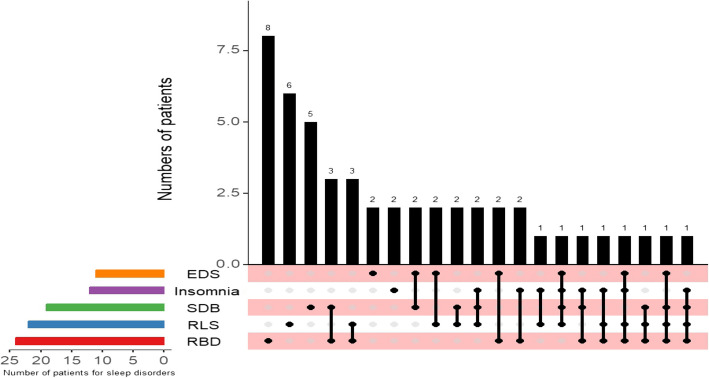
Results: Sleep disorders were common nonmotor symptoms (81.4%) and coexisted in approximately half of the patients. Dysautonomia was significantly associated with the presence of multiple sleep disorders. RBD was associated with dysautonomia and was negatively correlated with the plasma melatonin concentration at 1:00 AM (r = - 0.40, p = 0.002) in early-stage PD patients. The RLS group had higher PSQI scores, and RLS was negatively associated with the 5-hydroxytryptamine levels (r = - 0.40, p = 0.002) at 1:00 AM and glutamine levels (r = - 0.39, p = 0.002) at 9:00 AM. SDB was associated with cognitive impairment, a greater body mass index, and lower plasma acetylcholine concentrations at 1:00 AM.
Conclusion: Combined sleep disturbances are common in early-stage PD. Dysautonomia is closely related to various sleep disorders, including RBD, EDS, and insomnia. Changes in peripheral neurotransmitter and neurohormone levels may be involved in the development of sleep disorders.
期刊介绍:
Cell Communication and Signaling (CCS) is a peer-reviewed, open-access scientific journal that focuses on cellular signaling pathways in both normal and pathological conditions. It publishes original research, reviews, and commentaries, welcoming studies that utilize molecular, morphological, biochemical, structural, and cell biology approaches. CCS also encourages interdisciplinary work and innovative models, including in silico, in vitro, and in vivo approaches, to facilitate investigations of cell signaling pathways, networks, and behavior.
Starting from January 2019, CCS is proud to announce its affiliation with the International Cell Death Society. The journal now encourages submissions covering all aspects of cell death, including apoptotic and non-apoptotic mechanisms, cell death in model systems, autophagy, clearance of dying cells, and the immunological and pathological consequences of dying cells in the tissue microenvironment.






 京公网安备 11010802042870号
京ICP备2023020795号-1
京公网安备 11010802042870号
京ICP备2023020795号-1

 分享
分享
 求助内容:
求助内容: 应助结果提醒方式:
 扫码关注我们
