Camila Jiménez-González , Laura Fernández-De-Castro , Ana María Torrado , Clara Fuciños , Elena Díaz-de-Apodaca , María Luisa Rúa
{"title":"豆科缺陷种子高价值替代蛋白的营养价值评价","authors":"Camila Jiménez-González , Laura Fernández-De-Castro , Ana María Torrado , Clara Fuciños , Elena Díaz-de-Apodaca , María Luisa Rúa","doi":"10.1016/j.foodchem.2025.143936","DOIUrl":null,"url":null,"abstract":"<div><div>The high protein content of legumes, including <em>P. vulgaris, L. culinaris, L. albus, and P. sativum,</em> is increasingly valued in food formulations, driving interest in utilizing their by-products. This study evaluates the nutritional quality and applications of four legume protein concentrates derived from defective seeds. Analysis included amino acid composition, antinutrient presence, and <em>in vitro</em> digestion, along with structural analysis. Proximate composition, pigment, mineral, and bioactivity assays were also conducted. All concentrates surpassed 70 % protein concentration and presented a well-balanced amino acid profile meeting the requirements for healthy individuals. Bean concentrate exhibited elevated levels of trypsin inhibitor (53.27 ± 0.19 TIU/mg) and total phenolic compounds (0.82 ± 0.02 mg GAE/g), while pea concentrate showed the highest phytic acid content (2.67 ± 0.02 %). Bean concentrate displayed superior structural stability and lower <em>in vitro</em> protein digestibility (∼20 %), compared to the other concentrates (60–70 %). These findings optimize legume defective seeds utilization in plant-based products, addressing sustainability and enhancing nutritional value.</div></div>","PeriodicalId":318,"journal":{"name":"Food Chemistry","volume":"481 ","pages":"Article 143936"},"PeriodicalIF":9.8000,"publicationDate":"2025-07-30","publicationTypes":"Journal Article","fieldsOfStudy":null,"isOpenAccess":false,"openAccessPdf":"","citationCount":"0","resultStr":"{\"title\":\"Nutritional evaluation of high-value alternative proteins extracted from legume defective seeds\",\"authors\":\"Camila Jiménez-González , Laura Fernández-De-Castro , Ana María Torrado , Clara Fuciños , Elena Díaz-de-Apodaca , María Luisa Rúa\",\"doi\":\"10.1016/j.foodchem.2025.143936\",\"DOIUrl\":null,\"url\":null,\"abstract\":\"<div><div>The high protein content of legumes, including <em>P. vulgaris, L. culinaris, L. albus, and P. sativum,</em> is increasingly valued in food formulations, driving interest in utilizing their by-products. This study evaluates the nutritional quality and applications of four legume protein concentrates derived from defective seeds. Analysis included amino acid composition, antinutrient presence, and <em>in vitro</em> digestion, along with structural analysis. Proximate composition, pigment, mineral, and bioactivity assays were also conducted. All concentrates surpassed 70 % protein concentration and presented a well-balanced amino acid profile meeting the requirements for healthy individuals. Bean concentrate exhibited elevated levels of trypsin inhibitor (53.27 ± 0.19 TIU/mg) and total phenolic compounds (0.82 ± 0.02 mg GAE/g), while pea concentrate showed the highest phytic acid content (2.67 ± 0.02 %). Bean concentrate displayed superior structural stability and lower <em>in vitro</em> protein digestibility (∼20 %), compared to the other concentrates (60–70 %). These findings optimize legume defective seeds utilization in plant-based products, addressing sustainability and enhancing nutritional value.</div></div>\",\"PeriodicalId\":318,\"journal\":{\"name\":\"Food Chemistry\",\"volume\":\"481 \",\"pages\":\"Article 143936\"},\"PeriodicalIF\":9.8000,\"publicationDate\":\"2025-07-30\",\"publicationTypes\":\"Journal Article\",\"fieldsOfStudy\":null,\"isOpenAccess\":false,\"openAccessPdf\":\"\",\"citationCount\":\"0\",\"resultStr\":null,\"platform\":\"Semanticscholar\",\"paperid\":null,\"PeriodicalName\":\"Food Chemistry\",\"FirstCategoryId\":\"97\",\"ListUrlMain\":\"https://www.sciencedirect.com/science/article/pii/S0308814625011872\",\"RegionNum\":1,\"RegionCategory\":\"农林科学\",\"ArticlePicture\":[],\"TitleCN\":null,\"AbstractTextCN\":null,\"PMCID\":null,\"EPubDate\":\"2025/3/19 0:00:00\",\"PubModel\":\"Epub\",\"JCR\":\"Q1\",\"JCRName\":\"CHEMISTRY, APPLIED\",\"Score\":null,\"Total\":0}","platform":"Semanticscholar","paperid":null,"PeriodicalName":"Food Chemistry","FirstCategoryId":"97","ListUrlMain":"https://www.sciencedirect.com/science/article/pii/S0308814625011872","RegionNum":1,"RegionCategory":"农林科学","ArticlePicture":[],"TitleCN":null,"AbstractTextCN":null,"PMCID":null,"EPubDate":"2025/3/19 0:00:00","PubModel":"Epub","JCR":"Q1","JCRName":"CHEMISTRY, APPLIED","Score":null,"Total":0}
引用次数: 0
摘要
豆科植物,包括P. vulgaris, L. culinaris, L. albus和P. sativum的高蛋白含量,在食品配方中越来越受到重视,推动了对利用其副产品的兴趣。本研究评价了四种从缺陷种子中提取的豆科浓缩蛋白的营养品质及其应用。分析包括氨基酸组成,抗营养素存在,体外消化,以及结构分析。还进行了近似成分、色素、矿物和生物活性测定。所有浓缩物的蛋白质浓度均超过70% %,氨基酸分布均衡,符合健康个体的要求。大豆浓缩物中胰蛋白酶抑制剂(53.27 ± 0.19 TIU/mg)和总酚类化合物(0.82 ± 0.02 mg GAE/g)含量较高,而豌豆浓缩物中植酸含量最高(2.67 ± 0.02 %)。与其他浓缩物(60-70 %)相比,豆类浓缩物具有更好的结构稳定性和较低的体外蛋白质消化率(~20 %)。这些发现优化了豆类缺陷种子在植物性产品中的利用,解决了可持续性问题并提高了营养价值。
Nutritional evaluation of high-value alternative proteins extracted from legume defective seeds
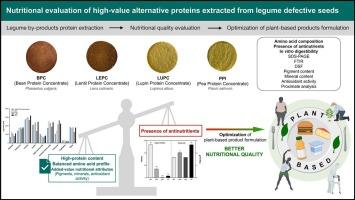
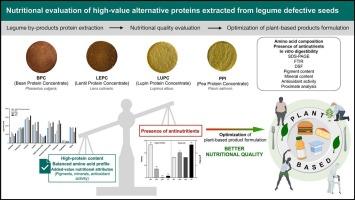
The high protein content of legumes, including P. vulgaris, L. culinaris, L. albus, and P. sativum, is increasingly valued in food formulations, driving interest in utilizing their by-products. This study evaluates the nutritional quality and applications of four legume protein concentrates derived from defective seeds. Analysis included amino acid composition, antinutrient presence, and in vitro digestion, along with structural analysis. Proximate composition, pigment, mineral, and bioactivity assays were also conducted. All concentrates surpassed 70 % protein concentration and presented a well-balanced amino acid profile meeting the requirements for healthy individuals. Bean concentrate exhibited elevated levels of trypsin inhibitor (53.27 ± 0.19 TIU/mg) and total phenolic compounds (0.82 ± 0.02 mg GAE/g), while pea concentrate showed the highest phytic acid content (2.67 ± 0.02 %). Bean concentrate displayed superior structural stability and lower in vitro protein digestibility (∼20 %), compared to the other concentrates (60–70 %). These findings optimize legume defective seeds utilization in plant-based products, addressing sustainability and enhancing nutritional value.
期刊介绍:
Food Chemistry publishes original research papers dealing with the advancement of the chemistry and biochemistry of foods or the analytical methods/ approach used. All papers should focus on the novelty of the research carried out.




 京公网安备 11010802042870号
京ICP备2023020795号-1
京公网安备 11010802042870号
京ICP备2023020795号-1

 分享
分享
 求助内容:
求助内容: 应助结果提醒方式:
 扫码关注我们
