{"title":"藏族大学生初访低海拔地区的水土不服调查分析","authors":"Weihua Zhang, Kezhen Han, Li Shao, Chao Yang, Kexin Zhao, Zhao Jiang","doi":"10.12182/20250160509","DOIUrl":null,"url":null,"abstract":"<p><strong>Objective: </strong>To investigate the correlation between changes in physiological indicators and altitude, age, and sex among ethnic Tibetan college students living in Xizang on long-term basis upon their first ever visit to a low-altitude region, thereby providing health guidance for long-term residents of high-altitude regions when they visit low-altitude environments for the first time.</p><p><strong>Methods: </strong>A cluster random sampling method was used to select 170 healthy first-year college students of Tibetan ethnicity (85 males and 85 females), from Xizang Minzu University. The participants did not have any respiratory, circulatory, or nervous system diseases, nor any family history of such conditions. Based on their responses to questionnaires and the monitoring data of their physiological indicators, an analysis was conducted to assess the incidence and duration of deacclimatization symptoms among these Tibetan college students during the first month after their arrival at a low-altitude region. In addition, the R programming language and the SPSS software were used to analyze the correlation between changes in blood pressure, heart rate, and body weight and the participants' age, sex, and the altitude of their long-term residence in Xizang before and after their arrival at a low-altitude region.</p><p><strong>Results: </strong>Statistical analysis revealed that Tibetan college students experienced deacclimatization symptoms within the first week of their first ever visit to a low-altitude region, primarily characterized by dizziness, fatigue, and drowsiness. The incidence was 41.9% among female students and 22.5% among male students. Furthermore, after arriving at low-altitude region, the participants experience an initial decrease followed by a recovery in both blood pressure and heart rate. They gained an average of 1.5 kg in body mass compared with their initial measurements upon arrival in a low-altitude region. Significant differences in blood pressure, heart rate, and body mass were observed among Tibetan students of different sexes and altitudes of their long-term residence in Xizang after their arrival in a low-altitude region.</p><p><strong>Conclusion: </strong>After arriving at a low-altitude region, Tibetan college students exhibit marked changes in physiological indicators, showing strong correlations between systolic blood pressure, body mass, etc., and sex, altitude, and other parameters.</p>","PeriodicalId":39321,"journal":{"name":"四川大学学报(医学版)","volume":"56 1","pages":"254-261"},"PeriodicalIF":0.0000,"publicationDate":"2025-01-20","publicationTypes":"Journal Article","fieldsOfStudy":null,"isOpenAccess":false,"openAccessPdf":"https://www.ncbi.nlm.nih.gov/pmc/articles/PMC11914000/pdf/","citationCount":"0","resultStr":"{\"title\":\"[Investigation and Analysis of Deacclimatization in Tibetan College Students Upon First Visit to Low-Altitude Regions].\",\"authors\":\"Weihua Zhang, Kezhen Han, Li Shao, Chao Yang, Kexin Zhao, Zhao Jiang\",\"doi\":\"10.12182/20250160509\",\"DOIUrl\":null,\"url\":null,\"abstract\":\"<p><strong>Objective: </strong>To investigate the correlation between changes in physiological indicators and altitude, age, and sex among ethnic Tibetan college students living in Xizang on long-term basis upon their first ever visit to a low-altitude region, thereby providing health guidance for long-term residents of high-altitude regions when they visit low-altitude environments for the first time.</p><p><strong>Methods: </strong>A cluster random sampling method was used to select 170 healthy first-year college students of Tibetan ethnicity (85 males and 85 females), from Xizang Minzu University. The participants did not have any respiratory, circulatory, or nervous system diseases, nor any family history of such conditions. Based on their responses to questionnaires and the monitoring data of their physiological indicators, an analysis was conducted to assess the incidence and duration of deacclimatization symptoms among these Tibetan college students during the first month after their arrival at a low-altitude region. In addition, the R programming language and the SPSS software were used to analyze the correlation between changes in blood pressure, heart rate, and body weight and the participants' age, sex, and the altitude of their long-term residence in Xizang before and after their arrival at a low-altitude region.</p><p><strong>Results: </strong>Statistical analysis revealed that Tibetan college students experienced deacclimatization symptoms within the first week of their first ever visit to a low-altitude region, primarily characterized by dizziness, fatigue, and drowsiness. The incidence was 41.9% among female students and 22.5% among male students. Furthermore, after arriving at low-altitude region, the participants experience an initial decrease followed by a recovery in both blood pressure and heart rate. They gained an average of 1.5 kg in body mass compared with their initial measurements upon arrival in a low-altitude region. Significant differences in blood pressure, heart rate, and body mass were observed among Tibetan students of different sexes and altitudes of their long-term residence in Xizang after their arrival in a low-altitude region.</p><p><strong>Conclusion: </strong>After arriving at a low-altitude region, Tibetan college students exhibit marked changes in physiological indicators, showing strong correlations between systolic blood pressure, body mass, etc., and sex, altitude, and other parameters.</p>\",\"PeriodicalId\":39321,\"journal\":{\"name\":\"四川大学学报(医学版)\",\"volume\":\"56 1\",\"pages\":\"254-261\"},\"PeriodicalIF\":0.0000,\"publicationDate\":\"2025-01-20\",\"publicationTypes\":\"Journal Article\",\"fieldsOfStudy\":null,\"isOpenAccess\":false,\"openAccessPdf\":\"https://www.ncbi.nlm.nih.gov/pmc/articles/PMC11914000/pdf/\",\"citationCount\":\"0\",\"resultStr\":null,\"platform\":\"Semanticscholar\",\"paperid\":null,\"PeriodicalName\":\"四川大学学报(医学版)\",\"FirstCategoryId\":\"3\",\"ListUrlMain\":\"https://doi.org/10.12182/20250160509\",\"RegionNum\":0,\"RegionCategory\":null,\"ArticlePicture\":[],\"TitleCN\":null,\"AbstractTextCN\":null,\"PMCID\":null,\"EPubDate\":\"\",\"PubModel\":\"\",\"JCR\":\"Q3\",\"JCRName\":\"Medicine\",\"Score\":null,\"Total\":0}","platform":"Semanticscholar","paperid":null,"PeriodicalName":"四川大学学报(医学版)","FirstCategoryId":"3","ListUrlMain":"https://doi.org/10.12182/20250160509","RegionNum":0,"RegionCategory":null,"ArticlePicture":[],"TitleCN":null,"AbstractTextCN":null,"PMCID":null,"EPubDate":"","PubModel":"","JCR":"Q3","JCRName":"Medicine","Score":null,"Total":0}
[Investigation and Analysis of Deacclimatization in Tibetan College Students Upon First Visit to Low-Altitude Regions].
Objective: To investigate the correlation between changes in physiological indicators and altitude, age, and sex among ethnic Tibetan college students living in Xizang on long-term basis upon their first ever visit to a low-altitude region, thereby providing health guidance for long-term residents of high-altitude regions when they visit low-altitude environments for the first time.
Methods: A cluster random sampling method was used to select 170 healthy first-year college students of Tibetan ethnicity (85 males and 85 females), from Xizang Minzu University. The participants did not have any respiratory, circulatory, or nervous system diseases, nor any family history of such conditions. Based on their responses to questionnaires and the monitoring data of their physiological indicators, an analysis was conducted to assess the incidence and duration of deacclimatization symptoms among these Tibetan college students during the first month after their arrival at a low-altitude region. In addition, the R programming language and the SPSS software were used to analyze the correlation between changes in blood pressure, heart rate, and body weight and the participants' age, sex, and the altitude of their long-term residence in Xizang before and after their arrival at a low-altitude region.
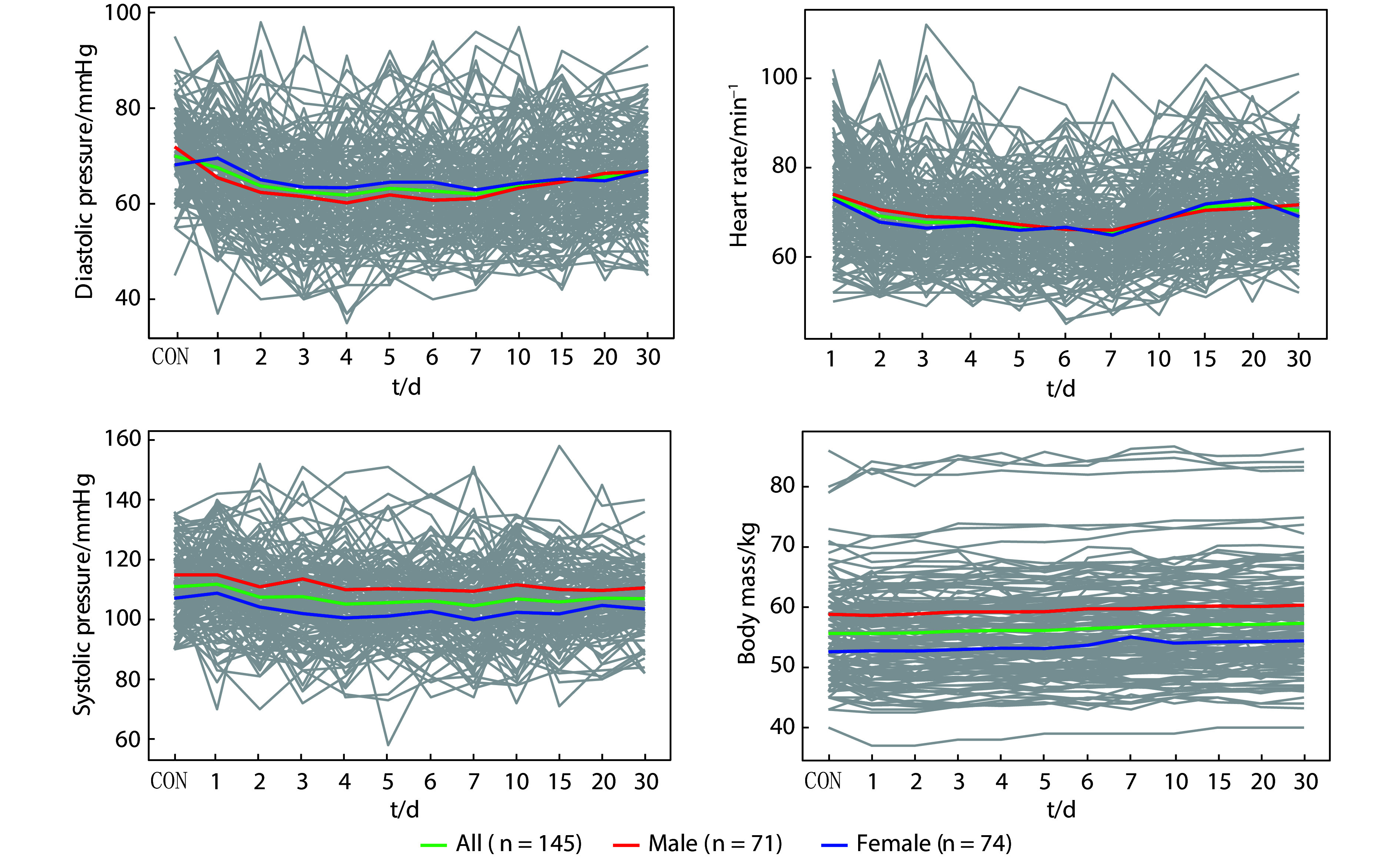
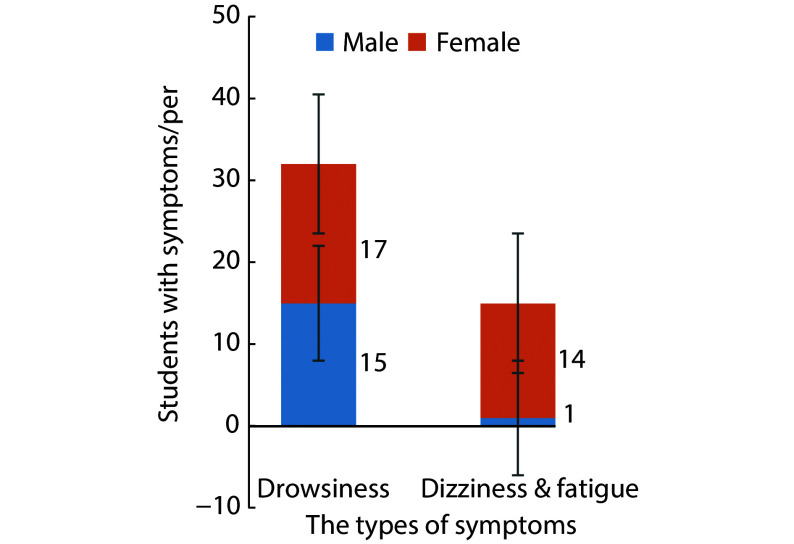
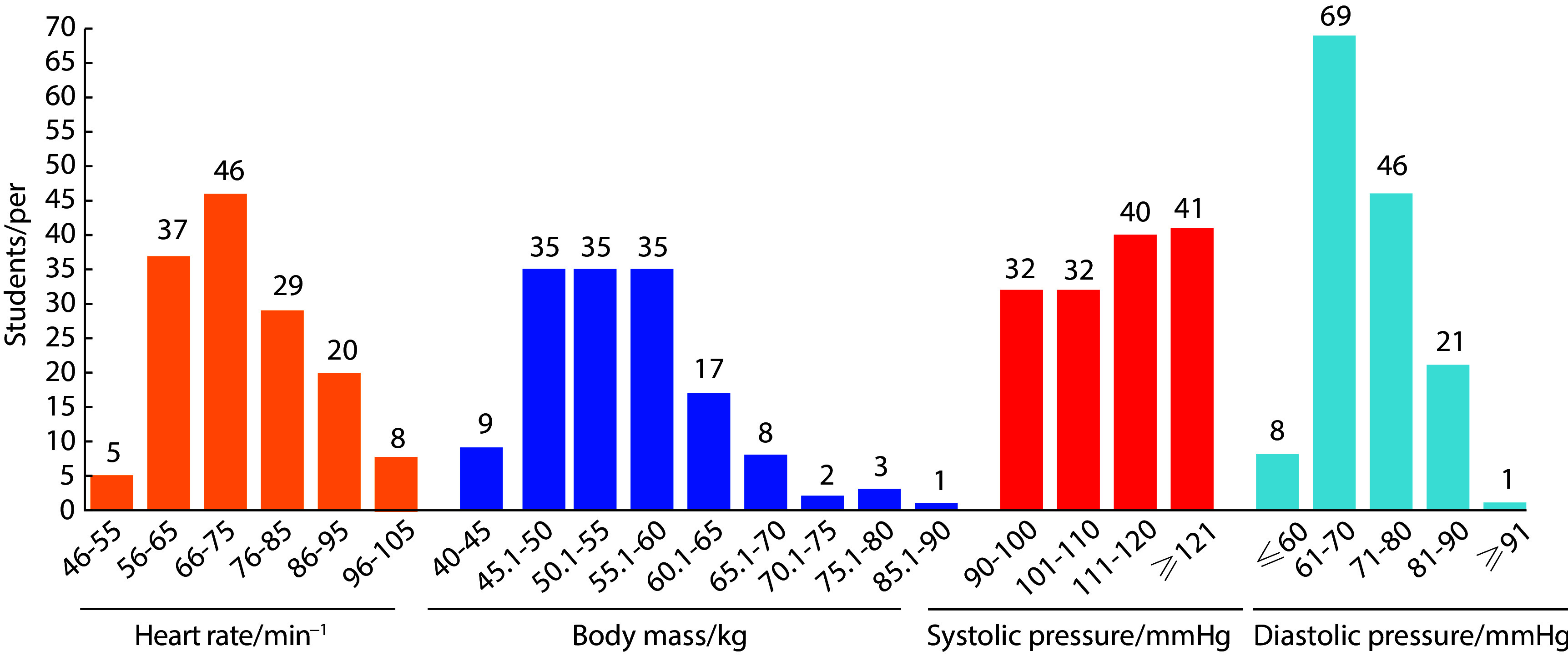
Results: Statistical analysis revealed that Tibetan college students experienced deacclimatization symptoms within the first week of their first ever visit to a low-altitude region, primarily characterized by dizziness, fatigue, and drowsiness. The incidence was 41.9% among female students and 22.5% among male students. Furthermore, after arriving at low-altitude region, the participants experience an initial decrease followed by a recovery in both blood pressure and heart rate. They gained an average of 1.5 kg in body mass compared with their initial measurements upon arrival in a low-altitude region. Significant differences in blood pressure, heart rate, and body mass were observed among Tibetan students of different sexes and altitudes of their long-term residence in Xizang after their arrival in a low-altitude region.
Conclusion: After arriving at a low-altitude region, Tibetan college students exhibit marked changes in physiological indicators, showing strong correlations between systolic blood pressure, body mass, etc., and sex, altitude, and other parameters.
四川大学学报(医学版)Biochemistry, Genetics and Molecular Biology-Molecular Biology
CiteScore
0.70
自引率
0.00%
发文量
8695
期刊介绍:
"Journal of Sichuan University (Medical Edition)" is a comprehensive medical academic journal sponsored by Sichuan University, a higher education institution directly under the Ministry of Education of the People's Republic of China. It was founded in 1959 and was originally named "Journal of Sichuan Medical College". In 1986, it was renamed "Journal of West China University of Medical Sciences". In 2003, it was renamed "Journal of Sichuan University (Medical Edition)" (bimonthly).
"Journal of Sichuan University (Medical Edition)" is a Chinese core journal and a Chinese authoritative academic journal (RCCSE). It is included in the retrieval systems such as China Science and Technology Papers and Citation Database (CSTPCD), China Science Citation Database (CSCD) (core version), Peking University Library's "Overview of Chinese Core Journals", the U.S. "Index Medica" (IM/Medline), the U.S. "PubMed Central" (PMC), the U.S. "Biological Abstracts" (BA), the U.S. "Chemical Abstracts" (CA), the U.S. EBSCO, the Netherlands "Abstracts and Citation Database" (Scopus), the Japan Science and Technology Agency Database (JST), the Russian "Abstract Magazine", the Chinese Biomedical Literature CD-ROM Database (CBMdisc), the Chinese Biomedical Periodical Literature Database (CMCC), the China Academic Journal Network Full-text Database (CNKI), the Chinese Academic Journal (CD-ROM Edition), and the Wanfang Data-Digital Journal Group.




 京公网安备 11010802042870号
京ICP备2023020795号-1
京公网安备 11010802042870号
京ICP备2023020795号-1

 分享
分享
 求助内容:
求助内容: 应助结果提醒方式:
 扫码关注我们
