Yu-Ting Liu, Quan-Jiang Lv, Hang Cong, Wen-Feng Zhao, Qing-Mei Ge, Nan Jiang and Qi-Long Zhu
{"title":"超细瓜[n]脲(n = 5-8)-Ni纳米复合材料作为电催化析氧反应的高效催化剂","authors":"Yu-Ting Liu, Quan-Jiang Lv, Hang Cong, Wen-Feng Zhao, Qing-Mei Ge, Nan Jiang and Qi-Long Zhu","doi":"10.1039/D5QI00013K","DOIUrl":null,"url":null,"abstract":"<p >Nickel-based oxygen evolution reaction (OER) electrocatalysts have garnered significant attention due to their high catalytic activity and abundant reserves. In this study, we report a series of cucurbit[<em>n</em>]uril (CB[<em>n</em>], <em>n</em> = 5–8) functionalized Ni nanocomposites (CB[<em>n</em>]–Ni, <em>n</em> = 5–8) to synergistically enhance the OER catalytic activity in alkaline media. The sizes and electronic structures of CB[<em>n</em>]–Ni can be precisely controlled using CB[<em>n</em>] with varying cavity sizes. Among these CB[<em>n</em>]–Ni nanocomposites, CB[7]–Ni presented superior OER performance compared to other CB[<em>n</em>]–Ni (<em>n</em> = 5, 6, and 8) and CB-free Ni nanocomposites. <em>Operando</em> electrochemical impedance spectroscopy (EIS) studies demonstrated that CB[7]–Ni initiated the OER at a relatively low applied potential of 1.5 V <em>vs.</em> RHE, achieving a superior turnover frequency of 0.24 s<small><sup>−1</sup></small> at 1.55 V <em>vs.</em> RHE. Additionally, spectroscopic measurements and theoretical calculations revealed that the incorporation of CB[7] regulates the electronic structure of the active Ni nanocomposite and lowers the activation energy for the formation of the *OOH intermediate, thereby facilitating the OER process. This work not only broadens the application of supramolecular macrocycles in electrocatalysis but also provides a novel strategy for the design of electrocatalysts.</p>","PeriodicalId":79,"journal":{"name":"Inorganic Chemistry Frontiers","volume":" 12","pages":" 4115-4123"},"PeriodicalIF":6.4000,"publicationDate":"2025-03-21","publicationTypes":"Journal Article","fieldsOfStudy":null,"isOpenAccess":false,"openAccessPdf":"","citationCount":"0","resultStr":"{\"title\":\"Ultrafine cucurbit[n]uril (n = 5–8)–Ni nanocomposites as highly efficient catalysts for the electrocatalytic oxygen evolution reaction†\",\"authors\":\"Yu-Ting Liu, Quan-Jiang Lv, Hang Cong, Wen-Feng Zhao, Qing-Mei Ge, Nan Jiang and Qi-Long Zhu\",\"doi\":\"10.1039/D5QI00013K\",\"DOIUrl\":null,\"url\":null,\"abstract\":\"<p >Nickel-based oxygen evolution reaction (OER) electrocatalysts have garnered significant attention due to their high catalytic activity and abundant reserves. In this study, we report a series of cucurbit[<em>n</em>]uril (CB[<em>n</em>], <em>n</em> = 5–8) functionalized Ni nanocomposites (CB[<em>n</em>]–Ni, <em>n</em> = 5–8) to synergistically enhance the OER catalytic activity in alkaline media. The sizes and electronic structures of CB[<em>n</em>]–Ni can be precisely controlled using CB[<em>n</em>] with varying cavity sizes. Among these CB[<em>n</em>]–Ni nanocomposites, CB[7]–Ni presented superior OER performance compared to other CB[<em>n</em>]–Ni (<em>n</em> = 5, 6, and 8) and CB-free Ni nanocomposites. <em>Operando</em> electrochemical impedance spectroscopy (EIS) studies demonstrated that CB[7]–Ni initiated the OER at a relatively low applied potential of 1.5 V <em>vs.</em> RHE, achieving a superior turnover frequency of 0.24 s<small><sup>−1</sup></small> at 1.55 V <em>vs.</em> RHE. Additionally, spectroscopic measurements and theoretical calculations revealed that the incorporation of CB[7] regulates the electronic structure of the active Ni nanocomposite and lowers the activation energy for the formation of the *OOH intermediate, thereby facilitating the OER process. This work not only broadens the application of supramolecular macrocycles in electrocatalysis but also provides a novel strategy for the design of electrocatalysts.</p>\",\"PeriodicalId\":79,\"journal\":{\"name\":\"Inorganic Chemistry Frontiers\",\"volume\":\" 12\",\"pages\":\" 4115-4123\"},\"PeriodicalIF\":6.4000,\"publicationDate\":\"2025-03-21\",\"publicationTypes\":\"Journal Article\",\"fieldsOfStudy\":null,\"isOpenAccess\":false,\"openAccessPdf\":\"\",\"citationCount\":\"0\",\"resultStr\":null,\"platform\":\"Semanticscholar\",\"paperid\":null,\"PeriodicalName\":\"Inorganic Chemistry Frontiers\",\"FirstCategoryId\":\"92\",\"ListUrlMain\":\"https://pubs.rsc.org/en/content/articlelanding/2025/qi/d5qi00013k\",\"RegionNum\":1,\"RegionCategory\":\"化学\",\"ArticlePicture\":[],\"TitleCN\":null,\"AbstractTextCN\":null,\"PMCID\":null,\"EPubDate\":\"\",\"PubModel\":\"\",\"JCR\":\"Q1\",\"JCRName\":\"CHEMISTRY, INORGANIC & NUCLEAR\",\"Score\":null,\"Total\":0}","platform":"Semanticscholar","paperid":null,"PeriodicalName":"Inorganic Chemistry Frontiers","FirstCategoryId":"92","ListUrlMain":"https://pubs.rsc.org/en/content/articlelanding/2025/qi/d5qi00013k","RegionNum":1,"RegionCategory":"化学","ArticlePicture":[],"TitleCN":null,"AbstractTextCN":null,"PMCID":null,"EPubDate":"","PubModel":"","JCR":"Q1","JCRName":"CHEMISTRY, INORGANIC & NUCLEAR","Score":null,"Total":0}
引用次数: 0
摘要
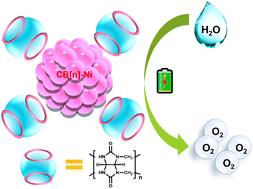
镍基析氧反应(OER)电催化剂因其高催化活性和丰富的储量而受到广泛关注。在本研究中,我们报道了一系列葫芦[n]尾辫(CB[n], n = 5-8)功能化的Ni纳米复合材料(CB[n]-Ni, n = 5-8)在碱性介质中协同增强OER催化活性。CB[n]-Ni的尺寸和电子结构可以通过CB[n]在不同的空腔尺寸下精确控制。其中,CB[n]-Ni与其他CB[n]-Ni (n = 5, 6, 8)和无CB -Ni纳米复合材料相比,CB[7]-Ni具有更好的OER性能。电化学阻抗谱(EIS)研究表明,相对于RHE, CB[7]-Ni在相对较低的1.5 V电位下引发OER。此外,光谱测量和理论计算表明,CB[7]的加入调节了活性Ni纳米复合材料的电子结构,降低了*OOH中间体形成的活化能,从而促进了OER过程。这项工作不仅拓宽了超分子大环在电催化中的应用,而且为电催化剂的设计提供了一种新的策略。
Ultrafine cucurbit[n]uril (n = 5–8)–Ni nanocomposites as highly efficient catalysts for the electrocatalytic oxygen evolution reaction†
Nickel-based oxygen evolution reaction (OER) electrocatalysts have garnered significant attention due to their high catalytic activity and abundant reserves. In this study, we report a series of cucurbit[n]uril (CB[n], n = 5–8) functionalized Ni nanocomposites (CB[n]–Ni, n = 5–8) to synergistically enhance the OER catalytic activity in alkaline media. The sizes and electronic structures of CB[n]–Ni can be precisely controlled using CB[n] with varying cavity sizes. Among these CB[n]–Ni nanocomposites, CB[7]–Ni presented superior OER performance compared to other CB[n]–Ni (n = 5, 6, and 8) and CB-free Ni nanocomposites. Operando electrochemical impedance spectroscopy (EIS) studies demonstrated that CB[7]–Ni initiated the OER at a relatively low applied potential of 1.5 V vs. RHE, achieving a superior turnover frequency of 0.24 s−1 at 1.55 V vs. RHE. Additionally, spectroscopic measurements and theoretical calculations revealed that the incorporation of CB[7] regulates the electronic structure of the active Ni nanocomposite and lowers the activation energy for the formation of the *OOH intermediate, thereby facilitating the OER process. This work not only broadens the application of supramolecular macrocycles in electrocatalysis but also provides a novel strategy for the design of electrocatalysts.




 京公网安备 11010802042870号
京ICP备2023020795号-1
京公网安备 11010802042870号
京ICP备2023020795号-1

 分享
分享
 求助内容:
求助内容: 应助结果提醒方式:
 扫码关注我们
