Seung Ho Baek, Min Ji Lee, Yoonwon Kook, Soong June Bae, Joon Jeong, Yoon Jin Cha, Sung Gwe Ahn
{"title":"ER + HER2-乳腺癌的病理完全缓解、组织学分级和间质肿瘤浸润淋巴细胞水平。","authors":"Seung Ho Baek, Min Ji Lee, Yoonwon Kook, Soong June Bae, Joon Jeong, Yoon Jin Cha, Sung Gwe Ahn","doi":"10.1186/s13058-025-01999-7","DOIUrl":null,"url":null,"abstract":"<p><strong>Background: </strong>Recent trials have integrated immune checkpoint inhibitors (ICIs) into neoadjuvant chemotherapy (NAC) in patients with estrogen receptor (ER)-positive, human epidermal growth factor receptor 2 (HER2)-negative breast cancer of histologic grade (HG) III. We assessed the pathological complete response (pCR) rate according to the level of stromal tumor-infiltrating lymphocytes (sTIL) and HG in patients with ER + HER2- breast cancer undergoing NAC.</p><p><strong>Methods: </strong>Between January 2016 and December 2023, we retrospectively identified 376 patients with ER + HER2- breast cancer who underwent NAC followed by surgery. HG and sTIL levels were examined in the biopsied samples before NAC. Multiple sTIL cutoff values as 10%, 20%, and 30% were applied.</p><p><strong>Results: </strong>Twenty-seven patients (7.2%) had HG III tumors. The pCR rate in the HG III group was 22.2%, which was significantly higher than that in the HG I/II group (4.0%) (p < 0.001). The HG III group had a higher mean sTIL level than HG I/II group (38.7% vs. 12.9%; p < 0.001). According to the sTIL levels, the pCR rate in the high sTIL group was significantly higher than that in the low sTIL group: i) cutoff of 10%, 2.4% vs. 9.5%; cutoff of 20%, 2.8% vs. 13.7%; and cutoff of 30%, 3.2% vs. 18.3%. In the high sTIL (≥ 30%) group, the pCR rate for HG III was 33.3%, whereas that for HG I/II was 13.3%.</p><p><strong>Conclusions: </strong>High tumor grade and sTIL levels were associated with higher rates of pCR in ER + HER2- breast cancer. Our findings support that the addition to ICIs to NAC increased pCR in high-risk, HG III, ER + HER2- breast cancer and suggest that sTIL levels could be utilized to identify patients with ER + HER2- breast cancer eligible for chemoimmunotherapy.</p>","PeriodicalId":49227,"journal":{"name":"Breast Cancer Research","volume":"27 1","pages":"42"},"PeriodicalIF":5.6000,"publicationDate":"2025-03-20","publicationTypes":"Journal Article","fieldsOfStudy":null,"isOpenAccess":false,"openAccessPdf":"https://www.ncbi.nlm.nih.gov/pmc/articles/PMC11927358/pdf/","citationCount":"0","resultStr":"{\"title\":\"Pathological complete response, histologic grade, and level of stromal tumor-infiltrating lymphocytes in ER + HER2- breast cancer.\",\"authors\":\"Seung Ho Baek, Min Ji Lee, Yoonwon Kook, Soong June Bae, Joon Jeong, Yoon Jin Cha, Sung Gwe Ahn\",\"doi\":\"10.1186/s13058-025-01999-7\",\"DOIUrl\":null,\"url\":null,\"abstract\":\"<p><strong>Background: </strong>Recent trials have integrated immune checkpoint inhibitors (ICIs) into neoadjuvant chemotherapy (NAC) in patients with estrogen receptor (ER)-positive, human epidermal growth factor receptor 2 (HER2)-negative breast cancer of histologic grade (HG) III. We assessed the pathological complete response (pCR) rate according to the level of stromal tumor-infiltrating lymphocytes (sTIL) and HG in patients with ER + HER2- breast cancer undergoing NAC.</p><p><strong>Methods: </strong>Between January 2016 and December 2023, we retrospectively identified 376 patients with ER + HER2- breast cancer who underwent NAC followed by surgery. HG and sTIL levels were examined in the biopsied samples before NAC. Multiple sTIL cutoff values as 10%, 20%, and 30% were applied.</p><p><strong>Results: </strong>Twenty-seven patients (7.2%) had HG III tumors. The pCR rate in the HG III group was 22.2%, which was significantly higher than that in the HG I/II group (4.0%) (p < 0.001). The HG III group had a higher mean sTIL level than HG I/II group (38.7% vs. 12.9%; p < 0.001). According to the sTIL levels, the pCR rate in the high sTIL group was significantly higher than that in the low sTIL group: i) cutoff of 10%, 2.4% vs. 9.5%; cutoff of 20%, 2.8% vs. 13.7%; and cutoff of 30%, 3.2% vs. 18.3%. In the high sTIL (≥ 30%) group, the pCR rate for HG III was 33.3%, whereas that for HG I/II was 13.3%.</p><p><strong>Conclusions: </strong>High tumor grade and sTIL levels were associated with higher rates of pCR in ER + HER2- breast cancer. Our findings support that the addition to ICIs to NAC increased pCR in high-risk, HG III, ER + HER2- breast cancer and suggest that sTIL levels could be utilized to identify patients with ER + HER2- breast cancer eligible for chemoimmunotherapy.</p>\",\"PeriodicalId\":49227,\"journal\":{\"name\":\"Breast Cancer Research\",\"volume\":\"27 1\",\"pages\":\"42\"},\"PeriodicalIF\":5.6000,\"publicationDate\":\"2025-03-20\",\"publicationTypes\":\"Journal Article\",\"fieldsOfStudy\":null,\"isOpenAccess\":false,\"openAccessPdf\":\"https://www.ncbi.nlm.nih.gov/pmc/articles/PMC11927358/pdf/\",\"citationCount\":\"0\",\"resultStr\":null,\"platform\":\"Semanticscholar\",\"paperid\":null,\"PeriodicalName\":\"Breast Cancer Research\",\"FirstCategoryId\":\"3\",\"ListUrlMain\":\"https://doi.org/10.1186/s13058-025-01999-7\",\"RegionNum\":1,\"RegionCategory\":\"医学\",\"ArticlePicture\":[],\"TitleCN\":null,\"AbstractTextCN\":null,\"PMCID\":null,\"EPubDate\":\"\",\"PubModel\":\"\",\"JCR\":\"Q1\",\"JCRName\":\"Medicine\",\"Score\":null,\"Total\":0}","platform":"Semanticscholar","paperid":null,"PeriodicalName":"Breast Cancer Research","FirstCategoryId":"3","ListUrlMain":"https://doi.org/10.1186/s13058-025-01999-7","RegionNum":1,"RegionCategory":"医学","ArticlePicture":[],"TitleCN":null,"AbstractTextCN":null,"PMCID":null,"EPubDate":"","PubModel":"","JCR":"Q1","JCRName":"Medicine","Score":null,"Total":0}
Pathological complete response, histologic grade, and level of stromal tumor-infiltrating lymphocytes in ER + HER2- breast cancer.
Background: Recent trials have integrated immune checkpoint inhibitors (ICIs) into neoadjuvant chemotherapy (NAC) in patients with estrogen receptor (ER)-positive, human epidermal growth factor receptor 2 (HER2)-negative breast cancer of histologic grade (HG) III. We assessed the pathological complete response (pCR) rate according to the level of stromal tumor-infiltrating lymphocytes (sTIL) and HG in patients with ER + HER2- breast cancer undergoing NAC.
Methods: Between January 2016 and December 2023, we retrospectively identified 376 patients with ER + HER2- breast cancer who underwent NAC followed by surgery. HG and sTIL levels were examined in the biopsied samples before NAC. Multiple sTIL cutoff values as 10%, 20%, and 30% were applied.
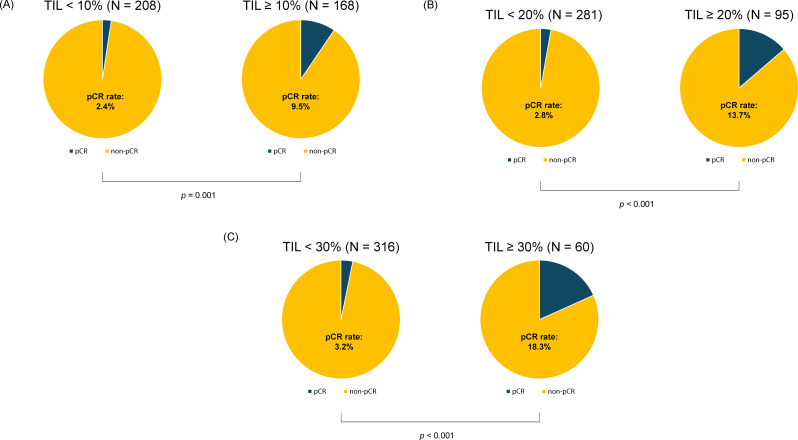
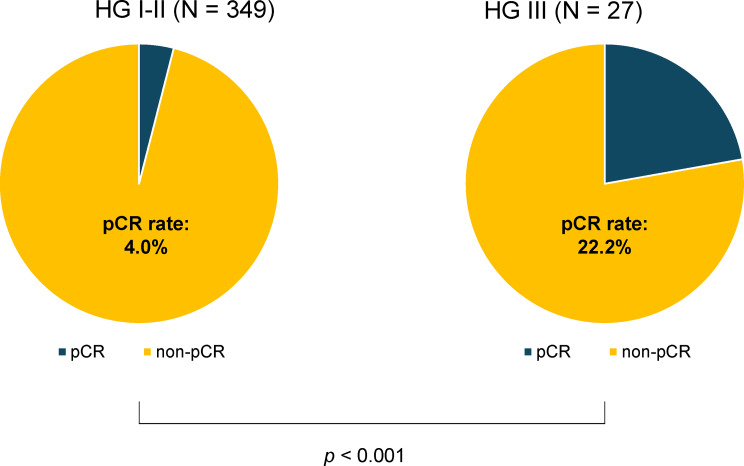
Results: Twenty-seven patients (7.2%) had HG III tumors. The pCR rate in the HG III group was 22.2%, which was significantly higher than that in the HG I/II group (4.0%) (p < 0.001). The HG III group had a higher mean sTIL level than HG I/II group (38.7% vs. 12.9%; p < 0.001). According to the sTIL levels, the pCR rate in the high sTIL group was significantly higher than that in the low sTIL group: i) cutoff of 10%, 2.4% vs. 9.5%; cutoff of 20%, 2.8% vs. 13.7%; and cutoff of 30%, 3.2% vs. 18.3%. In the high sTIL (≥ 30%) group, the pCR rate for HG III was 33.3%, whereas that for HG I/II was 13.3%.
Conclusions: High tumor grade and sTIL levels were associated with higher rates of pCR in ER + HER2- breast cancer. Our findings support that the addition to ICIs to NAC increased pCR in high-risk, HG III, ER + HER2- breast cancer and suggest that sTIL levels could be utilized to identify patients with ER + HER2- breast cancer eligible for chemoimmunotherapy.
期刊介绍:
Breast Cancer Research, an international, peer-reviewed online journal, publishes original research, reviews, editorials, and reports. It features open-access research articles of exceptional interest across all areas of biology and medicine relevant to breast cancer. This includes normal mammary gland biology, with a special emphasis on the genetic, biochemical, and cellular basis of breast cancer. In addition to basic research, the journal covers preclinical, translational, and clinical studies with a biological basis, including Phase I and Phase II trials.




 京公网安备 11010802042870号
京ICP备2023020795号-1
京公网安备 11010802042870号
京ICP备2023020795号-1

 分享
分享
 求助内容:
求助内容: 应助结果提醒方式:
 扫码关注我们
