Imen Jallouli, Michael Doulberis, Jannis Kountouras
{"title":"原发性胆道胆管炎:发病机理及治疗综述。","authors":"Imen Jallouli, Michael Doulberis, Jannis Kountouras","doi":"10.20524/aog.2025.0953","DOIUrl":null,"url":null,"abstract":"<p><p>Primary biliary cholangitis (PBC) is a progressive autoimmune liver disease characterized by chronic inflammation and destruction of interlobular bile ducts. Its pathogenesis involves a complex interplay of genetic predisposition, environmental triggers, and immune-mediated mechanisms, particularly T-helper cell activity, leading to bile duct damage. First-line therapy includes ursodeoxycholic acid (UDCA), which improves liver biochemistry and slows disease progression, with obeticholic acid (OCA) as an option for non-responders. Double and/or triple therapy, including UDCA, OCA, and fibrates, appears to be superior in achieving therapeutic benefits in UDCA-nonresponsive PBC patients. Emerging therapies, such as peroxisome proliferator-activated receptor-α agonists, biologics such as dacetuzumab and rituximab, and experimental approaches such as stem-cell therapy, offer promising advances in managing PBC. Liver transplantation remains a final treatment option for advanced cases.</p>","PeriodicalId":7978,"journal":{"name":"Annals of Gastroenterology","volume":"38 2","pages":"121-132"},"PeriodicalIF":2.2000,"publicationDate":"2025-03-01","publicationTypes":"Journal Article","fieldsOfStudy":null,"isOpenAccess":false,"openAccessPdf":"https://www.ncbi.nlm.nih.gov/pmc/articles/PMC11928896/pdf/","citationCount":"0","resultStr":"{\"title\":\"Primary biliary cholangitis: a summary of pathogenesis and therapies.\",\"authors\":\"Imen Jallouli, Michael Doulberis, Jannis Kountouras\",\"doi\":\"10.20524/aog.2025.0953\",\"DOIUrl\":null,\"url\":null,\"abstract\":\"<p><p>Primary biliary cholangitis (PBC) is a progressive autoimmune liver disease characterized by chronic inflammation and destruction of interlobular bile ducts. Its pathogenesis involves a complex interplay of genetic predisposition, environmental triggers, and immune-mediated mechanisms, particularly T-helper cell activity, leading to bile duct damage. First-line therapy includes ursodeoxycholic acid (UDCA), which improves liver biochemistry and slows disease progression, with obeticholic acid (OCA) as an option for non-responders. Double and/or triple therapy, including UDCA, OCA, and fibrates, appears to be superior in achieving therapeutic benefits in UDCA-nonresponsive PBC patients. Emerging therapies, such as peroxisome proliferator-activated receptor-α agonists, biologics such as dacetuzumab and rituximab, and experimental approaches such as stem-cell therapy, offer promising advances in managing PBC. Liver transplantation remains a final treatment option for advanced cases.</p>\",\"PeriodicalId\":7978,\"journal\":{\"name\":\"Annals of Gastroenterology\",\"volume\":\"38 2\",\"pages\":\"121-132\"},\"PeriodicalIF\":2.2000,\"publicationDate\":\"2025-03-01\",\"publicationTypes\":\"Journal Article\",\"fieldsOfStudy\":null,\"isOpenAccess\":false,\"openAccessPdf\":\"https://www.ncbi.nlm.nih.gov/pmc/articles/PMC11928896/pdf/\",\"citationCount\":\"0\",\"resultStr\":null,\"platform\":\"Semanticscholar\",\"paperid\":null,\"PeriodicalName\":\"Annals of Gastroenterology\",\"FirstCategoryId\":\"1085\",\"ListUrlMain\":\"https://doi.org/10.20524/aog.2025.0953\",\"RegionNum\":0,\"RegionCategory\":null,\"ArticlePicture\":[],\"TitleCN\":null,\"AbstractTextCN\":null,\"PMCID\":null,\"EPubDate\":\"2025/2/28 0:00:00\",\"PubModel\":\"Epub\",\"JCR\":\"Q3\",\"JCRName\":\"GASTROENTEROLOGY & HEPATOLOGY\",\"Score\":null,\"Total\":0}","platform":"Semanticscholar","paperid":null,"PeriodicalName":"Annals of Gastroenterology","FirstCategoryId":"1085","ListUrlMain":"https://doi.org/10.20524/aog.2025.0953","RegionNum":0,"RegionCategory":null,"ArticlePicture":[],"TitleCN":null,"AbstractTextCN":null,"PMCID":null,"EPubDate":"2025/2/28 0:00:00","PubModel":"Epub","JCR":"Q3","JCRName":"GASTROENTEROLOGY & HEPATOLOGY","Score":null,"Total":0}
Primary biliary cholangitis: a summary of pathogenesis and therapies.
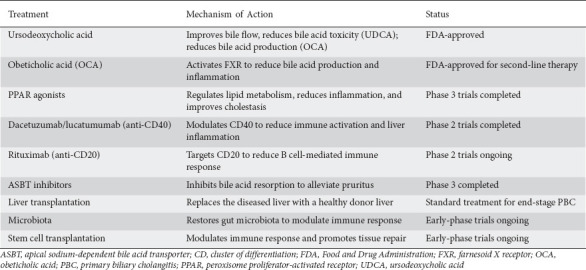
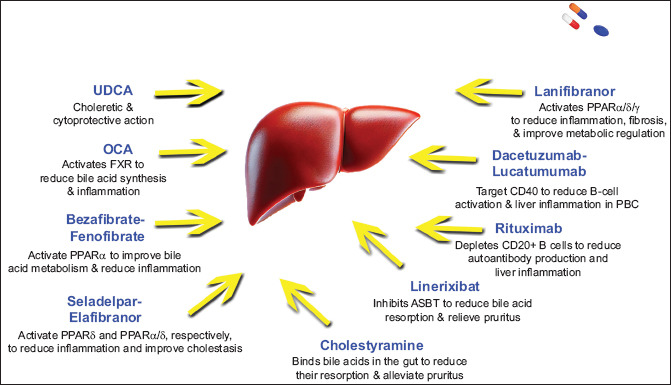
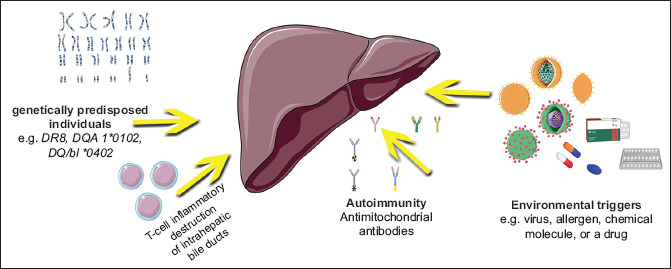
Primary biliary cholangitis (PBC) is a progressive autoimmune liver disease characterized by chronic inflammation and destruction of interlobular bile ducts. Its pathogenesis involves a complex interplay of genetic predisposition, environmental triggers, and immune-mediated mechanisms, particularly T-helper cell activity, leading to bile duct damage. First-line therapy includes ursodeoxycholic acid (UDCA), which improves liver biochemistry and slows disease progression, with obeticholic acid (OCA) as an option for non-responders. Double and/or triple therapy, including UDCA, OCA, and fibrates, appears to be superior in achieving therapeutic benefits in UDCA-nonresponsive PBC patients. Emerging therapies, such as peroxisome proliferator-activated receptor-α agonists, biologics such as dacetuzumab and rituximab, and experimental approaches such as stem-cell therapy, offer promising advances in managing PBC. Liver transplantation remains a final treatment option for advanced cases.





 京公网安备 11010802042870号
京ICP备2023020795号-1
京公网安备 11010802042870号
京ICP备2023020795号-1

 分享
分享
 求助内容:
求助内容: 应助结果提醒方式:
 扫码关注我们
