Laurits Taul-Madsen, Ulrik Dalgas, Hjalte Riis, Magnus K Broløs, Jesper Lundbye-Jensen, Lars G Hvid
{"title":"最大肌肉力量和有氧能力对多发性硬化症患者下肢身体功能的影响-横断面研究","authors":"Laurits Taul-Madsen, Ulrik Dalgas, Hjalte Riis, Magnus K Broløs, Jesper Lundbye-Jensen, Lars G Hvid","doi":"10.1177/20552173251326171","DOIUrl":null,"url":null,"abstract":"<p><strong>Background: </strong>Multiple sclerosis (MS) is characterized by impairment of physical function that is often linked to neuromuscular and cardiovascular deficits. However, the specific contributions of muscle strength and aerobic capacity to physical function in MS are not fully understood.</p><p><strong>Objective: </strong>This study aimed to investigate the independent roles of maximal muscle strength (MVC) and aerobic capacity (VO<sub>2</sub>peak) on lower extremity physical function, as measured by the 6-minute walk test (6MWT) and five-time sit-to-stand test (5STS) in people with MS (pwMS).</p><p><strong>Methods: </strong>In a cross-sectional study, 150 pwMS underwent assessment of VO<sub>2</sub>peak, maximal voluntary contraction (MVC), and physical function (6MWT and 5STS). Regression analyses were conducted to explore the associations between physiological parameters and physical function.</p><p><strong>Results: </strong>MVC and VO<sub>2</sub>peak were moderately associated with (i.e., explained) 6MWT (R² = 0.40, p < 0.001), yet with VO<sub>2</sub>peak (β = 7.9, std. β = 0.45, p < 0.001) having a preferential influence compared to MVC (β = 48.2, std. β = 0.26, p < 0.001). MVC and VO<sub>2</sub>peak were weakly associated with (i.e., explained) 5STS (R² = 0.14, p < 0.001), yet with MVC (β = 0.06, std. β = 0.28, p = 0.004) having a preferential influence compared to VO<sub>2</sub>peak (β = 0.00, std. β = 0.16, p = 0.101).</p><p><strong>Conclusion: </strong>Both maximal muscle strength and aerobic capacity to physical function in pwMS. Maximal muscle strength was preferentially linked to performance in the 5STS test, whereas aerobic capacity was preferentially linked to performance in the 6MWT. These findings support the need for tailored exercise interventions to target specific physiological deficits during MS rehabilitation.</p>","PeriodicalId":18961,"journal":{"name":"Multiple Sclerosis Journal - Experimental, Translational and Clinical","volume":"11 1","pages":"20552173251326171"},"PeriodicalIF":2.3000,"publicationDate":"2025-03-21","publicationTypes":"Journal Article","fieldsOfStudy":null,"isOpenAccess":false,"openAccessPdf":"https://www.ncbi.nlm.nih.gov/pmc/articles/PMC11930483/pdf/","citationCount":"0","resultStr":"{\"title\":\"Implications of maximal muscle strength and aerobic capacity for lower extremity physical function in people with multiple sclerosis-a cross-sectional study.\",\"authors\":\"Laurits Taul-Madsen, Ulrik Dalgas, Hjalte Riis, Magnus K Broløs, Jesper Lundbye-Jensen, Lars G Hvid\",\"doi\":\"10.1177/20552173251326171\",\"DOIUrl\":null,\"url\":null,\"abstract\":\"<p><strong>Background: </strong>Multiple sclerosis (MS) is characterized by impairment of physical function that is often linked to neuromuscular and cardiovascular deficits. However, the specific contributions of muscle strength and aerobic capacity to physical function in MS are not fully understood.</p><p><strong>Objective: </strong>This study aimed to investigate the independent roles of maximal muscle strength (MVC) and aerobic capacity (VO<sub>2</sub>peak) on lower extremity physical function, as measured by the 6-minute walk test (6MWT) and five-time sit-to-stand test (5STS) in people with MS (pwMS).</p><p><strong>Methods: </strong>In a cross-sectional study, 150 pwMS underwent assessment of VO<sub>2</sub>peak, maximal voluntary contraction (MVC), and physical function (6MWT and 5STS). Regression analyses were conducted to explore the associations between physiological parameters and physical function.</p><p><strong>Results: </strong>MVC and VO<sub>2</sub>peak were moderately associated with (i.e., explained) 6MWT (R² = 0.40, p < 0.001), yet with VO<sub>2</sub>peak (β = 7.9, std. β = 0.45, p < 0.001) having a preferential influence compared to MVC (β = 48.2, std. β = 0.26, p < 0.001). MVC and VO<sub>2</sub>peak were weakly associated with (i.e., explained) 5STS (R² = 0.14, p < 0.001), yet with MVC (β = 0.06, std. β = 0.28, p = 0.004) having a preferential influence compared to VO<sub>2</sub>peak (β = 0.00, std. β = 0.16, p = 0.101).</p><p><strong>Conclusion: </strong>Both maximal muscle strength and aerobic capacity to physical function in pwMS. Maximal muscle strength was preferentially linked to performance in the 5STS test, whereas aerobic capacity was preferentially linked to performance in the 6MWT. These findings support the need for tailored exercise interventions to target specific physiological deficits during MS rehabilitation.</p>\",\"PeriodicalId\":18961,\"journal\":{\"name\":\"Multiple Sclerosis Journal - Experimental, Translational and Clinical\",\"volume\":\"11 1\",\"pages\":\"20552173251326171\"},\"PeriodicalIF\":2.3000,\"publicationDate\":\"2025-03-21\",\"publicationTypes\":\"Journal Article\",\"fieldsOfStudy\":null,\"isOpenAccess\":false,\"openAccessPdf\":\"https://www.ncbi.nlm.nih.gov/pmc/articles/PMC11930483/pdf/\",\"citationCount\":\"0\",\"resultStr\":null,\"platform\":\"Semanticscholar\",\"paperid\":null,\"PeriodicalName\":\"Multiple Sclerosis Journal - Experimental, Translational and Clinical\",\"FirstCategoryId\":\"1085\",\"ListUrlMain\":\"https://doi.org/10.1177/20552173251326171\",\"RegionNum\":0,\"RegionCategory\":null,\"ArticlePicture\":[],\"TitleCN\":null,\"AbstractTextCN\":null,\"PMCID\":null,\"EPubDate\":\"2025/1/1 0:00:00\",\"PubModel\":\"eCollection\",\"JCR\":\"Q2\",\"JCRName\":\"CLINICAL NEUROLOGY\",\"Score\":null,\"Total\":0}","platform":"Semanticscholar","paperid":null,"PeriodicalName":"Multiple Sclerosis Journal - Experimental, Translational and Clinical","FirstCategoryId":"1085","ListUrlMain":"https://doi.org/10.1177/20552173251326171","RegionNum":0,"RegionCategory":null,"ArticlePicture":[],"TitleCN":null,"AbstractTextCN":null,"PMCID":null,"EPubDate":"2025/1/1 0:00:00","PubModel":"eCollection","JCR":"Q2","JCRName":"CLINICAL NEUROLOGY","Score":null,"Total":0}
Implications of maximal muscle strength and aerobic capacity for lower extremity physical function in people with multiple sclerosis-a cross-sectional study.
Background: Multiple sclerosis (MS) is characterized by impairment of physical function that is often linked to neuromuscular and cardiovascular deficits. However, the specific contributions of muscle strength and aerobic capacity to physical function in MS are not fully understood.
Objective: This study aimed to investigate the independent roles of maximal muscle strength (MVC) and aerobic capacity (VO2peak) on lower extremity physical function, as measured by the 6-minute walk test (6MWT) and five-time sit-to-stand test (5STS) in people with MS (pwMS).
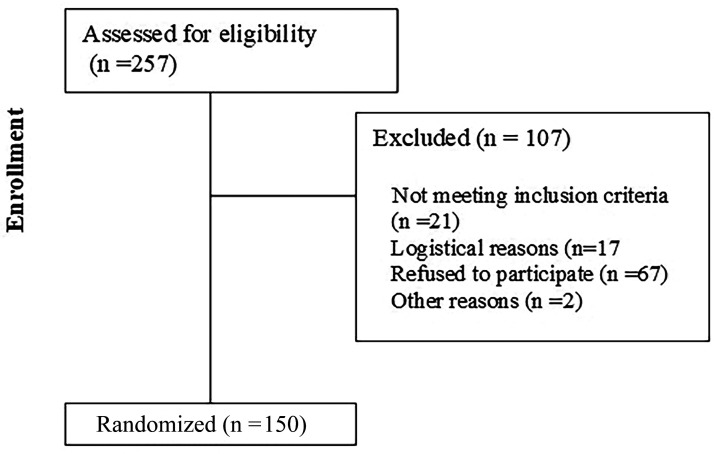
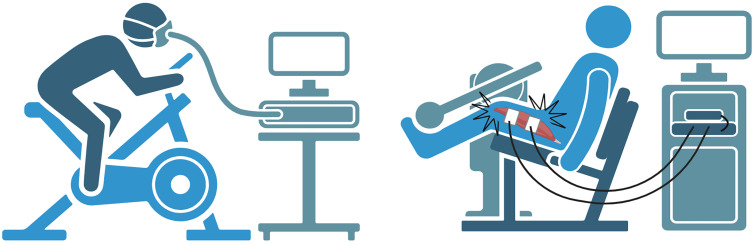
Methods: In a cross-sectional study, 150 pwMS underwent assessment of VO2peak, maximal voluntary contraction (MVC), and physical function (6MWT and 5STS). Regression analyses were conducted to explore the associations between physiological parameters and physical function.
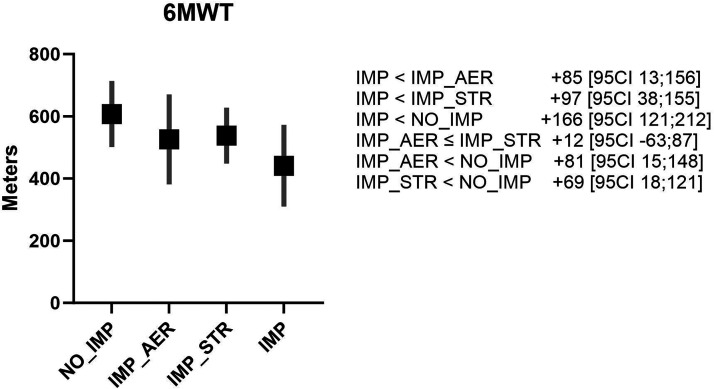
Results: MVC and VO2peak were moderately associated with (i.e., explained) 6MWT (R² = 0.40, p < 0.001), yet with VO2peak (β = 7.9, std. β = 0.45, p < 0.001) having a preferential influence compared to MVC (β = 48.2, std. β = 0.26, p < 0.001). MVC and VO2peak were weakly associated with (i.e., explained) 5STS (R² = 0.14, p < 0.001), yet with MVC (β = 0.06, std. β = 0.28, p = 0.004) having a preferential influence compared to VO2peak (β = 0.00, std. β = 0.16, p = 0.101).
Conclusion: Both maximal muscle strength and aerobic capacity to physical function in pwMS. Maximal muscle strength was preferentially linked to performance in the 5STS test, whereas aerobic capacity was preferentially linked to performance in the 6MWT. These findings support the need for tailored exercise interventions to target specific physiological deficits during MS rehabilitation.





 京公网安备 11010802042870号
京ICP备2023020795号-1
京公网安备 11010802042870号
京ICP备2023020795号-1

 分享
分享
 求助内容:
求助内容: 应助结果提醒方式:
 扫码关注我们
