Yuanyuan Yu , Zhifeng Xu , Le Xu , Dan Lu , Yamei Tang , Hongcheng Mai
{"title":"植物细胞外囊泡作为中枢神经系统疾病的新兴神经保护剂","authors":"Yuanyuan Yu , Zhifeng Xu , Le Xu , Dan Lu , Yamei Tang , Hongcheng Mai","doi":"10.1016/j.jare.2025.03.042","DOIUrl":null,"url":null,"abstract":"<div><h3>Background</h3><div>Plant extracellular vesicles (PEVs) have emerged important roles in central nervous system (CNS) disorders. PEVs are nanoscale vesicles (30–150 nm) that mediate intercellular communication and exhibit unique therapeutic potential due to their natural biocompatibility, minimal immunogenicity, and ability to cross the blood–brain barrier (BBB). With increasing interest in neurotherapeutics, PEVs offer promising applications for CNS disorders by overcoming delivery barriers and reducing adverse effects associated with synthetic nanoparticles.</div></div><div><h3>Aim of review</h3><div>This review provides a comprehensive analysis of the role of PEVs in CNS disorders, focusing on their mechanisms of action, therapeutic potential, and advantages over mammalian extracellular vesicles (MEVs) and synthetic delivery systems. It also highlights emerging research, challenges, and future directions for their clinical translation.</div></div><div><h3>Key scientific concepts of review</h3><div>PEVs, derived from fruits, vegetables, and medicinal plants, contain bioactive molecules such as proteins, lipids, microRNAs (miRNAs) and nucleic acids. These vesicles demonstrate the ability to traverse the BBB through receptor-mediated transport and membrane fusion, delivering therapeutic effects for CNS disorders, including neuroinflammation, ischemic stroke, and gliomas. Their pharmacological benefits stem from active metabolites, such as gingerols, alkaloids, and flavonoids, which modulate immune responses, maintain BBB integrity, and reduce neuronal apoptosis. Despite their advantages, challenges such as efficient extraction methods, standardization, and scalability remain obstacles to clinical application. Addressing these issues through advanced extraction techniques, improved characterization, and optimized drug loading strategies can enhance the clinical utility of PEVs.</div></div>","PeriodicalId":14952,"journal":{"name":"Journal of Advanced Research","volume":"79 ","pages":"Pages 879-889"},"PeriodicalIF":17.1000,"publicationDate":"2026-01-01","publicationTypes":"Journal Article","fieldsOfStudy":null,"isOpenAccess":false,"openAccessPdf":"","citationCount":"0","resultStr":"{\"title\":\"Plant extracellular vesicles as emerging neuroprotective agents for central nervous system disorders\",\"authors\":\"Yuanyuan Yu , Zhifeng Xu , Le Xu , Dan Lu , Yamei Tang , Hongcheng Mai\",\"doi\":\"10.1016/j.jare.2025.03.042\",\"DOIUrl\":null,\"url\":null,\"abstract\":\"<div><h3>Background</h3><div>Plant extracellular vesicles (PEVs) have emerged important roles in central nervous system (CNS) disorders. PEVs are nanoscale vesicles (30–150 nm) that mediate intercellular communication and exhibit unique therapeutic potential due to their natural biocompatibility, minimal immunogenicity, and ability to cross the blood–brain barrier (BBB). With increasing interest in neurotherapeutics, PEVs offer promising applications for CNS disorders by overcoming delivery barriers and reducing adverse effects associated with synthetic nanoparticles.</div></div><div><h3>Aim of review</h3><div>This review provides a comprehensive analysis of the role of PEVs in CNS disorders, focusing on their mechanisms of action, therapeutic potential, and advantages over mammalian extracellular vesicles (MEVs) and synthetic delivery systems. It also highlights emerging research, challenges, and future directions for their clinical translation.</div></div><div><h3>Key scientific concepts of review</h3><div>PEVs, derived from fruits, vegetables, and medicinal plants, contain bioactive molecules such as proteins, lipids, microRNAs (miRNAs) and nucleic acids. These vesicles demonstrate the ability to traverse the BBB through receptor-mediated transport and membrane fusion, delivering therapeutic effects for CNS disorders, including neuroinflammation, ischemic stroke, and gliomas. Their pharmacological benefits stem from active metabolites, such as gingerols, alkaloids, and flavonoids, which modulate immune responses, maintain BBB integrity, and reduce neuronal apoptosis. Despite their advantages, challenges such as efficient extraction methods, standardization, and scalability remain obstacles to clinical application. Addressing these issues through advanced extraction techniques, improved characterization, and optimized drug loading strategies can enhance the clinical utility of PEVs.</div></div>\",\"PeriodicalId\":14952,\"journal\":{\"name\":\"Journal of Advanced Research\",\"volume\":\"79 \",\"pages\":\"Pages 879-889\"},\"PeriodicalIF\":17.1000,\"publicationDate\":\"2026-01-01\",\"publicationTypes\":\"Journal Article\",\"fieldsOfStudy\":null,\"isOpenAccess\":false,\"openAccessPdf\":\"\",\"citationCount\":\"0\",\"resultStr\":null,\"platform\":\"Semanticscholar\",\"paperid\":null,\"PeriodicalName\":\"Journal of Advanced Research\",\"FirstCategoryId\":\"103\",\"ListUrlMain\":\"https://www.sciencedirect.com/science/article/pii/S2090123225002024\",\"RegionNum\":1,\"RegionCategory\":\"综合性期刊\",\"ArticlePicture\":[],\"TitleCN\":null,\"AbstractTextCN\":null,\"PMCID\":null,\"EPubDate\":\"2025/3/24 0:00:00\",\"PubModel\":\"Epub\",\"JCR\":\"Q1\",\"JCRName\":\"MULTIDISCIPLINARY SCIENCES\",\"Score\":null,\"Total\":0}","platform":"Semanticscholar","paperid":null,"PeriodicalName":"Journal of Advanced Research","FirstCategoryId":"103","ListUrlMain":"https://www.sciencedirect.com/science/article/pii/S2090123225002024","RegionNum":1,"RegionCategory":"综合性期刊","ArticlePicture":[],"TitleCN":null,"AbstractTextCN":null,"PMCID":null,"EPubDate":"2025/3/24 0:00:00","PubModel":"Epub","JCR":"Q1","JCRName":"MULTIDISCIPLINARY SCIENCES","Score":null,"Total":0}
Plant extracellular vesicles as emerging neuroprotective agents for central nervous system disorders
Background
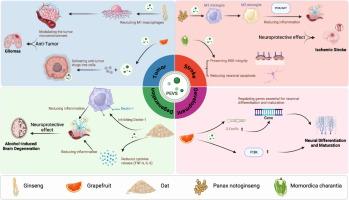
Plant extracellular vesicles (PEVs) have emerged important roles in central nervous system (CNS) disorders. PEVs are nanoscale vesicles (30–150 nm) that mediate intercellular communication and exhibit unique therapeutic potential due to their natural biocompatibility, minimal immunogenicity, and ability to cross the blood–brain barrier (BBB). With increasing interest in neurotherapeutics, PEVs offer promising applications for CNS disorders by overcoming delivery barriers and reducing adverse effects associated with synthetic nanoparticles.
Aim of review
This review provides a comprehensive analysis of the role of PEVs in CNS disorders, focusing on their mechanisms of action, therapeutic potential, and advantages over mammalian extracellular vesicles (MEVs) and synthetic delivery systems. It also highlights emerging research, challenges, and future directions for their clinical translation.
Key scientific concepts of review
PEVs, derived from fruits, vegetables, and medicinal plants, contain bioactive molecules such as proteins, lipids, microRNAs (miRNAs) and nucleic acids. These vesicles demonstrate the ability to traverse the BBB through receptor-mediated transport and membrane fusion, delivering therapeutic effects for CNS disorders, including neuroinflammation, ischemic stroke, and gliomas. Their pharmacological benefits stem from active metabolites, such as gingerols, alkaloids, and flavonoids, which modulate immune responses, maintain BBB integrity, and reduce neuronal apoptosis. Despite their advantages, challenges such as efficient extraction methods, standardization, and scalability remain obstacles to clinical application. Addressing these issues through advanced extraction techniques, improved characterization, and optimized drug loading strategies can enhance the clinical utility of PEVs.
期刊介绍:
Journal of Advanced Research (J. Adv. Res.) is an applied/natural sciences, peer-reviewed journal that focuses on interdisciplinary research. The journal aims to contribute to applied research and knowledge worldwide through the publication of original and high-quality research articles in the fields of Medicine, Pharmaceutical Sciences, Dentistry, Physical Therapy, Veterinary Medicine, and Basic and Biological Sciences.
The following abstracting and indexing services cover the Journal of Advanced Research: PubMed/Medline, Essential Science Indicators, Web of Science, Scopus, PubMed Central, PubMed, Science Citation Index Expanded, Directory of Open Access Journals (DOAJ), and INSPEC.





 京公网安备 11010802042870号
京ICP备2023020795号-1
京公网安备 11010802042870号
京ICP备2023020795号-1

 分享
分享
 求助内容:
求助内容: 应助结果提醒方式:
 扫码关注我们
