Veronica L Formanek, Barak M Spector, Gabriela Zappitelli, Zhenxing Wu, Kai Zhao
{"title":"设计新型“助嗅器”,改善后新冠时代嗅觉功能。","authors":"Veronica L Formanek, Barak M Spector, Gabriela Zappitelli, Zhenxing Wu, Kai Zhao","doi":"10.1186/s12916-025-03999-y","DOIUrl":null,"url":null,"abstract":"<p><strong>Background: </strong>Eyeglasses, hearing aids, etc., all serve to enhance the sensory stimuli to enable patients to see or hear things that they would not otherwise be able to, but we have no equivalent technology for olfaction, a pressing issue in the post-COVID era.</p><p><strong>Methods: </strong>We attempt to invent \"Smell-Aids\" by non-invasively enhancing intranasal odorant delivery to the olfactory epithelium, using two prototypes: (a) a nasal foam plug with a diagonal channel embedded to direct air/odor flow upwards to the olfactory region; (b) a clip (similar to what synchronized swimmers use) pinching a critical nasal valve region that may intensify the nasal airflow vortex to the olfactory region.</p><p><strong>Results: </strong>We first tested these prototypes in counter-balanced orders on 58 healthy subjects, where their measured odor detection thresholds to phenylethyl alcohol significantly improved with both prototypes in subjects with normal smell function (baseline: 8-16.5, n = 30, 12.49 ± 2.8, plug: 14.42 ± 4.9, pinch: 14.73 ± 5.4, p < 0.05), but not in subjects with \"super\" sensitivity at baseline (> 16.5, n = 28). Next, we tested the prototypes on 54 patients with confirmed olfactory losses (age 21-80 years, median 54.5), the majority of whom (37/54 = 69%) were post-COVID long haulers (infected 12/15/2019 to 10/4/23; persisted 30 to 1260 days, median 22 months). The remaining non-COVID smell losses (n = 17) span significantly longer from 5 months to 27 years (median 8.5 years). The 9-item NIH toolbox odor identification score significantly improved after application of both smell aids (baseline: 4.30 ± 2.27, plug 5.11 ± 2.32, pinch 4.82 ± 2.06, mixed model p < 0.05), especially among the non-COVID cohort. For COVID long haulers, only the nasal plug remained effective (p < 0.05). Subgroup analysis was performed on patients who reported diminished (hyposmia/anosmia 38/54) vs distorted smell (parosmia/phantosmia 27/54, n = 11 reported both) and showed that the nasal plug remains effective for both cohorts (p < 0.05) while the pinch is only effective for the hypo/anosmia cohort (p < 0.05).</p><p><strong>Conclusions: </strong>These results preliminarily demonstrated the novelty of improving olfactory function through different peripheral mechanisms for different patient and normative cohorts and may one day lead to an effective over-the-counter smell aid. Enhancing olfactory functions in healthy and patient cohorts through improving intranasal air and odorant delivery.</p><p><strong>Trial registration: </strong>ClinicalTrials.gov NCT05920330.</p>","PeriodicalId":9188,"journal":{"name":"BMC Medicine","volume":"23 1","pages":"169"},"PeriodicalIF":8.3000,"publicationDate":"2025-03-24","publicationTypes":"Journal Article","fieldsOfStudy":null,"isOpenAccess":false,"openAccessPdf":"https://www.ncbi.nlm.nih.gov/pmc/articles/PMC11934656/pdf/","citationCount":"0","resultStr":"{\"title\":\"Designing novel \\\"Smell-Aids\\\" to improve olfactory function in post COVID-19 era.\",\"authors\":\"Veronica L Formanek, Barak M Spector, Gabriela Zappitelli, Zhenxing Wu, Kai Zhao\",\"doi\":\"10.1186/s12916-025-03999-y\",\"DOIUrl\":null,\"url\":null,\"abstract\":\"<p><strong>Background: </strong>Eyeglasses, hearing aids, etc., all serve to enhance the sensory stimuli to enable patients to see or hear things that they would not otherwise be able to, but we have no equivalent technology for olfaction, a pressing issue in the post-COVID era.</p><p><strong>Methods: </strong>We attempt to invent \\\"Smell-Aids\\\" by non-invasively enhancing intranasal odorant delivery to the olfactory epithelium, using two prototypes: (a) a nasal foam plug with a diagonal channel embedded to direct air/odor flow upwards to the olfactory region; (b) a clip (similar to what synchronized swimmers use) pinching a critical nasal valve region that may intensify the nasal airflow vortex to the olfactory region.</p><p><strong>Results: </strong>We first tested these prototypes in counter-balanced orders on 58 healthy subjects, where their measured odor detection thresholds to phenylethyl alcohol significantly improved with both prototypes in subjects with normal smell function (baseline: 8-16.5, n = 30, 12.49 ± 2.8, plug: 14.42 ± 4.9, pinch: 14.73 ± 5.4, p < 0.05), but not in subjects with \\\"super\\\" sensitivity at baseline (> 16.5, n = 28). Next, we tested the prototypes on 54 patients with confirmed olfactory losses (age 21-80 years, median 54.5), the majority of whom (37/54 = 69%) were post-COVID long haulers (infected 12/15/2019 to 10/4/23; persisted 30 to 1260 days, median 22 months). The remaining non-COVID smell losses (n = 17) span significantly longer from 5 months to 27 years (median 8.5 years). The 9-item NIH toolbox odor identification score significantly improved after application of both smell aids (baseline: 4.30 ± 2.27, plug 5.11 ± 2.32, pinch 4.82 ± 2.06, mixed model p < 0.05), especially among the non-COVID cohort. For COVID long haulers, only the nasal plug remained effective (p < 0.05). Subgroup analysis was performed on patients who reported diminished (hyposmia/anosmia 38/54) vs distorted smell (parosmia/phantosmia 27/54, n = 11 reported both) and showed that the nasal plug remains effective for both cohorts (p < 0.05) while the pinch is only effective for the hypo/anosmia cohort (p < 0.05).</p><p><strong>Conclusions: </strong>These results preliminarily demonstrated the novelty of improving olfactory function through different peripheral mechanisms for different patient and normative cohorts and may one day lead to an effective over-the-counter smell aid. Enhancing olfactory functions in healthy and patient cohorts through improving intranasal air and odorant delivery.</p><p><strong>Trial registration: </strong>ClinicalTrials.gov NCT05920330.</p>\",\"PeriodicalId\":9188,\"journal\":{\"name\":\"BMC Medicine\",\"volume\":\"23 1\",\"pages\":\"169\"},\"PeriodicalIF\":8.3000,\"publicationDate\":\"2025-03-24\",\"publicationTypes\":\"Journal Article\",\"fieldsOfStudy\":null,\"isOpenAccess\":false,\"openAccessPdf\":\"https://www.ncbi.nlm.nih.gov/pmc/articles/PMC11934656/pdf/\",\"citationCount\":\"0\",\"resultStr\":null,\"platform\":\"Semanticscholar\",\"paperid\":null,\"PeriodicalName\":\"BMC Medicine\",\"FirstCategoryId\":\"3\",\"ListUrlMain\":\"https://doi.org/10.1186/s12916-025-03999-y\",\"RegionNum\":1,\"RegionCategory\":\"医学\",\"ArticlePicture\":[],\"TitleCN\":null,\"AbstractTextCN\":null,\"PMCID\":null,\"EPubDate\":\"\",\"PubModel\":\"\",\"JCR\":\"Q1\",\"JCRName\":\"MEDICINE, GENERAL & INTERNAL\",\"Score\":null,\"Total\":0}","platform":"Semanticscholar","paperid":null,"PeriodicalName":"BMC Medicine","FirstCategoryId":"3","ListUrlMain":"https://doi.org/10.1186/s12916-025-03999-y","RegionNum":1,"RegionCategory":"医学","ArticlePicture":[],"TitleCN":null,"AbstractTextCN":null,"PMCID":null,"EPubDate":"","PubModel":"","JCR":"Q1","JCRName":"MEDICINE, GENERAL & INTERNAL","Score":null,"Total":0}
Designing novel "Smell-Aids" to improve olfactory function in post COVID-19 era.
Background: Eyeglasses, hearing aids, etc., all serve to enhance the sensory stimuli to enable patients to see or hear things that they would not otherwise be able to, but we have no equivalent technology for olfaction, a pressing issue in the post-COVID era.
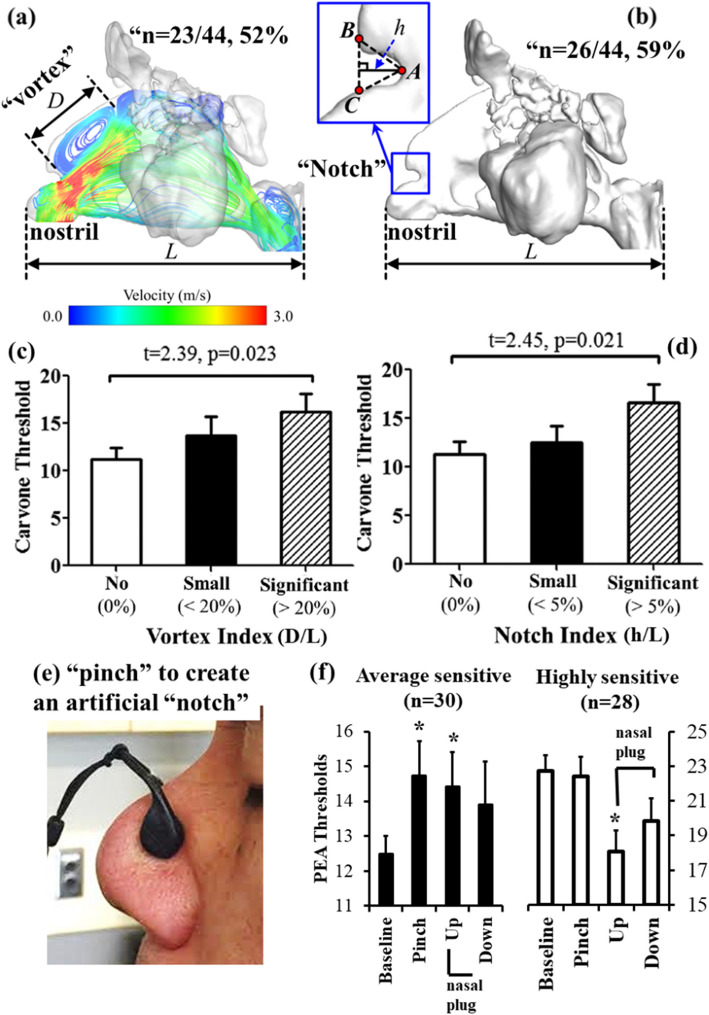
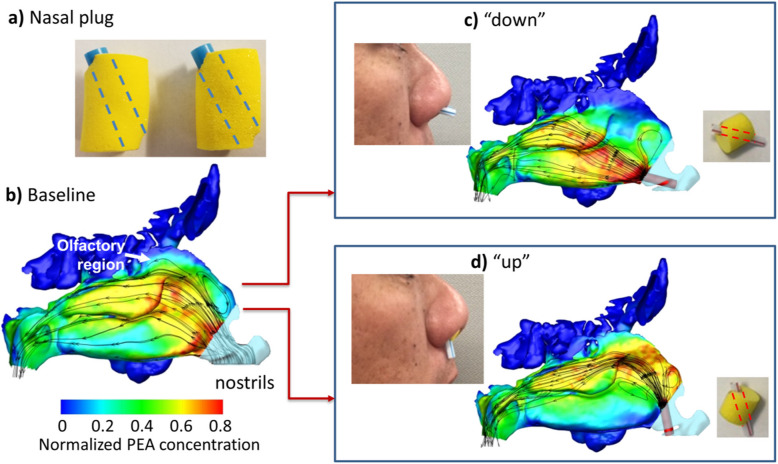
Methods: We attempt to invent "Smell-Aids" by non-invasively enhancing intranasal odorant delivery to the olfactory epithelium, using two prototypes: (a) a nasal foam plug with a diagonal channel embedded to direct air/odor flow upwards to the olfactory region; (b) a clip (similar to what synchronized swimmers use) pinching a critical nasal valve region that may intensify the nasal airflow vortex to the olfactory region.
Results: We first tested these prototypes in counter-balanced orders on 58 healthy subjects, where their measured odor detection thresholds to phenylethyl alcohol significantly improved with both prototypes in subjects with normal smell function (baseline: 8-16.5, n = 30, 12.49 ± 2.8, plug: 14.42 ± 4.9, pinch: 14.73 ± 5.4, p < 0.05), but not in subjects with "super" sensitivity at baseline (> 16.5, n = 28). Next, we tested the prototypes on 54 patients with confirmed olfactory losses (age 21-80 years, median 54.5), the majority of whom (37/54 = 69%) were post-COVID long haulers (infected 12/15/2019 to 10/4/23; persisted 30 to 1260 days, median 22 months). The remaining non-COVID smell losses (n = 17) span significantly longer from 5 months to 27 years (median 8.5 years). The 9-item NIH toolbox odor identification score significantly improved after application of both smell aids (baseline: 4.30 ± 2.27, plug 5.11 ± 2.32, pinch 4.82 ± 2.06, mixed model p < 0.05), especially among the non-COVID cohort. For COVID long haulers, only the nasal plug remained effective (p < 0.05). Subgroup analysis was performed on patients who reported diminished (hyposmia/anosmia 38/54) vs distorted smell (parosmia/phantosmia 27/54, n = 11 reported both) and showed that the nasal plug remains effective for both cohorts (p < 0.05) while the pinch is only effective for the hypo/anosmia cohort (p < 0.05).
Conclusions: These results preliminarily demonstrated the novelty of improving olfactory function through different peripheral mechanisms for different patient and normative cohorts and may one day lead to an effective over-the-counter smell aid. Enhancing olfactory functions in healthy and patient cohorts through improving intranasal air and odorant delivery.
期刊介绍:
BMC Medicine is an open access, transparent peer-reviewed general medical journal. It is the flagship journal of the BMC series and publishes outstanding and influential research in various areas including clinical practice, translational medicine, medical and health advances, public health, global health, policy, and general topics of interest to the biomedical and sociomedical professional communities. In addition to research articles, the journal also publishes stimulating debates, reviews, unique forum articles, and concise tutorials. All articles published in BMC Medicine are included in various databases such as Biological Abstracts, BIOSIS, CAS, Citebase, Current contents, DOAJ, Embase, MEDLINE, PubMed, Science Citation Index Expanded, OAIster, SCImago, Scopus, SOCOLAR, and Zetoc.





 京公网安备 11010802042870号
京ICP备2023020795号-1
京公网安备 11010802042870号
京ICP备2023020795号-1

 分享
分享
 求助内容:
求助内容: 应助结果提醒方式:
 扫码关注我们
