Antje Frey Nascimento, Jens Gaab, Bojana Degen, Mareike Rytz, Anja Holder, Dilan Sezer, Sarah Buergler, Andrea H Meyer, Irving Kirsch, Joe Kossowsky, Cosima Locher
{"title":"开放标签安慰剂对经前综合症的疗效:一项随机对照试验。","authors":"Antje Frey Nascimento, Jens Gaab, Bojana Degen, Mareike Rytz, Anja Holder, Dilan Sezer, Sarah Buergler, Andrea H Meyer, Irving Kirsch, Joe Kossowsky, Cosima Locher","doi":"10.1136/bmjebm-2024-112875","DOIUrl":null,"url":null,"abstract":"<p><strong>Objective: </strong>To investigate the efficacy and safety of open-label placebos (OLP) in premenstrual syndrome (PMS).</p><p><strong>Design: </strong>Randomised controlled trial.</p><p><strong>Setting: </strong>Switzerland, 2018-2020.</p><p><strong>Participants: </strong>150 women (18-45 years of age) with PMS or premenstrual dysphoric disorder.</p><p><strong>Intervention: </strong>Random assignment (1:1:1) to treatment as usual (TAU), OLP without treatment rationale (OLP-), or OLP with treatment rationale (OLP+). OLP consisted of two placebo pills per day for 6 weeks.</p><p><strong>Main outcome measures: </strong>Primary outcomes were PMS symptom intensity and interference between groups across three menstrual cycles (MC1-MC3); adverse events (ie, safety) were measured at weeks 3 and 6 after the start of the intervention. Secondary outcomes were psychological and somatic subscales of PMS symptom intensity, and adherence.</p><p><strong>Results: </strong>From 2 August 2018 to 3 December 2020, 150 women were randomly allocated to TAU (n=50), OLP- (n=50), and OLP+ (n=50), of whom 145 (96.7%) completed trial participation. Groups differed in symptom intensity (F(4)=4.419, p=0.002, r<sup>2</sup>=0.16) and interference (F(4)=3.159, p=0.014, r<sup>2</sup>=0.13) across three MCs. Mean symptom intensity at MC3 was lower for OLP+ compared to TAU (b=-9.97, SE=2.85, t(412)=3.50, p<0.001, d=0.90) and to OLP- (b=-6.10, SE=2.89, t(411)=2.11, p=0.036, d=0.55), but OLP- and TAU did not differ (b=-3.87, SE=2.87, t(411)=1.35, p=0.177, d=0.35). Mean interference at MC3 was lower for OLP+ compared to TAU (b=-1.23, SE=0.54, t(443)=2.30, p=0.022, d=0.55) and to OLP- (b=-1.10, SE=0.54, t(442)=2.02, p=0.044, d=0.48), but OLP- and TAU did not differ (b=-0.14, SE=0.54, t(442)=0.26, p=0.799, d=0.06). Four non-serious adverse events were reported in OLP- (n=1) and OLP+ (n=3). Improvement in psychological and somatic symptom intensity was comparable to primary outcomes. Adherence to the OLP intervention was high (93.18±18.95%), with no difference between groups.</p><p><strong>Conclusions: </strong>The results of our clinical trial indicate that OLP provided with a treatment rationale is an effective, safe, and acceptable treatment for PMS.</p><p><strong>Trial registration: </strong>ClinicalTrials.gov NCT03547661 (submitted 2 May 2018).</p>","PeriodicalId":9059,"journal":{"name":"BMJ Evidence-Based Medicine","volume":" ","pages":""},"PeriodicalIF":7.6000,"publicationDate":"2025-03-25","publicationTypes":"Journal Article","fieldsOfStudy":null,"isOpenAccess":false,"openAccessPdf":"https://www.ncbi.nlm.nih.gov/pmc/articles/PMC12573394/pdf/","citationCount":"0","resultStr":"{\"title\":\"Efficacy of open-label placebos for premenstrual syndrome: a randomised controlled trial.\",\"authors\":\"Antje Frey Nascimento, Jens Gaab, Bojana Degen, Mareike Rytz, Anja Holder, Dilan Sezer, Sarah Buergler, Andrea H Meyer, Irving Kirsch, Joe Kossowsky, Cosima Locher\",\"doi\":\"10.1136/bmjebm-2024-112875\",\"DOIUrl\":null,\"url\":null,\"abstract\":\"<p><strong>Objective: </strong>To investigate the efficacy and safety of open-label placebos (OLP) in premenstrual syndrome (PMS).</p><p><strong>Design: </strong>Randomised controlled trial.</p><p><strong>Setting: </strong>Switzerland, 2018-2020.</p><p><strong>Participants: </strong>150 women (18-45 years of age) with PMS or premenstrual dysphoric disorder.</p><p><strong>Intervention: </strong>Random assignment (1:1:1) to treatment as usual (TAU), OLP without treatment rationale (OLP-), or OLP with treatment rationale (OLP+). OLP consisted of two placebo pills per day for 6 weeks.</p><p><strong>Main outcome measures: </strong>Primary outcomes were PMS symptom intensity and interference between groups across three menstrual cycles (MC1-MC3); adverse events (ie, safety) were measured at weeks 3 and 6 after the start of the intervention. Secondary outcomes were psychological and somatic subscales of PMS symptom intensity, and adherence.</p><p><strong>Results: </strong>From 2 August 2018 to 3 December 2020, 150 women were randomly allocated to TAU (n=50), OLP- (n=50), and OLP+ (n=50), of whom 145 (96.7%) completed trial participation. Groups differed in symptom intensity (F(4)=4.419, p=0.002, r<sup>2</sup>=0.16) and interference (F(4)=3.159, p=0.014, r<sup>2</sup>=0.13) across three MCs. Mean symptom intensity at MC3 was lower for OLP+ compared to TAU (b=-9.97, SE=2.85, t(412)=3.50, p<0.001, d=0.90) and to OLP- (b=-6.10, SE=2.89, t(411)=2.11, p=0.036, d=0.55), but OLP- and TAU did not differ (b=-3.87, SE=2.87, t(411)=1.35, p=0.177, d=0.35). Mean interference at MC3 was lower for OLP+ compared to TAU (b=-1.23, SE=0.54, t(443)=2.30, p=0.022, d=0.55) and to OLP- (b=-1.10, SE=0.54, t(442)=2.02, p=0.044, d=0.48), but OLP- and TAU did not differ (b=-0.14, SE=0.54, t(442)=0.26, p=0.799, d=0.06). Four non-serious adverse events were reported in OLP- (n=1) and OLP+ (n=3). Improvement in psychological and somatic symptom intensity was comparable to primary outcomes. Adherence to the OLP intervention was high (93.18±18.95%), with no difference between groups.</p><p><strong>Conclusions: </strong>The results of our clinical trial indicate that OLP provided with a treatment rationale is an effective, safe, and acceptable treatment for PMS.</p><p><strong>Trial registration: </strong>ClinicalTrials.gov NCT03547661 (submitted 2 May 2018).</p>\",\"PeriodicalId\":9059,\"journal\":{\"name\":\"BMJ Evidence-Based Medicine\",\"volume\":\" \",\"pages\":\"\"},\"PeriodicalIF\":7.6000,\"publicationDate\":\"2025-03-25\",\"publicationTypes\":\"Journal Article\",\"fieldsOfStudy\":null,\"isOpenAccess\":false,\"openAccessPdf\":\"https://www.ncbi.nlm.nih.gov/pmc/articles/PMC12573394/pdf/\",\"citationCount\":\"0\",\"resultStr\":null,\"platform\":\"Semanticscholar\",\"paperid\":null,\"PeriodicalName\":\"BMJ Evidence-Based Medicine\",\"FirstCategoryId\":\"3\",\"ListUrlMain\":\"https://doi.org/10.1136/bmjebm-2024-112875\",\"RegionNum\":3,\"RegionCategory\":\"医学\",\"ArticlePicture\":[],\"TitleCN\":null,\"AbstractTextCN\":null,\"PMCID\":null,\"EPubDate\":\"\",\"PubModel\":\"\",\"JCR\":\"Q1\",\"JCRName\":\"MEDICINE, GENERAL & INTERNAL\",\"Score\":null,\"Total\":0}","platform":"Semanticscholar","paperid":null,"PeriodicalName":"BMJ Evidence-Based Medicine","FirstCategoryId":"3","ListUrlMain":"https://doi.org/10.1136/bmjebm-2024-112875","RegionNum":3,"RegionCategory":"医学","ArticlePicture":[],"TitleCN":null,"AbstractTextCN":null,"PMCID":null,"EPubDate":"","PubModel":"","JCR":"Q1","JCRName":"MEDICINE, GENERAL & INTERNAL","Score":null,"Total":0}
Efficacy of open-label placebos for premenstrual syndrome: a randomised controlled trial.
Objective: To investigate the efficacy and safety of open-label placebos (OLP) in premenstrual syndrome (PMS).
Design: Randomised controlled trial.
Setting: Switzerland, 2018-2020.
Participants: 150 women (18-45 years of age) with PMS or premenstrual dysphoric disorder.
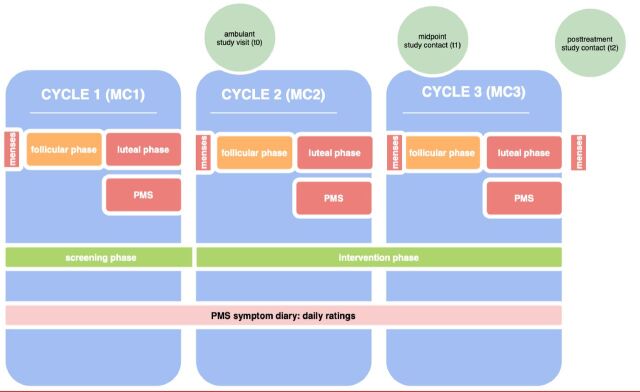
Intervention: Random assignment (1:1:1) to treatment as usual (TAU), OLP without treatment rationale (OLP-), or OLP with treatment rationale (OLP+). OLP consisted of two placebo pills per day for 6 weeks.
Main outcome measures: Primary outcomes were PMS symptom intensity and interference between groups across three menstrual cycles (MC1-MC3); adverse events (ie, safety) were measured at weeks 3 and 6 after the start of the intervention. Secondary outcomes were psychological and somatic subscales of PMS symptom intensity, and adherence.
Results: From 2 August 2018 to 3 December 2020, 150 women were randomly allocated to TAU (n=50), OLP- (n=50), and OLP+ (n=50), of whom 145 (96.7%) completed trial participation. Groups differed in symptom intensity (F(4)=4.419, p=0.002, r2=0.16) and interference (F(4)=3.159, p=0.014, r2=0.13) across three MCs. Mean symptom intensity at MC3 was lower for OLP+ compared to TAU (b=-9.97, SE=2.85, t(412)=3.50, p<0.001, d=0.90) and to OLP- (b=-6.10, SE=2.89, t(411)=2.11, p=0.036, d=0.55), but OLP- and TAU did not differ (b=-3.87, SE=2.87, t(411)=1.35, p=0.177, d=0.35). Mean interference at MC3 was lower for OLP+ compared to TAU (b=-1.23, SE=0.54, t(443)=2.30, p=0.022, d=0.55) and to OLP- (b=-1.10, SE=0.54, t(442)=2.02, p=0.044, d=0.48), but OLP- and TAU did not differ (b=-0.14, SE=0.54, t(442)=0.26, p=0.799, d=0.06). Four non-serious adverse events were reported in OLP- (n=1) and OLP+ (n=3). Improvement in psychological and somatic symptom intensity was comparable to primary outcomes. Adherence to the OLP intervention was high (93.18±18.95%), with no difference between groups.
Conclusions: The results of our clinical trial indicate that OLP provided with a treatment rationale is an effective, safe, and acceptable treatment for PMS.
Trial registration: ClinicalTrials.gov NCT03547661 (submitted 2 May 2018).
期刊介绍:
BMJ Evidence-Based Medicine (BMJ EBM) publishes original evidence-based research, insights and opinions on what matters for health care. We focus on the tools, methods, and concepts that are basic and central to practising evidence-based medicine and deliver relevant, trustworthy and impactful evidence.
BMJ EBM is a Plan S compliant Transformative Journal and adheres to the highest possible industry standards for editorial policies and publication ethics.






 京公网安备 11010802042870号
京ICP备2023020795号-1
京公网安备 11010802042870号
京ICP备2023020795号-1

 分享
分享
 求助内容:
求助内容: 应助结果提醒方式:
 扫码关注我们
