Alberto De Stefani, Giovanni Bruno, Valentina Montanari, Ayoub Boutarbouche, Patrizio Bollero, Antonio Gracco, Michele Basilicata
{"title":"使用被动舌弓管理混合牙列的回旋空间:系统回顾。","authors":"Alberto De Stefani, Giovanni Bruno, Valentina Montanari, Ayoub Boutarbouche, Patrizio Bollero, Antonio Gracco, Michele Basilicata","doi":"10.3390/dj13030135","DOIUrl":null,"url":null,"abstract":"<p><p><b>Background/Objectives:</b> Dental crowding and the premature loss of one or more deciduous teeth are common issues during the growth phase that accompanies the transition from mixed to permanent dentition. The aim of this systematic review is to examine the effectiveness of using a passive lingual arch in preserving the length of the lower arch and managing the leeway space, analyzing the effects on the linear and angular positions of the permanent teeth. <b>Methods:</b> A systematic review of the literature was conducted using the PubMed, Web of Science, Scopus, and Cochrane Library database. After an initial selection of 306 articles, seven studies that met the defined selection criteria were included. These articles were used to compile the PICO table. <b>Results:</b> The studies examined agree that the application of the passive lingual arch is useful in preserving the length of the lower arch during the transition from mixed to permanent dentition. The observed changes in the linear and angular positions of the permanent teeth, particularly the distoinclination of the permanent molars and the proclination of the incisors, were considered indicative of the effectiveness of this technique. However, one author did not observe these changes, noting only a prevention of mesioinclination and lingualization of the molars and incisors. <b>Conclusions:</b> The use of the passive lingual arch in the transition from mixed to permanent dentition proves to be advantageous for correcting mild anterior crowding, maintaining residual spaces after the premature loss of deciduous molars, and preventing the impaction of permanent premolars. This simple and effective orthodontic device can be applied in clinical practice, always based on an accurate diagnosis and a well-defined treatment plan.</p>","PeriodicalId":11269,"journal":{"name":"Dentistry Journal","volume":"13 3","pages":""},"PeriodicalIF":3.4000,"publicationDate":"2025-03-20","publicationTypes":"Journal Article","fieldsOfStudy":null,"isOpenAccess":false,"openAccessPdf":"https://www.ncbi.nlm.nih.gov/pmc/articles/PMC11941238/pdf/","citationCount":"0","resultStr":"{\"title\":\"Managing the Leeway Space in Mixed Dentition Using a Passive Lingual Arch: A Systematic Review.\",\"authors\":\"Alberto De Stefani, Giovanni Bruno, Valentina Montanari, Ayoub Boutarbouche, Patrizio Bollero, Antonio Gracco, Michele Basilicata\",\"doi\":\"10.3390/dj13030135\",\"DOIUrl\":null,\"url\":null,\"abstract\":\"<p><p><b>Background/Objectives:</b> Dental crowding and the premature loss of one or more deciduous teeth are common issues during the growth phase that accompanies the transition from mixed to permanent dentition. The aim of this systematic review is to examine the effectiveness of using a passive lingual arch in preserving the length of the lower arch and managing the leeway space, analyzing the effects on the linear and angular positions of the permanent teeth. <b>Methods:</b> A systematic review of the literature was conducted using the PubMed, Web of Science, Scopus, and Cochrane Library database. After an initial selection of 306 articles, seven studies that met the defined selection criteria were included. These articles were used to compile the PICO table. <b>Results:</b> The studies examined agree that the application of the passive lingual arch is useful in preserving the length of the lower arch during the transition from mixed to permanent dentition. The observed changes in the linear and angular positions of the permanent teeth, particularly the distoinclination of the permanent molars and the proclination of the incisors, were considered indicative of the effectiveness of this technique. However, one author did not observe these changes, noting only a prevention of mesioinclination and lingualization of the molars and incisors. <b>Conclusions:</b> The use of the passive lingual arch in the transition from mixed to permanent dentition proves to be advantageous for correcting mild anterior crowding, maintaining residual spaces after the premature loss of deciduous molars, and preventing the impaction of permanent premolars. This simple and effective orthodontic device can be applied in clinical practice, always based on an accurate diagnosis and a well-defined treatment plan.</p>\",\"PeriodicalId\":11269,\"journal\":{\"name\":\"Dentistry Journal\",\"volume\":\"13 3\",\"pages\":\"\"},\"PeriodicalIF\":3.4000,\"publicationDate\":\"2025-03-20\",\"publicationTypes\":\"Journal Article\",\"fieldsOfStudy\":null,\"isOpenAccess\":false,\"openAccessPdf\":\"https://www.ncbi.nlm.nih.gov/pmc/articles/PMC11941238/pdf/\",\"citationCount\":\"0\",\"resultStr\":null,\"platform\":\"Semanticscholar\",\"paperid\":null,\"PeriodicalName\":\"Dentistry Journal\",\"FirstCategoryId\":\"1085\",\"ListUrlMain\":\"https://doi.org/10.3390/dj13030135\",\"RegionNum\":0,\"RegionCategory\":null,\"ArticlePicture\":[],\"TitleCN\":null,\"AbstractTextCN\":null,\"PMCID\":null,\"EPubDate\":\"\",\"PubModel\":\"\",\"JCR\":\"Q2\",\"JCRName\":\"DENTISTRY, ORAL SURGERY & MEDICINE\",\"Score\":null,\"Total\":0}","platform":"Semanticscholar","paperid":null,"PeriodicalName":"Dentistry Journal","FirstCategoryId":"1085","ListUrlMain":"https://doi.org/10.3390/dj13030135","RegionNum":0,"RegionCategory":null,"ArticlePicture":[],"TitleCN":null,"AbstractTextCN":null,"PMCID":null,"EPubDate":"","PubModel":"","JCR":"Q2","JCRName":"DENTISTRY, ORAL SURGERY & MEDICINE","Score":null,"Total":0}
引用次数: 0
摘要
背景/目的:乳牙拥挤和一颗或多颗乳牙过早脱落是伴随混合牙向恒牙过渡的生长阶段的常见问题。本系统综述的目的是检查使用被动舌弓在保持下弓长度和管理回旋空间方面的有效性,分析对恒牙线性和角度位置的影响。方法:使用PubMed、Web of Science、Scopus和Cochrane Library数据库对文献进行系统综述。在最初选择306篇文章后,7篇研究符合确定的选择标准。这些文章用于编译PICO表。结果:研究一致认为,在混合牙列到恒牙列的过渡过程中,被动舌弓的应用对于保持下弓的长度是有用的。观察到的恒牙线性和角度位置的变化,特别是恒磨牙的不倾斜和门牙的前倾,被认为是该技术有效性的标志。然而,一位作者没有观察到这些变化,只注意到臼齿和门牙的中偏倾和语言化的预防。结论:被动舌弓用于混合牙列到恒牙列的过渡,有利于矫正轻度前牙拥挤,保持乳磨牙过早脱落后的残留间隙,防止恒磨牙嵌塞。这种简单有效的正畸装置可以在临床实践中应用,始终基于准确的诊断和明确的治疗计划。
Managing the Leeway Space in Mixed Dentition Using a Passive Lingual Arch: A Systematic Review.
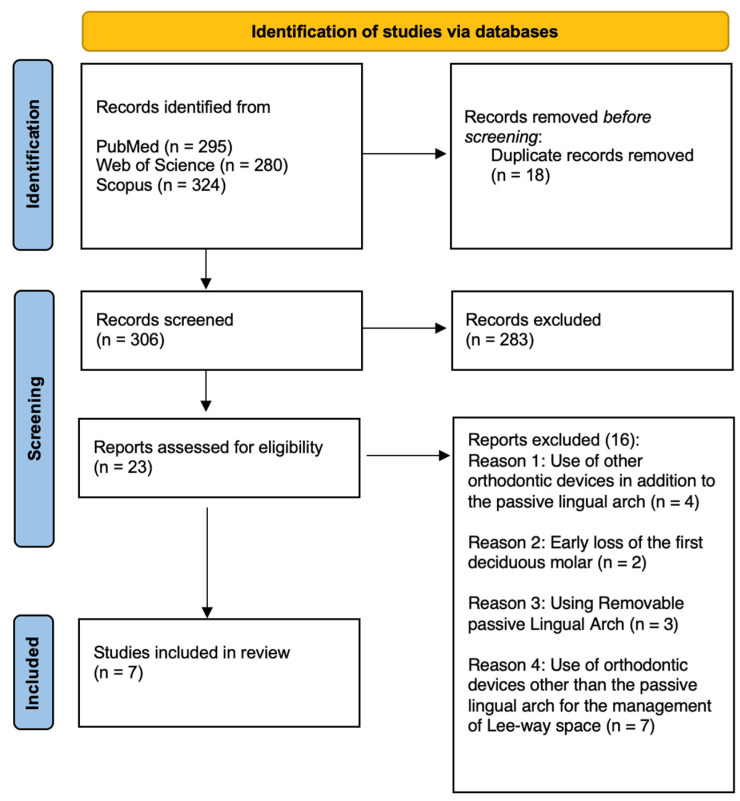
Background/Objectives: Dental crowding and the premature loss of one or more deciduous teeth are common issues during the growth phase that accompanies the transition from mixed to permanent dentition. The aim of this systematic review is to examine the effectiveness of using a passive lingual arch in preserving the length of the lower arch and managing the leeway space, analyzing the effects on the linear and angular positions of the permanent teeth. Methods: A systematic review of the literature was conducted using the PubMed, Web of Science, Scopus, and Cochrane Library database. After an initial selection of 306 articles, seven studies that met the defined selection criteria were included. These articles were used to compile the PICO table. Results: The studies examined agree that the application of the passive lingual arch is useful in preserving the length of the lower arch during the transition from mixed to permanent dentition. The observed changes in the linear and angular positions of the permanent teeth, particularly the distoinclination of the permanent molars and the proclination of the incisors, were considered indicative of the effectiveness of this technique. However, one author did not observe these changes, noting only a prevention of mesioinclination and lingualization of the molars and incisors. Conclusions: The use of the passive lingual arch in the transition from mixed to permanent dentition proves to be advantageous for correcting mild anterior crowding, maintaining residual spaces after the premature loss of deciduous molars, and preventing the impaction of permanent premolars. This simple and effective orthodontic device can be applied in clinical practice, always based on an accurate diagnosis and a well-defined treatment plan.





 京公网安备 11010802042870号
京ICP备2023020795号-1
京公网安备 11010802042870号
京ICP备2023020795号-1

 分享
分享
 求助内容:
求助内容: 应助结果提醒方式:
 扫码关注我们
