{"title":"前庭-眼反射功能及其对人工耳蜗受者姿势稳定性和生活质量的影响:一项横断面研究。","authors":"Khalid A Alahmari, Sarah Alshehri","doi":"10.3390/life15030499","DOIUrl":null,"url":null,"abstract":"<p><strong>Background/objectives: </strong>Vestibulo-ocular reflex (VOR) function, measured by the video head impulse test (vHIT) gains, plays a crucial role in postural stability and quality of life. Cochlear implant recipients often experience vestibular dysfunction, but its relationship with balance and patient-reported outcomes remains underexplored. This study aimed to (1) evaluate the relationship between vHIT gains and postural stability in cochlear implant recipients; (2) assess the impact of vHIT gains on quality-of-life metrics; and (3) identify key predictors of postural stability, including vHIT gains and demographic/clinical characteristics.</p><p><strong>Methods: </strong>This cross-sectional study was conducted between August 2023 and February 2024 and included 46 participants that comprised cochlear implant recipients and age-matched normal hearers who underwent the vHIT for lateral, anterior, and posterior semicircular canal function. Postural stability was assessed using dynamic posturography, and quality of life was measured using the Short Form-36 (SF-36). Multiple linear regression and correlation analyses were performed.</p><p><strong>Results: </strong>The vHIT gains demonstrated significant positive correlations with postural stability, with the lateral canal showing the strongest association (r = 0.742, <i>p</i> = 0.001), followed by the posterior (r = 0.701, <i>p</i> = 0.003) and anterior canals (r = 0.684, <i>p</i> = 0.005). A multiple regression analysis identified the lateral canal as the most significant predictor of postural stability (β = 0.512, <i>p</i> = 0.001, adjusted R<sup>2</sup> = 0.47). Quality-of-life metrics were inversely correlated with the vHIT gains, particularly in the posterior canal (r = -0.712, <i>p</i> = 0.002), which explained 43-51% of the variance.</p><p><strong>Conclusions: </strong>This study highlighted the lateral semicircular canal as the primary determinant of postural stability in cochlear implant recipients, underscoring the importance of vestibular assessments in optimizing balance and functional outcomes.</p>","PeriodicalId":56144,"journal":{"name":"Life-Basel","volume":"15 3","pages":""},"PeriodicalIF":3.4000,"publicationDate":"2025-03-20","publicationTypes":"Journal Article","fieldsOfStudy":null,"isOpenAccess":false,"openAccessPdf":"https://www.ncbi.nlm.nih.gov/pmc/articles/PMC11943606/pdf/","citationCount":"0","resultStr":"{\"title\":\"Vestibulo-Ocular Reflex Function and Its Impact on Postural Stability and Quality of Life in Cochlear Implant Recipients: A Cross-Sectional Study.\",\"authors\":\"Khalid A Alahmari, Sarah Alshehri\",\"doi\":\"10.3390/life15030499\",\"DOIUrl\":null,\"url\":null,\"abstract\":\"<p><strong>Background/objectives: </strong>Vestibulo-ocular reflex (VOR) function, measured by the video head impulse test (vHIT) gains, plays a crucial role in postural stability and quality of life. Cochlear implant recipients often experience vestibular dysfunction, but its relationship with balance and patient-reported outcomes remains underexplored. This study aimed to (1) evaluate the relationship between vHIT gains and postural stability in cochlear implant recipients; (2) assess the impact of vHIT gains on quality-of-life metrics; and (3) identify key predictors of postural stability, including vHIT gains and demographic/clinical characteristics.</p><p><strong>Methods: </strong>This cross-sectional study was conducted between August 2023 and February 2024 and included 46 participants that comprised cochlear implant recipients and age-matched normal hearers who underwent the vHIT for lateral, anterior, and posterior semicircular canal function. Postural stability was assessed using dynamic posturography, and quality of life was measured using the Short Form-36 (SF-36). Multiple linear regression and correlation analyses were performed.</p><p><strong>Results: </strong>The vHIT gains demonstrated significant positive correlations with postural stability, with the lateral canal showing the strongest association (r = 0.742, <i>p</i> = 0.001), followed by the posterior (r = 0.701, <i>p</i> = 0.003) and anterior canals (r = 0.684, <i>p</i> = 0.005). A multiple regression analysis identified the lateral canal as the most significant predictor of postural stability (β = 0.512, <i>p</i> = 0.001, adjusted R<sup>2</sup> = 0.47). Quality-of-life metrics were inversely correlated with the vHIT gains, particularly in the posterior canal (r = -0.712, <i>p</i> = 0.002), which explained 43-51% of the variance.</p><p><strong>Conclusions: </strong>This study highlighted the lateral semicircular canal as the primary determinant of postural stability in cochlear implant recipients, underscoring the importance of vestibular assessments in optimizing balance and functional outcomes.</p>\",\"PeriodicalId\":56144,\"journal\":{\"name\":\"Life-Basel\",\"volume\":\"15 3\",\"pages\":\"\"},\"PeriodicalIF\":3.4000,\"publicationDate\":\"2025-03-20\",\"publicationTypes\":\"Journal Article\",\"fieldsOfStudy\":null,\"isOpenAccess\":false,\"openAccessPdf\":\"https://www.ncbi.nlm.nih.gov/pmc/articles/PMC11943606/pdf/\",\"citationCount\":\"0\",\"resultStr\":null,\"platform\":\"Semanticscholar\",\"paperid\":null,\"PeriodicalName\":\"Life-Basel\",\"FirstCategoryId\":\"99\",\"ListUrlMain\":\"https://doi.org/10.3390/life15030499\",\"RegionNum\":3,\"RegionCategory\":\"生物学\",\"ArticlePicture\":[],\"TitleCN\":null,\"AbstractTextCN\":null,\"PMCID\":null,\"EPubDate\":\"\",\"PubModel\":\"\",\"JCR\":\"Q1\",\"JCRName\":\"BIOLOGY\",\"Score\":null,\"Total\":0}","platform":"Semanticscholar","paperid":null,"PeriodicalName":"Life-Basel","FirstCategoryId":"99","ListUrlMain":"https://doi.org/10.3390/life15030499","RegionNum":3,"RegionCategory":"生物学","ArticlePicture":[],"TitleCN":null,"AbstractTextCN":null,"PMCID":null,"EPubDate":"","PubModel":"","JCR":"Q1","JCRName":"BIOLOGY","Score":null,"Total":0}
引用次数: 0
摘要
背景/目的:前庭眼反射(VOR)功能,通过视频头部脉冲测试(vHIT)增益测量,在姿势稳定性和生活质量中起着至关重要的作用。人工耳蜗受者经常经历前庭功能障碍,但其与平衡和患者报告的结果的关系仍未得到充分探讨。本研究旨在(1)评估人工耳蜗受者vHIT增益与体位稳定性之间的关系;(2)评估vHIT收益对生活质量指标的影响;(3)确定姿势稳定性的关键预测因素,包括vHIT增益和人口统计学/临床特征。方法:这项横断面研究于2023年8月至2024年2月期间进行,包括46名参与者,其中包括人工耳蜗受者和年龄匹配的正常听者,他们接受了vHIT治疗,以治疗侧半规管、前半规管和后半规管功能。采用动态体位法评估姿势稳定性,采用SF-36量表评估生活质量。进行多元线性回归和相关分析。结果:vHIT增益与体位稳定性呈显著正相关,其中外侧椎管相关性最强(r = 0.742, p = 0.001),其次是后椎管(r = 0.701, p = 0.003)和前椎管(r = 0.684, p = 0.005)。多元回归分析发现外侧椎管是体位稳定性最显著的预测因子(β = 0.512, p = 0.001,调整后R2 = 0.47)。生活质量指标与vHIT增益呈负相关,特别是在后椎管(r = -0.712, p = 0.002),这解释了43-51%的方差。结论:本研究强调了外侧半规管是人工耳蜗受者姿势稳定性的主要决定因素,强调了前庭评估在优化平衡和功能结果中的重要性。
Vestibulo-Ocular Reflex Function and Its Impact on Postural Stability and Quality of Life in Cochlear Implant Recipients: A Cross-Sectional Study.
Background/objectives: Vestibulo-ocular reflex (VOR) function, measured by the video head impulse test (vHIT) gains, plays a crucial role in postural stability and quality of life. Cochlear implant recipients often experience vestibular dysfunction, but its relationship with balance and patient-reported outcomes remains underexplored. This study aimed to (1) evaluate the relationship between vHIT gains and postural stability in cochlear implant recipients; (2) assess the impact of vHIT gains on quality-of-life metrics; and (3) identify key predictors of postural stability, including vHIT gains and demographic/clinical characteristics.
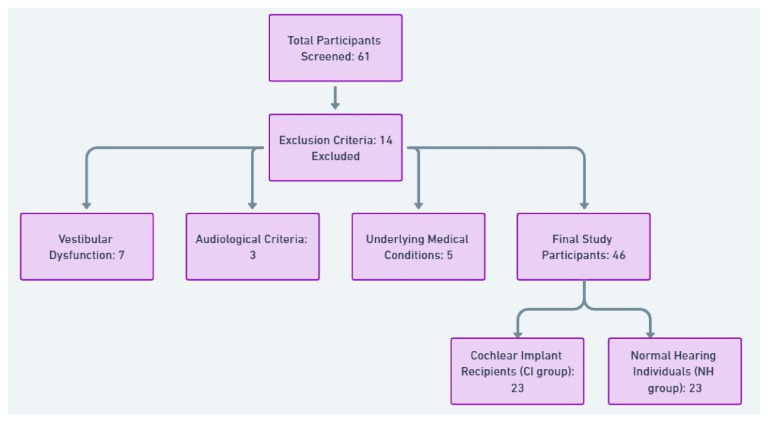
Methods: This cross-sectional study was conducted between August 2023 and February 2024 and included 46 participants that comprised cochlear implant recipients and age-matched normal hearers who underwent the vHIT for lateral, anterior, and posterior semicircular canal function. Postural stability was assessed using dynamic posturography, and quality of life was measured using the Short Form-36 (SF-36). Multiple linear regression and correlation analyses were performed.
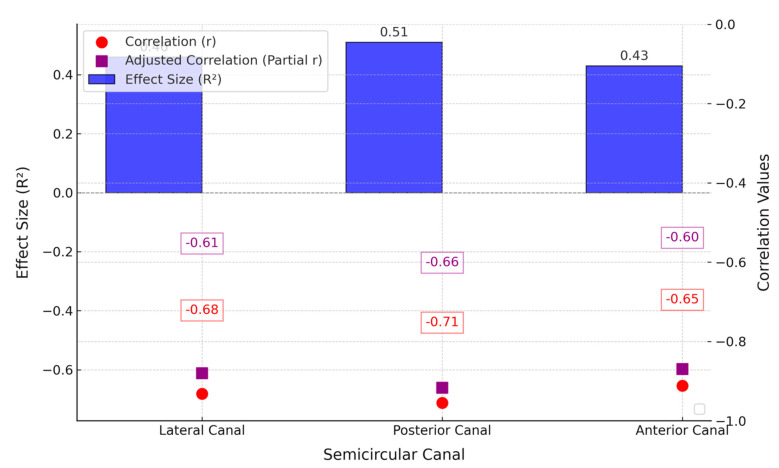
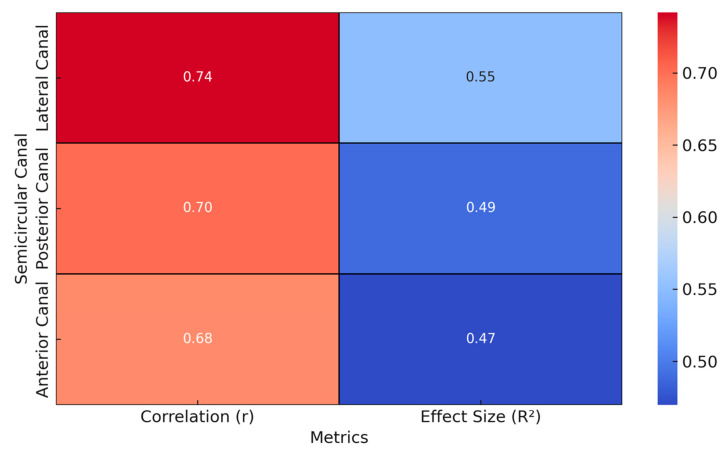
Results: The vHIT gains demonstrated significant positive correlations with postural stability, with the lateral canal showing the strongest association (r = 0.742, p = 0.001), followed by the posterior (r = 0.701, p = 0.003) and anterior canals (r = 0.684, p = 0.005). A multiple regression analysis identified the lateral canal as the most significant predictor of postural stability (β = 0.512, p = 0.001, adjusted R2 = 0.47). Quality-of-life metrics were inversely correlated with the vHIT gains, particularly in the posterior canal (r = -0.712, p = 0.002), which explained 43-51% of the variance.
Conclusions: This study highlighted the lateral semicircular canal as the primary determinant of postural stability in cochlear implant recipients, underscoring the importance of vestibular assessments in optimizing balance and functional outcomes.
Life-BaselBiochemistry, Genetics and Molecular Biology-General Biochemistry,Genetics and Molecular Biology
CiteScore
4.30
自引率
6.20%
发文量
1798
审稿时长
11 weeks
期刊介绍:
Life (ISSN 2075-1729) is an international, peer-reviewed open access journal of scientific studies related to fundamental themes in Life Sciences, especially those concerned with the origins of life and evolution of biosystems. Our aim is to encourage scientists to publish their experimental and theoretical results in as much detail as possible. There is no restriction on the length of the papers.





 京公网安备 11010802042870号
京ICP备2023020795号-1
京公网安备 11010802042870号
京ICP备2023020795号-1

 分享
分享
 求助内容:
求助内容: 应助结果提醒方式:
 扫码关注我们
