Izabela Silva Freitas, Aryane Maria de Oliveira Lima, Edson de Paiva Alves, Genes de Morais Souza, Luiz Antônio Magalhães Pontes
{"title":"通过综合生命周期评价生物乙醇、丙烯和绿色氨工艺生产乙腈的技术和环境可行性","authors":"Izabela Silva Freitas, Aryane Maria de Oliveira Lima, Edson de Paiva Alves, Genes de Morais Souza, Luiz Antônio Magalhães Pontes","doi":"10.1021/acssuschemeng.4c09745","DOIUrl":null,"url":null,"abstract":"Acetonitrile (ACN) is a valuable product, serving as a feedstock in the petrochemical, pharmaceutical, and fine chemical industries. This study analyzes the environmental footprint of ACN production employing a life cycle assessment. A comparative assessment was conducted between the fossil-based process and a novel bioethanol and green ammonia approach. The ReCiPe Midpoint method was applied, utilizing Ecoinvent database in SIMAPRO. Dates to evaluate environmental impacts of adding bioethanol were obtained by using a pilot-scale reactor operating parallel to the main reactor in a Brazilian industrial unit. The scenario using bioethanol, propene, and petrochemical ammonia exhibited a noteworthy compensation for 96 kg of CO<sub>2</sub>-equiv/t of ACN, when compared to scenario 1. Additionally, this scenario achieved a 14% reduction in fossil resource scarcity. The use of bioethanol and green ammonia can reduce environmental impacts by up to 5% in the six assessed categories. Specifically, while global warming potential and fossil resource scarcity have decreased, the introduction of bioethanol has increased human toxicity and ecotoxicity impacts in ACN production, primarily due to sugar cane cultivation. The study demonstrates that the proposed innovations offer a viable approach to mitigating the environmental effects of ACN production and maintaining process safety, also highlighting the increased impacts associated with bioethanol.","PeriodicalId":25,"journal":{"name":"ACS Sustainable Chemistry & Engineering","volume":"27 1","pages":""},"PeriodicalIF":7.3000,"publicationDate":"2025-03-28","publicationTypes":"Journal Article","fieldsOfStudy":null,"isOpenAccess":false,"openAccessPdf":"","citationCount":"0","resultStr":"{\"title\":\"Evaluation of the Technical and Environmental Viability of a Bioethanol, Propene, and Green Ammonia Process for Acetonitrile Production through a Comprehensive Life Cycle Assessment\",\"authors\":\"Izabela Silva Freitas, Aryane Maria de Oliveira Lima, Edson de Paiva Alves, Genes de Morais Souza, Luiz Antônio Magalhães Pontes\",\"doi\":\"10.1021/acssuschemeng.4c09745\",\"DOIUrl\":null,\"url\":null,\"abstract\":\"Acetonitrile (ACN) is a valuable product, serving as a feedstock in the petrochemical, pharmaceutical, and fine chemical industries. This study analyzes the environmental footprint of ACN production employing a life cycle assessment. A comparative assessment was conducted between the fossil-based process and a novel bioethanol and green ammonia approach. The ReCiPe Midpoint method was applied, utilizing Ecoinvent database in SIMAPRO. Dates to evaluate environmental impacts of adding bioethanol were obtained by using a pilot-scale reactor operating parallel to the main reactor in a Brazilian industrial unit. The scenario using bioethanol, propene, and petrochemical ammonia exhibited a noteworthy compensation for 96 kg of CO<sub>2</sub>-equiv/t of ACN, when compared to scenario 1. Additionally, this scenario achieved a 14% reduction in fossil resource scarcity. The use of bioethanol and green ammonia can reduce environmental impacts by up to 5% in the six assessed categories. Specifically, while global warming potential and fossil resource scarcity have decreased, the introduction of bioethanol has increased human toxicity and ecotoxicity impacts in ACN production, primarily due to sugar cane cultivation. The study demonstrates that the proposed innovations offer a viable approach to mitigating the environmental effects of ACN production and maintaining process safety, also highlighting the increased impacts associated with bioethanol.\",\"PeriodicalId\":25,\"journal\":{\"name\":\"ACS Sustainable Chemistry & Engineering\",\"volume\":\"27 1\",\"pages\":\"\"},\"PeriodicalIF\":7.3000,\"publicationDate\":\"2025-03-28\",\"publicationTypes\":\"Journal Article\",\"fieldsOfStudy\":null,\"isOpenAccess\":false,\"openAccessPdf\":\"\",\"citationCount\":\"0\",\"resultStr\":null,\"platform\":\"Semanticscholar\",\"paperid\":null,\"PeriodicalName\":\"ACS Sustainable Chemistry & Engineering\",\"FirstCategoryId\":\"92\",\"ListUrlMain\":\"https://doi.org/10.1021/acssuschemeng.4c09745\",\"RegionNum\":1,\"RegionCategory\":\"化学\",\"ArticlePicture\":[],\"TitleCN\":null,\"AbstractTextCN\":null,\"PMCID\":null,\"EPubDate\":\"\",\"PubModel\":\"\",\"JCR\":\"Q1\",\"JCRName\":\"CHEMISTRY, MULTIDISCIPLINARY\",\"Score\":null,\"Total\":0}","platform":"Semanticscholar","paperid":null,"PeriodicalName":"ACS Sustainable Chemistry & Engineering","FirstCategoryId":"92","ListUrlMain":"https://doi.org/10.1021/acssuschemeng.4c09745","RegionNum":1,"RegionCategory":"化学","ArticlePicture":[],"TitleCN":null,"AbstractTextCN":null,"PMCID":null,"EPubDate":"","PubModel":"","JCR":"Q1","JCRName":"CHEMISTRY, MULTIDISCIPLINARY","Score":null,"Total":0}
引用次数: 0
摘要
乙腈(ACN)是一种有价值的产品,是石油化工、制药和精细化工行业的原料。本研究采用生命周期评估方法分析了ACN生产的环境足迹。对化石燃料为基础的过程和一种新的生物乙醇和绿色氨方法进行了比较评估。采用ReCiPe Midpoint法,利用SIMAPRO中的Ecoinvent数据库。通过在巴西工业装置中使用与主反应器平行运行的中试反应器,获得了评估添加生物乙醇对环境影响的数据。与情景1相比,使用生物乙醇、丙烯和石化氨的情景对96 kg co2当量/t ACN有显著的补偿。此外,该方案还使化石资源稀缺性减少了14%。在六个被评估的类别中,使用生物乙醇和绿色氨可以减少高达5%的环境影响。具体来说,虽然全球变暖潜势和化石资源稀缺性已经降低,但生物乙醇的引入增加了ACN生产中的人类毒性和生态毒性影响,主要是由于甘蔗种植。该研究表明,拟议的创新提供了一种可行的方法来减轻ACN生产对环境的影响和维护过程安全,同时也突出了与生物乙醇相关的日益增加的影响。
Evaluation of the Technical and Environmental Viability of a Bioethanol, Propene, and Green Ammonia Process for Acetonitrile Production through a Comprehensive Life Cycle Assessment
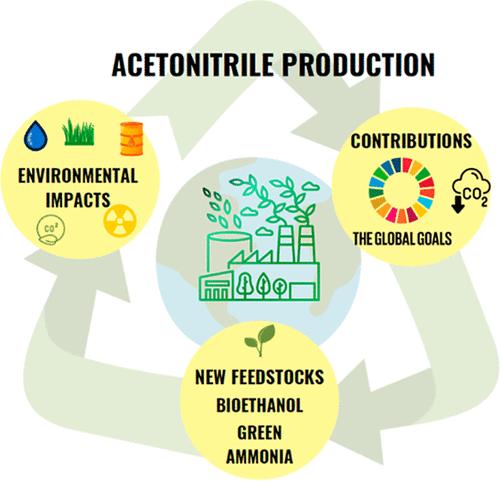
Acetonitrile (ACN) is a valuable product, serving as a feedstock in the petrochemical, pharmaceutical, and fine chemical industries. This study analyzes the environmental footprint of ACN production employing a life cycle assessment. A comparative assessment was conducted between the fossil-based process and a novel bioethanol and green ammonia approach. The ReCiPe Midpoint method was applied, utilizing Ecoinvent database in SIMAPRO. Dates to evaluate environmental impacts of adding bioethanol were obtained by using a pilot-scale reactor operating parallel to the main reactor in a Brazilian industrial unit. The scenario using bioethanol, propene, and petrochemical ammonia exhibited a noteworthy compensation for 96 kg of CO2-equiv/t of ACN, when compared to scenario 1. Additionally, this scenario achieved a 14% reduction in fossil resource scarcity. The use of bioethanol and green ammonia can reduce environmental impacts by up to 5% in the six assessed categories. Specifically, while global warming potential and fossil resource scarcity have decreased, the introduction of bioethanol has increased human toxicity and ecotoxicity impacts in ACN production, primarily due to sugar cane cultivation. The study demonstrates that the proposed innovations offer a viable approach to mitigating the environmental effects of ACN production and maintaining process safety, also highlighting the increased impacts associated with bioethanol.
期刊介绍:
ACS Sustainable Chemistry & Engineering is a prestigious weekly peer-reviewed scientific journal published by the American Chemical Society. Dedicated to advancing the principles of green chemistry and green engineering, it covers a wide array of research topics including green chemistry, green engineering, biomass, alternative energy, and life cycle assessment.
The journal welcomes submissions in various formats, including Letters, Articles, Features, and Perspectives (Reviews), that address the challenges of sustainability in the chemical enterprise and contribute to the advancement of sustainable practices. Join us in shaping the future of sustainable chemistry and engineering.




 京公网安备 11010802042870号
京ICP备2023020795号-1
京公网安备 11010802042870号
京ICP备2023020795号-1

 分享
分享
 求助内容:
求助内容: 应助结果提醒方式:
 扫码关注我们
