Valtteri Oksanen, Kiia Malinen, Tao Hu, Alexander Reznichenko, Tom Wirtanen
{"title":"tempo介导的高电流密度甲醛和甲醇成对电合成乙二醇的研究。","authors":"Valtteri Oksanen, Kiia Malinen, Tao Hu, Alexander Reznichenko, Tom Wirtanen","doi":"10.1002/cssc.202500123","DOIUrl":null,"url":null,"abstract":"<p>Herein, a paired electrosynthesis of ethylene glycol from formaldehyde and methanol facilitated by TEMPO is reported. The use of TEMPO accentuates formaldehyde production at the anode, providing additional formaldehyde into the cathodic coupling process. The reaction is performed in water/methanol solution in a simple undivided cell using sulfuric acid-treated graphite electrodes with industrially feasible current densities between 300 and 350 mA cm<sup>−2</sup>. Other components of the reaction are sodium chloride which is used as a supporting electrolyte and tributylmethylammonium chloride which raises the current efficiency. With a slight modification in the reaction temperature and current density, the outcome can be tuned from high current efficiency toward higher chemical yields. The conditions of the batch reaction are successfully transferred to a continuous flow-cell arrangement. Mechanistic studies indicate the involvement of hydroxymethyl radicals in the electrolysis, and deuterium-labeling experiments show the partial conversion of methanol into formaldehyde and ethylene glycol.</p>","PeriodicalId":149,"journal":{"name":"ChemSusChem","volume":"18 12","pages":""},"PeriodicalIF":6.6000,"publicationDate":"2025-03-28","publicationTypes":"Journal Article","fieldsOfStudy":null,"isOpenAccess":false,"openAccessPdf":"https://onlinelibrary.wiley.com/doi/epdf/10.1002/cssc.202500123","citationCount":"0","resultStr":"{\"title\":\"TEMPO-Mediated Paired Electrosynthesis of Ethylene Glycol from Formaldehyde and Methanol at High Current Densities\",\"authors\":\"Valtteri Oksanen, Kiia Malinen, Tao Hu, Alexander Reznichenko, Tom Wirtanen\",\"doi\":\"10.1002/cssc.202500123\",\"DOIUrl\":null,\"url\":null,\"abstract\":\"<p>Herein, a paired electrosynthesis of ethylene glycol from formaldehyde and methanol facilitated by TEMPO is reported. The use of TEMPO accentuates formaldehyde production at the anode, providing additional formaldehyde into the cathodic coupling process. The reaction is performed in water/methanol solution in a simple undivided cell using sulfuric acid-treated graphite electrodes with industrially feasible current densities between 300 and 350 mA cm<sup>−2</sup>. Other components of the reaction are sodium chloride which is used as a supporting electrolyte and tributylmethylammonium chloride which raises the current efficiency. With a slight modification in the reaction temperature and current density, the outcome can be tuned from high current efficiency toward higher chemical yields. The conditions of the batch reaction are successfully transferred to a continuous flow-cell arrangement. Mechanistic studies indicate the involvement of hydroxymethyl radicals in the electrolysis, and deuterium-labeling experiments show the partial conversion of methanol into formaldehyde and ethylene glycol.</p>\",\"PeriodicalId\":149,\"journal\":{\"name\":\"ChemSusChem\",\"volume\":\"18 12\",\"pages\":\"\"},\"PeriodicalIF\":6.6000,\"publicationDate\":\"2025-03-28\",\"publicationTypes\":\"Journal Article\",\"fieldsOfStudy\":null,\"isOpenAccess\":false,\"openAccessPdf\":\"https://onlinelibrary.wiley.com/doi/epdf/10.1002/cssc.202500123\",\"citationCount\":\"0\",\"resultStr\":null,\"platform\":\"Semanticscholar\",\"paperid\":null,\"PeriodicalName\":\"ChemSusChem\",\"FirstCategoryId\":\"92\",\"ListUrlMain\":\"https://chemistry-europe.onlinelibrary.wiley.com/doi/10.1002/cssc.202500123\",\"RegionNum\":2,\"RegionCategory\":\"化学\",\"ArticlePicture\":[],\"TitleCN\":null,\"AbstractTextCN\":null,\"PMCID\":null,\"EPubDate\":\"\",\"PubModel\":\"\",\"JCR\":\"Q1\",\"JCRName\":\"CHEMISTRY, MULTIDISCIPLINARY\",\"Score\":null,\"Total\":0}","platform":"Semanticscholar","paperid":null,"PeriodicalName":"ChemSusChem","FirstCategoryId":"92","ListUrlMain":"https://chemistry-europe.onlinelibrary.wiley.com/doi/10.1002/cssc.202500123","RegionNum":2,"RegionCategory":"化学","ArticlePicture":[],"TitleCN":null,"AbstractTextCN":null,"PMCID":null,"EPubDate":"","PubModel":"","JCR":"Q1","JCRName":"CHEMISTRY, MULTIDISCIPLINARY","Score":null,"Total":0}
引用次数: 0
摘要
在此,我们报道了一种由TEMPO促进的甲醛和甲醇成对电合成乙二醇的方法。TEMPO的使用增加了阳极的甲醛生成,为阴极的酚醛偶联提供了额外的甲醛。反应在水/甲醇溶液中进行,在一个简单的未分裂电池中使用硫酸处理的石墨电极,工业上可行的电流密度在300至350 mA cm-2之间。该反应的其他组分是用作支撑电解质的氯化钠和提高电流效率的三甲基氯化铵。只要稍微调整一下反应温度和电流密度,结果就可以从高电流效率转向更高的化学收率。间歇式反应的条件被成功地转移到一个连续的流动池布置。机理研究表明,羟甲基自由基参与了电解过程。
TEMPO-Mediated Paired Electrosynthesis of Ethylene Glycol from Formaldehyde and Methanol at High Current Densities
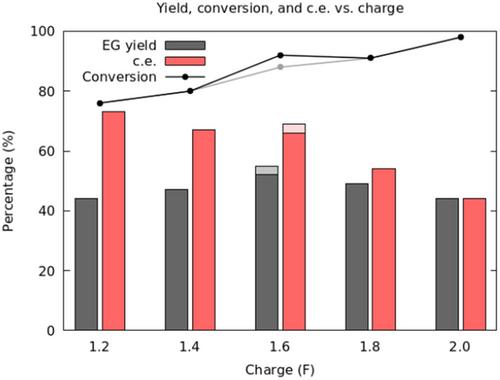
Herein, a paired electrosynthesis of ethylene glycol from formaldehyde and methanol facilitated by TEMPO is reported. The use of TEMPO accentuates formaldehyde production at the anode, providing additional formaldehyde into the cathodic coupling process. The reaction is performed in water/methanol solution in a simple undivided cell using sulfuric acid-treated graphite electrodes with industrially feasible current densities between 300 and 350 mA cm−2. Other components of the reaction are sodium chloride which is used as a supporting electrolyte and tributylmethylammonium chloride which raises the current efficiency. With a slight modification in the reaction temperature and current density, the outcome can be tuned from high current efficiency toward higher chemical yields. The conditions of the batch reaction are successfully transferred to a continuous flow-cell arrangement. Mechanistic studies indicate the involvement of hydroxymethyl radicals in the electrolysis, and deuterium-labeling experiments show the partial conversion of methanol into formaldehyde and ethylene glycol.
期刊介绍:
ChemSusChem
Impact Factor (2016): 7.226
Scope:
Interdisciplinary journal
Focuses on research at the interface of chemistry and sustainability
Features the best research on sustainability and energy
Areas Covered:
Chemistry
Materials Science
Chemical Engineering
Biotechnology





 京公网安备 11010802042870号
京ICP备2023020795号-1
京公网安备 11010802042870号
京ICP备2023020795号-1

 分享
分享
 求助内容:
求助内容: 应助结果提醒方式:
 扫码关注我们
