Natalie Nguyen, Michael C Marinier, Bryan Mouser, Victoria C Tappa, Marshall Rupe, Jacob M Elkins
{"title":"相位角和细胞外水肿预测全关节置换术术后并发症的风险。","authors":"Natalie Nguyen, Michael C Marinier, Bryan Mouser, Victoria C Tappa, Marshall Rupe, Jacob M Elkins","doi":"10.2478/joeb-2025-0005","DOIUrl":null,"url":null,"abstract":"<p><strong>Intro: </strong>Total knee arthroplasty (TKA) and total hip arthroplasty (THA) are common procedures that improve mobility but carry a risk of postoperative complications, particularly in patients with obesity. Body Mass Index (BMI) is traditionally used for risk assessment but does not account for muscle mass or fat distribution. Bioelectrical impedance analysis (BIA) provides a more detailed body composition evaluation. This study investigates the association between BIA-derived metrics and postoperative complications in TKA and THA, hypothesizing that these metrics are superior predictors compared to BMI.</p><p><strong>Methods: </strong>A retrospective cohort study was performed on 567 adult patients who underwent primary THA or TKA from January 2020 to December 2023. The data collected included demographic characteristics, comorbidities, preoperative laboratory values, preoperative BIA measurements and postoperative complications. Multivariate logistic regression models were developed to identify independent predictors of postoperative complications. Receiver operating characteristic (ROC) curves assessed the predictive accuracy of BIA-metrics models compared to BMI model.</p><p><strong>Results: </strong>In a cohort of 567 patients (55.7% female, median age 66), no significant difference in BMI was found between the complication and non-complication groups. However, the complication group had a higher ECW/TBW ratio (0.396 vs. 0.393, p = 0.011), higher ECW/ICW ratio (0.657 vs. 0.647, p = 0.012), and a lower phase angle (4.65 vs. 4.80, p = 0.039). Multivariate logistic regression analysis revealed that higher standardized ECW/TBW (OR 1.65, 95% CI 1.17-2.31, p = 0.004) and ECW/ICW z-scores (OR 1.61, 95% CI 1.15-2.23, p = 0.005) were associated with increased odds of postoperative complications, while a lower phase angle was protective (OR 0.58, 95% CI 0.37-0.91, p = 0.018). ROC analysis showed moderate predictive accuracy for ECW/TBW (AUC 0.71, 95% CI 0.62-0.79), ECW/ICW (AUC 0.70, 95% CI 0.62-0.79), and phase angle (AUC 0.69, 95% CI 0.60-0.79). In contrast, BMI was not significantly associated with complications, and BMI model demonstrated inferior predictive accuracy (AUC 0.61).</p><p><strong>Conclusion: </strong>ECW/TBW, ECW/ICW and phase angle are associated with postoperative complications in patients undergoing primary TKA or THA. These metrics provide better predictive accuracy than BMI enhancing preoperative risk stratification.</p>","PeriodicalId":38125,"journal":{"name":"Journal of Electrical Bioimpedance","volume":"16 1","pages":"35-42"},"PeriodicalIF":0.0000,"publicationDate":"2025-03-25","publicationTypes":"Journal Article","fieldsOfStudy":null,"isOpenAccess":false,"openAccessPdf":"https://www.ncbi.nlm.nih.gov/pmc/articles/PMC11945341/pdf/","citationCount":"0","resultStr":"{\"title\":\"Phase angle and extracellular edema predict risk of postoperative complications in total joint arthroplasties.\",\"authors\":\"Natalie Nguyen, Michael C Marinier, Bryan Mouser, Victoria C Tappa, Marshall Rupe, Jacob M Elkins\",\"doi\":\"10.2478/joeb-2025-0005\",\"DOIUrl\":null,\"url\":null,\"abstract\":\"<p><strong>Intro: </strong>Total knee arthroplasty (TKA) and total hip arthroplasty (THA) are common procedures that improve mobility but carry a risk of postoperative complications, particularly in patients with obesity. Body Mass Index (BMI) is traditionally used for risk assessment but does not account for muscle mass or fat distribution. Bioelectrical impedance analysis (BIA) provides a more detailed body composition evaluation. This study investigates the association between BIA-derived metrics and postoperative complications in TKA and THA, hypothesizing that these metrics are superior predictors compared to BMI.</p><p><strong>Methods: </strong>A retrospective cohort study was performed on 567 adult patients who underwent primary THA or TKA from January 2020 to December 2023. The data collected included demographic characteristics, comorbidities, preoperative laboratory values, preoperative BIA measurements and postoperative complications. Multivariate logistic regression models were developed to identify independent predictors of postoperative complications. Receiver operating characteristic (ROC) curves assessed the predictive accuracy of BIA-metrics models compared to BMI model.</p><p><strong>Results: </strong>In a cohort of 567 patients (55.7% female, median age 66), no significant difference in BMI was found between the complication and non-complication groups. However, the complication group had a higher ECW/TBW ratio (0.396 vs. 0.393, p = 0.011), higher ECW/ICW ratio (0.657 vs. 0.647, p = 0.012), and a lower phase angle (4.65 vs. 4.80, p = 0.039). Multivariate logistic regression analysis revealed that higher standardized ECW/TBW (OR 1.65, 95% CI 1.17-2.31, p = 0.004) and ECW/ICW z-scores (OR 1.61, 95% CI 1.15-2.23, p = 0.005) were associated with increased odds of postoperative complications, while a lower phase angle was protective (OR 0.58, 95% CI 0.37-0.91, p = 0.018). ROC analysis showed moderate predictive accuracy for ECW/TBW (AUC 0.71, 95% CI 0.62-0.79), ECW/ICW (AUC 0.70, 95% CI 0.62-0.79), and phase angle (AUC 0.69, 95% CI 0.60-0.79). In contrast, BMI was not significantly associated with complications, and BMI model demonstrated inferior predictive accuracy (AUC 0.61).</p><p><strong>Conclusion: </strong>ECW/TBW, ECW/ICW and phase angle are associated with postoperative complications in patients undergoing primary TKA or THA. These metrics provide better predictive accuracy than BMI enhancing preoperative risk stratification.</p>\",\"PeriodicalId\":38125,\"journal\":{\"name\":\"Journal of Electrical Bioimpedance\",\"volume\":\"16 1\",\"pages\":\"35-42\"},\"PeriodicalIF\":0.0000,\"publicationDate\":\"2025-03-25\",\"publicationTypes\":\"Journal Article\",\"fieldsOfStudy\":null,\"isOpenAccess\":false,\"openAccessPdf\":\"https://www.ncbi.nlm.nih.gov/pmc/articles/PMC11945341/pdf/\",\"citationCount\":\"0\",\"resultStr\":null,\"platform\":\"Semanticscholar\",\"paperid\":null,\"PeriodicalName\":\"Journal of Electrical Bioimpedance\",\"FirstCategoryId\":\"1085\",\"ListUrlMain\":\"https://doi.org/10.2478/joeb-2025-0005\",\"RegionNum\":0,\"RegionCategory\":null,\"ArticlePicture\":[],\"TitleCN\":null,\"AbstractTextCN\":null,\"PMCID\":null,\"EPubDate\":\"2025/1/1 0:00:00\",\"PubModel\":\"eCollection\",\"JCR\":\"Q3\",\"JCRName\":\"Biochemistry, Genetics and Molecular Biology\",\"Score\":null,\"Total\":0}","platform":"Semanticscholar","paperid":null,"PeriodicalName":"Journal of Electrical Bioimpedance","FirstCategoryId":"1085","ListUrlMain":"https://doi.org/10.2478/joeb-2025-0005","RegionNum":0,"RegionCategory":null,"ArticlePicture":[],"TitleCN":null,"AbstractTextCN":null,"PMCID":null,"EPubDate":"2025/1/1 0:00:00","PubModel":"eCollection","JCR":"Q3","JCRName":"Biochemistry, Genetics and Molecular Biology","Score":null,"Total":0}
引用次数: 0
摘要
简介:全膝关节置换术(TKA)和全髋关节置换术(THA)是一种常见的手术,可以改善活动能力,但有术后并发症的风险,尤其是肥胖患者。身体质量指数(BMI)传统上用于风险评估,但不考虑肌肉质量或脂肪分布。生物电阻抗分析(BIA)提供了更详细的身体成分评估。本研究调查了全髋关节置换术和全髋关节置换术中bia衍生指标与术后并发症之间的关系,假设这些指标与BMI相比是更好的预测指标。方法:对2020年1月至2023年12月期间接受原发性THA或TKA的567名成年患者进行回顾性队列研究。收集的数据包括人口统计学特征、合并症、术前实验室值、术前BIA测量和术后并发症。建立多变量logistic回归模型以确定术后并发症的独立预测因素。受试者工作特征(ROC)曲线评估BIA-metrics模型与BMI模型的预测准确性。结果:在567例患者(55.7%为女性,中位年龄66岁)的队列中,并发症组和非并发症组的BMI无显著差异。并发症组ECW/TBW比值较高(0.396比0.393,p = 0.011), ECW/ICW比值较高(0.657比0.647,p = 0.012),相位角较低(4.65比4.80,p = 0.039)。多因素logistic回归分析显示,较高的标准化ECW/TBW (OR 1.65, 95% CI 1.17-2.31, p = 0.004)和ECW/ICW z-评分(OR 1.61, 95% CI 1.15-2.23, p = 0.005)与术后并发症的发生率增加相关,而较低的相位角具有保护作用(OR 0.58, 95% CI 0.37-0.91, p = 0.018)。ROC分析显示ECW/TBW (AUC 0.71, 95% CI 0.62-0.79)、ECW/ICW (AUC 0.70, 95% CI 0.62-0.79)和相位角(AUC 0.69, 95% CI 0.60-0.79)的预测准确度中等。相比之下,BMI与并发症无显著相关性,BMI模型的预测准确性较低(AUC 0.61)。结论:ECW/TBW、ECW/ICW和相位角与原发性全髋关节置换术或全髋关节置换术患者术后并发症相关。这些指标提供了比BMI更好的预测准确性,增强了术前风险分层。
Phase angle and extracellular edema predict risk of postoperative complications in total joint arthroplasties.
Intro: Total knee arthroplasty (TKA) and total hip arthroplasty (THA) are common procedures that improve mobility but carry a risk of postoperative complications, particularly in patients with obesity. Body Mass Index (BMI) is traditionally used for risk assessment but does not account for muscle mass or fat distribution. Bioelectrical impedance analysis (BIA) provides a more detailed body composition evaluation. This study investigates the association between BIA-derived metrics and postoperative complications in TKA and THA, hypothesizing that these metrics are superior predictors compared to BMI.
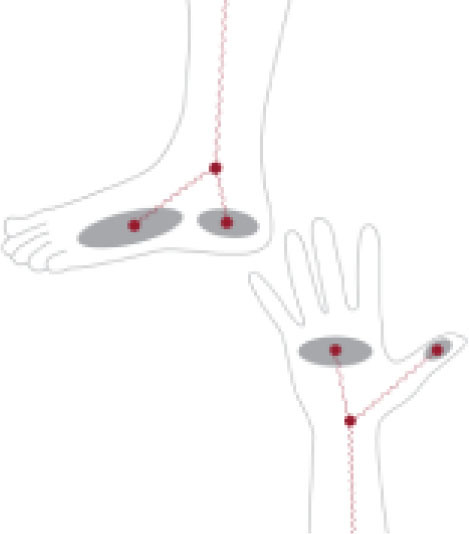
Methods: A retrospective cohort study was performed on 567 adult patients who underwent primary THA or TKA from January 2020 to December 2023. The data collected included demographic characteristics, comorbidities, preoperative laboratory values, preoperative BIA measurements and postoperative complications. Multivariate logistic regression models were developed to identify independent predictors of postoperative complications. Receiver operating characteristic (ROC) curves assessed the predictive accuracy of BIA-metrics models compared to BMI model.
Results: In a cohort of 567 patients (55.7% female, median age 66), no significant difference in BMI was found between the complication and non-complication groups. However, the complication group had a higher ECW/TBW ratio (0.396 vs. 0.393, p = 0.011), higher ECW/ICW ratio (0.657 vs. 0.647, p = 0.012), and a lower phase angle (4.65 vs. 4.80, p = 0.039). Multivariate logistic regression analysis revealed that higher standardized ECW/TBW (OR 1.65, 95% CI 1.17-2.31, p = 0.004) and ECW/ICW z-scores (OR 1.61, 95% CI 1.15-2.23, p = 0.005) were associated with increased odds of postoperative complications, while a lower phase angle was protective (OR 0.58, 95% CI 0.37-0.91, p = 0.018). ROC analysis showed moderate predictive accuracy for ECW/TBW (AUC 0.71, 95% CI 0.62-0.79), ECW/ICW (AUC 0.70, 95% CI 0.62-0.79), and phase angle (AUC 0.69, 95% CI 0.60-0.79). In contrast, BMI was not significantly associated with complications, and BMI model demonstrated inferior predictive accuracy (AUC 0.61).
Conclusion: ECW/TBW, ECW/ICW and phase angle are associated with postoperative complications in patients undergoing primary TKA or THA. These metrics provide better predictive accuracy than BMI enhancing preoperative risk stratification.





 京公网安备 11010802042870号
京ICP备2023020795号-1
京公网安备 11010802042870号
京ICP备2023020795号-1

 分享
分享
 求助内容:
求助内容: 应助结果提醒方式:
 扫码关注我们
