{"title":"肥胖对上皮性卵巢癌手术并发症和术后预后的影响:一项荟萃分析。","authors":"Jingjing Sheng, Chu Li, Jiali Zhang, Zujian Jin, Yun Xiao Zhou, Yiping Huang","doi":"10.1186/s12893-025-02770-7","DOIUrl":null,"url":null,"abstract":"<p><strong>Objective: </strong>To comprehensively evaluate and compare surgical outcomes of obese patients versus non-obese patients for surgical complications and postoperative prognosis due to epithelial ovarian cancer (EOC).</p><p><strong>Methods: </strong>Studies were obtained from database search systems of Medline (PubMed) and Embase. Data were analyzed by the meta-analysis method and the random-effect or fixed-effect model. The heterogeneity between the studies was evaluated by I2 index and the data were analyzed using STATA version 15.1 and Review Manager version 5.4.</p><p><strong>Results: </strong>14 studies with 4858 cases of proven epithelial ovarian cancer who underwent extensive surgery were included. Obesity may be a risk factor of the low surgical complex score (RR1.08, 95% CI 1.01-1.15, p = 0.05), but had no manifesting difference in the surgical complications score compared non-obesity group (RR 0.50, 95% CI 0.07-3.79, p = 0.501 and RR 0.60, 95% CI 0.22-1.63, p = 0.316). Obesity EOC patients who undergone surgery tended to be correlated with surgical complications, such as wound infection (RR 2.71, 95% CI 1.59-4.61, p = 0.000), intestinal complications (RR 2.09, 95% CI 1.00-4.35, p = 0.000), and 30-readmission rate (RR 1.84, 95% CI 1.16-2.93, p = 0.000). Obese patients were more likely to have shorter prognosis free survival (PFS) (SMD 0.62-year, 95% CI-0.13 to 0.15), but the results did not discover a significant difference in overall survival (OS)between obesity and non-obesity. (SMD 0.01-year, 95% CI-0.13 to 0.15) CONCLUSIONS: Obesity affects the difficulty of ovarian cancer surgery, and a negative relationship between obesity and surgical complications is observed. Obesity is a potential risk factor for prognosis of EOC patients. Attention is played on determining what kind of case should be benefit most from this surgery to minimize the rates of operative complications and postoperative mortality.</p><p><strong>Prospero registration number: </strong>CRD 42,023,434,781.</p>","PeriodicalId":49229,"journal":{"name":"BMC Surgery","volume":"25 1","pages":"119"},"PeriodicalIF":1.8000,"publicationDate":"2025-03-27","publicationTypes":"Journal Article","fieldsOfStudy":null,"isOpenAccess":false,"openAccessPdf":"https://www.ncbi.nlm.nih.gov/pmc/articles/PMC11948763/pdf/","citationCount":"0","resultStr":"{\"title\":\"The effects of obesity on surgical complications and postoperative prognosis of epithelial ovarian cancer: a meta-analysis.\",\"authors\":\"Jingjing Sheng, Chu Li, Jiali Zhang, Zujian Jin, Yun Xiao Zhou, Yiping Huang\",\"doi\":\"10.1186/s12893-025-02770-7\",\"DOIUrl\":null,\"url\":null,\"abstract\":\"<p><strong>Objective: </strong>To comprehensively evaluate and compare surgical outcomes of obese patients versus non-obese patients for surgical complications and postoperative prognosis due to epithelial ovarian cancer (EOC).</p><p><strong>Methods: </strong>Studies were obtained from database search systems of Medline (PubMed) and Embase. Data were analyzed by the meta-analysis method and the random-effect or fixed-effect model. The heterogeneity between the studies was evaluated by I2 index and the data were analyzed using STATA version 15.1 and Review Manager version 5.4.</p><p><strong>Results: </strong>14 studies with 4858 cases of proven epithelial ovarian cancer who underwent extensive surgery were included. Obesity may be a risk factor of the low surgical complex score (RR1.08, 95% CI 1.01-1.15, p = 0.05), but had no manifesting difference in the surgical complications score compared non-obesity group (RR 0.50, 95% CI 0.07-3.79, p = 0.501 and RR 0.60, 95% CI 0.22-1.63, p = 0.316). Obesity EOC patients who undergone surgery tended to be correlated with surgical complications, such as wound infection (RR 2.71, 95% CI 1.59-4.61, p = 0.000), intestinal complications (RR 2.09, 95% CI 1.00-4.35, p = 0.000), and 30-readmission rate (RR 1.84, 95% CI 1.16-2.93, p = 0.000). Obese patients were more likely to have shorter prognosis free survival (PFS) (SMD 0.62-year, 95% CI-0.13 to 0.15), but the results did not discover a significant difference in overall survival (OS)between obesity and non-obesity. (SMD 0.01-year, 95% CI-0.13 to 0.15) CONCLUSIONS: Obesity affects the difficulty of ovarian cancer surgery, and a negative relationship between obesity and surgical complications is observed. Obesity is a potential risk factor for prognosis of EOC patients. Attention is played on determining what kind of case should be benefit most from this surgery to minimize the rates of operative complications and postoperative mortality.</p><p><strong>Prospero registration number: </strong>CRD 42,023,434,781.</p>\",\"PeriodicalId\":49229,\"journal\":{\"name\":\"BMC Surgery\",\"volume\":\"25 1\",\"pages\":\"119\"},\"PeriodicalIF\":1.8000,\"publicationDate\":\"2025-03-27\",\"publicationTypes\":\"Journal Article\",\"fieldsOfStudy\":null,\"isOpenAccess\":false,\"openAccessPdf\":\"https://www.ncbi.nlm.nih.gov/pmc/articles/PMC11948763/pdf/\",\"citationCount\":\"0\",\"resultStr\":null,\"platform\":\"Semanticscholar\",\"paperid\":null,\"PeriodicalName\":\"BMC Surgery\",\"FirstCategoryId\":\"3\",\"ListUrlMain\":\"https://doi.org/10.1186/s12893-025-02770-7\",\"RegionNum\":3,\"RegionCategory\":\"医学\",\"ArticlePicture\":[],\"TitleCN\":null,\"AbstractTextCN\":null,\"PMCID\":null,\"EPubDate\":\"\",\"PubModel\":\"\",\"JCR\":\"Q2\",\"JCRName\":\"SURGERY\",\"Score\":null,\"Total\":0}","platform":"Semanticscholar","paperid":null,"PeriodicalName":"BMC Surgery","FirstCategoryId":"3","ListUrlMain":"https://doi.org/10.1186/s12893-025-02770-7","RegionNum":3,"RegionCategory":"医学","ArticlePicture":[],"TitleCN":null,"AbstractTextCN":null,"PMCID":null,"EPubDate":"","PubModel":"","JCR":"Q2","JCRName":"SURGERY","Score":null,"Total":0}
引用次数: 0
摘要
目的:综合评价和比较肥胖患者与非肥胖患者因上皮性卵巢癌(EOC)引起的手术并发症和术后预后。方法:从Medline (PubMed)和Embase数据库检索系统中获取研究。数据采用meta分析方法和随机效应或固定效应模型进行分析。采用I2指数评价研究间的异质性,使用STATA 15.1版本和Review Manager 5.4版本对数据进行分析。结果:14项研究纳入了4858例经过广泛手术证实的上皮性卵巢癌。肥胖可能是手术并发症评分低的危险因素(RR1.08, 95% CI 1.01 ~ 1.15, p = 0.05),但手术并发症评分与非肥胖组比较无明显差异(RR 0.50, 95% CI 0.07 ~ 3.79, p = 0.501; RR 0.60, 95% CI 0.22 ~ 1.63, p = 0.316)。接受手术的肥胖EOC患者往往与手术并发症相关,如伤口感染(RR 2.71, 95% CI 1.59 ~ 4.61, p = 0.000)、肠道并发症(RR 2.09, 95% CI 1.00 ~ 4.35, p = 0.000)、30次再入院率(RR 1.84, 95% CI 1.16 ~ 2.93, p = 0.000)。肥胖患者的无预后生存期(PFS)更短(SMD为0.62年,95% ci为0.13 ~ 0.15),但肥胖与非肥胖患者的总生存期(OS)无显著差异。(SMD 0.01年,95% CI-0.13 ~ 0.15)结论:肥胖影响卵巢癌手术难度,肥胖与手术并发症呈负相关。肥胖是影响EOC患者预后的潜在危险因素。重点是确定哪种病例应该从手术中获益最多,以尽量减少手术并发症和术后死亡率。普洛斯彼罗注册号:CRD 42,023,434,781。
The effects of obesity on surgical complications and postoperative prognosis of epithelial ovarian cancer: a meta-analysis.
Objective: To comprehensively evaluate and compare surgical outcomes of obese patients versus non-obese patients for surgical complications and postoperative prognosis due to epithelial ovarian cancer (EOC).
Methods: Studies were obtained from database search systems of Medline (PubMed) and Embase. Data were analyzed by the meta-analysis method and the random-effect or fixed-effect model. The heterogeneity between the studies was evaluated by I2 index and the data were analyzed using STATA version 15.1 and Review Manager version 5.4.
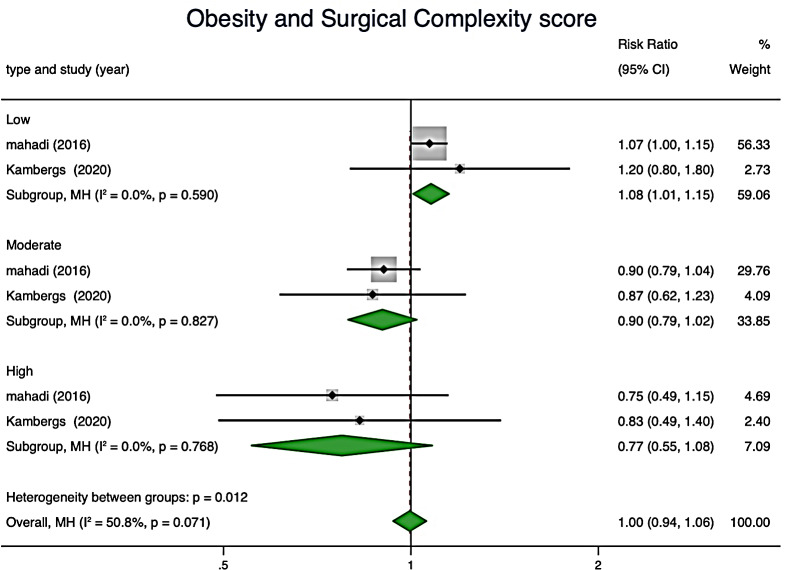
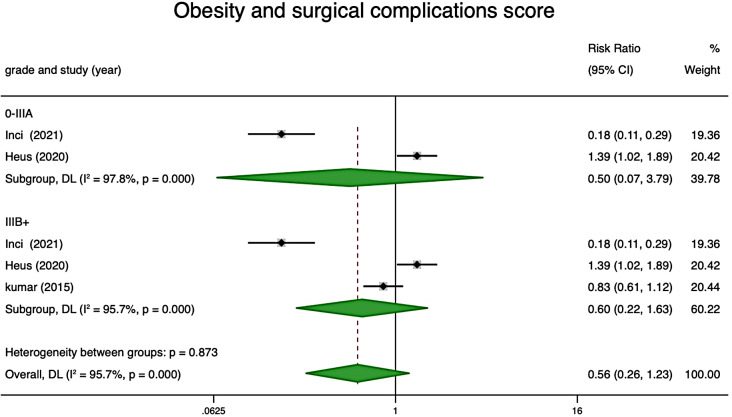
Results: 14 studies with 4858 cases of proven epithelial ovarian cancer who underwent extensive surgery were included. Obesity may be a risk factor of the low surgical complex score (RR1.08, 95% CI 1.01-1.15, p = 0.05), but had no manifesting difference in the surgical complications score compared non-obesity group (RR 0.50, 95% CI 0.07-3.79, p = 0.501 and RR 0.60, 95% CI 0.22-1.63, p = 0.316). Obesity EOC patients who undergone surgery tended to be correlated with surgical complications, such as wound infection (RR 2.71, 95% CI 1.59-4.61, p = 0.000), intestinal complications (RR 2.09, 95% CI 1.00-4.35, p = 0.000), and 30-readmission rate (RR 1.84, 95% CI 1.16-2.93, p = 0.000). Obese patients were more likely to have shorter prognosis free survival (PFS) (SMD 0.62-year, 95% CI-0.13 to 0.15), but the results did not discover a significant difference in overall survival (OS)between obesity and non-obesity. (SMD 0.01-year, 95% CI-0.13 to 0.15) CONCLUSIONS: Obesity affects the difficulty of ovarian cancer surgery, and a negative relationship between obesity and surgical complications is observed. Obesity is a potential risk factor for prognosis of EOC patients. Attention is played on determining what kind of case should be benefit most from this surgery to minimize the rates of operative complications and postoperative mortality.





 京公网安备 11010802042870号
京ICP备2023020795号-1
京公网安备 11010802042870号
京ICP备2023020795号-1

 分享
分享
 求助内容:
求助内容: 应助结果提醒方式:
 扫码关注我们
