Michael J. Watson , Charlie C. Mundorff , Eric M. Lynch , Justin M. Kollman , John F. Kearney , Miklos Guttman
{"title":"互补-主动IgM的特征定义。","authors":"Michael J. Watson , Charlie C. Mundorff , Eric M. Lynch , Justin M. Kollman , John F. Kearney , Miklos Guttman","doi":"10.1016/j.jmb.2025.169104","DOIUrl":null,"url":null,"abstract":"<div><div>Immunoglobulin M (IgM) is a class of mammalian antibody that is critical for the early stages of adaptive immunity, and is the most potent Ig-activator of the classical complement cascade. While the relationship between IgM and complement has been appreciated for decades, the structural transitions within IgM upon antigen binding that promote the activation of complement component C1 remain unresolved. Here we examine <em>in vitro</em> complement activation, C1 binding kinetics, and conformational changes within IgM in different antigen-bound states. Binding studies using biolayer interferometry revealed that only in a multivalent complex with a surface-displayed antigen was IgM fully capable of initiating complement activation. Hydrogen/Deuterium exchange with mass spectrometry revealed the predominant structural changes within the Fc domains during transition to the active conformation. Collectively, this work establishes key structural and functional qualities that define the complement-active form of IgM.</div></div>","PeriodicalId":369,"journal":{"name":"Journal of Molecular Biology","volume":"437 12","pages":"Article 169104"},"PeriodicalIF":4.7000,"publicationDate":"2025-06-15","publicationTypes":"Journal Article","fieldsOfStudy":null,"isOpenAccess":false,"openAccessPdf":"","citationCount":"0","resultStr":"{\"title\":\"Defining the Features of Complement-Active IgM\",\"authors\":\"Michael J. Watson , Charlie C. Mundorff , Eric M. Lynch , Justin M. Kollman , John F. Kearney , Miklos Guttman\",\"doi\":\"10.1016/j.jmb.2025.169104\",\"DOIUrl\":null,\"url\":null,\"abstract\":\"<div><div>Immunoglobulin M (IgM) is a class of mammalian antibody that is critical for the early stages of adaptive immunity, and is the most potent Ig-activator of the classical complement cascade. While the relationship between IgM and complement has been appreciated for decades, the structural transitions within IgM upon antigen binding that promote the activation of complement component C1 remain unresolved. Here we examine <em>in vitro</em> complement activation, C1 binding kinetics, and conformational changes within IgM in different antigen-bound states. Binding studies using biolayer interferometry revealed that only in a multivalent complex with a surface-displayed antigen was IgM fully capable of initiating complement activation. Hydrogen/Deuterium exchange with mass spectrometry revealed the predominant structural changes within the Fc domains during transition to the active conformation. Collectively, this work establishes key structural and functional qualities that define the complement-active form of IgM.</div></div>\",\"PeriodicalId\":369,\"journal\":{\"name\":\"Journal of Molecular Biology\",\"volume\":\"437 12\",\"pages\":\"Article 169104\"},\"PeriodicalIF\":4.7000,\"publicationDate\":\"2025-06-15\",\"publicationTypes\":\"Journal Article\",\"fieldsOfStudy\":null,\"isOpenAccess\":false,\"openAccessPdf\":\"\",\"citationCount\":\"0\",\"resultStr\":null,\"platform\":\"Semanticscholar\",\"paperid\":null,\"PeriodicalName\":\"Journal of Molecular Biology\",\"FirstCategoryId\":\"99\",\"ListUrlMain\":\"https://www.sciencedirect.com/science/article/pii/S0022283625001706\",\"RegionNum\":2,\"RegionCategory\":\"生物学\",\"ArticlePicture\":[],\"TitleCN\":null,\"AbstractTextCN\":null,\"PMCID\":null,\"EPubDate\":\"2025/3/26 0:00:00\",\"PubModel\":\"Epub\",\"JCR\":\"Q1\",\"JCRName\":\"BIOCHEMISTRY & MOLECULAR BIOLOGY\",\"Score\":null,\"Total\":0}","platform":"Semanticscholar","paperid":null,"PeriodicalName":"Journal of Molecular Biology","FirstCategoryId":"99","ListUrlMain":"https://www.sciencedirect.com/science/article/pii/S0022283625001706","RegionNum":2,"RegionCategory":"生物学","ArticlePicture":[],"TitleCN":null,"AbstractTextCN":null,"PMCID":null,"EPubDate":"2025/3/26 0:00:00","PubModel":"Epub","JCR":"Q1","JCRName":"BIOCHEMISTRY & MOLECULAR BIOLOGY","Score":null,"Total":0}
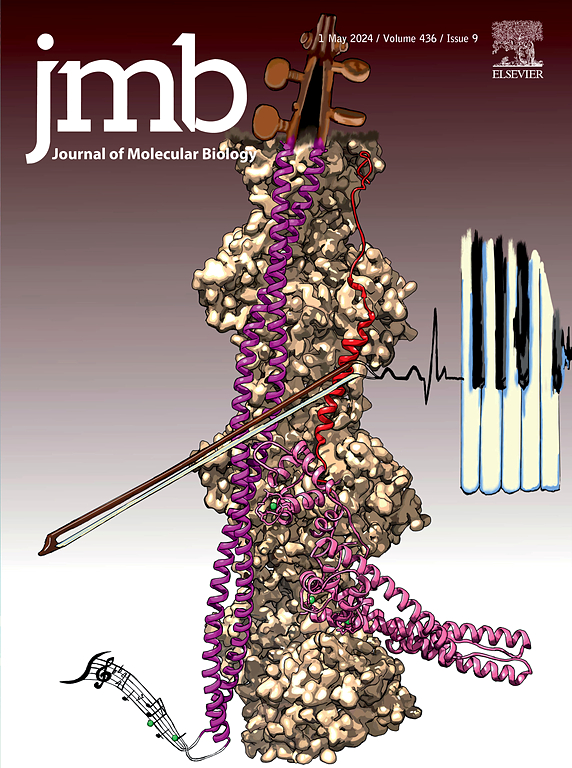
Immunoglobulin M (IgM) is a class of mammalian antibody that is critical for the early stages of adaptive immunity, and is the most potent Ig-activator of the classical complement cascade. While the relationship between IgM and complement has been appreciated for decades, the structural transitions within IgM upon antigen binding that promote the activation of complement component C1 remain unresolved. Here we examine in vitro complement activation, C1 binding kinetics, and conformational changes within IgM in different antigen-bound states. Binding studies using biolayer interferometry revealed that only in a multivalent complex with a surface-displayed antigen was IgM fully capable of initiating complement activation. Hydrogen/Deuterium exchange with mass spectrometry revealed the predominant structural changes within the Fc domains during transition to the active conformation. Collectively, this work establishes key structural and functional qualities that define the complement-active form of IgM.
期刊介绍:
Journal of Molecular Biology (JMB) provides high quality, comprehensive and broad coverage in all areas of molecular biology. The journal publishes original scientific research papers that provide mechanistic and functional insights and report a significant advance to the field. The journal encourages the submission of multidisciplinary studies that use complementary experimental and computational approaches to address challenging biological questions.
Research areas include but are not limited to: Biomolecular interactions, signaling networks, systems biology; Cell cycle, cell growth, cell differentiation; Cell death, autophagy; Cell signaling and regulation; Chemical biology; Computational biology, in combination with experimental studies; DNA replication, repair, and recombination; Development, regenerative biology, mechanistic and functional studies of stem cells; Epigenetics, chromatin structure and function; Gene expression; Membrane processes, cell surface proteins and cell-cell interactions; Methodological advances, both experimental and theoretical, including databases; Microbiology, virology, and interactions with the host or environment; Microbiota mechanistic and functional studies; Nuclear organization; Post-translational modifications, proteomics; Processing and function of biologically important macromolecules and complexes; Molecular basis of disease; RNA processing, structure and functions of non-coding RNAs, transcription; Sorting, spatiotemporal organization, trafficking; Structural biology; Synthetic biology; Translation, protein folding, chaperones, protein degradation and quality control.





 京公网安备 11010802042870号
京ICP备2023020795号-1
京公网安备 11010802042870号
京ICP备2023020795号-1

 分享
分享
 求助内容:
求助内容: 应助结果提醒方式:
 扫码关注我们
