Han-Kyeol Kim, Sojeong Park, Sung-Woo Kim, Eun Seok Park, Jin Yong Hong, Ickpyo Hong, Min Seok Baek
{"title":"L-α甘油酰磷胆碱使用与延迟痴呆转化之间的关系:韩国一项全国性的纵向研究。","authors":"Han-Kyeol Kim, Sojeong Park, Sung-Woo Kim, Eun Seok Park, Jin Yong Hong, Ickpyo Hong, Min Seok Baek","doi":"10.1016/j.tjpad.2025.100059","DOIUrl":null,"url":null,"abstract":"<p><strong>Background: </strong>Alzheimer's disease and vascular dementia are two of the most common causes of dementia. While early diagnosis and intervention are crucial, available treatments and research concerning the mild cognitive impairment stage remain limited. This study aimed to evaluate the real-world effectiveness and safety of L-α glycerylphosphorylcholine in this context.</p><p><strong>Objectives: </strong>To investigate the impact of L-α glycerylphosphorylcholine on the risk of conversion from mild cognitive impairment to Alzheimer's disease dementia and vascular dementia, as well as its influence on stroke risk DESIGN: A nationwide, population-based cohort study SETTING: Data from South Korea's National Health Insurance Service PARTICIPANTS: Overall, 508,107 patients newly diagnosed with mild cognitive impairment between 2013 and 2016 were included.</p><p><strong>Intervention: </strong>Patients were classified as users or non-users of L-α glycerylphosphorylcholine based on prescription records.</p><p><strong>Measurements: </strong>The primary outcomes were the risk of progression to Alzheimer's disease dementia and vascular dementia. Stroke risk was examined as a secondary outcome. A time-dependent Cox regression analysis was used to adjust for demographic and clinical factors.</p><p><strong>Results: </strong>Compared to non-users, L-α glycerylphosphorylcholine users had a lower risk of progression to Alzheimer's disease dementia (hazard ratio = 0.899, 95 % confidence interval: 0.882-0.918) and vascular dementia (hazard ratio = 0.832, 95 % confidence interval: 0.801-0.865) within 2,435,924 and 662,281.6 person-years, respectively. In patients under 65, L-α glycerylphosphorylcholine significantly reduced the risk of progression to Alzheimer's and vascular dementia. Stroke risk significantly decreased in patients who did not progress to dementia but not in those who did.</p><p><strong>Conclusions: </strong>L-α Glycerylphosphorylcholine reduces dementia conversion and stroke risk in patients with mild cognitive impairment, making it a viable early intervention. Future large-scale randomized controlled studies should examine its effects on other dementia subtypes and long-term cognitive outcomes.</p>","PeriodicalId":22711,"journal":{"name":"The Journal of Prevention of Alzheimer's Disease","volume":"12 4","pages":"100059"},"PeriodicalIF":7.8000,"publicationDate":"2025-04-01","publicationTypes":"Journal Article","fieldsOfStudy":null,"isOpenAccess":false,"openAccessPdf":"https://www.ncbi.nlm.nih.gov/pmc/articles/PMC12184023/pdf/","citationCount":"0","resultStr":"{\"title\":\"Association between L-α glycerylphosphorylcholine use and delayed dementia conversion: A nationwide longitudinal study in South Korea.\",\"authors\":\"Han-Kyeol Kim, Sojeong Park, Sung-Woo Kim, Eun Seok Park, Jin Yong Hong, Ickpyo Hong, Min Seok Baek\",\"doi\":\"10.1016/j.tjpad.2025.100059\",\"DOIUrl\":null,\"url\":null,\"abstract\":\"<p><strong>Background: </strong>Alzheimer's disease and vascular dementia are two of the most common causes of dementia. While early diagnosis and intervention are crucial, available treatments and research concerning the mild cognitive impairment stage remain limited. This study aimed to evaluate the real-world effectiveness and safety of L-α glycerylphosphorylcholine in this context.</p><p><strong>Objectives: </strong>To investigate the impact of L-α glycerylphosphorylcholine on the risk of conversion from mild cognitive impairment to Alzheimer's disease dementia and vascular dementia, as well as its influence on stroke risk DESIGN: A nationwide, population-based cohort study SETTING: Data from South Korea's National Health Insurance Service PARTICIPANTS: Overall, 508,107 patients newly diagnosed with mild cognitive impairment between 2013 and 2016 were included.</p><p><strong>Intervention: </strong>Patients were classified as users or non-users of L-α glycerylphosphorylcholine based on prescription records.</p><p><strong>Measurements: </strong>The primary outcomes were the risk of progression to Alzheimer's disease dementia and vascular dementia. Stroke risk was examined as a secondary outcome. A time-dependent Cox regression analysis was used to adjust for demographic and clinical factors.</p><p><strong>Results: </strong>Compared to non-users, L-α glycerylphosphorylcholine users had a lower risk of progression to Alzheimer's disease dementia (hazard ratio = 0.899, 95 % confidence interval: 0.882-0.918) and vascular dementia (hazard ratio = 0.832, 95 % confidence interval: 0.801-0.865) within 2,435,924 and 662,281.6 person-years, respectively. In patients under 65, L-α glycerylphosphorylcholine significantly reduced the risk of progression to Alzheimer's and vascular dementia. Stroke risk significantly decreased in patients who did not progress to dementia but not in those who did.</p><p><strong>Conclusions: </strong>L-α Glycerylphosphorylcholine reduces dementia conversion and stroke risk in patients with mild cognitive impairment, making it a viable early intervention. Future large-scale randomized controlled studies should examine its effects on other dementia subtypes and long-term cognitive outcomes.</p>\",\"PeriodicalId\":22711,\"journal\":{\"name\":\"The Journal of Prevention of Alzheimer's Disease\",\"volume\":\"12 4\",\"pages\":\"100059\"},\"PeriodicalIF\":7.8000,\"publicationDate\":\"2025-04-01\",\"publicationTypes\":\"Journal Article\",\"fieldsOfStudy\":null,\"isOpenAccess\":false,\"openAccessPdf\":\"https://www.ncbi.nlm.nih.gov/pmc/articles/PMC12184023/pdf/\",\"citationCount\":\"0\",\"resultStr\":null,\"platform\":\"Semanticscholar\",\"paperid\":null,\"PeriodicalName\":\"The Journal of Prevention of Alzheimer's Disease\",\"FirstCategoryId\":\"1085\",\"ListUrlMain\":\"https://doi.org/10.1016/j.tjpad.2025.100059\",\"RegionNum\":0,\"RegionCategory\":null,\"ArticlePicture\":[],\"TitleCN\":null,\"AbstractTextCN\":null,\"PMCID\":null,\"EPubDate\":\"2025/1/10 0:00:00\",\"PubModel\":\"Epub\",\"JCR\":\"Q2\",\"JCRName\":\"BUSINESS\",\"Score\":null,\"Total\":0}","platform":"Semanticscholar","paperid":null,"PeriodicalName":"The Journal of Prevention of Alzheimer's Disease","FirstCategoryId":"1085","ListUrlMain":"https://doi.org/10.1016/j.tjpad.2025.100059","RegionNum":0,"RegionCategory":null,"ArticlePicture":[],"TitleCN":null,"AbstractTextCN":null,"PMCID":null,"EPubDate":"2025/1/10 0:00:00","PubModel":"Epub","JCR":"Q2","JCRName":"BUSINESS","Score":null,"Total":0}
Association between L-α glycerylphosphorylcholine use and delayed dementia conversion: A nationwide longitudinal study in South Korea.
Background: Alzheimer's disease and vascular dementia are two of the most common causes of dementia. While early diagnosis and intervention are crucial, available treatments and research concerning the mild cognitive impairment stage remain limited. This study aimed to evaluate the real-world effectiveness and safety of L-α glycerylphosphorylcholine in this context.
Objectives: To investigate the impact of L-α glycerylphosphorylcholine on the risk of conversion from mild cognitive impairment to Alzheimer's disease dementia and vascular dementia, as well as its influence on stroke risk DESIGN: A nationwide, population-based cohort study SETTING: Data from South Korea's National Health Insurance Service PARTICIPANTS: Overall, 508,107 patients newly diagnosed with mild cognitive impairment between 2013 and 2016 were included.
Intervention: Patients were classified as users or non-users of L-α glycerylphosphorylcholine based on prescription records.
Measurements: The primary outcomes were the risk of progression to Alzheimer's disease dementia and vascular dementia. Stroke risk was examined as a secondary outcome. A time-dependent Cox regression analysis was used to adjust for demographic and clinical factors.
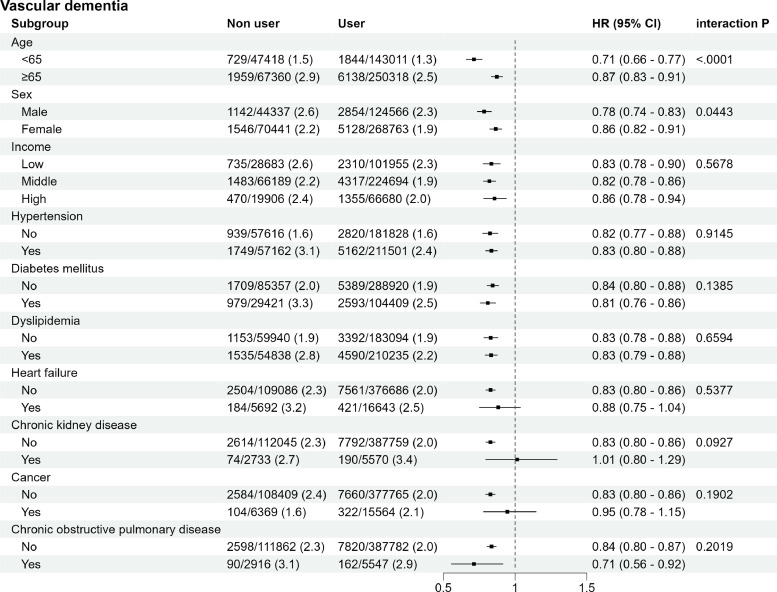
Results: Compared to non-users, L-α glycerylphosphorylcholine users had a lower risk of progression to Alzheimer's disease dementia (hazard ratio = 0.899, 95 % confidence interval: 0.882-0.918) and vascular dementia (hazard ratio = 0.832, 95 % confidence interval: 0.801-0.865) within 2,435,924 and 662,281.6 person-years, respectively. In patients under 65, L-α glycerylphosphorylcholine significantly reduced the risk of progression to Alzheimer's and vascular dementia. Stroke risk significantly decreased in patients who did not progress to dementia but not in those who did.
Conclusions: L-α Glycerylphosphorylcholine reduces dementia conversion and stroke risk in patients with mild cognitive impairment, making it a viable early intervention. Future large-scale randomized controlled studies should examine its effects on other dementia subtypes and long-term cognitive outcomes.
期刊介绍:
The JPAD Journal of Prevention of Alzheimer’Disease will publish reviews, original research articles and short reports to improve our knowledge in the field of Alzheimer prevention including: neurosciences, biomarkers, imaging, epidemiology, public health, physical cognitive exercise, nutrition, risk and protective factors, drug development, trials design, and heath economic outcomes.JPAD will publish also the meeting abstracts from Clinical Trial on Alzheimer Disease (CTAD) and will be distributed both in paper and online version worldwide.We hope that JPAD with your contribution will play a role in the development of Alzheimer prevention.






 京公网安备 11010802042870号
京ICP备2023020795号-1
京公网安备 11010802042870号
京ICP备2023020795号-1

 分享
分享
 求助内容:
求助内容: 应助结果提醒方式:
 扫码关注我们
